When talking about polishing and cleaning, the choice of the right product depends not only on the material to be treated, but also on the expected result, the frequency of use, and the operational context. In a professional setting, in fact, a detergent or polishing product is selected according to precise criteria: compatibility with surfaces, ease of application, residues left after treatment, and consistency with routine maintenance. This polishing and cleaning guide is designed precisely to help navigate different needs, avoiding unsuitable purchases or overly generic solutions.
Whether it is about restoring the appearance of a surface, keeping it tidy over time, or preparing it for more intensive use, it is useful to think with a practical approach. Professionals do not choose “the strongest product,” but the one most suitable for the type of dirt, the finish, and the planned cycle polishing and cleaning maintenance expected. To explore other selection criteria and compare solutions for daily use, it may be helpful to also consult the available technical guides and content dedicated to professional maintenance.
What polishing and cleaning are for in a professional context
The polishing and cleaning does not have a single function. In some cases, it serves to remove surface dirt, halos, residues, or dullness; in others, the goal is to improve the final appearance of the surface and keep it tidier over time. In professional contexts, these two aspects often go hand in hand: cleaning without altering and polishing without creating unwanted buildup.
An experienced operator always assesses the starting point. A surface may appear dirty but actually have a finishing problem, slight oxidation, or deposits incompatible with normal detergents. Conversely, a visually dull surface does not always require an abrasive or polishing action: sometimes a correct cleaning product, applied with the right support, is enough.
The main objectives of professional polishing and cleaning are:
- restoring the appearance of surfaces marked by dirt, halos, or residues;
- maintaining the finish without overly aggressive interventions;
- preparing the surface for a subsequent treatment or use phase;
- reducing dirt buildup with consistent maintenance;
- avoiding damage caused by incompatible products.
For this reason, a good polishing and cleaning guide does not just distinguish between “cleaning” and “polishing,” but helps to understand when a gentle action is needed, when a more targeted intervention is preferable, and when it is convenient to set up a maintenance routine. If you want to better navigate materials, applications, and accessories, you can also see the solutions for surface care.
Compatibility, measurements, and technical checks before choosing
One of the most common mistakes is choosing a product based polishing and cleaning solely on the commercial description or the desired effect. Professionals, instead, start from the real compatibility with the support. Different materials react differently to detergents, polishing agents, applicator cloths, and finishing accessories.
Before purchasing, it is useful to check some essential aspects:
- type of surface: smooth, porous, painted, satin, glossy or delicate;
- intended use: frequent maintenance, occasional cleaning, aesthetic restoration;
- application method: manual, with cloth, sponge, pad or other support;
- presence of residues: some treatments require careful removal after use;
- compatibility with products already used: waxes, protectives, previous detergents or other treatments.
When we talk about “measurements”, we do not mean only the container size or the available quantity, but also the correct relationship between surface, area to be treated and application tool. In practice, the right product is the one that allows controlled, uniform work consistent with the required finish.
Another important criterion concerns technical checks. If the material or finish is not immediately recognizable, it is always advisable to check the technical data sheet or, if necessary, perform a preliminary test in a less visible area. If a detail is unclear, check the product sheet. This approach reduces the risk of halos, dulling or uneven results.
In a correct strategy of polishing and cleaning maintenance, compatibility should not only be evaluated on the single intervention, but also over time. An effective product today might not be the best choice if used frequently on a delicate surface. This is why professionals prefer to build a sustainable and repeatable usage cycle, rather than relying on overly aggressive solutions.
To compare the available options more consciously, it may be helpful to consult the categories dedicated to cleaning products and the insights on professional applications.
Typical errors in ordering or installing polishing and cleaning products
Even when the need is clear, ordering the wrong product is more common than one might think. In many cases, the problem arises from a too quick assessment of the material or from improper use of the term “universal”. In professional practice, absolute universality is rare: there are almost always compatibility limits, recommended application methods or surfaces on which the result may vary.
Among the most common errors are:
- confusing cleaning and finishing: a detergent does not always polish, and a polish does not always clean thoroughly;
- ignore the type of dirt: dust, grease, residues, light oxidation and halos require different approaches;
- choosing unsuitable accessories: wrong cloths, sponges or supports can compromise the result;
- not checking compatibility with treated, painted or sensitive surfaces;
- applying too much product, thinking it will improve effectiveness;
- skipping the preliminary test on a small area.
Another common mistake concerns the phase we could define as “installation,” that is the first introduction of the product into the operational cycle. In a company, laboratory, workshop or structured work environments, introducing a new item for polishing and cleaning without clearly defining how to use it often leads to inconsistent results. Having the correct product is not enough: you need to know when to use it, with which accessory and how often.
For example, if a product is used on different surfaces without distinction, the risk is to achieve a good result on one material and an unsatisfactory effect on another. Similarly, using a cloth that is too aggressive or not suitable for the finish can ruin the quality of the treatment.
To reduce errors during ordering and use, professionals follow a simple sequence:
- identify the material and finish;
- define the objective: clean, revive, polish or maintain;
- check product compatibility;
- match the correct accessory;
- test the result on a small area;
- only then extend the application.
This logic makes every polishing and cleaning guide, more effective, because it transforms a generic choice into a decision truly useful for daily work.
Products, spare parts and accessories useful for effective polishing and maintenance cleaning
In professional work, the final result does not depend only on the main product. A good polishing and cleaning maintenance often also requires consistent accessories and suitable replacements. Cloths, applicator supports, residue removal elements, and tools for even application can make a real difference in the quality of the treatment.
The correct criterion is not to accumulate accessories, but to choose those that help to:
- distribute the product evenly;
- avoid waste and overapplications;
- reduce the risk of marks or halos;
- improve the consistency of the result on similar surfaces;
- simplify routine maintenance.
In many cases, the professional distinguishes between accessories for the cleaning phase and accessories for the finishing phase. This separation is useful because it prevents contamination between dirt residues and materials used for the final polishing. Periodic replacement of worn supports also falls within an efficiency logic: a worn or no longer suitable accessory can worsen the result even if the product is correct.
It is also worth considering supply continuity. If an item becomes part of the work routine, it is important that it can be easily integrated with compatible replacements or accessories. This aspect is often underestimated at the time of purchase but greatly affects ease of use in the medium term.
A good selection method involves evaluating together:
- main product;
- application tools;
- materials for removal or finishing;
- any useful replacements to maintain consistent work quality.
If you are building or updating your operational set, it may be useful to also explore compatible accessories for maintenance. This way the choice of the solution for the polishing and cleaning becomes more complete and truly functional for daily use.
How to choose based on the real use case
A truly useful guide on polishing and cleaning must take use cases into account. Not all surfaces require the same approach, and above all, not all need the same level of intervention. In a professional context, it is advisable to think in terms of scenarios, so as to avoid both excessive treatments and solutions that are too light.
Frequent cleaning on visible surfaces
When a surface is highly exposed and cleaned often, the priority is to maintain order and uniformity without stressing the material. In these cases, professionals tend to prefer products that are easy to handle, with controlled application and good compatibility with repeated use. The goal is not only to clean well once, but to do so consistently.
Aesthetic restoration after dirt accumulation or dullness
If the surface has lost its shine or shows persistent halos, a more targeted approach may be needed. Here, the choice depends greatly on the type of deposit and the original finish. Before proceeding, it is always useful to check if the material tolerates a more intense action or requires a gentle solution. If you have doubts, check the product sheet.
Routine maintenance after an initial treatment
After a restoration or polishing phase, maintenance becomes crucial. A common mistake is to subsequently use cleaners that are not consistent with the treatment just performed. Professionals, instead, set up a simple and repeatable routine, choosing products and accessories that help preserve the result without altering it.
This is the point where the polishing and cleaning maintenance takes on its true value: not as an isolated intervention, but as a method of managing the surface over time.
Recommended products
the brand pages with maintenance and finishing lines


 Teak wonder combo pack (2x1lt) tw cleaner + brightner – code: TWCP1X8
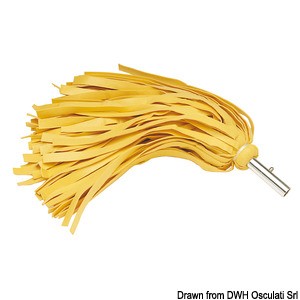 Shurhold chamois mop with snap-on fitting – code: 36.113.00 – Osculati


Useful links to guide your choice
If you want to deepen the topic of polishing and cleaning guide with a practical approach, it can be useful to consult related content and category pages already organized by application. A well-constructed path helps compare materials, usage methods, and accessories without wasting time on generic searches.
You can start with an overview of the available solutions, continue with the selection guides for professional use, and deepen the systems dedicated to routine maintenance. If instead you are considering a targeted purchase, it is useful to also consult the pages dedicated to the brands handled, so as to verify availability, compatibility, and possible combinations.
To choose more quickly and consistently with your use, explore the category dedicated to polishing and cleaning or consult the brands available in the store: you will find solutions designed for different materials, compatible accessories, and useful references to build a more effective professional maintenance. Also, consider the criteria for choosing suitable lights based on your specific needs, such as light intensity and color temperature. Remember that good lighting can greatly improve the quality of work and accuracy in polishing. Finally, do not forget to consult user reviews to guide you towards tested and appreciated options.
FAQ
How to choose a polishing and cleaning product without making mistakes?
The main criterion is compatibility with the surface to be treated. Before purchasing, consider the material, the finish, the type of dirt, and the frequency of use. It is also useful to check how the product should be applied and with which accessories. If you have doubts about compatibility or usage methods, check the product sheet.
Are polishing and cleaning the same thing?
No. Cleaning is used to remove dirt, residues, or stains, while polishing aims to improve the appearance of the surface or to enhance its finish. In many professional contexts, the two activities are connected, but they require different products and accessories.
How important is the accessory in polishing and maintenance cleaning?
It matters a lot, because an unsuitable accessory can compromise the result even with a good product. Cloths, sponges, or applicator supports affect the distribution, residue removal, and uniformity of the finish. This is why professionals always choose accessories consistent with the material and the type of treatment.
Is it correct to use the same product on different surfaces?
Not always. Even if a product may seem versatile, different surfaces can react differently. In a professional context, it is better to check specific compatibility and perform a test on a small area before extensive use.
How to set up an effective polishing and maintenance cleaning routine?
The most effective routine starts with a proper initial treatment and continues with regular, non-aggressive interventions consistent with the surface. The idea is to maintain the result over time, avoiding both dirt buildup and overly intense treatments. Good maintenance combines the right product, the correct accessory, and a well-defined frequency of use.