


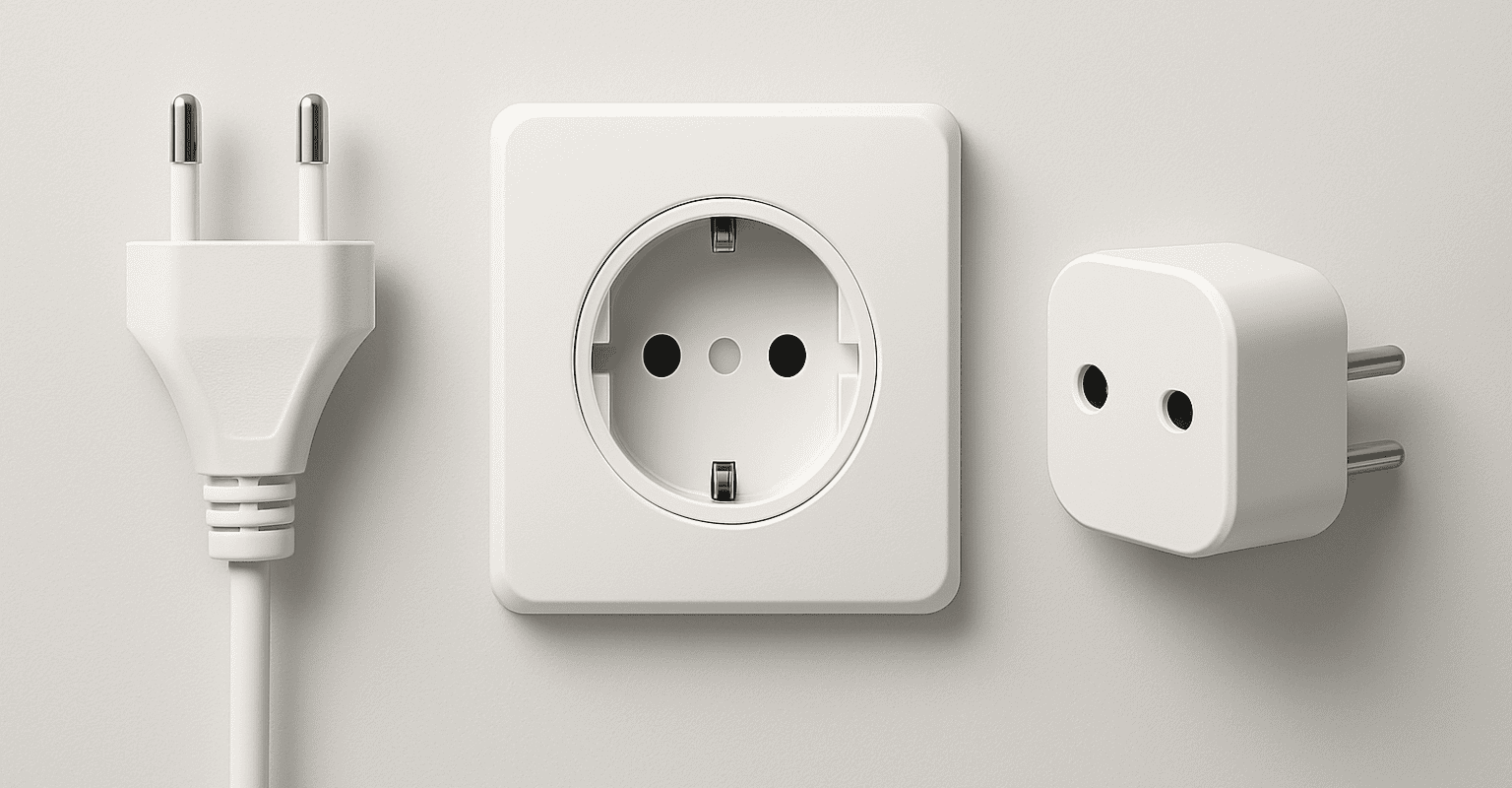
What plugs and sockets are for and why choosing well makes a difference
In daily work, the plugs and sockets are often considered simple components, almost taken for granted. In reality, precisely because they are used continuously, they are among the elements that most affect operational continuity, connection convenience, and intervention times. A rushed purchase or careless assembly can turn into downtime, repeated replacements, and avoidable time losses.
A good plugs and sockets guide starts from a clear principle: it is not enough to find a component “similar” to the one already present. It is necessary to understand usage context, compatibility, installation methods, and future maintenance. This is where the difference lies between a solution that really works and one that causes problems shortly after.
When talking about plugs and sockets, typical cases are many: connections in professional environments, replacements on existing systems, renewal of worn connection points, updating accessories that must interact with already installed components. In all these scenarios, the most common mistake is focusing only on the external appearance, neglecting decisive details that emerge only at the time of assembly.
Per orientarti meglio può essere utile consultare anche le guide tecniche del catalogo, soprattutto se stai confrontando più soluzioni o devi sostituire un componente già in uso.
Another often underestimated aspect concerns management over time. A correct choice simplifies the maintenance plugs and sockets, reduces unscheduled interventions, and makes any future replacements more straightforward. Conversely, a component chosen without checks can complicate wiring, fastening, use, and periodic inspection.
For this reason, before purchasing, it is advisable to ask yourself some essential questions:
- Where will the plug or socket be installed?
- With which components must it be compatible?
- As will the assembly be carried out?
- Who will intervene in case of replacement or inspection?
- How important is the speed of connection and disconnection in daily work?
Answering these points well helps avoid impulsive purchases and build a choice truly suited to the real application.
Plugs and sockets: compatibility, measurements, and technical checks to do before purchase
The most delicate phase is almost never the assembly, but the preliminary check. Many problems actually arise even before the component arrives on site: wrong order, inconsistent connection, underestimated dimensions, missing accessories or configurations not aligned with the existing system.
When evaluating plugs and sockets, the first check must concern the compatibility with what is already installed. If you are replacing an existing element, do not assume that two apparently similar components are interchangeable. Minimal differences in shape, fastening system, or connection configuration can make assembly more complex than expected.
Check the type of connection
Before proceeding, always verify the required interface type. In a proper plugs and sockets guide, this step is essential because it prevents immediate incompatibilities. If the component must integrate with an existing system, carefully compare:
- general structure of the connection;
- arrangement of connection points;
- method of insertion or coupling;
- presence of locking or protection elements;
- need for complementary accessories.
If in doubt, the safest method is to compare the component to be replaced with images, descriptions, and indications available in the store, or check the product sheet.
Measurements and dimensions: the error noticed only during assembly
Another critical point concerns the measurements. It is not enough that the connection is correct: the component must also fit in the installation point. In many cases, problems arise when the technician tries to mount the socket or connect the plug and realizes that the size does not allow for neat installation or easy access.
Before ordering, it is advisable to check:
- available space around the installation point;
- connection orientation;
- presence of nearby obstacles;
- need for frequent opening, closing, or operation;
- accessibility for future inspection interventions.
This attention is particularly useful when working on existing systems, where free space is often limited and every detail counts.
Technical checks not to skip
Besides compatibility and dimensions, there are practical checks that help avoid returns and delays. For example, it is important to understand whether the component is intended for a new installation or a replacement on an existing line. In the latter case, comparison with the piece already in use is always the best approach.
Può essere utile consultare anche la sezione dedicata ai componenti di collegamento per confrontare famiglie di prodotto, varianti e accessori che spesso vengono trascurati in fase di ordine.
Among the most useful checks are:
- consistency between the intended application and the component's intended use;
- compatibility with the existing system;
- presence of any parts necessary to complete the assembly;
- ease of access for future operations of maintenance plugs and sockets;
- correspondence between technical description and actual operational needs.
If a feature is not clearly indicated, avoid assumptions: check the product sheet.
Typical errors in ordering or installing plugs and sockets
The most costly mistakes are not always the most obvious ones. Often, they are seemingly small choices that, when combined, slow down work and cause unexpected replacements. Knowing the most common mistakes helps to prevent them effectively.
Purchasing “sight unseen” without technical comparison
One of the most frequent mistakes is ordering a plug or socket based solely on visual similarity. This approach easily leads to receiving a component that “looks right” but does not integrate with the existing system. The practical rule is simple: never order without at least minimal technical comparison, especially in case of replacement.
Neglecting the installation context
A socket suitable for a workbench may not be the best choice in an area where access is difficult or where the connection is frequently used. Similarly, a plug may be impractical if the cable must follow a constrained path or if the connection point is hard to reach.
Evaluating the context means considering:
- frequency of use;
- ease of insertion and removal;
- cable routing order;
- inspection possibility;
- speed of replacement in case of failure or wear.
Forgetting necessary accessories or spare parts
A classic operational problem arises when the main component arrives, but the assembly cannot be completed because a complementary element is missing. This causes a double step: new order, waiting, work stoppage. To avoid this, before confirming the purchase, check if additional parts or completion accessories are needed.
Per approfondire questo aspetto puoi consultare le pagine con accessori e ricambi correlati, utili per capire se il componente richiede elementi aggiuntivi per l’installazione o la sostituzione.
Assembling without thinking about future maintenance
A truly efficient choice concerns not only the initial installation but also what will happen afterward. The maintenance plugs and sockets becomes easier when the component is accessible, recognizable, and consistent with the rest of the system. If instead the assembly is done in a disorderly way or with poorly aligned components, every subsequent check will take more time.
Basically, it is advisable to avoid:
- installations that make access to the connection point difficult;
- forced pairings between components that are not perfectly compatible;
- configurations that complicate disassembly and replacement;
- improvised solutions chosen only to quickly finish the job.
Not reading the product sheet carefully
It may seem trivial, but many critical issues arise precisely from this. A technical description read hastily leads to misinterpretations. When a detail is crucial for your case, do not rely on memory or experience with similar components: check the product sheet and compare every useful piece of information with the actual application.
Products, spare parts, and accessories useful for a more complete choice
In a purchase-oriented guide, talking about plugs and sockets without considering spare parts and accessories would be reductive. In practice, in fact, the main component is only part of the final result. A well-made selection also takes into account what is needed to install, complete, protect, or replace the connection over time.
When analyzing a category of plugs and sockets, it is useful to think in terms of a system. This means asking not only “which component do I need today,” but also “which elements can simplify the work now and in future interventions.”.
When it is advisable to also consider spare parts
If you work on existing systems or on lines that must remain operational, having an overall view is a concrete advantage. In many cases, along with the main component, it is advisable to check the availability of replacement or complementary parts, thus reducing downtime in case of wear or scheduled replacement.
More careful management of spare parts helps to:
- reduce downtime due to components not immediately available;
- maintain consistency between existing installations and new replacements;
- simplify inspection interventions;
- improve the organization of routine maintenance.
Accessories that prevent problems during assembly
Many difficulties do not depend on the plug or socket itself, but on the fact that assembly requires additional elements not considered at the start. That is why, during selection, it is useful to check if there are related accessories that can make the installation neater and more straightforward.
Per orientarti tra famiglie collegate, può essere utile esplorare anche le categorie affini del catalogo e confrontare le soluzioni disponibili in base al tipo di applicazione.
The right accessories can help to:
- make the connection easier to manage;
- facilitate fastening and positioning;
- improve accessibility for future inspections;
- reduce the risk of makeshift assemblies;
- keep the connection point more organized.
How to make a truly efficient choice
An efficient choice comes from balancing three factors: compatibility, ease of installation, and future maintenance. If one of these elements is neglected, the initial advantage of the purchase is quickly lost.
For this reason, before proceeding, it can be useful to follow a small operational checklist:
- precisely identify the application;
- compare the component with the one already installed, if present;
- check measurements and available space;
- verify if spare parts or related accessories are needed;
- consider the ease of inspection and replacement;
- consult descriptions and technical details before ordering.
Se vuoi approfondire il metodo di selezione, puoi leggere anche gli articoli di supporto alla scelta dei componenti, utili per ridurre errori in fase di acquisto e installazione.
Adopting this approach means turning a simple product search into a more informed decision, with fewer surprises and greater operational continuity.
Recommended products
Go to the Plugs and Sockets category
 Panel 5 switches + lighter socket - Part No.: 14.703.00 - Osculati
 Waterproof plug plus 2-pole socket – code: 14.187.02 – Osculati
 6-pole toggle switch (ON)OFF(ON) 15 A – code: 14.925.06 – Osculati
 Stainless steel cigarette lighter socket – code: 14.518.00 – Osculati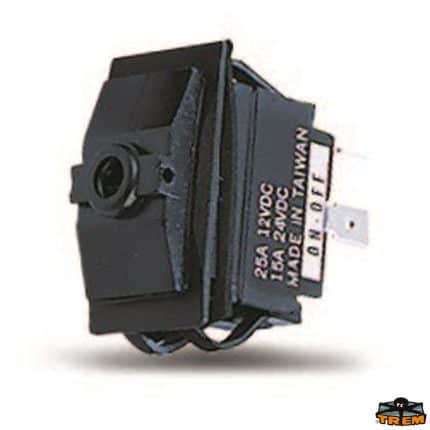
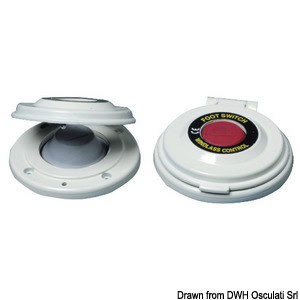 Red-white foot pedal control panel – code: 02.342.03 – Osculati
 Control panel for winch 80×60 mm - Code: 02.341.00 - Osculati
Choose plugs and sockets with more confidence in the store
If you are considering a replacement or a new installation, the best way to avoid mistakes is to start from an organized selection: compare the available solutions, check the technical details, and explore any related spare parts or accessories. Browse the category dedicated to plugs and sockets or the brands available in the store to find the solution best suited to your operational context, supported by product sheets designed to help you choose more quickly and accurately.
FAQ
How do I know if a plug or socket is compatible with the one already installed?
The best check is to compare the existing component with images, description, and technical details of the product sheet. Verify shape, connection system, dimensions, and mounting methods. If a detail is unclear, check the product sheet before ordering.
What is the most common mistake when buying plugs and sockets?
The most frequent mistake is choosing a component just because it looks similar to the one already present. Visual similarity does not guarantee real compatibility. Before purchasing, it is always advisable to check the application, connection, available space, and necessary accessories.
Why is it important to consider maintenance when choosing plugs and sockets?
Because a correct choice must not only work on the first assembly but also simplify inspections, replacements, and future interventions. Accessible components consistent with the rest of the system help reduce downtime and operational complications.
When is it advisable to also check spare parts and connected accessories?
It is especially advisable to do this in case of replacement on existing systems or when the installation must be completed without delays. Checking spare parts and accessories in advance helps to avoid separate orders, additional waiting, and incomplete installations.
If I can't find clear technical information, what should I do?
In these cases, it is better not to make assumptions. The safest solution is to check the product sheet, compare the details with the actual application, and proceed only when compatibility is clear.


