


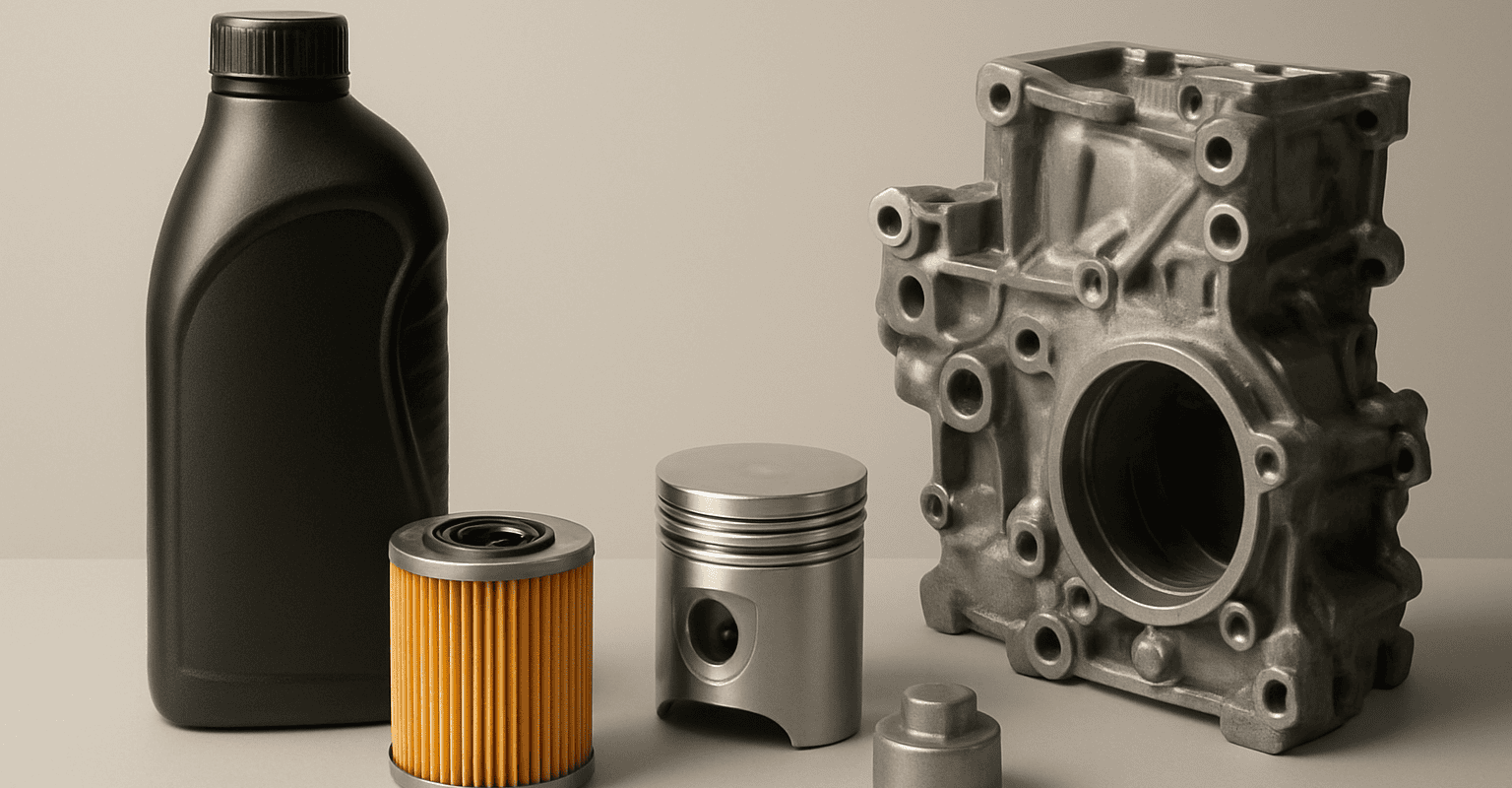
What engine spare parts and oils are for in truly effective maintenance
Talking about engine parts and oils means entering the heart of the operational continuity of a plant, a machine, or a handling system. It is not just about replacing a worn component or topping up a fluid: the correct choice affects reliability, regularity of operation, and durability over time.
In good engine parts and oils guide, maintenance, the first point to clarify is this: engine, lubrication, and connected components work as a whole. If a single element is not consistent with the system, anomalies such as irregular starts, overheating, noise, premature wear, or general efficiency loss may appear.
For this reason, it is advisable to evaluate every purchase not as an isolated intervention but as part of a engine spare parts and maintenance oils. strategy. An incorrect oil, for example, can alter the behavior of seals and moving parts; similarly, a seemingly compatible spare part but not perfectly suitable can compromise the system's balance.
In practice, these products serve to:
- keep the engine in stable working conditions;
- reduce wear of parts subject to friction;
- preserve compatibility with the existing system;
- limit machine downtime due to improvised replacements;
- simplify scheduled maintenance in the medium and long term.
Those who purchase for professional use know that the choice should never be based solely on immediate availability. It is more useful to start from the real context: type of application, frequency of use, environmental conditions, operational continuity, and replacement history. From this perspective, a careful selection of spare parts and lubricants helps avoid repeated interventions and makes the management of the technical warehouse more orderly.
Se stai valutando componenti collegati alla manutenzione ordinaria, può essere utile confrontare anche altre soluzioni presenti nello store, ad esempio tramite guide dedicate ai componenti per impianti o approfondimenti su manutenzione e continuità operativa.
How to choose engine spare parts and oils based on plant, compatibility, and durability
The correct choice always starts with a simple question: is this spare part or this oil really suitable for my plant? The answer requires an orderly check of multiple factors, not a quick assessment based only on shape, attachment, or generic description.
Compatibility with the type of system
Each system has its own characteristics: engine configuration, usage mode, work cycles, installation environment, presence of other sensitive components. A suitable replacement in one context may not be in another, even if visually similar.
Before purchasing, always check:
- intended use the component or fluid;
- compatibility with the engine and with the connected elements;
- type of system on which it will be installed;
- operating conditions, such as continuous use, intermittent use, or harsh environments;
- any manufacturer indications or available technical data sheet.
When a detail is not immediately clear, the safest choice is simple: check the product sheet. This is especially true for oils, seals, filters, transmission elements, and spare parts that must interact with materials or circuits already present.
Measurements, attachments, and technical references
One of the most common mistakes is considering a replacement compatible just because it “looks the same.” In reality, minimal differences in attachment, size, threading, connection, or geometry can make the installation incorrect or unstable.
To reduce the risk, it is advisable to gather all useful references in advance:
- code of the component to be replaced, if available;
- model of the engine or unit being worked on;
- relevant measurements of the installed part;
- type of connection or mechanical interface;
- specifications indicated in the product sheet.
Se il tuo obiettivo è una sostituzione senza margini di dubbio, è utile confrontare il ricambio esistente con le informazioni presenti nello store e, quando disponibile, consultare anche le schede tecniche dei componenti per un controllo più preciso.
Actual duration: it’s not just about the spare part, but the context
When it comes to duration, there is no absolute valid answer. The performance of a component or oil depends on how the system works. A clean and regular environment does not stress the system like a context with dust, humidity, intense cycles, or long periods of continuous operation.
To choose more consciously, consider:
- frequency of use of the system;
- presence of variable loads or work peaks;
- maintenance intervals already adopted;
- history of failures or replacements;
- interaction between spare part and lubrication.
In other words, a good purchase is not only the one that “fits” correctly, but the one that remains consistent over time with the system. For this reason, duration must be evaluated together with compatibility and maintenance quality.
Compatibility, measurements and technical checks before ordering
Before confirming an order, it is useful to follow a simple but rigorous procedure. This step reduces errors, returns, and downtime, especially when purchasing spare parts for scheduled interventions or to quickly restore a stopped machine.
Practical checklist before purchasing
Here is a verification sequence useful in almost all cases:
- Identify the component to be replaced and its role in the system.
- Detect the code or reference present on the part, if readable.
- Check measurements and connections carefully.
- Check the compatibility of the oil with engine, materials, and operating conditions.
- Check the product sheet to confirm application and intended use.
- Evaluate related spare parts to be replaced in the same intervention.
This logic is particularly useful when the problem does not concern a single element, but a set of parts worn progressively. In many cases, intervening on only one point leaves unchanged the cause that generated the failure or anomaly.
When it is advisable to also check connected components
If you are replacing an engine spare part or choosing an oil to restore proper functioning, it may be useful to also check:
- gaskets and seals;
- filters and parts subject to deposits;
- transmission or coupling elements;
- connections and fastening points;
- components already affected by indirect wear.
Questa attenzione evita il classico scenario in cui un ricambio nuovo viene installato correttamente ma lavora in un sistema ancora sbilanciato. Per approfondire la logica di sostituzione coordinata, puoi consultare anche i contenuti sulla manutenzione dei sistemi motore.
Typical errors in ordering or installing engine spare parts and oils
The most costly mistakes are not always the obvious ones. They often arise from small simplifications during ordering or from installations carried out without preliminary checks. Knowing them helps to avoid them.
Purchasing based on appearance and not data
A similar component is not automatically correct. Relying on photos, approximate dimensions, or overly generic descriptions can lead to immediate incompatibilities or problems that emerge only after startup.
The best rule is this: never replace a technical check with a visual similarity. If in doubt, check the product sheet.
Underestimating the role of oil in system durability
Another common mistake is considering oil as a secondary element. In reality, lubrication is an integral part of the balance of the engine and its connected components. An inconsistent choice can affect flow, protection, and operational stability.
For this reason, in the engine spare parts and maintenance oils, the fluid should never be chosen separately from the rest of the system. Instead, a joint evaluation between application, compatibility, and usage conditions is needed.
Installing without checking cleanliness and condition of the seats
Even the correct spare part can perform poorly if mounted in the presence of residues, deposits, deformations, or unsuitable surfaces. Before installation, it is always advisable to check:
- cleaning of contact surfaces;
- seat integrity;
- absence of residues from the previous component;
- correct alignment during assembly;
- consistency of the lubricant used.
A rushed installation can alter the system's behavior already in the first work cycles, making it difficult to understand whether the problem depends on the replacement part, the oil, or the installation.
Do not plan the replacement with a preventive approach
Many purchases arise in emergencies. It is understandable, but it is not always the most efficient solution. When possible, it is advisable to set up preventive management, keeping track of the components most subject to wear and the fluids to be checked periodically.
A minimal planning allows to:
- reduce unexpected downtime;
- order more accurately;
- coordinate multiple replacements in the same intervention;
- improve operational continuity.
Per chi gestisce impianti o officine, può essere utile affiancare alla scelta dei ricambi anche una panoramica sulle soluzioni per manutenzione programmata.
Products, spare parts, and accessories useful for a more complete choice
When purchasing, it is useful to think in terms of functional groups and not single parts. This approach allows building a more coherent intervention and avoiding fragmented orders that force the plant to stop again shortly after.
In the world of engine parts and oils, it is often advisable to evaluate together:
- main engine components subject to wear or periodic replacement;
- oils and fluids compatible with the application;
- sealing elements that work in contact with fluids;
- filtration and accessory parts useful for keeping the system clean;
- connected components which may be affected by the wear of the replaced part.
This does not mean changing everything indiscriminately, but adopting a smarter logic: intervene where there is a real technical relationship. For example, if a spare part works in combination with seals or a lubricated circuit, it makes sense to also check these elements before closing the order.
Un altro aspetto utile è la consultazione di contenuti correlati nello store. In molti casi, guide e pagine di categoria aiutano a orientarsi meglio tra applicazioni, famiglie di prodotto e criteri di compatibilità. Per questo può essere comodo esplorare le guide prodotto disponibili e le sezioni dedicate ai brand o alle linee tecniche già presenti in catalogo.
If your goal is a safer choice, the best method remains this:
- start from the engine and the system;
- verify the correct spare part;
- match the compatible oil;
- check the connected accessories;
- confirm everything on the product sheet.
Following this sequence, the selection becomes more precise and the purchase more useful even in the long term.
Recommended products
Go to the Engine Spare Parts and Oils category
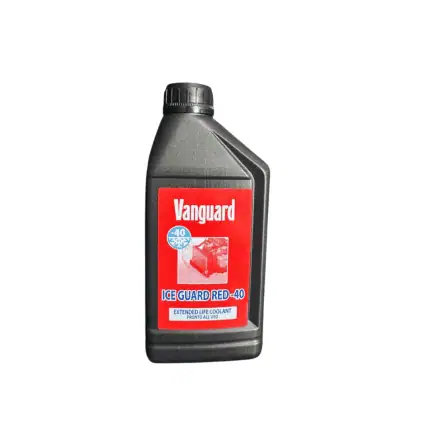 Ready-to-use antifreeze fluid ice guard red – 40 1L – code: V3203 RED 1L – Vanguard

 Racor 10 micron cartridge for 900MA - Code: 17.667.42 - Osculati
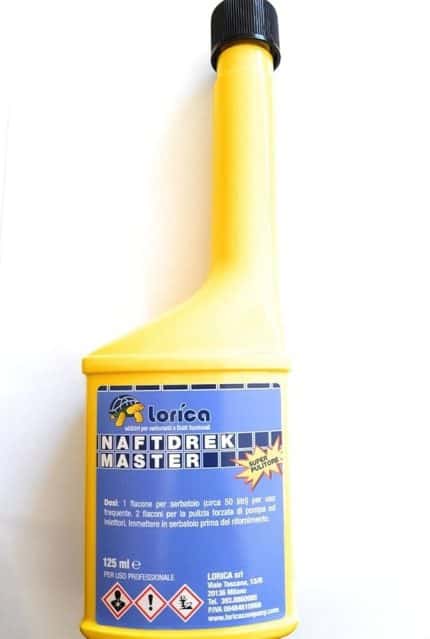 Naftdrek lorica: multifunctional diesel biostabilizer additive 125 ml – code: A1313
 Ready-to-use antifreeze fluid ice guard red – 40 5L – code: V3203 5L – Vanguard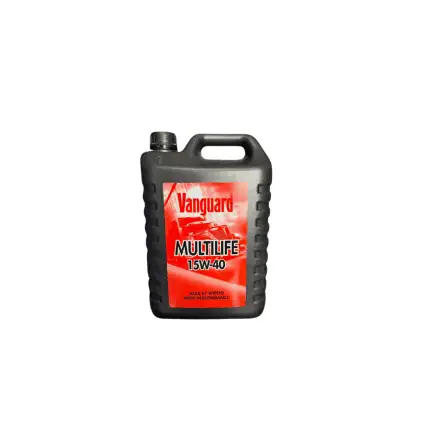

Support for choice and next steps in the store
If you are comparing multiple solutions for engine parts and oils, the most effective way to proceed is to start from the reference category or the brand you usually use, always checking compatibility, application, and technical details on the product sheet. Explore the store sections dedicated to spare parts and lubricants to quickly find the most suitable solution for your system and make maintenance more organized, safe, and continuous.
FAQ
How do I know if an engine spare part is compatible with my system?
The best check starts from the component code, engine model, measurements, attachments, and intended use. If a detail is unclear, check the product sheet before ordering.
Can I choose an oil based only on the engine type?
No, it is better to also consider the context of use, the materials present in the system, and the other connected components. Compatibility must be evaluated comprehensively, not in isolation.
What are the most common mistakes when ordering engine parts and oils?
Among the most common mistakes are purchasing based solely on visual similarity, failing to check measurements and connections, choosing the oil without verifying the application, and installing on unclean or unchecked seats.
Is it advisable to also replace accessories or connected components?
Often yes, especially when the replacement works together with seals, filters, or other elements subject to indirect wear. A preventive check helps to avoid new stoppages shortly after the intervention.
When is it useful to consult the product sheet?
Always, especially when you need to confirm compatibility, application, measurements, or usage features. If you have a technical doubt, the product sheet is the first reference to check.


