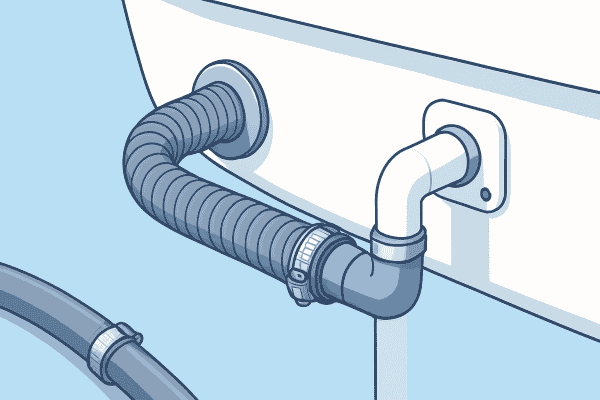
What plumbing and fittings are for
When talking about hydraulics and fittings, you enter a field that concerns the correct connection between pipes, utilities, valves, distribution elements, and parts subject to replacement over time. In a technical store, this category should not be seen as a set of isolated items, but as a system: each component interacts with the others and the right choice always depends on the installation context.
A good hydraulics and fittings guide starts from a simple principle: the fitting is not only used to join two elements, but to ensure continuity, compatibility, and ease of maintenance. For this reason, before purchasing spare parts, accessories, or related components, it is advisable to consider the entire circuit and not just the single piece.
In practice, fittings are used to:
- connect pipes and terminals with different geometries;
- adapt threads or connections that are not identical;
- create branches, reductions, or changes of direction;
- simplify replacement and maintenance operations;
- integrate accessories useful for controlling or protecting the system.
Questo approccio è particolarmente utile sia per chi gestisce un impianto già esistente, sia per chi deve completare un’installazione selezionando elementi compatibili tra loro. Se stai valutando anche altri componenti collegati al circuito, può essere utile consultare le guide tecniche del catalogo per confrontare famiglie di prodotto e destinazioni d’uso.
The key point is to avoid disconnected purchases: a correct fitting must be consistent with material, type of connection, available space, and future intervention methods. In other words, choosing well today means reducing problems tomorrow.
Compatibility, measurements, and technical checks in plumbing and fitting systems
Compatibility is the most important aspect when selecting components of hydraulics and fittings. Many errors arise from the fact that two elements may seem similar but are not really. An apparently identical thread, a diameter interpreted approximately, or a material unsuitable for the rest of the system can compromise assembly or make subsequent maintenance complex.
What data to start with before ordering
To correctly match fittings, spare parts, and accessories, it is advisable to first gather some basic information:
- type of connection: threaded, push-fit, compression, or other configuration indicated in the product sheet;
- nominal size: this data should always be verified without relying on visual estimates;
- shape of the fitting: straight, curved, T-shaped, reduced, or adapter;
- material: it must be consistent with the pipe, fluid, and components already present;
- available space: in some systems, space constraints are as decisive as the measurement;
- component function: permanent connection, disassembly point, branch, or quick replacement.
If any of these data are unclear, the best choice is to stop and check the product sheet. A correct order almost always comes from an extra check, not from a guess.
How to read compatibility practically
A hydraulics and fittings guide truly useful must help to read compatibility not only from a theoretical point of view, but operationally. For example, if you need to replace a worn component, it is not enough to find a “similar” fitting: you need to check if the new element matches the existing pipe, the installation direction, and other accessories present upstream or downstream.
In many cases it is useful to start from the already installed component and check:
- how it connects with the rest of the circuit;
- if it requires gaskets, sealing elements, or dedicated accessories;
- if the replacement must maintain the same configuration or can be adapted;
- if the replacement also involves nearby parts that are worth renewing together.
Questo metodo riduce gli acquisti incompleti e aiuta a costruire un carrello più coerente. Se stai confrontando più soluzioni, puoi approfondire anche tramite le categorie correlate per impianti e connessioni, così da individuare più facilmente gli abbinamenti corretti.
Measurements: the most common error comes from here
Among all checks, the one on measurements is the most delicate. Often there is a tendency to consider equivalent components that have minimal differences only in appearance. In reality, these very differences can prevent assembly or create an unsuitable coupling.
To avoid problems:
- always compare the declared measurement with that of the component to be replaced;
- do not rely only on the perceived outer diameter by eye;
- check if the fitting is designed to adapt different measurements;
- verify in the product sheet if complementary accessories are required.
When the doubt concerns a reduction, a branch, or an adaptation between different standards, it is even more important to carefully read the technical description. In these cases, compatibility does not depend on a single datum but on the set of connections involved.
Typical errors in ordering or installation
Even with a well-organized catalog, the most frequent errors in the field hydraulics and fittings maintenance derive from too quick evaluations. The problem is not only ordering the wrong part: often a correct component in itself is purchased, but unsuitable for the real system.
Confusing replacement and adapter
A replacement must restore an existing function, while an adapter serves to connect different elements. Confusing these two roles leads to improvised solutions. If you need to replace a worn part, always ask yourself if you are looking for an equivalent element or a fitting that modifies the connection. These are two different needs and must be treated separately.
Neglecting the material of the rest of the system
Another typical mistake is focusing on the shape of the fitting and ignoring the material of the circuit. In a logic of hydraulics and fittings maintenance, continuity between components is fundamental. An inconsistent match can complicate assembly, require additional accessories, or make future interventions less easy.
For this reason, it is always useful to check:
- material of the pipe or component to be connected;
- presence of already installed intermediate elements;
- need for additional sealing or connection accessories;
- possible simultaneous replacement of nearby worn parts.
Ignoring space and accessibility
A fitting that is compatible on paper may be inconvenient or unusable during assembly if space is limited. This often happens in technical compartments, under utilities, in narrow passages, or in systems that have been layered over time. Before ordering, always assess whether the component can be installed and removed without obstacles.
In caso di dubbi, conviene orientarsi su una selezione più ragionata dei componenti correlati e consultare le sezioni dedicate ai ricambi e agli accessori compatibili per capire se esistono configurazioni più adatte al tuo impianto.
Do not plan future maintenance
A correct choice should not only solve the immediate problem. It must also facilitate subsequent interventions. That is why a good hydraulics and fittings guide always considers maintenance as part of the initial choice. If a point in the system is subject to wear, inspection, or periodic replacements, it makes sense to favor a configuration that makes future interventions easier.
This is especially true when you are purchasing not only the fitting but also spare parts, accessories, and related components. The goal is to create an orderly, clear, and easily manageable system over time.
Useful products, spare parts and accessories to combine
Within the store context, the value of a category like hydraulics and fittings truly emerges when read together with complementary elements. It is not about adding random items, but identifying what is needed to complete the job without interruptions.
When selecting a fitting, it can be useful to check if you also need:
- sealing components compatible with the type of connection;
- spare parts to replace worn parts during the same intervention;
- accessories to simplify assembly, disassembly, or circuit inspection;
- adapting elements between different connections or sizes;
- related parts that are worth renewing together to avoid a second system downtime.
This approach is particularly effective during maintenance: if you are already working on a point in the system, it often makes sense to also check what is immediately connected. Not to replace everything, but to prevent a secondary component from compromising the result of the work just performed.
How to build a consistent purchase in the store
To move in an orderly way within the catalog, you can follow a simple sequence:
- identify the main component to connect or replace;
- check size, connection, and material;
- check which accessories are necessary for assembly;
- consider if there are related spare parts to replace in the same intervention;
- compare the information with the product datasheet.
In questa fase, consultare le pagine di approfondimento sui componenti per impianti può aiutare a chiarire differenze tra soluzioni simili e a evitare ordini incompleti.
Another useful aspect is consistency between categories: those looking for a fitting often also need elements that do not belong to the same subsection of the catalog but are closely related to the work to be done. For this reason, a store-driven guide must accompany the user in the choice, without limiting itself to the single product family.
If your goal is a quick replacement, an expansion of the system, or scheduled maintenance, the criterion remains the same: correct matching means checking the whole. The right fitting is the one that works well with everything around it.
Before completing the order, it can be useful to do a final cross-check between the product sheet, system configuration, and necessary accessories. It is a simple step but often decisive to avoid returns, downtime, and re-installations.
Recommended products
Go to the Hydraulics and fittings category
 Hose holder type Rome M 1"x30 yellow – DVGW – code: 1056F*30 – Maestrini
 1“ Brass Anti-Corrosion F.F.F. ”T" Fitting – CR – DVGW – code: 7130F – Maestrini
 1/2"x3/8" anti-siphon valve in CR anti-corrosion brass – code: *7083D – Maestrini
 O-ring for 3/4" and 1" filters (4412) - Code: 0087-5EF - Maestrini
 90° 1" M-F Elbow in yellow brass – DVGW – code: 0092F – Maestrini

Useful links to better choose plumbing components and fittings
Se stai confrontando più soluzioni o vuoi approfondire il rapporto tra raccordi, ricambi e accessori, puoi esplorare anche le altre guide prodotto del blog. Trovare il componente corretto è molto più semplice quando si leggono insieme funzione, compatibilità e contesto di utilizzo.
To complete your purchase more securely, consult the dedicated category or the brands available in the Technofluid store: you can compare different solutions for hydraulics and fittings, check the details in the product sheets, and more precisely identify the related components suitable for your system.
FAQ
How to understand if a fitting is compatible with my system?
Check the type of connection, size, material, and function of the component to be connected. If any information is unclear, check the product sheet before ordering.
When is it convenient to also buy spare parts and accessories together with the fittings?
It is advisable to do it when the intervention involves parts subject to wear, sealing elements, or nearby components that may require replacement in the same job.
What is the most common mistake when choosing hydraulic components and fittings?
The most common mistake is relying solely on the appearance of the part without checking the actual size, type of connection, and compatibility with the rest of the system.
For maintenance, is it better to replace only the fitting or also check the connected parts?
It is generally useful to also check the connected parts, especially if the area is already accessible. This helps to avoid close interventions and makes maintenance more orderly.