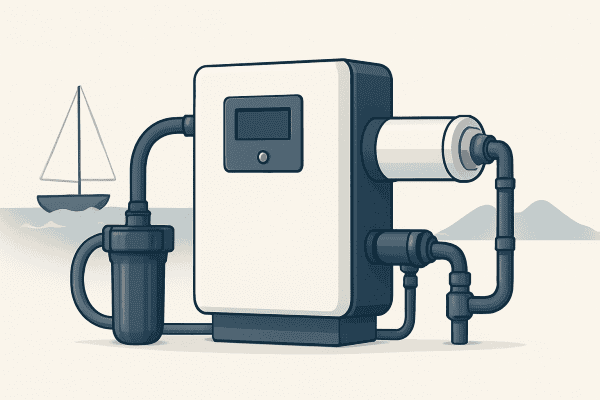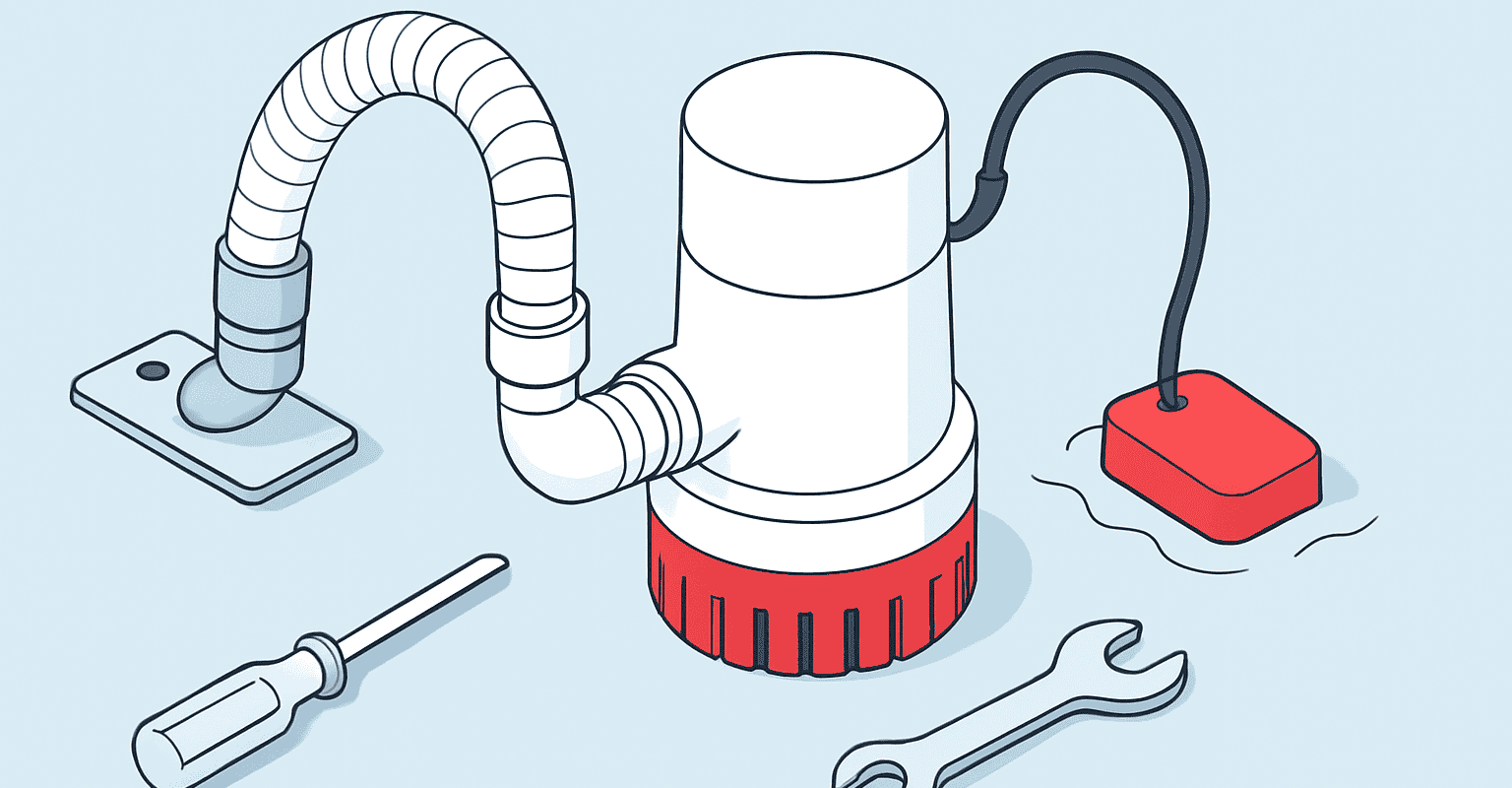
Introduction and when it is needed
The marine pumps are among the quietest components on board: they run for months unnoticed… until they stop. When this happens, the problem is rarely “the pump is dead” and more often concerns power supply, installation, piping, or sensors. This guide is designed to give you a quick troubleshooting and practical, useful both for onboard pump (freshwater, washing, services) and for bilge pump (drainage and safety).
It will be useful if you notice one of these signs:
- the pump does not start or starts intermittently;
- unusual noise, vibrations, smell of heat;
- reduced flow, weak jet, cycles too frequent;
- presence of water in the bilge despite the pump “seeming” active;
- automatic switch that does not intervene or always intervenes.
If you want to immediately explore the available options, you can find the selection in the category Pumps.
Basic concepts (how it works)
Understand how a pump works helps diagnose in a few minutes. In boating, the most common families are:
- Bilge pumps: often centrifugal, designed to move water with small debris. They do not “suck” like a self-priming pump: they must be positioned correctly and with suitable piping.
- Pressurized pumps for fresh water (typical onboard pump): often diaphragm, self-priming, with pressure switch. They maintain pressure in the circuit and start when you open a tap.
- Transfer/service pumps: for transfers, washing, specific uses. The installation logic may vary: check the product sheet.
Three key concepts that recur in every problem:
- Power supply: actual voltage at the terminals, connections, fuses, ground.
- Hydraulics: pipe diameter, air leaks, valves, restrictions, excessive bends.
- Control: float/sensor, pressure switch, relay, switches and wiring.
1) Identify the type of connection required
The correct choice reduces “mysterious” failures and false alarms. Before adding to the cart, clarify the use:
- Bilge: continuous drainage or emergency? presence of debris? need for automatic?
- : pumps, pressure tanks, filters, boilers.: one or more users? external shower? autoclave with pressure switch?
- Deck washing: often requires higher pressure and suitable components: check the product sheet.
Practical sizing criteria
To size without complicating your life, think like this:
- System compatibility: boat voltage and type of control (manual/automatic).
- Pipe section: a “big” pump with a small pipe performs less and strains. Better consistency between pump and line.
- Space and accessibility: a pump you can't reach becomes a problem at the first maintenance.
- Noise and vibrations: often depend more on supports and pipes than on the pump itself.
Materials and marine environment
Salt and humidity put everything to the test: pump bodies, screws, connectors. Look for components suitable for nautical use and especially take care of:
- Protected electrical connections (correct crimps, heat shrink tubing, protective spray if provided);
- hoses and clamps resistant and properly tightened;
- filters where needed (especially on fresh water and suction).
Flow rate and head (practical examples)
Two words that often confuse: flow rate and head. In practice:
- Flow rate: how much water the pump moves in a certain time, under ideal conditions.
- Head: how “high” (or against how much resistance) it can push the water. More curve, more height, more valves = more resistance.
Practical examples (without numbers):
- Bilge pump with long discharge and many bends: even if the pump is good, performance decreases. Typical solution: more direct route, consistent diameter, fewer bends, check valve only if really necessary (and suitable).
- Onboard pump that feeds multiple taps: if the line is long or “choked”, the pump cycles often and seems to “go crazy”. Often this is not a defect: it is the circuit that creates losses or resistances.
- Self-priming: some pumps handle it well, others less so. If the suction takes in air or the filter is not sealed, priming becomes intermittent.
When comparing different models, don’t stop at the “nameplate” data: check the product sheet the curve or recommended usage indications.
Correct installation (steps + errors to avoid)
A clean installation solves half the problems before they arise. Here is a “refitting-proof” sequence.
Recommended steps
- Plan the route: short pipes, wide bends, easy access to filter and connections.
- Prepare the base: stable support, antivibration mounts if provided, dry and inspectable area.
- Install filter/screen where necessary (fresh water and some service pumps). In the bilge, consider a prefilter if the environment is dirty: check the product sheet.
- Connect the pipes: consistent diameter, suitable clamps, no crushing.
- Wiring: adequate section, fuse close to the source, connections protected from moisture.
- Functional test: manual and automatic test (float/pressure switch), check for leaks and cycles.
Common mistakes to avoid
- Random check valve“: useful in some systems, harmful in others (increases resistance and can promote clogging). If you use it, choose a suitable one: check the product sheet.
- Pipes too small or with too many tight bends: the pump works poorly and overheats.
- Exposed electrical connections: oxidation = voltage drop = difficult starts.
- Pump not accessible: when you have to clean, you will postpone… and the problem will grow.
- Poorly positioned discharge: risk of backflow or water return, especially with rough seas.
Maintenance (frequencies and checks)
Maintenance of marine pumps it is simple if done often and in a few minutes. The goal is to prevent dirt, salt, and rust from causing a malfunction.
Quick checks (routine)
- Visual inspection: leaks, drips, loose clamps, cracked hoses.
- Ignition test: manual and automatic (bilge), opening faucet (fresh water).
- Listening: changes in noise often indicate air in the line or blockages.
Periodic checks (more thorough)
- Filter cleaning and gasket inspection (if present).
- Wiring check: rust on fastons, loose terminals, damaged sheaths.
- Check pipes: microcracks on suction = air = uncertain priming.
- Float/sensor test in bilge: must move freely and without sticking.
If your boat stays still for a long time, a functional test before going out avoids surprises: a few seconds can save you an early return.
Common problems and solutions (troubleshooting)
Here you find a “funnel” diagnosis: start with the simplest and most likely checks, then go into detail. In case of doubt, stop and check the product sheet or with a technician.
1) The pump does not start
- Check fuse/switch: it seems trivial, but it is the first point.
- Measure the voltage at the terminals: if it is low, the problem is upstream (long cables, rust, poor ground).
- Check the control: stuck float, pressure switch that does not close, defective switch.
- Oxidized connections: clean/recrimp and protect. Often the pump “restarts” just by moving the cables: it is a clue.
2) The pump starts but does not send water
- Air in suction (onboard pump): check filter, fittings, microcracks on the tube, clamps.
- Clogged filter: cleaning and checking gasket/seal.
- Clogged impeller/rotor (bilge): turn off, disassemble if applicable and remove debris.
- Blocked non-return valve: it can remain closed or partially closed.
3) Low flow or weak jet
- Crushed tube or too tight curve: reposition and use wide curves.
- Inconsistent diameter: if the system “chokes”, the pump does not perform.
- Partial obstructions: salt, algae, debris in the drain or through-hull.
- Dirty filter or gasket that sucks air.
4) The pump cycles often (frequent on/off)
Typical of onboard pump with pressure switch.
- Leak in the circuit: even a continuous drop restarts the pump. Check fittings, showers, taps.
- Air in line: tighten and seal filter.
- Pressure switch calibrated or dirty: on some models it is adjustable or replaceable: check in the product sheet.
- Accumulator/vessel (if present) discharge or unsuitable: it can increase the cycles.
5) The bilge pump does not start automatically
- Float stuck due to dirt or encrustations: cleaning and manual test.
- Incorrect wiring: automatic often has two lines (manual/auto). Check the diagram again.
- Faulty sensor: if it works in manual and not in auto, the culprit is often the control, not the pump.
6) The pump remains always active
- Actual water ingress: first of all, check that there is no leak on board.
- Stuck float in the “on” position or dirty sensor.
- Backflow: water flows back from the discharge pipe and the pump restarts. Check the path and discharge position.
7) Abnormal noise and vibrations
- Rigid support or loose fastenings: add antivibration mounts if provided.
- Cavitation/air: often due to suction not sealed (onboard pump) or restrictions.
- Debris in the pump body: especially in the bilge.
8) Smell of heat or warm cables
- Voltage drop due to undersized or oxidized cables: the pump draws “poorly” and heats up.
- Pump working against a restriction: bent pipe, stuck valve, clogged filter.
- Dry runningSome pumps suffer greatly from operating without water: check the product sheet.
Recommended products
To help you navigate, below you will find quick links to common types and solutions. The links are designed to take you to specific sheets or filters: check the product sheet compatibility, dimensions, and included accessories.
- Bilge pumps
- Automatic bilge pumps
- Floats and bilge sensors
- Freshwater autoclave pumps (onboard pump)
- Deck wash pumps
- Transfer pumps
- Filters for pumps and water systems
- Non-return valves for pump systems
- Hoses and fittings for pump installation
- Installation accessories and spare parts
Recommended products
 Autoclave Jet 4B C.E, 24V, 0.75 kW - code: 01J4BCE1 - Gianneschi Pumps and Blowers
 EL/Pump CB 22-110, V230 M, 50/60 Hz, 1Ph, 0.55 kW 2P – code: 01CB22G222 – Gianneschi Pumps and Blowers
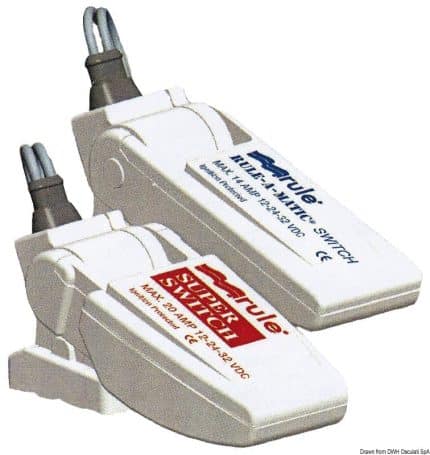 Circuit Breaker for Rule Pumps 35A – code: 16.601.00 – Osculati
 Portable gear pump kit UP3-CK 12V 15 L/min – code: 16400612 – Marco
 El/Ecoinox Pump 622, 230/400V T, 50Hz, 1.5 kW – code: 01I62B3 – Gianneschi Pumps and Blowers
 EL/Pump MV44 G, 24 V DC, 0.33 kW – code: 01GMV341G – Gianneschi Pumps and Blowers
 Eye Tech 1000 Car Pump, 12V – code: 1616164 – Italian Nautical Supplies
 El/Single-screw Pump MV44 G, 230/400V T, 50Hz, 0.75 kW – code: 01GMV343G – Gianneschi Pumps and Blowers
Useful links
To complete the intervention, these paths help you quickly find what you need without wasting time browsing through countless pages:
- All marine pumps (category)
- Freshwater system guide on boats
- Bilge guide: checks and best practices
- Marine wiring: common mistakes and how to avoid them
- Support: questions about compatibility and spare parts
FAQ
How do I understand if the problem is the pump or the system?
If the pump receives correct power but the flow remains low, the problem is often , is a practical component for processing and assembly in the (filter, air in suction, kinked hose). If instead no voltage arrives or it arrives “weak,” it is more likely a problem electric (wires, oxidation, ground, fuse).
Is a check valve always needed on the bilge pump?
No: it can be useful to reduce backflow in some layouts, but it adds resistance and can promote clogging. Evaluate case by case and check the product sheet if the pump tolerates it or if it is not recommended.
Why does the onboard pump start by itself even with the taps closed?
Usually for a micro-leak (fitting, shower head, faucet) or for air entering the suction. Also check the filter and seals: an imperfect seal can cause pressure loss and cause the pump to restart.
The bilge pump works manually but not automatically: what should I check?
The prime suspect is the float/sensor or its wiring. Check that it moves freely, is not encrusted, and that the connections are correct. If necessary, test the sensor separately.
Can I install a more powerful pump without changing pipes and wiring?
The system may become the bottleneck: small pipes and inadequate cables can reduce performance and increase problems (overheating, abnormal cycles). Before changing the model, check the product sheet installation requirements and consider a line upgrade.
Conclusion
Effective troubleshooting on marine pumps starts with a few targeted checks: power supply, suction tightness, filter cleaning, and correct control (pressure switch or float). If you want to replace or improve your onboard pump or bilge pump, explore the category Pumps: you will find solutions and accessories to complete the installation, with details to check directly on the product sheet.
FAQ
How do I understand if the problem is the pump or the system?
If the pump receives correct power but the flow remains low, the problem is often hydraulic (filter, air in suction, clogged tube). If no voltage arrives or it is weak, it is more likely an electrical problem (wires, oxide, ground, fuse).
Is a check valve always needed on the bilge pump?
No: it can be useful to reduce backflow in some layouts, but it adds resistance and can promote clogging. Evaluate case by case and check the product sheet to see if the pump tolerates it or if it is not recommended.
Why does the onboard pump start by itself even with the taps closed?
Usually for a micro-leak (fitting, showerhead, faucet) or for air entering the suction. Also check the filter and seals: an imperfect seal can cause pressure loss and restart the pump.
The bilge pump works manually but not automatically: what should I check?
The first suspect is the float/sensor or its wiring. Check that it moves freely, is not encrusted, and that the connections are correct. If necessary, test the sensor separately.
Can I install a more powerful pump without changing pipes and wiring?
The system may become the bottleneck: small pipes and inadequate cables can reduce performance and increase problems (overheating, abnormal cycles). Before changing the model, check the installation requirements on the product sheet and consider upgrading the line.