


When to really consider the blower price in onboard ventilation
Talking about blower price usefully means going beyond the superficial comparison between similar items. In onboard ventilation, in fact, the perceived cost only makes sense if read together with the intended use, compatibility with the existing system, and ease of integration. A blower chosen only because it appears convenient can cause installation problems, perceived noise, incompatible dimensions, or air management unsuitable for the compartment where it must operate.
The correct starting point is to understand when the blower is really necessary. In the nautical field, it is often considered in the presence of closed compartments, technical areas, spaces where air exchange must be supported more decisively than just passive ventilation. In other cases, the critical issue is not the lack of the component, but an inconsistent design of the air path.
Those who compare different solutions online often look for a quick reference on the topic ventilation and blower, but the most useful question is not just “how much does it cost,” but “what am I really comparing?”. Two solutions may seem equivalent but differ in body shape, connections, flow orientation, materials, and mounting methods. For this reason, before ordering, it is advisable to check the application context and not stop at the brief datasheet alone.
If you are reviewing the system as a whole, it can be useful to also explore the components related to air circulation and the management of technical compartments, consulting related resources such as onboard ventilation systems, accessories for nautical systems, or air replacement components.
Another often underestimated aspect concerns the timing of the comparison. Evaluating the blower only when the failure has already occurred often leads to hasty choices. Conversely, a preventive analysis allows you to check passages, diameters, supports, power supply, and installation position. In this way, the blower price compatibility becomes a concrete criterion: not just an economic comparison, but an indicator of the relationship between the chosen component and the work needed to integrate it correctly.
Differences between solutions, measurements, and blower price compatibility
Differences between blowers should not only be read from a construction perspective but especially in relation to the system in which they will operate. In practice, compatibility depends on some recurring elements.
Shape and dimensions of the blower body
The first check concerns external dimensions and body geometry. In many onboard compartments, available space is limited and replacement does not always take place in a free area. A blower with different dimensions may require different brackets, repositioning of pipes, or modifications to the wiring path. Even when the connection diameter seems correct, the component body might not fit the existing mounting point.
For this reason, when evaluating the blower price compatibility, it is always useful to check:
- general component dimensions;
- position of the connections;
- air inlet and outlet orientation;
- space required for installation and maintenance;
- any interference with other elements in the compartment.
Compatibility with piping and air path
A blower works well only if placed in a coherent air circuit. The issue is not just “whether it fits or not,” but how it integrates with existing piping. Curves that are too tight, improvised fittings, or unstable adaptations can compromise the final result and make any initial price comparison meaningless.
At this stage, it is advisable to check the product sheet for the type of connection provided and compare it with the actual diameter of the ducts already on board. A minimal difference, seemingly negligible, can result in forced installation or suboptimal coupling.
Materials and usage context
Not all blowers are chosen for the same environments. Exposure to humidity, salt, vapors, or harsh conditions affects the choice of the component. Even without going into undeclared details, it is correct to say that materials and build quality influence the value of the solution over time. If the blower has to operate in a particularly exposed technical compartment, the evaluation cannot be reduced to a direct comparison between images or brief descriptions.
In these cases, it is useful to compare the available information with other sections of the catalog, for example solutions for engine compartments and air replacement or components for professional nautical installations, to have a more complete picture of the application.
New installation or replacement of an existing blower
The selection logic changes greatly between a new installation and a replacement. In the first case, the air path can be designed more freely. In the second, however, existing constraints must be respected: holes, supports, wiring, piping, and accessibility. It is precisely in replacements that the blower price issue is often misunderstood: a seemingly more affordable component may require adaptations that negate the initial advantage.
To avoid mistakes, it is useful to gather some essential information before ordering:
- photo of the currently installed blower;
- dimensions of the available compartment;
- diameter of connected ducts;
- mounting position;
- air path diagram, even simplified.
With this data, the comparison becomes more technical and less approximate.
Errors to avoid when choosing and installing the blower
Many problems attributed to the component actually depend on an incomplete initial choice or inaccurate installation. Avoiding the most common mistakes helps select the correct blower and reduce subsequent interventions.
Confusing visual similarity with real compatibility
One of the most frequent mistakes is choosing a blower because it “looks the same” as the one already installed. In the nautical field, however, aesthetic similarity does not mean technical equivalence. Attachments, flow orientation, mounting points, or installation requirements may differ. When in doubt, the best solution is to check the product sheet and compare the component with photos and measurements of the existing system.
Neglecting the overall ventilation path
A blower alone does not solve a poorly set up system. If the air path is obstructed, too tortuous, or designed without coherence, even a good choice may not give the expected result. That is why the topic ventilation and blower must be addressed as a whole: air intake, ducts, positioning, and outlet must work in a coordinated way.
Before purchasing, always check:
- that the ducts are not crushed or deteriorated;
- that the air path does not have excessive bends;
- that the installation point allows for orderly flow;
- that the blower is consistent with the intended circulation direction.
Underestimating accessibility and maintenance
Another typical mistake is installing the blower in a position that makes any subsequent inspection difficult. Even if the component physically fits in the compartment, one must ask if it will be possible to inspect it, clean the surrounding area, or work on the connections. A good installation is not only compatible today but manageable over time.
This assessment is especially important when working in tight technical spaces with other components already present. An overly cramped installation complicates any future replacements and can increase downtime in case of intervention.
Comparing blower price without considering the necessary work
When comparing multiple solutions, the component cost is only part of the picture. If a choice requires adapters, support modifications, or revision of the air path, the initial advantage can quickly diminish. For this reason, the correct comparison is always between blower, compatibility, and ease of integration.
In practice, before ordering it is advisable to ask yourself:
- is it installed without significant modifications?
- does it require additional accessories?
- does it integrate with the existing ducts?
- does it allow for orderly maintenance?
- is it consistent with the intended use on board?
If one or more answers are uncertain, it is better to stop and check the available details.
Products and categories to consider for ventilation and blower
Those looking for a blower rarely need just the isolated component. In most cases, the correct choice comes from a broader vision of onboard ventilation. For this reason, it is useful to also consider related categories and accessories, without limiting yourself to the single item.
For example, during a replacement, the need may arise to review:
- air passage pipes;
- fittings and connections;
- fastening elements;
- grilles or circuit terminals;
- complementary components of the ventilation system.
This approach is particularly useful when the existing blower was installed a long time ago and the system has undergone changes over time. In these cases, the comparison on the blower price becomes more reliable if included in an overall system check.
To better orient yourself, it can be helpful to also explore sections dedicated to nautical ventilation and in-depth content on installation, compatibility, and air replacement. A well-organized catalog allows you to compare not only the main component but also everything that affects the success of the assembly.
Another important point concerns the level of use. In an occasional context, some needs may differ compared to more intensive or professional use. Even without entering undeclared specifics, it is correct to set the choice starting from the real environment of use, the type of compartment, and the required continuity of operation. If the doubt concerns the blower's destination, the safest rule always remains the same: check the product sheet and compare the data with your system.
Finally, when evaluating related categories and solutions, it is useful not to lose sight of the main objective: to achieve consistent, orderly, and easy-to-manage ventilation. A well-chosen blower works better when the entire circuit is designed logically, without improvised adaptations.
Recommended products

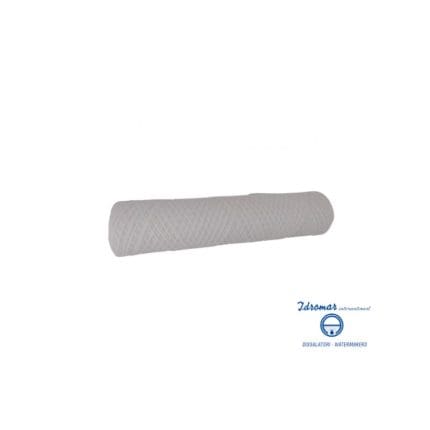 10" Wound Wire Cartridge 20 micron – code: 10MP20 – Idromar
 Brush with spring - code: SGM45 - Gianneschi Pumps and Blowers
 Stainless steel clamps Norma 12–22 mm – code: FAI0012022 – Toscogomma



Choosing the right blower before ordering
Before confirming the purchase, it is advisable to do one last practical check. There is no need to complicate the choice, but it is important to verify some points that directly affect real compatibility.
- Check the measurements of the compartment and the component.
- Check the attachments and the connection with existing ducts.
- Observe the flow direction and the logic of the air path.
- Evaluate the installation in relation to supports, accessibility, and maintenance.
- Compare the usage context with what is indicated in the product sheet.
If you are looking for a reliable solution for onboard ventilation, explore the dedicated category or the reference brand Technofluid: comparing the available options in a specialized context helps to choose the blower best suited to your system with more confidence.
FAQ
How to properly evaluate the blower price without stopping at just the cost?
The comparison must be made considering compatibility with the compartment, fittings, air path, and ease of installation. An apparently convenient blower may require adaptations that make the choice less advantageous. Always check the product sheet for dimensions, connections, and intended use.
What does blower price compatibility mean in an onboard system?
It means evaluating the relationship between the chosen component and its actual integration into the existing system. It's not just about the price, but also the consistency with pipes, dimensions, fastenings, and accessibility for maintenance.
Are ventilation and blower always the same thing?
No. The blower is a component of the system, while ventilation includes the entire air circuit: intakes, ducts, path, and outlet. If the system is poorly designed, even a correct blower might not solve the problem.
Can I replace a blower by choosing one that looks similar?
It is not recommended. Two blowers may look the same but have important differences in connections, dimensions, flow orientation, or mounting. Before ordering, compare photos, measurements, and data in the product sheet.
What checks to perform before ordering a blower for onboard ventilation?
It is advisable to check available space, duct diameter, attachment positions, accessibility for installation, and consistency of the air path. If any of these aspects are unclear, collect photos and measurements of the existing system and compare them with the product sheet.


