


What plugs and sockets are used for in entry-level, professional, and heavy-duty contexts
The plugs and sockets they are essential components for creating practical, quick, and safe electrical connections in many work environments. It is not just about “plugging and unplugging” a cable: the correct choice affects operational continuity, ease of maintenance, and daily equipment management.
In a plugs and sockets guide oriented towards purchase, it is useful to start with a concrete distinction between three main usage families: entry level, professional solution and heavy duty. This classification does not depend on a single detail, but on the context in which the connection is used, the frequency of insertion and removal, the type of environment, and the required level of robustness.
Entry-level solutions are often suitable for simple uses, with non-intensive use and mild environmental conditions. Professional versions better meet needs for continuity, practicality, and resistance in daily use. Heavy-duty configurations, on the other hand, are designed for more demanding environments, where impacts, dust, humidity, or mechanical stresses require greater construction reliability.
Per orientarti tra le diverse opzioni può essere utile consultare anche una panoramica sulle soluzioni per la distribuzione elettrica e approfondire i componenti collegati alla gestione degli impianti tramite accessori tecnici per installazione e collegamento.
When an entry-level solution is sufficient
A basic solution can be adequate when the application is simple and the connection is not subjected to particular stresses. In these cases, the most important factors are:
- ease of use;
- compatibility with the existing system;
- quick replacement;
- orderly management of connections.
It is a sensible choice in dry environments, little exposed to impacts or frequent movements. However, if the connection point is used often or is located in more dynamic operational areas, it is advisable to consider a higher tier.
Where the advantages of professional versions emerge
Professional solutions are recommended when the connection becomes part of daily work. In workshops, laboratories, technical areas, mobile stations, or light production contexts, the difference is seen in ease of assembly, overall system durability, and the ability to withstand repeated use.
In this tier, the choice should not be based only on external appearance. It is important to evaluate the perceived quality of materials, the solidity of the coupling, ease of intervention, and consistency with the rest of the system. For those involved in assistance and replacements, this is also the typical field of maintenance plugs and sockets, where the goal is to reduce downtime and make every check more immediate.
When to opt for heavy-duty solutions
Heavy-duty versions become relevant when the environment is harsher or when the connection is exposed to conditions that challenge the components. Think of industrial departments, construction sites, outdoor areas, systems subject to dirt, or stations where wiring is frequently moved.
In these cases, it is useful to favor products designed to offer a greater sense of robustness and better service continuity. If you have doubts about the characteristics suitable for your use, check the product sheet and always compare the real usage context with the intended destination of the component.
Compatibility, measurements, and technical checks to choose plugs and sockets without errors
One of the most delicate aspects in choosing plugs and sockets is compatibility. Even when two components seem similar, it does not mean they are suitable to work together correctly. For this reason, before ordering, it is useful to perform a methodical check.
The first question to ask is simple: which system or device must the component interface with? From this stem all other checks, which may concern configuration, format, mounting method, and usage conditions.
Checks to perform before purchase
For a more precise selection, always check these points:
- type of application: fixed, mobile, temporary, or intensive use;
- physical compatibility: shape, size, coupling, and available space;
- installation method: wall-mounted, handheld, panel-mounted, or on extension cord;
- usage environment: indoor, outdoor, protected area, or exposed zone;
- frequency of use: occasional, regular, continuous;
- maintenance needs: ease of access, disassembly, and replacement.
Se stai confrontando più soluzioni, può essere utile affiancare la lettura delle schede a una consultazione delle guide tecniche per componenti elettrici, così da individuare più rapidamente la categoria coerente con il tuo impianto.
Measurements, sizes, and details often overlooked
In many purchase requests, the problem does not arise from the operating principle, but from practical details such as available space, connection orientation, cable routing, or position of attachment points. A component correct on paper can prove inconvenient or unsuitable once installed.
To avoid this scenario, always check:
- mounting point dimensions;
- overall size of the plug or socket body;
- cable exit direction;
- ease of insertion and removal in real space;
- presence of nearby elements that may obstruct the connection.
If the project involves quick replacements or frequent interventions, these aspects become even more important. A good plugs and sockets guide does not only limit itself to theoretical compatibility: it also considers the ergonomics of daily use.
How to correctly read the product sheet
The product sheet is the most reliable reference to confirm the choice. When a detail is not immediate, it is not advisable to proceed by visual similarity. It is better to stop and check the product sheet all available information on assembly, intended use, and compatibility.
Se devi acquistare anche componenti complementari, può essere utile esplorare ricambi e accessori per connessioni elettriche in modo coordinato, evitando ordini separati o abbinamenti improvvisati.
Typical errors in ordering or installing plugs and sockets
Many problems arise from recurring mistakes that could be avoided with a preliminary check of a few minutes. In a store-driven logic, recognizing these mistakes helps not only to choose better but also to reduce returns, replacements, and lost time on site or in the workshop.
Confusing occasional use with intensive use
One of the most frequent mistakes is choosing an entry-level solution for a context that actually requires a professional or heavy-duty range. At first, it may seem like a practical choice, but over time actual use highlights limits in robustness, comfort, or perceived durability.
If the connection is opened and closed often, if the cable is subject to tension, or if the environment is operational, it is advisable to consider from the start a solution more suited to the work pace.
Ordering without checking the type of installation
Another typical mistake concerns the mounting method. Flying socket, wall socket, panel solution, or extension configuration are not interchangeable by simple similarity. Before confirming the order, always check where and how the component will be installed.
This point is also central in the maintenance plugs and sockets: when replacing an existing element, you must check not only the component to be removed but also the context in which it is integrated.
Neglecting the real working environment
During the purchase phase, there is sometimes a tendency to consider only the electrical function, neglecting the environment. Dust, humidity, accidental impacts, cable handling, and the presence of external agents can influence the choice of the correct category.
For this reason, it is useful to ask some practical questions:
- will the component be used indoors or outdoors?
- will it be exposed to dirt or splashes?
- will the cable be moved often?
- will the operator need to connect and disconnect quickly?
- Is the area subject to impacts or frequent traffic?
These questions help to understand if a standard solution is sufficient or if it is better to opt for a more robust range.
Do not plan for replacement and maintenance
A well-made purchase does not only consider the initial installation but also the management over time. If the component is part of a system that requires operational continuity, it is advisable to evaluate from the start the availability of spare parts, accessories, and useful parts for possible replacements.
In quest’ottica, consultare anche una sezione dedicata a componenti per manutenzione e ricambio può semplificare il lavoro e rendere più efficiente l’intervento futuro.
Products, spare parts, and accessories useful for a more complete choice
When talking about plugs and sockets, choosing the main component is only part of the job. To achieve a truly functional system, it is also worth considering the accessory elements that improve installation, organization, and maintenance.
This approach is particularly useful in professional contexts, where coordinated selection reduces unforeseen issues and makes assembly smoother. Even without going into unconfirmed technical details, it is clear that accessories and spare parts can make a difference in everyday usability.
Which accessories to consider together with the main component
Depending on the application, it may be useful to check the availability of:
- fastening elements;
- components for connection protection;
- parts useful for quick replacement;
- accessories for tidier cable management;
- complementary solutions for coordinated installations.
The ideal composition always depends on the context. If you are not sure about the correct combination, check the product sheet and compare the options available within the same product family.
Spare parts and operational continuity
In contexts where stopping a workstation is inconvenient or costly in organizational terms, the availability of spare parts is an aspect not to be underestimated. A good maintenance plugs and sockets strategy indeed involves components that are easily identifiable, replaceable, and consistent with the existing installation.
This is especially true for technical departments, workshops, and plants where the speed of intervention is as important as the initial choice. Planning ahead means reducing errors, speeding up checks, and simplifying reordering.
Recommended products
Go to the Plugs and Sockets category
 ON-OFF toggle switch 2 terminals 15 A (one trip) - Code: 14.925.01 - Osculati
 Marine stainless steel female plug 16 A – code: 14.305.00 – Osculati
 Socket AC 220 V type Schuko satin-finished - Code: 14.492.04 - Osculati

 Toggle switch ON-OFF-ON 3 terminals 15 A (two steps) - Code: 14.925.02 - Osculati
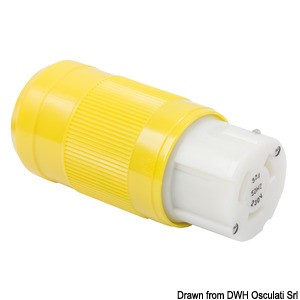 Single-phase bipolar marine plug 3 wires 32 A – code: 14.587.03 – Osculati
How to choose between entry level, professional, and heavy duty based on the use case
For buyers, the comparison between ranges should not be theoretical but operational. The correct question is not “which is the best overall?”, but rather “which is the most suitable for my context?”.
An entry-level solution may be suitable for simple and infrequent uses. A professional solution is more appropriate when the connection is part of daily work. A heavy-duty solution is preferable when the environment or intensity of use requires greater robustness and perceived reliability.
To simplify the choice, consider this practical scheme:
- entry level: for linear, non-intensive uses and in light-duty environments;
- professional solution: for regular use, routine maintenance, and workstations;
- heavy duty: for demanding environments, frequent handling, and severe working conditions.
If you are unsure between two categories, it is best to start from the actual stress level to which the connection will be subjected. In most cases, this is the criterion that really helps avoid selection errors.
Support for choosing plugs and sockets for your system
If you are considering which plugs and sockets to install in your system or in your spare parts warehouse, explore the dedicated category and compare the available solutions based on your usage context. For simple, professional, or heavy-duty applications, the most effective way to choose is to start from the actual destination of the component and check every detail in the product sheet. If you prefer a consistent assortment, also consult the brand lines available on Technofluid and identify the range best suited to your operational needs.
FAQ
How to choose between entry-level, professional, and heavy-duty plugs and sockets?
The choice mainly depends on the context of use. For simple and infrequent applications, an entry-level solution may be sufficient. For regular use or daily operational activities, a professional range is more suitable. In more demanding environments, with frequent handling or challenging conditions, it is advisable to opt for heavy-duty solutions. When in doubt, always check the product sheet.
What checks to make before ordering plugs and sockets?
Before ordering, it is useful to check the type of installation, compatibility with the existing system, dimensions, usage environment, and maintenance requirements. Even if two components seem similar, it does not mean they are suitable for the same use. The product sheet remains the main reference.
Do plugs and sockets require special attention for maintenance?
Yes. In maintenance contexts, it is important to choose components that are easy to identify, replace, and integrate into the existing system. It is also advisable to consider the availability of spare parts and useful accessories, so as to speed up any intervention and reduce downtime.
Can I choose plugs and sockets only based on shape or size?
No. Visual similarity is not enough. In addition to shape and dimensions, you must consider mounting methods, intended use, working environment, and overall compatibility with the system in which the component will be installed. If a detail is unclear, check the product sheet.


