


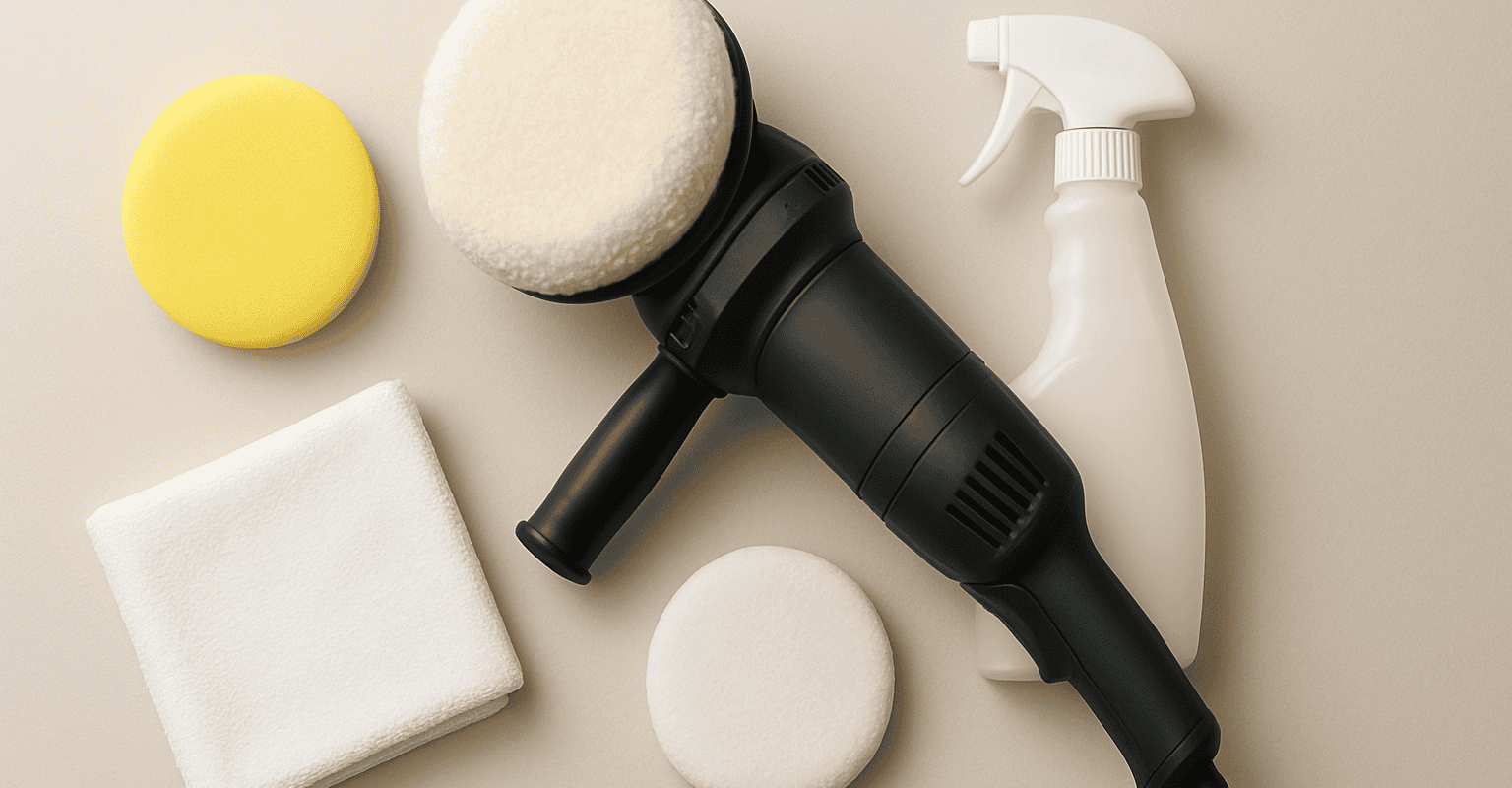
What polishing and cleaning are for
In a professional context, polishing and cleaning it does not only mean improving the surface appearance of a component or a work area. It mainly means preserving efficiency, operational continuity, and the quality of the final result. Before adding an item to the cart, it is therefore advisable to understand precisely what function it will have to perform: removing residues, finishing surfaces, preparing a support, keeping internal passages clean, or facilitating routine maintenance.
A good polishing and cleaning guide it starts right here: from actual use. In many cases, the mistake does not come from the choice of the product itself, but from buying a solution designed for a different application. A metal surface, a fitting, a machine body, or a passage line require different approaches depending on the material, the type of dirt, and the frequency of use.
To better guide you, it can be useful to distinguish between some recurring needs:
- ordinary cleaning, to remove dust, light residues, or traces of processing;
- technical cleaning, when it is necessary to intervene on more stubborn deposits or in hard-to-reach areas;
- surface polishing, useful to improve finish, smoothness, or component presentation;
- preventive maintenance, to reduce build-ups that over time can compromise proper functioning.
If you are considering items related to lines, fittings, terminals, or service accessories, the first check to make is always the compatibility with the existing system. In questa fase può aiutarti consultare anche risorse correlate come guide tecniche per la scelta dei componenti, accessori per impianti e collegamenti oppure soluzioni per manutenzione e servizio.
Another often underestimated aspect concerns the environment of use. Working in a workshop, laboratory, production line, or assembly area involves different needs in terms of practicality, space, and continuity of use. For this reason, before ordering, it is important to verify not only “what an item does” but also how it integrates into your process.
Compatibility, measurements, and technical checks
When talking about polishing and cleaning maintenance, the technical verification phase is the one that most easily avoids returns, downtime, and unsuitable purchases. The title of this guide refers to four key elements to check before ordering: sizes, threads, capacities or voltages. Not all are always equally relevant, but neglecting even one can make the component unusable or ineffective.
Measurements: the simplest check, but also the most neglected
Measurements must be carefully checked at every coupling point. It is not enough to know that an accessory “seems compatible”: diameters, dimensions, useful lengths, maneuvering spaces, and connection sizes must be checked. In particular, it is advisable to verify:
- internal and external diameter of the connection point;
- available space around the assembly area;
- useful length of the component or accessory;
- any interference with other already installed elements.
If the data is not immediately clear, check the product sheet and compare it with an actual measurement taken on the component already in use. Seemingly minor differences are often the ones that block assembly.
Threads: shape, pitch, and direction matter more than they seem
When a polishing and cleaning item connects to an existing system, the thread is one of the most critical points. It is not enough that the diameter seems correct: you need to check thread type, coupling compatibility, and connection configuration. A common mistake is ordering a component with a similar but not identical thread, resulting in forced or impossible assembly.
Before confirming the order, check:
- if the required thread is male or female;
- if the intended connection matches that of your system;
- if adapters or reducers are already installed;
- if the assembly requires gaskets, seals, or dedicated accessories.
In caso di dubbio, è utile confrontare la configurazione con raccordi e connessioni compatibili o con altre sezioni del catalogo dedicate ai collegamenti tecnici.
Flow rates: to be evaluated based on actual use
The flow rate should not be read as an isolated data point, but as an element that affects the behavior of the entire system. If the chosen item must support a flow of air, liquid, or other operating medium, it is necessary to verify that it is consistent with the intended use. An inadequate flow rate can result in irregular performance, ineffective cleaning, or premature wear.
To make a sensible choice, ask yourself:
- will the use be continuous or occasional;
- will the component work alone or within a larger line;
- are there restrictions, bends, or accessories that can influence the passage;
- does the application require uniformity, precision, or simple operational support.
If you are not sure of the correct value, check the product sheet and compare the data with the actual configuration of the system or equipment.
Voltages: essential check for powered components
In the case of accessories or devices that require electrical power, voltage control is indispensable. An item compatible in function but not in power supply can cause operational downtime or require unwanted adaptations. Before ordering, always check:
- type of power supply available at the installation point;
- compatibility with the existing system;
- presence of specific connections, plugs, or interfaces;
- need for additional accessories for proper use.
Even in this case, if the detail is not fully specified, the best rule is simple: check the product sheet.
Typical errors in ordering or installation
A truly useful guide on polishing and cleaning must also highlight the most common errors. Many problems do not depend on the quality of the purchased item, but on an initial evaluation that was too quick. Identifying recurring mistakes helps reduce downtime, replacements, and modification requests after delivery.
Confusing general cleaning with technical cleaning
One of the most common mistakes is treating all cleaning needs as if they were equivalent. In reality, removing surface dust is very different from having to eliminate processing residues, persistent traces, or accumulations in internal points. Choosing without distinguishing the type of intervention often leads to unsatisfactory results.
Before ordering, clearly define:
- what type of residue you need to remove;
- what material you are working on;
- whether the goal is to clean, finish, or maintain;
- how frequently you will use the component or accessory.
Relying only on images
Images help to understand shape and intended use, but do not replace technical verification. Ordering “by sight” is one of the main causes of incompatibility. Threads, fittings, useful measurements, and power requirements must always be checked in the descriptive details.
To avoid this mistake, always match reading the datasheet with a direct check on the existing component. If you are replacing an already installed accessory, also compare the mounting configuration and not just the external appearance.
Not considering the installation environment
An item correct on paper can prove inconvenient or impractical if the space around the point of use is not considered. Dimensions, orientation of connections, accessibility for maintenance, and presence of other components greatly affect the final choice.
This is especially true when the polishing and cleaning maintenance must be performed continuously: a solution that is difficult to reach or dismantle tends to slow down work and reduce the regularity of interventions.
Forgetting complementary spare parts and accessories
Another typical mistake is ordering only the main element without checking if complementary accessories are needed for mounting, use, or periodic replacement. Gaskets, adapters, fittings, connecting elements, or supports can make the difference between immediate installation and downtime waiting for the missing part.
Per questo è utile consultare anche sezioni correlate come ricambi e componenti di supporto o accessori per completare l’installazione, così da valutare l’insieme e non solo il singolo articolo.
Useful products, spare parts, and accessories
When the goal is to purchase quickly but correctly, it is better to think in terms of complete system. In practice, the choice in polishing and cleaning works better if approached in three levels: main component, connecting elements, parts subject to replacement or wear.
The first level concerns what is needed to perform the desired operation. The second includes everything that allows the component to truly integrate into your system or workstation. The third level, often ignored, concerns operational continuity: having a clear understanding of which parts require inspection, cleaning, or replacement over time simplifies management and reduces downtime.
In good polishing and cleaning guide, this overview is essential. It is not just about buying an item, but understanding if the chosen solution will be easy to assemble, use, and maintain.
A practical method can be this:
- identify the main function: clean, finish, maintain, connect;
- check compatibility: dimensions, threads, capacities or voltages;
- check necessary accessories: adapters, fittings, fastening elements;
- consider maintenance: parts to be periodically checked, useful spare parts, accessibility.
Se lavori su impianti o attrezzature che richiedono continuità, può essere utile esplorare anche componenti per manutenzione programmata e sezioni affini del catalogo, così da pianificare fin da subito una gestione più ordinata delle sostituzioni.
Another advantage of this approach is the reduction of fragmented purchases. Ordering completely means avoiding the typical situation where the component arrives, but installation is halted due to a secondary detail not considered initially.
Finally, remember that not all useful accessories are immediately obvious. Some become important only depending on the context: mounting orientation, frequency of use, presence of vibrations, need for quick disassembly or recurring cleaning. Even for these aspects, the correct reference is always the available documentation: if a detail is unclear, check the product sheet.
Recommended products
the brand pages with maintenance and finishing lines


 Teak wonder combo pack (2x1lt) tw cleaner + brightner – code: TWCP1X8

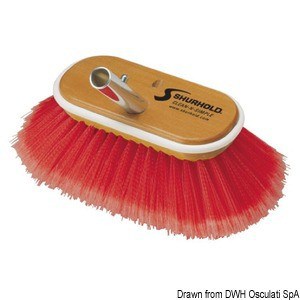 6" brush with soft and medium red fibers – code: 36.965.00 – Shurhold
 Shurhold light alloy handle 109/183 cm telescopic – code: 36.833.00 – Osculati
How to choose faster without making ordering mistakes
If you need to purchase under tight deadlines, the best solution is not to skip checks, but follow a simple checklist. Just a few steps are enough to significantly reduce the risk of error:
- Define the actual usepolishing, cleaning, finishing or maintenance.
- Take measurements directly on the component or at the installation point.
- Check threads and connections without relying solely on visual similarity.
- Verify load capacities or voltages if the operation depends on flow or supply.
- Evaluate accessories and spare parts necessary for assembly and continuous use.
- Check the product sheet to confirm every uncertain detail.
This method is useful both for those buying a component for the first time and for those who need to replace an existing element. In the latter case, do not assume that the existing configuration is standard: over time adapters, reductions, or modifications may have been added that change the actual compatibility.
If you want to navigate between solutions dedicated to polishing and cleaning, compatible accessories and maintenance components, explore the reference category or the brand available in the store: you will find related items, technical datasheets to compare, and useful options to complete the order more safely and consistently with your application.
FAQ
What data should I check before ordering a polishing and cleaning item?
Before ordering, it is always advisable to check measurements, thread type, connection compatibility, any required flow rates, and voltage if the component is powered. If any detail is unclear, check the product sheet.
How do I know if a component is compatible with my system?
The safest way is to compare the existing component with the technical sheet of the new item. Check actual dimensions, mounting configuration, male or female fittings, available space, and the presence of already installed adapters.
Why is it important to distinguish between ordinary cleaning and technical cleaning?
Because different needs require different solutions. Ordinary cleaning is used to remove light residues or surface dirt, while technical cleaning involves more complex deposits, internal points, or applications where operational continuity is essential.
Should I also consider accessories and spare parts when purchasing?
Yes, it is advisable. In many cases, the main component alone is not enough: fittings, adapters, gaskets, or other support elements may be needed. Evaluating accessories and spare parts right away helps avoid delays during installation or maintenance.
If I replace an already mounted article, can I reorder it just by looking at the external shape?
No, it is not advisable. Two components may look similar but have different sizes or threads. To avoid mistakes, always compare the existing part with the data shown on the product sheet and also check for any changes made over time to the system.


