When talking about covers, the most common risk is not choosing the wrong component in an absolute sense, but buying blanket accessories inconsistent with the system, with the available space or with the type of actual use. The result is well known: time lost between checks, returns, improvised adaptations and redoing installations. A more careful choice, on the other hand, simplifies installation and makes daily management much more straightforward.
This blanket accessories guide is born precisely to help you avoid the most frequent mistakes: understanding what the accessories are for, what checks to make before ordering, how to correctly read compatibility and dimensions, and which elements to consider from a blanket accessories maintenance. perspective. If you are evaluating a new configuration or need to replace existing components, starting from these points allows you to purchase with greater confidence.
To better navigate solutions, configurations, and spare parts, it can be useful to also consult the available technical guides, so you can compare your case with similar applications and reduce the margin of error.
What are cover accessories for
The blanket accessories are not simple secondary elements: in many cases they determine the practicality of the entire system. They serve to complete the assembly, improve daily management, facilitate opening or closing operations, make the installation tidier and simplify any subsequent interventions.
A common mistake is to consider them all interchangeable. In reality, each accessory must be read in relation to three factors:
- type of cover and system on which it must be installed;
- usage context, therefore frequency of use, available space and operating methods;
- maintenance needs, replacement or updating over time.
In practice, the right accessories help to:
- make the assembly cleaner and more consistent;
- avoid improvised adaptations on site or during installation;
- reduce the risk of incompatibility between components;
- improve accessibility for future checks and interventions;
- keep spare parts management tidier.
If your goal is not only to complete a purchase but to build a reliable configuration over time, it is advisable to think about the whole system from the start. In this sense, consulting categories related to coverage systems can help you understand which elements are normally paired and which, instead, require a more careful check in the product sheet.
Compatibility, measurements and technical checks before ordering
The most important phase comes first of adding an item to the cart. Many problems arise from a too quick reading of compatibility or from checks done “from memory,” without comparing the existing component with the available documentation.
To avoid useless purchases, it is advisable to methodically check some essential aspects.
Check the type of blanket and the reference system
The first point is simple but decisive: the accessory must be designed for the correct system. Even when two components seem similar, it is not certain that they are designed for the same structure or the same fastening method. If you have a doubt, check the product sheet compatibility with your configuration.
When possible, keep at hand:
- photos of the component already installed;
- measurements taken on site;
- any documentation of the existing system;
- description of the problem to be solved or the required function.
This information reduces errors and also helps when consulting technical support or other store resources, such as pages dedicated to spare parts and related accessories.
Measurements and dimensions: an approximate estimate is not enough
One of the most costly mistakes is relying on “indicative” measurements. A few millimeters of difference, a misaligned fastening point, or an underestimated side space can make installation longer than expected or even impossible.
Before ordering, always check:
- useful width and depth of the installation area;
- attachment points and their actual position;
- maneuvering space for installation, adjustment, and use;
- presence of obstacles such as edges, nearby structures, or already present components;
- orientation of the system, if relevant for installation.
A good method is to take measurements twice, perhaps at different times, and compare them with what is stated in the product sheet. If a detail is not clearly expressed, it is better to stop and investigate rather than proceed by assumption.
Check the actual installation, not just theoretical compatibility
An accessory may be compatible on paper but not very suitable in practice. This happens when the existing system has been modified over time, when there are unforeseen tolerances, or when the work area is less accessible than it seems.
For this reason, a true blanket accessories guide must also consider the operational context. Ask yourself:
- does the assembly require sufficient front or side space?
- is the accessory easily reachable for future adjustments?
- can the installation be performed without dismantling other parts?
- does the final configuration remain neat and easily manageable?
These questions help distinguish between a simply compatible solution and a truly functional one.
Typical errors in ordering or installation
Many wrong purchases are not due to the quality of the component, but to a rushed decision-making process. Here are the most common mistakes to avoid when choosing or assembling accessories for the blanket.
Buying based on the appearance of the part
Two accessories may look almost identical but have important differences in attachments, dimensions, orientation, or intended use. Relying solely on the photo is one of the quickest ways to order the wrong component. The rule is simple: the image helps, the product sheet confirms.
Ignoring components already present
Often an accessory is ordered without checking how it integrates with what is already installed. In these cases, the problem is not the single item, but the relationship between the new component and the existing system. Before purchasing, always observe the whole: supports, fastenings, passages, spaces, and accessibility.
Underestimating the assembly sequence
Another common mistake concerns the order of operations. Some accessories must be installed before other elements; if the correct sequence is realized too late, you risk having to dismantle everything and start over. To avoid this, it is useful to plan the assembly in advance, checking if predispositions or preliminary steps are necessary.
Neglecting future use and maintenance
An apparently correct assembly can become inconvenient over time if it does not allow access for checks, cleaning, or replacements. The issue of blanket accessories maintenance is precisely this: choosing and installing with consideration not only for today but also for future operations.
A well-thought-out configuration should allow:
- inspecting the main points without complex interventions;
- removing or replacing worn parts easily;
- keeping connections and fastenings organized;
- limiting downtime in case of intervention.
If you want to reduce repeated errors over time, it can be useful to also consult content dedicated to the maintenance of connected systems, especially when you are replacing components on systems already in use.
Do not check if a spare part or complementary accessory is needed
It often happens to buy a single item and discover during assembly that a complementary component is missing. This lengthens the time and generates a double order process. Before confirming the purchase, check if your case also requires completion, fastening, or adaptation parts. When the information is not immediate, check the product sheet.
Useful products, spare parts, and accessories: how to navigate without mistakes
When choosing products, spare parts, and accessory components, the point is not to buy more, but to buy more coherently. For this reason, it is advisable to distinguish between three different needs: completing a new installation, replacing an existing part, or improving the management of the already installed system.
When you are completing a new installation
If you are starting from scratch, the advantage is that you can plan everything in an orderly manner. At this stage, it is useful to build a reasoned list of the necessary components, taking into account compatibility, space requirements, and future access. A correct approach avoids fragmented purchases and reduces the risk of forgetting important elements.
For those evaluating the entire system, it can be useful to explore connected solutions for installation and completion, to check if there are recurring pairings already provided by the store.
When you need to replace a worn or no longer efficient component
In this case, the most important check is the comparison with the piece already present. It is not enough to know “what it is for”: you need to understand how it is made, how it connects, and what constraints the existing system imposes. Clear photos, real measurements, and verification of the current configuration are the most useful tools to avoid mistakes.
If the component to be replaced cannot be identified with certainty, it is better not to proceed by similarity. It is preferable to gather as much information as possible and compare it with the product sheet indications.
When the goal is to simplify management and accessories covered by maintenance
Not all accessories are chosen because something is missing. In many cases, they serve to make the system more comfortable to use and easier to maintain over time. Here the question to ask is: does this component really improve daily management or does it add complexity?
A useful choice in terms of blanket accessories maintenance is one that:
- facilitates periodic checks and quick interventions;
- reduces the need for unnecessary disassembly;
- keeps the system orderly and readable;
- helps manage spare parts and replacements more continuously.
In other words, the right accessory is not only compatible: it is also practical over time.
How to use an accessory covered guide to decide better
A truly useful guide does not just describe generic categories, but helps you make concrete decisions. If you want to use this blanket accessories guide effectively, try to follow a simple path before purchase:
- Define the real problem: do you need to complete, replace, or improve?
- Detect measurements and constraints: space, connections, orientation, accessibility.
- Compare the existing system: not just the part, but the entire mounting context.
- Check the product sheet: compatibility, installation notes, any required checks.
- Evaluate future maintenance: will the component remain accessible and easy to manage?
This method reduces the most common errors and also makes the relationship between purchase and installation more efficient. In particular, it is useful when working on existing systems, where every detail can affect the final result.
Recommended products
Go to the Covered Accessories category
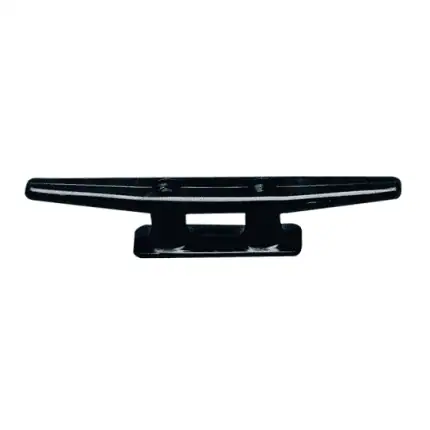 Nylon bollard 80 mm - code: 4646808 - Italian Marine Supplies

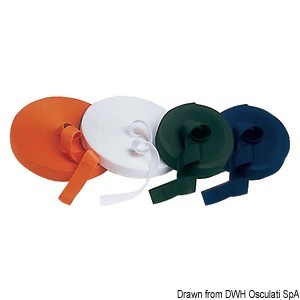 White polypropylene strap 50 mm – code: 06.400.50BI – Osculati
 Polycarbonate macerator nameplate holder - Code: 14.193.94 - Osculati
 Stainless steel rod without base 40 cm – code: 35.195.00 – Osculati
Useful links to choose cover accessories more confidently
If you are comparing multiple options and want to reduce doubts before ordering, it can help to also delve into the selection guides for components and spare parts. Cross-referencing your need with content dedicated to installation, replacement, and maintenance is often the quickest way to avoid inconsistent purchases.
If you want to find the most suitable solution for your system, explore the category dedicated to blanket accessories or the brands available in the store: you will find components designed to complete, replace, or optimize the system with greater continuity between choice, assembly, and management over time.
FAQ
How do I know if a blanket accessory is compatible with my system?
The check must be done by comparing the existing system with what is indicated in the product sheet. Verify the type of blanket, attachments, dimensions, orientation, and available space for installation. If a detail is not clear, it is better to clarify before ordering.
What measurements should be taken before purchasing blanket accessories?
It is useful to detect width, depth, position of fixing points, maneuvering space, and presence of nearby obstacles. Do not rely on approximate estimates: even small differences can complicate installation.
Is it better to replace only the worn component or review the entire configuration?
It depends on the context. If the problem concerns only a clearly identified part, targeted replacement may be sufficient. However, if the system has adaptations, inconvenient access, or incompatibilities accumulated over time, it is advisable to evaluate the configuration as a whole.
Why is maintenance important when choosing blanket accessories?
Because an accessory must not only be compatible at the time of installation, but also practical to check, clean, or replace in the future. A careful choice simplifies subsequent interventions and reduces time loss.
Can I choose a blanket accessory based only on the product photo?
No, the photo can help you orient yourself but it is not enough to confirm compatibility. It is always necessary to check the relevant technical information on the product sheet and compare it with your actual system.