


What plugs and sockets are for in an efficient system
The plugs and sockets they are elements often considered secondary, but in reality they directly affect operational continuity, ease of use, and reliability of connections. In professional, craft, or industrial environments, a worn or unsuitable connection point can cause interruptions, connection difficulties, and less orderly management of utilities.
A good plugs and sockets guide starts from a simple principle: not all connections have the same usage cycle, the same exposure to external agents, or the same need for robustness. For this reason, choosing whether to replace, repair, or plan maintenance is not a decision to be made only when an obvious fault appears.
Plugs and sockets are used to:
- connect equipment and machinery stably;
- manage frequent connections in operational areas;
- organize power points in technical or production spaces;
- reduce improvisations with non-ideal adaptations;
- keep the flow of connections orderly during daily use.
When the connection is frequently plugged and unplugged, or works in environments with dust, humidity, or mechanical stress, wear can appear sooner than expected. In these cases, the assessment should not be limited to the visibly damaged component alone: it is advisable to also observe the context, frequency of use, and the general condition of the connection point.
Se stai pianificando un controllo più ampio dell’impianto, può essere utile approfondire anche componenti elettrici e soluzioni di collegamento per avere una visione coerente dell’insieme.
When it is convenient to replace plugs and sockets instead of repairing them
Understanding whether to intervene with a repair or a complete replacement is the most important step. Generally, replacement is often the most practical choice when the component shows signs of structural wear or when the problem tends to recur over time.
It is advisable to consider replacement if you notice:
- obvious loosening during plug insertion;
- uncertain contacts or unstable connection;
- damaged, cracked, or deformed casing;
- signs of overheating or visual alterations;
- repeated difficulties in plugging or unplugging;
- internal components that no longer guarantee reliable sealing.
In these cases, insisting on minimal repair can turn into a temporary solution that does not address the real cause of the problem. If wear affects the component body, the locking system, or the connection seal, replacement tends to offer greater continuity and fewer subsequent interventions.
However, there are situations where targeted repair can make sense. For example, if the defect concerns a tightening, an internal wiring to be restored, or a replaceable accessory element, the intervention can be convenient, provided the rest of the component is still in good condition. The correct criterion is always this: repairing only makes sense if the component maintains overall integrity and reliability.
For those managing multiple stations or operational lines, periodic checks help avoid unexpected downtime. In this sense, the maintenance plugs and sockets is not just a corrective activity, but an organizational choice that reduces sudden outages.
Maintenance plugs and sockets: how to set up scheduled checks
Scheduled maintenance of connections is especially useful where connections are used continuously. There is no need to wait for a clear malfunction: often signs of deterioration appear gradually and can be intercepted with simple but regular checks.
An effective routine of maintenance plugs and sockets can include:
- visual inspection of the external body;
- checking the stability of the connection;
- verifying the tightening of internal connections, if applicable;
- cleaning exposed parts from dirt and residues;
- observing any signs of abnormal wear.
Scheduled maintenance is particularly useful in contexts where:
- connections are opened and closed many times a day;
- operators work with mobile equipment;
- the environment has dust, humidity, or operational dirt;
- the power supply point is subject to impacts or cable pulls;
- service continuity is important for workflow.
Another advantage of maintenance is the possibility to standardize checks. Instead of intervening only in emergencies, specific times are defined to verify the condition of components and replace those showing obvious deterioration. This approach also helps in managing spare parts and planning technical activities.
Se vuoi confrontare diverse soluzioni per il cablaggio e la distribuzione, può essere utile consultare anche guide tecniche per il collegamento elettrico e accessori per installazione e manutenzione.
Compatibility, measurements and technical checks before ordering
One of the most common mistakes concerns the choice of components that appear similar but are not actually compatible with the intended application. A correct plugs and sockets guide must always start with some preliminary checks, to avoid incorrect orders or interventions that require subsequent adjustments.
Before proceeding, carefully check:
- type of connection required;
- configuration of the existing connection point;
- mounting or installation method;
- available space in the usage area;
- environmental conditions in which the component will operate;
- compatibility with the cable or the existing system.
When a detail is not immediately clear, the correct reference is always the component documentation: check the product sheet. This is especially true for overall dimensions, fastening methods, construction features, and intended use.
It is also useful to distinguish between “identical” replacement and “equivalent” replacement. In the first case, a component very similar to the one already installed is sought, to simplify the intervention. In the second case, an alternative solution is considered that better meets current needs, for example for more intensive use, a different connection point configuration, or easier maintenance.
If your goal is to avoid mistakes before purchase, it is advisable to gather some basic information:
- photo of the existing component;
- installation context;
- frequency of use;
- any issues encountered over time;
- need for quick replacement or configuration update.
These elements help to choose more precisely and to navigate among the different options available in the store.
Typical errors in ordering or installing plugs and sockets
Many problems arise not so much from the quality of the component, but from a rushed choice or an installation that is not consistent with the working environment. The most frequent errors are often repetitive and, precisely for this reason, preventable.
Confusing similar components intended for different uses
A recurring aspect is the tendency to consider interchangeable components that actually have important differences. Even when the external appearance seems comparable, usage methods, structure, or compatibility with the existing system differ. Before ordering, it is always advisable to compare the technical description and, if necessary, check the product sheet.
Neglecting the operational context
A plug or socket suitable for a clean and lightly stressed environment might not be the best choice in an area exposed to impacts, dirt, or frequent handling. The context matters as much as the component itself. For this reason, a proper assessment must take into account not only the connection but also the actual use.
Intervene only when the fault is evident
Waiting for complete malfunction often leads to sudden stops and urgent replacements. Minimal but regular maintenance, on the other hand, allows recognizing initial signs: abnormal play, difficulty in engagement, wear of the casing, less stable contact.
Repair components that are already at the end of their cycle
Repairing is not always synonymous with operational savings. If the component shows multiple signs of deterioration or has already required repeated interventions, continuing to restore it can prolong the problem instead of solving it. In these cases, a well-considered replacement is often the most straightforward choice.
Per approfondire il tema della corretta selezione, puoi consultare anche soluzioni per ricambi e componenti tecnici e strumenti utili per il controllo dell’impianto.
Products, spare parts, and accessories useful for more organized management
When talking about plugs and sockets, the main component is not the only element to consider. Efficient management also involves compatible spare parts, support accessories, and complementary components that make installation, replacement, or maintenance easier.
In a conscious purchasing logic, it can be useful to evaluate:
- spare parts to restore worn connections;
- accessories that improve order and protection of the connection point;
- coordinated components to standardize multiple stations;
- solutions designed to simplify subsequent checks and interventions.
This approach is particularly advantageous for those who manage multiple users or work with systems distributed in different areas. Having a consistent line of components and accessories helps reduce errors, speed up maintenance, and make daily management more intuitive.
Another useful aspect is the availability of spare parts compatible with the configuration already in use. Before choosing, consider whether the goal is to maintain the existing setup or take the opportunity to make the system easier to check and simpler to maintain over time.
Se stai costruendo una dotazione completa per manutenzione e sostituzioni, può essere utile esplorare anche componenti per impianti e ricambi professionali.
Recommended products
Go to the Plugs and Sockets category
 Panel 5 switches + lighter socket - Part No.: 14.703.00 - Osculati
 Waterproof plug plus 2-pole socket – code: 14.187.02 – Osculati
 6-pole toggle switch (ON)OFF(ON) 15 A – code: 14.925.06 – Osculati
 Stainless steel cigarette lighter socket – code: 14.518.00 – Osculati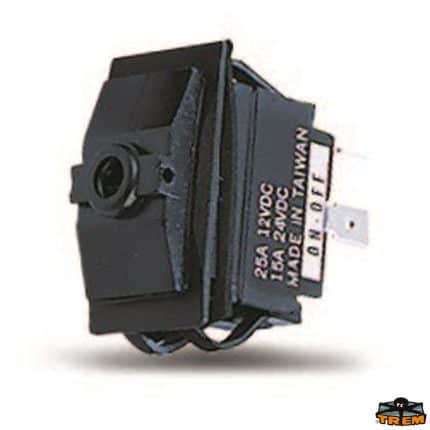
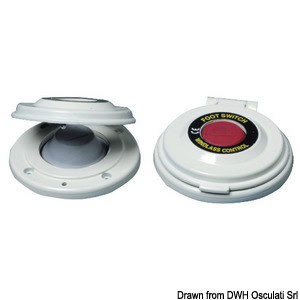 Red-white foot pedal control panel – code: 02.342.03 – Osculati
 Control panel for winch 80×60 mm - Code: 02.341.00 - Osculati
How to navigate the choice between replacement, repair, and maintenance
The best decision always depends on three factors: component condition, frequency of use and application criticality. If the connection is central to daily operations, it is advisable to favor solutions that reduce the risk of downtime. If, instead, the problem is limited and the component is still structurally sound, a repair may be sufficient.
Basically, you can use this scheme:
- Replace when the component is worn, unstable, or obviously damaged.
- Repair when the defect is limited and the rest of the structure is in good condition.
- Schedule maintenance when usage is frequent and you want to prevent failures, errors, and downtime.
This logic also makes purchasing management easier: you don’t buy just out of urgency, but you build a small operational continuity strategy. This is exactly where a good store-driven guide becomes useful: not only to find the component but to choose the right time and the most suitable type of intervention.
If you want to find the most suitable solution among available categories and brands, explore the assortment dedicated to plugs and sockets and compare options based on your usage context. A well-made selection today helps reduce corrective interventions tomorrow and keeps the system more organized, reliable, and easy to manage.
FAQ
When is it better to replace plugs and sockets instead of repairing them?
It is advisable to replace them when there is obvious wear, connection instability, damaged casing, or recurring problems over time. Repair only makes sense if the defect is limited and the component is still intact as a whole.
How to understand if a socket or a plug is compatible with the existing system?
It is useful to check the type of connection, configuration of the existing point, mounting method, available space, and usage conditions. If a detail is not clear, check the product sheet.
Is scheduled maintenance of plugs and sockets really useful?
Yes, especially in contexts where the connections are used frequently or are exposed to dirt, shocks, or moisture. Periodic checks help identify wear and anomalies before they cause downtime or urgent replacements.
What are the most common mistakes in choosing plugs and sockets?
The most common mistakes are buying similar but incompatible components, ignoring the operating context, intervening only after a failure has occurred, and attempting repairs on components that are already at the end of their lifecycle.
What to check before ordering a replacement for plugs and sockets?
Before ordering, it is advisable to collect photos of the existing component, information about the usage environment, frequency of use, and any issues encountered. These elements help to choose the most suitable replacement and avoid mistakes.


