


When boat accessories online for maintenance and checks are really needed
Buy boat accessories online does not only mean looking for a replacement when something stops working. In the nautical field, many components need to be observed before an obvious fault appears, because often the first signs are subtle: a mounting that loses stability, a less precise closure, a connection showing wear, a surface that changes appearance, or an element that no longer works with the same regularity.
For this reason, the nautical technical guides they are especially useful in the preventive phase. They help distinguish between a normal routine intervention and a replacement that should not be postponed. Those who sail continuously know this well: postponing a check on small accessories or secondary components can turn into a bigger problem, affecting comfort, operational safety, and the overall reliability of the boat.
A good approach starts with three simple questions:
- Does the component show visible signs of deterioration?
- Is the fastening or connection still stable?
- Has compatibility with the existing system been verified?
If even one answer is uncertain, it is advisable to investigate before purchasing. In many cases, the problem is not the single accessory, but the incorrect pairing with the onboard configuration. This is where the topic boat accessories online compatibility becomes central: choosing well means avoiding repeated replacements, improvised adaptations, and unreliable assemblies.
Per orientarti tra controlli e componenti correlati, può essere utile consultare anche guide tecniche nautiche dedicate alla manutenzione ordinaria, oltre a pagine di approfondimento su ricambi e accessori per la barca e sezioni con consigli per il controllo dei componenti di bordo.
Signs not to ignore during periodic checks
There are clues that deserve immediate attention, even when the component still seems usable. Among the most common:
- abnormal play in fixed or vibration-exposed elements;
- hardening of parts that should maintain elasticity or smoothness;
- traces of oxidation, discoloration, or deposits in exposed areas;
- microcracks on supports, passages, seals, or connection parts;
- unusual noises during opening, closing, tightening or movement;
- incorrect alignment after a previous replacement intervention.
These signals do not always indicate an imminent failure, but are a clear invitation to check in the product sheet and technical documentation if the installed component is still suitable for the usage context.
Boat accessories online: differences between solutions, sizes and compatibility
One of the most common mistakes in digital purchases is to consider accessories equivalent that actually differ greatly in shape, attachment, intended use or materials. In nautical technical guides, compatibility is not limited to external dimensions: it also concerns the type of mounting, the environment in which the component operates, the presence of other connected elements and the way the load or stress is distributed.
When evaluating an accessory, it is useful to read the technical sheet with a comparative logic. It is not enough that it “looks the same” as the one already installed. It is necessary to verify at least:
- overall dimensions and fixing points;
- type of connection or interface with the existing system;
- material and resistance to the installation environment;
- specific destination of the component;
- any mounting requirements indicated in the product sheet.
The topic boat accessories online compatibility becomes even more important when replacing an element already present on board for a long time. Over the years, in fact, adaptations, modifications or undocumented interventions may have been made. This means that the original component and the one actually installed may no longer coincide.
Mechanical, functional and contextual compatibility
To avoid mistakes, it is advisable to think on three distinct levels.
Mechanical compatibility: concerns measurements, holes, attachments, diameters, thicknesses and available spaces. If this correspondence is missing, the mounting will be complex or unstable.
Functional compatibility: the component must perform the same task as the previous one, without altering the system's behavior. An apparently similar accessory may have a different function or require different usage conditions.
Contextual compatibility: exposure to humidity, vibrations, salt spray, movement, mechanical pressure or contact with other materials. In the nautical environment, this level is often as decisive as the measurement.
Before ordering, always compare the existing component with available photos, dimensions and technical notes. If a detail is not clear, the best rule is simple: check the product sheet.
How to compare two accessories without stopping at the external appearance
An effective comparison follows a practical sequence:
- Observe the mounted component and photograph the installation context.
- Identify the truly critical points: attachment, orientation, passage, support, useful space.
- Check if the component works in conjunction with other elements.
- Read the technical datasheet of the spare part and check for any notes on installation and compatibility.
- Compare not only the shape but also the intended function.
This method reduces typical impulsive purchase errors and helps to choose more consciously among the different options available online.
Errors to avoid when choosing or installing nautical accessories
Many problems arise not from the product itself, but from an incomplete evaluation before purchase or from assembly carried out without preliminary checks. In the nautical sector, even a small accessory can affect the reliability of the system in which it is installed.
Here are the most common mistakes to avoid:
- choosing based solely on the image, without checking measurements and installation methods;
- underestimating the environment of use, especially in areas exposed to humidity and salt spray;
- reusing worn fastenings or supports together with the new component;
- forcing the adaptation of an accessory that is not perfectly compatible;
- ignoring the signs of wear of nearby components, replacing only the most obvious element;
- not verifying the correct working position after assembly.
Another common mistake is to intervene only when the malfunction is already evident. In reality, the most effective maintenance comes from observation. If an accessory changes behavior, requires more force, moves irregularly, or shows new visual signs, it is time to check.
Why improper assembly causes problems even with correct components
It can happen to purchase a correct accessory and still get an unsatisfactory result. The cause is often in the assembly. A wrong alignment, an unprepared surface, uneven tightening, or coupling with already worn parts can compromise the functioning from the first use.
For this reason, in nautical technical guides, assembly must be considered an integral part of the choice. There is no true compatibility if the component cannot work correctly in its actual housing.
Se stai valutando un ricambio o un accessorio per una zona già oggetto di interventi precedenti, può essere utile approfondire anche come verificare la compatibilità dei componenti nautici e consultare raccolte di approfondimenti tecnici per la manutenzione della barca.
Products and categories to consider for more organized maintenance
When talking about boat accessories online, the most common mistake is to look only for the part to replace. A more technical approach, instead, considers the set of categories involved in the same intervention area. If a component shows wear, it is likely that connected elements also deserve a check.
This does not mean replacing everything, but evaluating the context in an orderly manner. The categories to consider depend on the area of the boat involved and the type of function performed: fastening, sealing, passage, support, connection, protection, or movement.
A well-done check should include:
- condition of the support surfaces and contact points;
- condition of seals, supports, and fastenings present in the same area;
- presence of deformations or signs of rubbing;
- consistency between the new accessory and existing components;
- any needs for coordinated replacement of connected parts.
This approach is particularly useful in online purchases, where the overall view helps avoid fragmented orders and repeated interventions. In practice, you are not just looking for an accessory: you are building a more coherent maintenance.
How to use nautical technical guides to choose better
The nautical technical guides they are exactly for this: to turn a generic search into a reasoned choice. A well-structured technical content helps to understand whether the problem is related to wear, compatibility, assembly, or neglected maintenance.
When consulting a guide or a technical sheet, focus on these aspects:
- where the component works and with what stresses;
- which signals indicate a necessary replacement;
- which elements must be checked together;
- which data are needed to confirm compatibility.
In this way, the search for boat accessories online compatibility stops being a superficial comparison between images and becomes a more reliable technical verification.
Recommended products

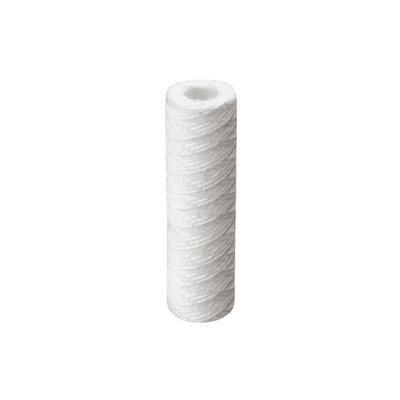
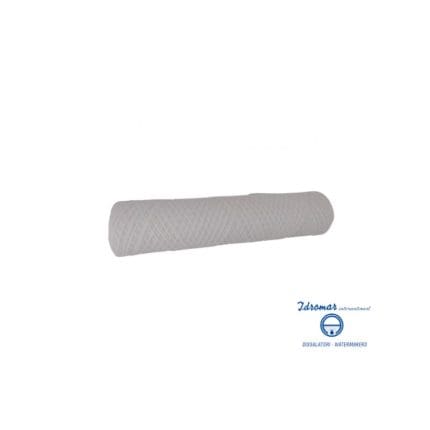 10" Wound Wire Cartridge 20 micron – code: 10MP20 – Idromar
 Stainless steel clamps Norma 12–22 mm – code: FAI0012022 – Toscogomma
 Brush with spring - code: SGM45 - Gianneschi Pumps and Blowers


Practical checks before confirming the online purchase
Before completing the order, it is advisable to do one last control step. It is a simple check, but often decisive to avoid returns, lost time, and ineffective assemblies.
Useful checklist:
- compare the measurements taken on board with those indicated in the product sheet;
- verify the type of installation required;
- check the material in relation to the environment of use;
- observe if the existing component works with other elements that could influence the choice;
- reread any compatibility notes present in the product sheet.
If any of these points remain doubtful, it is better to stop and investigate further. In boating, rushing the choice rarely leads to a truly efficient result.
Choose nautical accessories and spare parts with a more technical check
If you are looking for a reliable selection of components for the maintenance of your boat, explore the dedicated categories and brands available in the Technofluid catalog: comparing datasheets, applications, and compatibility is the most effective way to purchase with greater confidence and find the boat accessories online most suitable for your installation context.
FAQ
How to understand if a nautical accessory needs to be replaced or just checked?
It is advisable to observe signs such as abnormal play, stiffening, microcracks, oxidation, loss of alignment, or irregular operation. If the component is still working but shows these symptoms, it is useful to compare it with the technical datasheet and check if replacement is recommended.
What does online boat accessories compatibility really mean?
Compatibility is not just about external shape. It includes measurements, fittings, mounting methods, component function, and real onboard usage conditions. Before purchasing, it is important to check all available data in the product sheet.
Can I choose a nautical accessory just by comparing the photo with the one installed?
No, because two similar components can differ in connection, size, material, or intended use. The photo can help in the initial comparison, but confirmation must come from measurements, technical notes, and installation instructions.
What is the most common mistake when installing boat accessories?
One of the most common mistakes is installing a correct component on a worn or misaligned base. Reusing compromised fasteners or forcibly adapting parts that are not perfectly compatible can also cause problems from the very first use.
Why are nautical technical guides useful for online purchases?
Because they help to read the product in an applicative key, not just commercial. A technical guide allows you to understand which checks to make, which data to compare, and which elements to verify before ordering, reducing errors in choice and assembly.


