


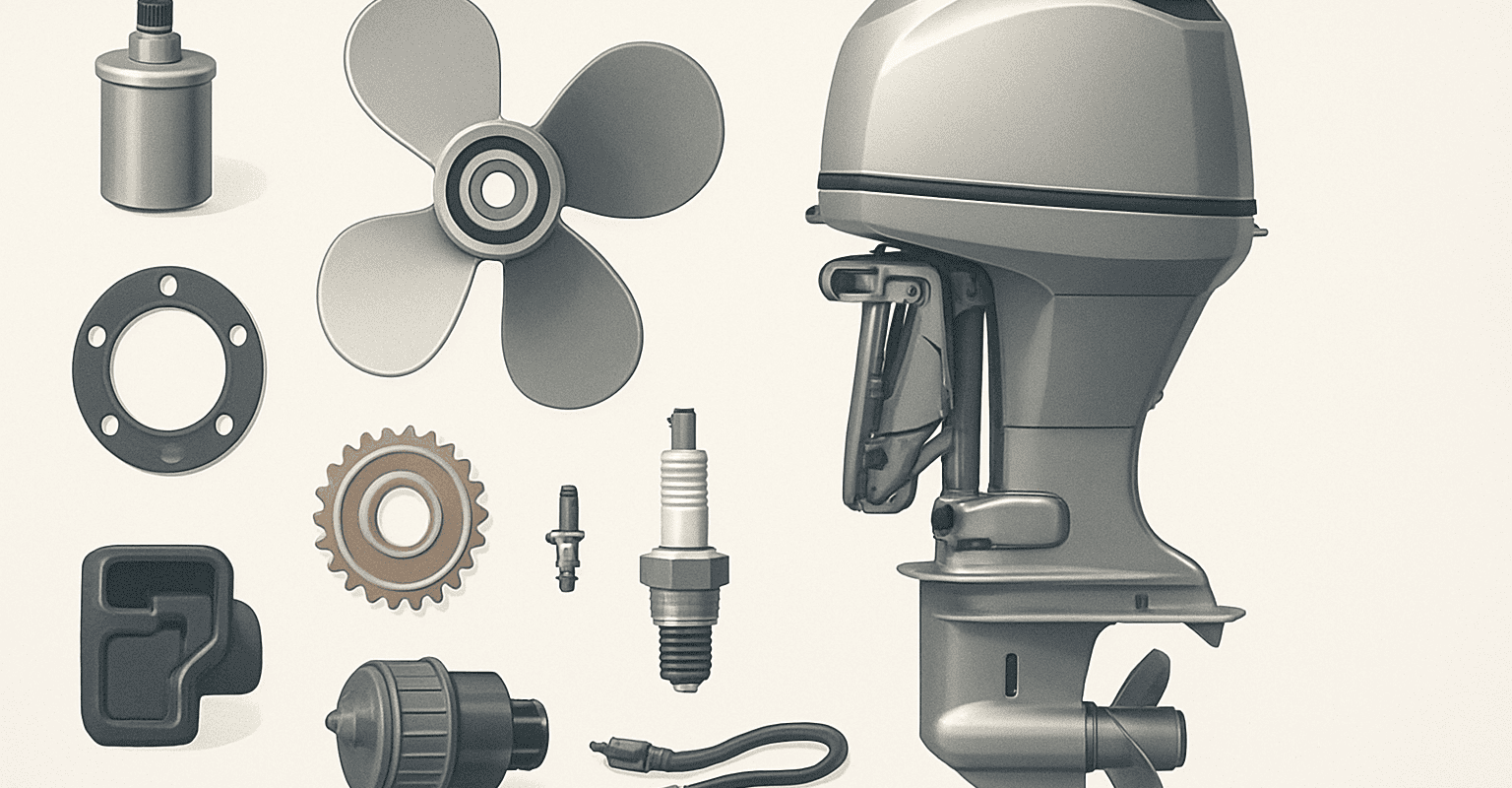
What outboard parts and engines are for
When talking about in the nautical field. In general, zinc anodes are used as a consumable component within maintenance plans, with the aim of supporting the protection of metal parts installed in the marine environment., the goal is not only to replace a worn part, but to keep the system reliable over time, reduce downtime and order the correct component on the first try. In the nautical field, even a seemingly simple detail like a connection, a gasket, a filter, or an electrical element can make the difference between a quick installation and a replacement that needs to be redone.
A good outboard parts and engines guide starts from a practical principle: before ordering you need to check what really matters, that is measurements, threads, loads, connections, and voltages. Many mistakes actually come from descriptions read too quickly or from compatibility taken for granted.
The correct choice of components also helps outboard parts and engines maintenance, because it allows you to schedule ordinary and extraordinary interventions with greater continuity. If the spare part is consistent with the engine and the existing system, improvised adaptations, downtime, and avoidable returns are reduced.
Per orientarti tra categorie e soluzioni disponibili può essere utile consultare anche le guide tecniche del catalogo, insieme alle sezioni dedicate a componenti per impianti nautici e ricambi e accessori per manutenzione.
Outboard parts and engines: compatibility, measurements, and technical checks
Before confirming an order, it is advisable to collect some essential data. There is no need to complicate the process: a few targeted checks are enough to avoid frequent incompatibilities. The most useful rule is simple: do not rely only on the appearance of the part. Two very similar components can have different threads, non-equivalent connections, or incompatible electrical characteristics.
Measurements to check before purchase
The measurements are the first filter. If you are replacing an already installed component, always check:
- internal and external diameter of the connections;
- useful length of the part to be mounted;
- pitch of holes or fixing points;
- overall size, especially in tight spaces;
- type of attachment, straight, curved, or with a specific fitting.
When the measurement is not very clear, the safest choice is to compare the removed part with the available data and, if necessary, check the product sheet. This step is particularly useful for components that work in line with pipes, supports, or wiring already present.
Threads and connections: the point where mistakes are most often made
One of the most common mistakes concerns threads. At first glance they may look the same, but the pitch, diameter, and connection standards differ. Forcing a fitting or installing an incorrect thread can compromise the seal and require replacing other connected parts as well.
Before ordering, check:
- if the thread is male or female;
- if the connection is parallel or tapered;
- if the pitch matches the component to be connected;
- if a gasket or a dedicated seal is required;
- if the fitting requires compatible accessories already on board.
In a real outboard parts and engines guide, this check is essential because many returns are due precisely to threads considered equivalent without real verification.
Flow rates and fluid passages
When the replacement part is involved in the passage of fuel, water, or other technical fluids, it is important to evaluate the flow rate and the diameter of the circuit. A component with a section inconsistent with the system can create restrictions, unstable assemblies, or inefficient connections.
It is not necessary to chase complex data: often it is enough to check that the replacement is designed for the type of circuit on which it must operate and that the fittings are consistent with the rest of the system. If the detail is not clearly specified, check the product sheet.
Voltages, electrical connections, and polarity
For electrical or electromechanical components, the key check concerns the voltage and compatibility with the existing wiring. Even when shape and connector seem correct, an inconsistent electrical value can prevent operation or cause anomalies.
Always check before purchasing:
- voltage required by the component;
- type of connector or terminal;
- number of poles or connection points;
- polarity, if applicable;
- presence of adapters already installed or needed.
Per approfondire i controlli su collegamenti e impianti può essere utile consultare anche la sezione dedicata ai componenti elettrici e gli approfondimenti sulla manutenzione tecnica.
Real compatibility: what to compare with the already mounted part
If you have the original spare part removed, use it as a practical reference. Compare not only the dimensions, but also:
- orientation of the connections;
- position of the fixing points;
- apparent material and intended use;
- presence of seals, spacers or accessories to be reused;
- any markings useful for identification.
If the component is not available because it is damaged or missing, the safest method is to start from the engine model and the related technical data, when available. In case of doubt, it is better to stop for a minute longer before ordering rather than choosing by similarity.
Typical errors in ordering or installing outboard spare parts and engines
Many problems do not arise from the product itself, but from a too quick selection process. In practice, the most frequent mistakes are recurring and almost always avoidable with a minimal checklist.
Ordering “by sight” without checking attachment and size
The first mistake is buying a spare part because it “looks the same”. In reality, in the sector of in the nautical field. In general, zinc anodes are used as a consumable component within maintenance plans, with the aim of supporting the protection of metal parts installed in the marine environment., two visually similar components can differ by a few millimeters or by a different thread. This is enough to make correct assembly impossible.
To avoid this, always check at least one objective datum: size, thread, center distance or type of connection.
Neglecting the installation context
A component can be correct on paper but uncomfortable or unsuitable in the place where it must be installed. This happens when you do not consider the available space, the bending radius of pipes and cables or the position of other nearby elements.
Before ordering, evaluate:
- accessibility of the mounting area;
- need to disassemble adjacent parts;
- correct orientation of the replacement once installed;
- presence of vibrations, moisture, or contact with other surfaces.
Reuse seals or accessories that are no longer suitable
Another common mistake is to replace only the main component and reuse gaskets, clamps, fittings, or small parts that are already compromised. In the outboard parts and engines maintenance, the overall sealing of the system matters as much as the replacement itself.
If the assembly requires sealing or fastening elements, check if they need to be replaced along with the main component. When the information is unclear, check the product sheet.
Forcing the assembly in case of doubt
If a thread resists abnormally, if a fitting does not fit correctly, or if the connector does not align without pressure, stop. Forcing the assembly can damage the new part and the existing seat. In these cases, the doubt should not be ignored: it is often the clearest sign of compatibility that needs to be rechecked.
Do not plan maintenance for outboard spare parts and engines
Purchasing only when the failure is already present often leads to rushed choices. A more effective management involves a scheduled maintenance of wear-prone components, with periodic checks on connections, seals, and parts exposed to the marine environment.
This approach improves operational continuity and makes it easier to identify in advance which spare parts to monitor or prioritize for replacement.
Products, spare parts, and accessories useful for maintenance
In a store-driven logic, choosing the right spare part works better when it is part of a coherent set of connected components and accessories. It does not mean buying more, but buying more completely, avoiding stopping at just the main piece.
For example, during replacement it can be useful to also check the availability of:
- compatible sealing elements and gaskets;
- fittings and connections consistent with the system;
- components for fastening or protecting connections;
- accessories useful for routine maintenance;
- complementary parts subject to wear in the same circuit.
This approach makes the outboard parts and engines guide perché aiuta a ragionare per sistema, non per singolo pezzo isolato. Se stai intervenendo su un circuito specifico, può essere utile esplorare anche le categorie collegate per accessori e ricambi tecnici.
Another practical tip is to always compare the type of use: routine maintenance, replacement due to wear, restoration after prolonged downtime, or overhaul of a part of the system. The context changes, and often the list of components to check before ordering changes as well.
Also, when the catalog offers filters for attachment, size, or application, it is advisable to use them carefully. Selecting a few correct parameters at the start reduces the risk of comparing irrelevant items and speeds up finding the truly compatible spare part.
Recommended products
Go to the Outboard Spare Parts and Engines category

 Oil filter (ref. Yanmar 129150-35150) – code: N0114089 – Trem

 Gasoline cartridge 75–90–115 Mercury – code: N0175014 – Trem
 Tohatsu oil filter 3R-07615-0 (ref. Mercury 35-822626Q1/Q03, Honda 15400-PFB-014/004) – code: N0114615 – Trem

How to order more safely from the online catalog
A well-made order starts with a small data collection. Before adding an item to the cart, prepare this information:
- model or engine reference, if available;
- photo of the disassembled component from multiple angles;
- main measurements taken accurately;
- type of thread or attachment, if identifiable;
- any details on wiring, voltage, or connections.
With these elements, it is easier to correctly read a technical sheet and distinguish between real compatibility and simple visual similarity. In product sheets, focus especially on description, images, attachments, and application notes. If a detail is not explicitly stated, check the product sheet or compare it with the component already installed.
For those who manage the outboard parts and engines maintenance continuously, it is also useful to create a small internal list of spare parts already replaced, with notes on measurements and connections. This simplifies future orders and reduces the margin of error in repurchases.
Choose the most suitable category for outboard spare parts and engines
If you are looking for a solution for your intervention, the most effective way is to start from the category or brand linked to the type of system you need to work on. Browsing through consistent sections of the catalog helps you compare attachments, sizes, and applications more quickly, with a selection closer to your real needs. Explore the categories dedicated to in the nautical field. In general, zinc anodes are used as a consumable component within maintenance plans, with the aim of supporting the protection of metal parts installed in the marine environment. and the available brands to find the compatible component with greater confidence before ordering.
FAQ
Which data should I check before ordering outboard spare parts and engines?
Before ordering, it is advisable to check measurements, type of connection, threading, possible voltage, and compatibility with the already installed component. If a detail is not clear, check the product sheet.
How do I know if a filet is compatible?
Visual comparison is not enough. You need to check diameter, pitch, male or female configuration, and the presence of any dedicated seals. If you have the part disassembled, compare it directly with the available technical data.
Why can two similar spare parts not be suitable for the same engine?
Because components that look very similar can differ in a few decisive details, such as pitch, orientation of the attachments, electrical connections, or threads. It is always better to check the technical data before purchasing.
In the maintenance of outboard spare parts and engines, do I also need to replace mounting accessories?
Often yes. Gaskets, seals, clamps, fittings, or small parts can affect the final result as much as the main replacement part. If applicable, it is useful to also check these elements before completing the order.
What to do if I am not sure about the compatibility of the spare part?
The safest method is to compare the already assembled part with the measurements, mounts, and features listed in the technical sheet. If the necessary detail is not available, check the product sheet before proceeding.


