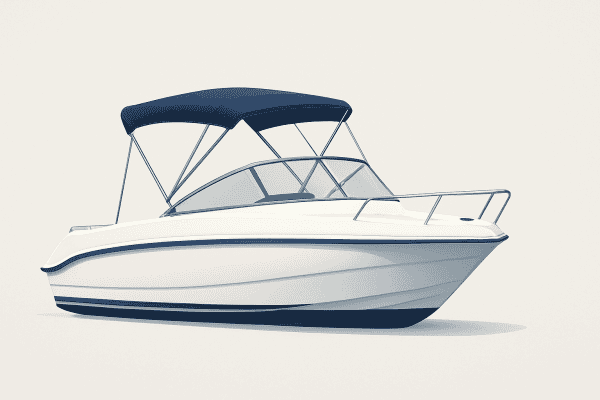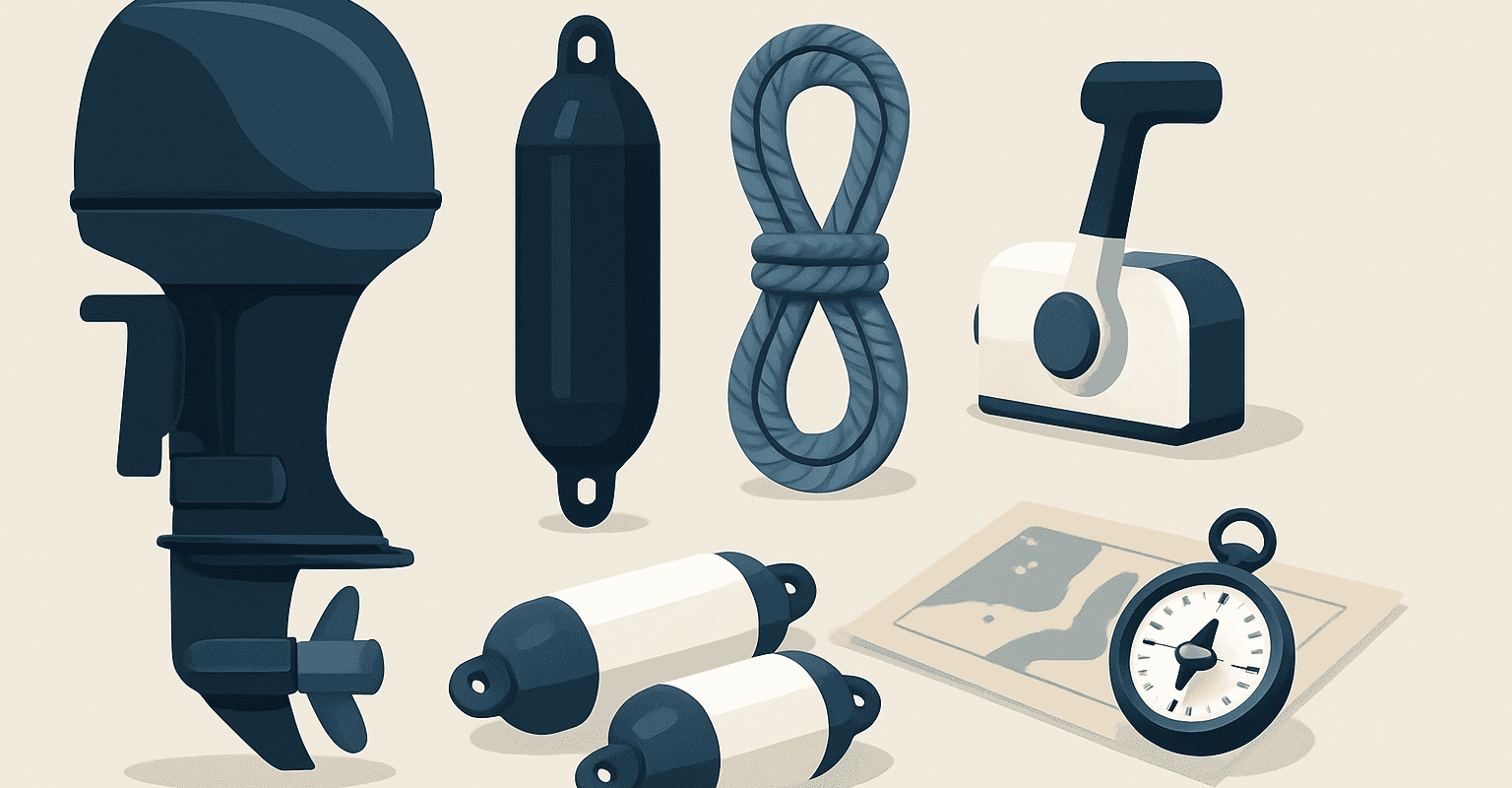
When motorboat accessories are really needed
Talking about motorboat accessories seriously means going beyond the idea of a simple complement. In many cases, an accessory not only improves practicality on board: it helps to make boat management more orderly, helps prevent premature wear, and allows early detection of small signs that, if neglected, can turn into more complex problems.
The correct question is not just “which accessory to choose,” but when is the right time to intervene. There are recurring situations where it is advisable to check components, connections, and compatibility before obvious anomalies appear:
- after long periods of inactivity;
- at the beginning of the boating season;
- after maintenance work on the engine or onboard system;
- when vibrations, noise, or unusual behaviors are noticed;
- when replacing an element connected to other existing components.
In a logic of nautical technical guides, the key point is this: many accessories work in synergy with the engine, fuel system, cooling, fastenings, and connection lines. For this reason, choosing a component without verifying the usage context often leads to ineffective installations or premature wear.
Regular visual inspection helps to understand if an accessory is still performing its function well. Signs such as material stiffening, abnormal discoloration, small deformations, leaks, or difficulty in assembly are clues not to be ignored. Even when the component still seems usable, loss of reliability can begin before obvious failure.
To deepen periodic checks and maintenance organization, it may be useful to consult To better guide you among components and complementary accessories, it can be useful to also consult and compare the different application areas based on the type of installation present on board.
Motorboat accessories compatibility: differences between solutions, sizes, and connections
One of the most common mistakes is to consider accessories as universal elements. In reality, the issue of motorboat accessories compatibility is central in any technical evaluation. Two apparently similar components can differ in fittings, materials, dimensions, fastening system, or intended use, and these differences directly affect the final result.
When comparing multiple solutions, it is advisable to consider some practical aspects.
Mechanical compatibility and dimensions
The first check concerns the available space and how the component integrates with the rest of the system. An accessory may be theoretically correct but practically unsuitable if it requires too tight bends, interferes with other elements, or makes access for maintenance difficult.
Before choosing, always verify:
- actual mounting position;
- orientation of the connections;
- space for connection and disassembly;
- presence of vibrations or heat sources nearby.
Materials and operating environment
In the nautical sector, the material is not a secondary detail. Humidity, salt spray, thermal shocks, and continuous stresses test even components that, outside the marine environment, would seem adequate. If you are considering a replacement, it is important to understand if the material of the new accessory is consistent with the intended use. If the data is not clear, check the product sheet.
In many situations, compatibility depends not only on the size but also on the material's reaction over time: a component that is too rigid, too flexible, or unsuitable for the environment can compromise the proper functioning of the assembly.
Connections and interfaces between components
Another often underestimated point concerns the connection with already installed parts. Attachments, fittings, terminals, supports, and clamping systems must be consistent with each other. Forcing a coupling or improvising an adaptation of a component to a different interface is one of the main causes of leaks, loosening, and unstable assemblies.
To avoid doubts, it is useful to compare the existing component with the replacement or alternative solution, checking shape, connection, and intended use. If you are performing a replacement on a system that has already been modified in the past, the check must be done even more carefully.
To better orient yourself among connections and configurations, you can also consult in-depth information on the compatibility of nautical components and check if your system requires accessories with specific characteristics.
Technical checks to perform before choosing or replacing
Before purchasing or installing new accessories, it is advisable to carry out an orderly verification. This approach reduces errors and allows you to understand if the problem really depends on the component you want to replace or on an upstream anomaly.
Here are the most useful checks:
- Visual inspection: look for cracks, deformations, signs of rubbing, oxidation, or abnormal residues.
- Fixing verification: check if supports, brackets, and anchoring points are stable.
- Passage control: observe if lines, pipes, or wiring follow correct paths and are not subject to crushing.
- Comparison with the existing component: measurement, attachment, and configuration must be consistent.
- Context analysis: evaluate if the accessory operates near heat, vibrations, or persistent humidity.
This method, typical of the best nautical technical guides, helps avoid unnecessary replacements. Sometimes the component appears worn, but the real problem is incorrect assembly, excessive tension, or misalignment that continues to damage even the new replacement.
If you want to build a more precise verification routine, it may be useful to read technical maintenance advice on board and compare the recommended checks for the different areas of the motorboat.
Mistakes to avoid when choosing or installing motorboat accessories
When comparing competing solutions, people often look first at the shape or immediate availability. From a technical point of view, however, the most costly mistakes almost always arise from evaluations made too quickly. Here are the ones to avoid with the greatest care.
Choose based on visual similarity
Two accessories may look identical but actually have decisive differences. A slightly different fitting, a non-equivalent material, or an incompatible size can compromise the installation. The external appearance is never enough to confirm compatibility.
Ignoring signs of indirect wear
The damaged component is not always the one showing the most obvious defect. An abnormal vibration, a fastening that often loosens, or a recurring leak may depend on a secondary accessory that is no longer efficient. Ignoring these signs leads to intervening in the wrong place.
Install without checking the complete path
An accessory correctly installed at the attachment point can still perform poorly if the overall path is wrong. Forced bends, lateral tensions, rubbing, and contact with hot surfaces reduce the component's lifespan and increase the risk of malfunctions.
Reuse already stressed elements
During a replacement, it happens to keep supports, clamps, gaskets, or connecting elements that appear still valid. However, if these components show signs of aging, the new accessory may not work under the correct conditions. In the nautical field, system continuity matters as much as the quality of the individual part.
Ignoring the component's technical data sheet
When a detail is not immediately evident, the simplest rule is also the most important: check the product sheet. It is the useful reference to clarify the intended use, construction features, compatibility, and installation notes. Proceeding by assumption, especially on a motorboat, is rarely a good idea.
For a broader overview of recurring installation errors, you can consult resources dedicated to the installation of nautical components and compare the most common cases encountered on board.
Signs not to ignore during use and routine maintenance
An accessory does not stop being important after installation. The next phase, that is observation during use and routine checks, is when the most useful signals to prevent problems are detected.
The most frequent warning signs are:
- new or unusual noises in normally stable areas;
- increased vibrations compared to the normal response of the boat;
- recurring loosenings of fastenings or connections;
- traces of moisture or residues near connection points;
- difficulty in maneuvering or handling components that previously operated smoothly;
- signs of rubbing on nearby surfaces.
These clues do not always indicate an imminent failure, but deserve attention. Especially when an anomaly appears gradually, it is easy to get used to the change and postpone the inspection. It is precisely at this stage that nautical technical guides they become useful: they help distinguish what is normal from what requires targeted inspection.
A good method is always to compare the current state with that observed in previous checks. If a component changes appearance, position, or behavior, even slightly, it is worth investigating further. Effective maintenance is not only based on replacement but on the ability to recognize changes before the obvious problem.
Products and categories to consider in a complete inspection
When analyzing the motorboat accessories, it is useful to think in terms of functional areas rather than isolated individual parts. This approach allows better comparison of available solutions and understanding if the component you are looking for should be evaluated together with other connected elements.
In a complete technical inspection, it is usually advisable to consider:
- connecting and fitting components;
- fastening and support elements;
- parts subject to vibration or movement;
- accessories related to fluid or air passages;
- components exposed to moisture, salt, and continuous stresses.
This category-based reading also helps in comparing alternatives available on the market. Instead of just asking which accessory to buy, try asking yourself what function it must guarantee in your system, in which environment it operates and with which other components it must interact.
If you are considering a replacement or an upgrade, it can be helpful to explore the technical categories for the motorboat and compare the available solutions based on the type of installation. In case of doubts about compatibility, the correct reference is always the product sheet.
Recommended products


How to use nautical technical guides to choose better
In the landscape of competitor-driven searches, many contents are limited to listing types of accessories without really explaining how to evaluate them. A more useful approach is instead to use the nautical technical guides as a tool to understand the problem: first define the context, then compare compatible solutions.
To choose more consciously, follow this sequence:
- identify the function of the component in the onboard system;
- check the condition of the existing part and connected parts;
- verify measurements, attachments, materials, and dimensions;
- consider the actual installation environment;
- confirm every detail in the product sheet.
This method is particularly useful when you need to compare similar but not identical accessories, or when the boat has undergone modifications over time. In these cases, the motorboat accessories compatibility cannot be taken for granted: it must be verified point by point, avoiding improvised adaptations.
If you want to navigate among components, applications, and solutions for your system, explore the Technofluid selection and delve into the categories dedicated to boating: you will find useful support to identify the most suitable accessories for your motorboat and check compatibility more precisely before purchase.
FAQ
How to understand if an accessory for a motorboat is compatible with the existing system?
It is advisable to check attachments, dimensions, materials, mounting position, and function of the component in the onboard system. If a detail is unclear, check the product sheet.
What signs indicate that a powerboat accessory needs to be checked?
Unusual noises, increased vibrations, frequent loosenings, traces of moisture, rubbing or difficulties in use are signals not to be ignored because they may indicate wear or incorrect assembly.
Is it correct to replace an accessory by choosing only one similar to the one already installed?
No, visual similarity is not enough. You need to check real compatibility, connections, materials, and intended use to avoid assembly or operation problems.
When is it advisable to check the motorboat accessories?
The most useful moments are before the season, after long periods of inactivity, after interventions on the engine or system, and whenever even slight anomalies appear.
Why are nautical technical guides useful in choosing accessories?
They help to read the installation context, compare solutions technically, and reduce selection errors, especially when compatibility is not immediate.