When boat awnings are really needed
I boat awnings are not an accessory to be evaluated solely based on aesthetics or immediate availability. The correct choice comes from a very concrete question: in what navigation or mooring situation must they work? Understanding this point avoids most compatibility errors that arise after purchase, especially when trying to adapt a generic solution to a boat with particular geometries, encumbrances, or fixing points.
In the nautical field, the awning is often considered a universal cover. In reality, it is not. The configuration of the cockpit, the presence of handrails, roll-bars, consoles, windshields, seats, side decks, and already installed accessories all change. Even the simple way the boat is used affects the choice: daily outings, frequent anchorage stops, fishing, short transfers, or seasonal use require different considerations.
A good initial criterion is to distinguish between three practical needs:
- sun protection during mooring, prioritizing covered surface and ease of opening;
- coverage compatible with onboard spaces, when the boat has encumbrances that limit the movement of the structure;
- integration with the boat's setup, useful when the awning must coexist with other accessories without obstructing passages and maneuvers.
Those who consult nautical technical guides often looks for exactly this: not a generic description, but a method to understand if a solution is really suitable for their boat. Before comparing models and configurations, it is therefore advisable to observe the real usage context and check in the product sheet what information is provided about installation, encumbrance, and intended use.
Per approfondire altri accessori utili alla copertura e alla protezione di bordo, può essere utile consultare le guide dedicate agli accessori nautici e gli approfondimenti tecnici per l’allestimento della barca.
Differences between boat awnings, sizes, and real compatibility
The most delicate issue is not just choosing an awning, but choosing a system that presents real compatibility with the boat. 316 stainless steel pipe price compatibility boat awnings compatibility, the risk is stopping at an indicative size without verifying everything that really matters: useful width, available height, structure opening, support positions, and space needed for daily use.
Size is not enough if the boat's geometry is not considered
One of the most common simplifications is thinking that comparing the boat's width with the awning's width is enough. In practice, however, compatibility depends on where the system must be sealed is the fastest way to avoid micro-leaks, seepage, or cracked fittings from over-tightening. where the awning will be fixed and on how it will develop once opened. Two boats with similar width may require different solutions if the following change:
- the shape of the cockpit;
- the distance between the lateral support points;
- the presence of cushions, backrests, or rigid structures;
- the height of the console or windshield;
- the need to leave passage free at the stern or towards the bow.
For this reason, in the nautical technical guides more useful the measurement is treated as a starting point, not as the only decision criterion. If the product sheet provides mounting instructions, it is advisable to compare them with the actual boat and not with an approximate evaluation made from memory.
Structural compatibility and usability compatibility do not coincide
A bimini top may be compatible from a fixing point of view but prove impractical in daily use. This is where many disappointing purchases take shape. The structural compatibility concerns the possibility of installing the system correctly; the usability compatibility instead concerns the fact that, once mounted, it does not obstruct access, seating, visibility, or movements on board.
Before choosing, it is useful to ask some practical questions:
- does the open bimini top leave enough space to move in the cockpit?
- does the structure interfere with other accessories already present?
- when closed, does it occupy an acceptable volume relative to the use of the boat?
- are the fixing points really in a suitable area?
- are opening and closing manageable in the real context on board?
These checks are often more important than simple theoretical compatibility. If some details are not obvious, the best solution is check the product sheet to compare the information with measurements taken directly on the boat.
Materials and configurations: what changes in the choice
Without going into specifics not provided, it is useful to know that the differences between various boat bimini tops concern not only the cover but also the overall configuration of the structure. The type of frame, the support system, the opening method, and how the bimini integrates with the boat change.
In practical terms, this means that two apparently similar solutions can behave very differently during installation. A simpler structure may be suitable for linear configurations without obstacles; a more complex solution may be more appropriate when adapting to less regular spaces. Therefore, there is no absolutely right choice, but a choice more consistent with the specific boat.
Per orientarsi meglio tra configurazioni e componenti, possono essere utili le guide tecniche sui sistemi di copertura nautica e gli approfondimenti sul montaggio degli accessori di bordo.
Mistakes to avoid when choosing or installing boat awnings
Those looking for boat awnings with a technical approach, it mainly aims to avoid mistakes. And the most common mistakes almost never depend on a product defect, but on an incomplete initial assessment. Below you will find the most common cases to prevent.
Buying based solely on visual similarity
Seeing a solution installed on a similar boat does not mean it is suitable for your own. Even minimal differences in the cockpit profile, the inclination of the bulwarks, or the arrangement of accessories can completely change the outcome of the installation. Aesthetic similarity is a weak clue; technical compatibility is what really matters.
Neglecting the attachment points
Many problems arise because the focus is on the cover and not on the supports. In reality, the attachment points are the heart of the installation. If the available area is not suitable, if it interferes with other elements, or if it does not allow proper opening, even an awning theoretically the right size can prove unsuitable.
Before purchasing, it is advisable to check:
- actual position of the anchoring points;
- space needed for the movement of the structure;
- presence of lateral or upper obstacles;
- compatibility with already installed accessories.
Ignoring the closed footprint
Another typical mistake concerns the phase when the awning is not in use. When closed, the structure must remain in a position that does not compromise onboard livability. If it obstructs seating, hinders access to a compartment, or makes passage uncomfortable, the problem will immediately emerge in daily use. This aspect is often underestimated because the focus is only on the open cover.
Not considering the actual use of the boat
A boat mainly used for short stops has different needs compared to a boat used for entire days at anchor. The usual presence of multiple people on board also changes the space assessment. An awning chosen without considering actual use risks being correct on paper but not very functional in practice.
Installing without prior measurement verification
Among the most avoidable mistakes is the failure to take actual measurements. Estimating by eye is not enough. It is advisable to note the useful dimensions, photograph the area involved, and compare everything with the available indications. If the product sheet provides technical information, it is always appropriate to verify correspondence with the boat before proceeding.
In a logic of nautical technical guides, the principle is simple: less assumptions, more verifications. This approach reduces returns, improvised adaptations, and incompatibilities that emerge only after installation.
Products and categories to consider for a more informed choice
When evaluating a solution for cockpit coverage, it is not useful to stop at the single description. Instead, it is advisable to think in terms of functional categories, comparing structure, intended use, and compatibility with the boat. This method allows a better understanding of which product families are most suitable for your case, without being guided only by current availability.
A well-done comparison should include at least these elements:
- type of installation, to understand if the structure is consistent with the available attachment points;
- coverage development, to assess the actual protection relative to the shaded area;
- space required when opening and closing, useful to avoid compromising the usability of the boat;
- integration with other accessories, especially on already accessorized boats;
- ease of management, important for those who frequently open and close the awning.
In questa fase è utile confrontare anche categorie collegate, come supporti, accessori di montaggio e componenti complementari, perché spesso la compatibilità finale dipende dal sistema nel suo insieme e non solo dalla copertura principale. Per questo può essere interessante consultare le categorie dedicate ai componenti nautici correlati, così da avere una visione più completa prima della scelta.
If you are comparing different options, avoid relying solely on a generic commercial definition. Instead, try to reconstruct the installation context: where it is fixed, how it opens, how much space it requires, and which elements of the boat it involves. This is the step that distinguishes a random choice from a truly technical one.
Recommended products

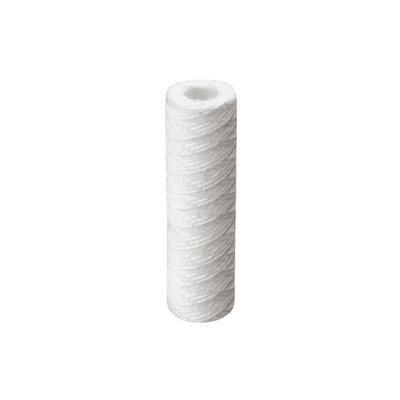
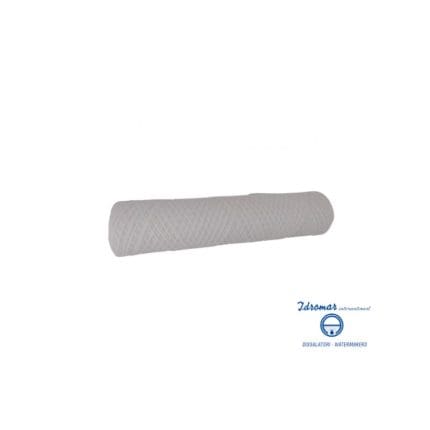 10" Wound Wire Cartridge 20 micron – code: 10MP20 – Idromar
 Brush with spring - code: SGM45 - Gianneschi Pumps and Blowers
 Stainless steel clamps Norma 12–22 mm – code: FAI0012022 – Toscogomma


How to use a technical method to avoid compatibility errors
To choose well among the different boat awnings, it can be useful to follow a simple but effective sequence. This approach, typical of the best nautical technical guides, helps turn a scattered search into a concrete verification.
- Observe the installation area: identify obstacles, accesses, existing accessories, and available surfaces.
- Record the useful measurements: not only the width, but also the distances between fixing points and surrounding spaces.
- Define the main use: mooring, occasional coverage, frequent use, need to keep some passages free.
- Compare the declared compatibility: if available, check the product sheet for mounting indications.
- Evaluate use when open and closed: the awning must be manageable in both conditions.
This method reduces the risk of choosing a solution that seems suitable but is not very functional once installed. In particular, when the search revolves around boat awnings compatibility, the real competitive advantage is not finding the first available product, but identifying the one consistent with the actual configuration of the boat.
If you want to navigate through solutions, accessories, and connected components, explore the dedicated category and available brands: comparing options with a technical approach is the most effective way to choose a bimini truly suitable for your boat.
FAQ
How to understand if a bimini top is compatible with my boat?
Compatibility must be checked considering the usable width, the position of the fixing points, the bulk of the well, the presence of accessories, and the space needed for opening and closing. It is not enough to compare a generic measurement: it is advisable to check the product sheet and compare the data with the measurements taken on board.
Is it enough to measure the width of the boat to choose the right awning?
No. The width is only one of the initial parameters. For a correct choice, you also need to evaluate the geometry of the mounting area, the available height, the obstacles present, and how the structure opens and closes.
What are the most common mistakes when choosing boat awnings?
The most common mistakes are choosing based solely on visual similarity, ignoring the attachment points, not considering the closed dimensions, neglecting the actual use of the boat, and not precisely verifying the measurements before purchase.
Why can an awning be compatible on paper but uncomfortable in practice?
Because structural compatibility does not always coincide with usability compatibility. A bimini may be mountable but bulky, obstruct passages, interfere with other accessories, or make daily use of the boat less practical.
When is it advisable to consult nautical technical guides before purchase?
Nautical technical guides are particularly useful when the boat has a non-linear configuration, already installed accessories, or limited spaces. They help to compare solutions more accurately and reduce the risk of compatibility errors.