


When boat interior accessories are really needed
Talking about boat interior accessories useful means going beyond aesthetics or simple comfort. In many cases, these components affect the usability of spaces, practicality on board, and the durability of the interior setup. The problem arises when apparently similar elements are purchased without evaluating the real installation context: existing materials, space constraints, fixing points, humidity, vibrations, and continuity with other already installed accessories.
On a boat, the interior is not a domestic environment adapted to water. It is a technical space, subject to movement, condensation, usage fluctuations, and continuous stresses. For this reason, the nautical technical guides are essential to understand when an accessory is truly necessary and when it risks becoming a source of recurring problems.
Internal accessories become relevant especially in these situations:
- when reorganizing a cabin or a dinette with new support or storage points;
- when an existing component shows wear, play, noise, or difficulty in use;
- when you want to improve ergonomics without invasive intervention on the structure;
- when replacing internal elements and it is necessary to maintain proper compatibility with the rest of the setup;
- when an accessory must coexist with curved surfaces, thin panels, or delicate materials.
Un errore frequente è considerare ogni accessorio come un pezzo indipendente. In realtà, a bordo, ogni scelta influisce sulle altre: una chiusura, una maniglia, un supporto o un elemento di fissaggio possono cambiare il modo in cui si apre un vano, si distribuisce il carico o si comporta un pannello nel tempo. Se stai affrontando un aggiornamento più ampio, può essere utile confrontare anche altre guide tecniche nautiche dedicate alla gestione degli spazi interni e dei sistemi di bordo.
Boat interior accessories: differences between solutions, sizes, and compatibility
The most delicate phase is almost never the purchase itself, but the evaluation of boat interior accessories compatibility. Two components may seem equivalent in function but differ in geometry, fixing method, required thickness, mounting orientation, or interaction with the supporting material.
To avoid mistakes, it is advisable to think on four levels: function, available space, installation surface, and actual use. This approach is typical of the best nautical technical guides, because it reduces the risk of incompatibilities not visible at first glance.
Functional compatibility
The first point is to understand what the accessory really has to do. It is not enough that it “fits”: it must work well in the intended context. An element designed to hold, close, support, or guide must be consistent with the required movement and frequency of use.
Useful questions to ask yourself:
- should the accessory remain stable or allow controlled movement?
- is it used with one hand or does it require a firmer grip?
- is it mounted in an area subject to impacts or frequent passage?
- does it need to integrate with other components already present?
If the function is not precisely defined, there is a risk of choosing a solution that is correct on paper but inconvenient in daily use.
Dimensional compatibility
Measurements should not be read superficially. Inside a boat, not only width, height, and depth matter, but also opening radius, maneuvering space, setbacks, support thickness, and mounting tolerances. An accessory may fit into the available space and still be unsuitable because it interferes with an edge, a hinge, a frame, or another nearby element.
Among the most common errors are:
- measuring only the compartment and not the movement needed to use the accessory;
- neglecting the thickness of the panel or covering;
- not considering the heads of screws, washers, or fastening elements;
- evaluating the position with the boat stationary without imagining use while sailing or in shared spaces.
When a datum is unclear, check the product sheet and always compare the actual bulk with the installation area.
Compatibility with materials and finishes
Marine wood, composite panels, coated surfaces, painted or laminated elements react differently to tightening, pressure, and repeated load. An accessory chosen without considering the support can cause micro-deformations, loosening, or permanent marks.
For this reason it is useful to distinguish between:
- rigid surfaces but sensitive to chipping;
- thin supports that require load distribution;
- materials with delicate finishes that can be marked during installation;
- areas subject to humidity, where the stability of the fastening must be evaluated more carefully.
Se stai confrontando componenti destinati a pannelli, sportelli o vani tecnici, può aiutarti anche consultare una guida ai sistemi di fissaggio per la nautica per capire quali criteri applicare prima dell’installazione.
Compatibility with real use on board
An internal accessory perfect in a showroom can prove impractical while sailing. Vibrations, tilting, accidental impacts, and rapid opening of compartments completely change the behavior of many components. The choice must therefore be made thinking about real use, not just appearance or position when stationary.
A good criterion is to mentally simulate the usage scenario:
- who will use it most often?
- how often?
- in which body position?
- with what precision or force?
- in the presence of movement or with wet hands?
This practical reading is what distinguishes a correct choice from a replacement to be redone shortly after.
Mistakes to avoid when choosing or installing internal boat accessories
Many recurring problems do not depend on the perceived quality of the component, but on a combination of incomplete evaluation, rushed installation, and wrong expectations. Here are the most common mistakes to avoid.
Choosing based on appearance and not function
An accessory visually consistent with the interior decor is not automatically suitable for its use. In boating, aesthetics must follow functionality. If the component is used often, the priority is ease of grip, fastening reliability, and consistency with the support.
Ignoring compatibility with the existing component
One of the most frequent cases concerns replacements. A worn accessory is removed and it is thought that a similar replacement can be installed without further checks. In reality, spacing, drilling, depth, orientation, and closing methods may change. The result is an adapted installation, often untidy and less stable over time.
Before replacing a component, always check:
- position and distance of fastening points;
- available space behind the panel;
- any pre-existing marks or holes to cover;
- interferences with other already installed elements;
- need for complementary accessories.
Underestimating the mounting support
An internal panel may seem solid, but it is not always suitable for direct fastening. If the support is thin, layered, or already stressed by previous installations, the risk is obtaining an initially acceptable tightening that is destined to loosen.
In these cases, it is preferable to carefully evaluate the type of support and, if necessary, look for specific indications in the technical datasheets. If the detail is not specified, check the product sheet.
Installing without considering the range of movement
This mistake mainly concerns elements that open, close, guide, or hold. When the boat is stationary, the movement may seem correct; in actual use, impacts against edges, incomplete openings, unwanted returns, or hard-to-reach points emerge.
A dry test before final fastening helps to avoid:
- contact with frames, edges or nearby handles;
- uncomfortable opening corners;
- interference with cushions or upholstery;
- movements requiring excessive force or unnatural precision.
Neglecting maintenance and accessibility
An interior accessory must not only work on the day of installation. It must also remain accessible for cleaning, inspection, and possible replacement. If installed in a hard-to-reach area or with impractical fastenings, any subsequent intervention becomes more complicated than necessary.
Per una visione più ampia sulle verifiche preliminari, può essere utile leggere anche una guida alla manutenzione degli interni di bordo o approfondire i criteri di scelta nelle guide tecniche per accessori nautici.
Products and categories to consider for a more functional boat interior
When talking about interior accessories, the most common mistake is looking for a single solution for very different needs. In reality, it is better to think in terms of functional families, so as to compare consistent options and reduce the risk of incompatibility.
The categories to consider depend on the area of use and the type of intervention. In general, the selection should start from these questions:
- is it necessary to improve the opening and closing of compartments, doors or panels?
- is it necessary to increase order and containment in internal spaces?
- is it necessary to replace worn elements that compromise comfort or practicality?
- is it necessary to make a component more stable that tends to move or vibrate while sailing?
Thinking this way, it becomes easier to identify the correct category without getting lost among only apparently similar solutions. This approach is particularly useful in competitor-driven contexts, where many online proposals seem equivalent but differ in mounting details, intended use, and integration with the rest of the outfitting.
How to compare categories without making mistakes
Before choosing, it is advisable to compare each option according to a practical grid:
- intended use: cabin, dinette, technical compartment, passage area;
- type of support: panel, furniture, internal wall, secondary structure;
- frequency of use: occasional, daily, intensive;
- ease of assembly: direct, with adaptation, with preliminary check;
- aesthetic and functional continuity: integration with accessories already present.
Se stai valutando più soluzioni per la stessa area, può essere utile consultare anche una selezione di accessori per interni nautici e confrontare le informazioni disponibili in modo sistematico, senza limitarti alla foto o alla descrizione sintetica.
Another often overlooked aspect is consistency between different categories. For example, an intervention on closures, supports, and fastenings should be thought of as a small system, not as a sum of independent parts. This reduces the risk of vibrations, play over time, and subsequent corrective interventions.
In summary, the best choice almost always comes from three preliminary checks:
- measure the space and support precisely;
- define the real function of the accessory in daily use;
- check compatibility with the elements already on board.
By following this method, the boat interior accessories become a concrete improvement and not a replacement to be reviewed after a few outings.
Recommended products

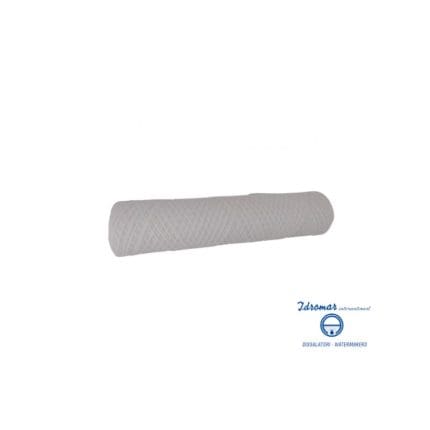 10" Wound Wire Cartridge 20 micron – code: 10MP20 – Idromar
 Brush with spring - code: SGM45 - Gianneschi Pumps and Blowers
 Stainless steel clamps Norma 12–22 mm – code: FAI0012022 – Toscogomma


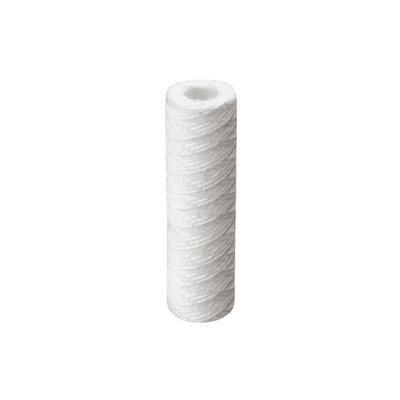
If you are updating or restoring onboard spaces, explore the category dedicated to nautical interior accessories and compare the available solutions based on function, installation, and compatibility: it is the fastest way to choose components consistent with your setup and reduce the most common errors.
FAQ
How to check the compatibility of boat interior accessories before purchase?
It is advisable to check the function, actual measurements, support thickness, fixing points, and movement space. If any data is unclear, check the product sheet.
What is the most common mistake when replacing an interior boat accessory?
The most common thought is that a similar component is automatically interchangeable. In reality, center distances, depths, orientation, and mounting methods can vary.
Why are measurements not enough to choose a nautical interior accessory?
Because beyond static bulk, opening, accessibility, interference with nearby elements, and behavior in real use on board also matter, even in the presence of movement.
When is it useful to consult nautical technical guides for interiors?
They are useful when you need to replace an existing component, compare multiple solutions, or check compatibility between accessory, support, and installation area.
How to avoid recurring problems after installing internal boat accessories?
It is important to do a positioning test, evaluate the support, check the full movement of the accessory, and choose solutions consistent with daily use.


