


When do you really need a marine VHF and which one to choose
Understand which marine VHF to choose does not mean starting from the model, but from the context of use. In a serious technical guide, the correct question is: how you will use the VHF on board, how often and in what configuration of the boat. Only in this way does the choice become coherent and not random.
A marine VHF comes into play when you want to maintain clear communications on board and externally, integrating the navigation electronics in an orderly way. However, not all boats have the same needs. A small unit with limited space requires different considerations compared to a more equipped console or a boat with a dashboard already full of instruments.
For this reason, in the nautical technical guides, the choice of VHF must be considered together with other elements: installation position, control ergonomics, display visibility, quick access to the microphone, and compatibility with existing equipment. If you are upgrading the instrumentation, it may be useful to also compare related solutions such as onboard instruments and electronic accessories or to explore the topic further with other nautical technical guides.
There are three typical scenarios in which the choice of VHF becomes decisive:
- New installation: you need to understand where to place it and with which accessories to pair it.
- Replacement of an existing device: the key point is compatibility with wiring, supports, and available spaces.
- Complete dashboard overhaul: the VHF must be chosen based on the entire onboard ecosystem, not as an isolated element.
In practice, asking “which one to choose” only makes sense if you first define use, position, and integration. This is the step that distinguishes a functional choice from a purchase made only based on habit or aesthetics.
Differences between solutions, measurements or compatibility
The most underestimated part when looking for which marine VHF to choose compatibility concerns precisely the physical and functional differences between the various solutions. Many users compare VHFs as if they were all equivalent, but in reality, they differ in size, mounting methods, connector arrangement, and interaction with the rest of the system.
Fixed mounting or more flexible configuration
The first practical distinction is between devices designed for a stable mounting on the dashboard and solutions that favor a more flexible space management. In a compact workstation, even a few details make a difference: body depth, cable space at the back, support orientation, and front accessibility.
Before choosing, always check:
- the actual usable space at the installation point;
- the presence of obstacles behind the panel;
- the ease with which you can reach connectors and wiring;
- the convenience of use standing or sitting while driving.
If the VHF is installed on an already crowded console, it is useful to also consider supports, brackets, and mounting accessories to avoid improvised adaptations.
Measurements and dimensions: the detail that changes the choice
The measurements are not only needed to understand if a device fits in the available space. They are also used to assess if it remains readable, if the buttons are easily reachable, and if the microphone can be stored without obstruction. An organized dashboard improves daily use and reduces errors during quick maneuvers.
When comparing multiple options, don’t stop at the front view. Also consider:
- overall depth of the body;
- support protrusion if provided;
- cable bending radius behind the device;
- side space for connections and ventilation.
If a detail is not clear, check the product sheet. This is the simplest way to avoid mechanical incompatibilities that only emerge during installation.
Compatibility with antenna, power supply, and onboard network
The topic which marine VHF to choose compatibility mainly concerns integration. A VHF does not work alone: it communicates with the antenna, power supply, and, in many cases, with other instruments on board. A correct choice therefore starts with a precise question: what must this device coexist with?
The points to check are:
- type of antenna installation and cable routing;
- power availability at the chosen point;
- presence of other electronics that take up space or require nearby connections;
- compatibility with the existing configuration, especially in case of replacement.
If you are upgrading an already active station, it is useful to also check compatibility with antennas and components for onboard systems and with accessories already installed. At this stage, a well-made technical guide helps more than a simple comparison sheet because it focuses on the final result: an orderly, accessible, and coherent system.
Interface and daily usability
Another often overlooked aspect is the’real usability. Two devices may seem similar, but offer a very different experience during use. Buttons too close together, a display difficult to read from the driving position, or a poorly placed microphone can make even the best installation uncomfortable.
To choose well, ask yourself:
- can you read the information with direct light or from different angles?
- can you use the controls intuitively even with quick movements?
- is the microphone in a practical position and does not interfere with other instruments?
- does the overall layout remain tidy after installation?
These elements are not secondary: they affect the quality of the onboard experience and how easily the VHF truly becomes part of your navigation routine.
Mistakes to avoid in choice or assembly
In competitor-driven research, the same problem is often noticed: there is much talk about device comparison and little about concrete errors that compromise the choice. In reality, problems almost always arise before purchase or during installation.
Choosing based on habit and not the dashboard
One of the most common mistakes is buying a VHF because it looks “similar to one already seen” or because it seems suitable in photos. But the actual helm can tell a different story. Limited space, particular angles, presence of a windshield, nearby instruments, or hard-to-access compartments completely change the final outcome.
The practical rule is simple: measure first, compare later. Without this step, the risk is having to adapt the installation in a messy way.
Neglecting cable routing
A VHF may seem compatible from the front but prove problematic once the back is considered. If the wiring space is insufficient or requires too tight bends, the installation becomes uncomfortable and untidy. This is especially true in compact consoles, where every centimeter behind the panel counts.
Before installation, check:
- where the cables will pass;
- if the panel allows easy access;
- if the mount or housing does not obstruct connections;
- if the microphone can be fixed in a practical spot.
Ignoring compatibility with the existing system
When replacing a device, many take for granted that the new VHF will integrate without problems. In reality, every installation has its own story: brackets, holes, cable passages, already positioned antenna, available power supply, and arrangement of other instruments. That’s why the topic which marine VHF to choose compatibility is not a detail, but a central criterion.
If you are working on an already equipped boat, always check what you can really reuse and what instead needs to be reconsidered. In case of doubt, check the product sheet and compare the device with your current setup.
Placing the VHF in an inconvenient spot
A correct installation is not only stable: it must also be comfortable to use. A VHF that is too low, too lateral, or hidden by other instruments ends up being less immediate. The same goes for the microphone, which must be reachable without unnatural movements.
A good installation takes into account:
- visibility of the display from the driving position;
- direct access to the main controls;
- ease of grabbing the microphone;
- absence of interference with steering and other instrumentation.
To delve deeper into the topic of console organization, it may be useful to also consult accessories for the console and space management on board.
Products and categories to consider
When evaluating which marine VHF to choose, you should not consider only the main device. A complete technical choice also includes related categories, because the final result depends on the whole. In the best nautical technical guides, in fact, the VHF is always integrated into a coherent onboard system.
The categories to watch carefully are:
- antennas and related accessories, to verify compatibility with the planned installation;
- supports and fastening components, useful when the console requires a dedicated solution;
- cabling and connection accessories, essential for a clean installation;
- complementary electronic instrumentation, if you want to maintain a uniform and rational console.
This approach helps avoid disconnected purchases. A well-chosen VHF is one that integrates seamlessly, not one that simply seems suitable on paper. If your goal is to upgrade the command station, it is better to think in categories rather than isolated single items.
Another useful criterion is the coherence of the onboard project. If you are renewing multiple elements together, choose components that have compatible mounting logics and simplify daily use. This is especially true for those who want an orderly, readable, and easy-to-manage console during navigation.
Finally, remember that the technical evaluation does not end with the aesthetic comparison. Before proceeding, always check dimensions, installation methods, and necessary accessories. If information is not immediately available, check the product sheet.
Recommended products

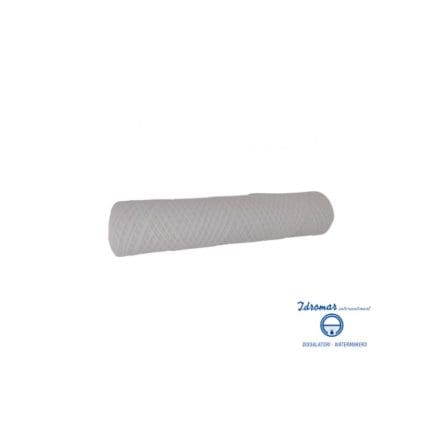 10" Wound Wire Cartridge 20 micron – code: 10MP20 – Idromar
 Stainless steel clamps Norma 12–22 mm – code: FAI0012022 – Toscogomma
 Brush with spring - code: SGM45 - Gianneschi Pumps and Blowers
 Desalination maintenance kit – code: Cleaning Kit (SC1 + SC2) – Schenker


How to navigate between technical comparison and final choice
Among the many pages that talk about VHF, the truly useful ones are the most concrete: they start from the boat, the console, and the real connections. It is here that research like which marine VHF to choose finds a reliable answer. It is not enough to compare shapes or functions in the abstract: a technical reading that combines available space, compatibility, and ease of use is needed.
If you want to make a more informed choice, the best method is this:
- define where you will install the VHF;
- measure the useful space precisely;
- check cabling, antenna, and accessories already present;
- evaluate ease of use from the driving position;
- compare only solutions truly compatible with your onboard setup.
If you are looking for a solution suitable for your boat, explore the selection of devices and accessories in the dedicated category or delve into the available brands to find components consistent with your onboard configuration.
FAQ
How to understand which marine VHF to choose for your boat?
To choose the most suitable marine VHF, first consider the available space on the console, the type of mounting, ease of use from the driving position, and compatibility with the antenna, power supply, and accessories already on board.
How important are the measurements when choosing a marine VHF?
Measurements are essential because they affect not only the front footprint but also the depth, cable routing, and ease of use. If you have doubts, check the product sheet.
What does it mean to evaluate the compatibility of a marine VHF?
Compatibility concerns integration with the existing system: antenna, wiring, power supply, supports, and arrangement of other onboard instruments. It is a crucial aspect especially when replacing an already installed device.
What mistakes to avoid when installing a marine VHF?
The most common mistakes are choosing without measuring the dashboard, neglecting the space behind the panel, not checking the cable routing, and placing the microphone or controls in inconvenient spots during use.
Better to evaluate only the VHF or also the related categories?
It is also advisable to consider antennas, supports, wiring, and mounting accessories. A VHF works well when it is part of a coherent and orderly onboard system, not when chosen as an isolated element.


