


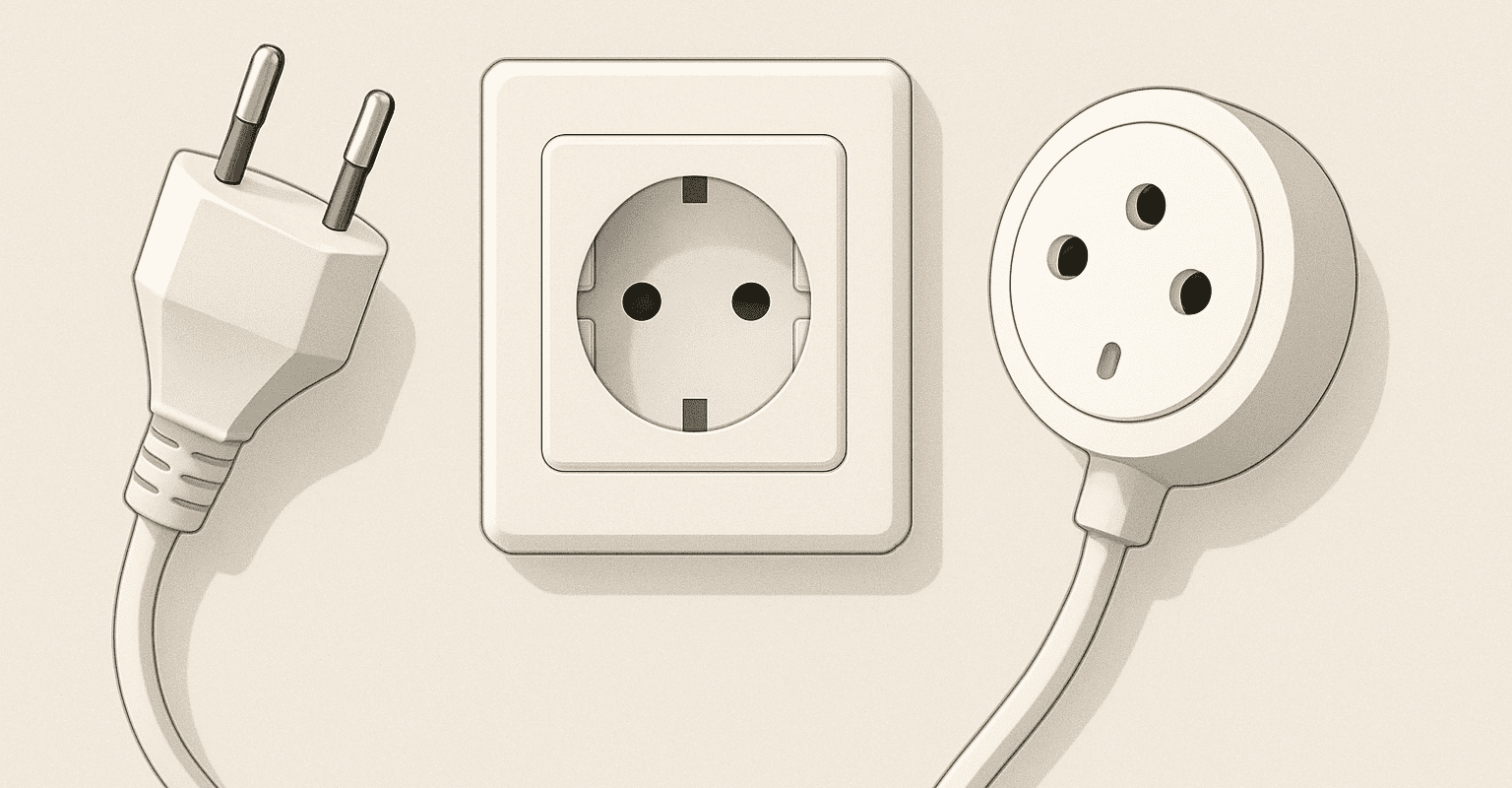
What plugs and sockets are for and why they are central in connections
When talking about plugs and sockets, often people only think about the final connection between two elements. In reality, these components have a much more important role: they allow you to connect, disconnect and quickly restore a line in a practical, orderly and functional way. In professional contexts, choosing the correct component helps reduce unnecessary stops, assembly errors and unnecessary replacements.
A good plugs and sockets guide always starts from a simple principle: it is not enough that two parts seem compatible, they must really be so in shape, attachment, intended use and connection configuration. This is where many of the most frequent problems arise, especially when performing maintenance or ordering a replacement without having checked all the details.
Plugs and sockets are used in numerous applications where a reliable interface between components is needed. Their practical function is to simplify connection and disconnection operations, but also to make the management of replacements, periodic checks and quick interventions on already installed lines easier.
In a logic of maintenance plugs and sockets, the main advantage is the possibility to more easily isolate the critical point. If a connection shows anomalies, the check almost always starts here: wear, incorrect coupling, incomplete assembly or component not consistent with the system are among the most common causes.
To guide you among connected components and compatible solutions, it can also be useful to consult the technical guides in the catalog, where you can compare families of items and intended uses more quickly.
Plugs and sockets: compatibility, measurements and technical checks to do before ordering
One of the most frequent mistakes is ordering a plug or socket based only on the external appearance. In practice, two components may look similar but differ in decisive details. For this reason, before proceeding, it is advisable to follow a simple and concrete verification sequence.
Check the type of connection
The first point concerns the type of connection. It is necessary to understand whether the component to be replaced must mate with an already present counterpart or if the entire connection point is being rebuilt. This distinction completely changes the way of choosing the replacement.
If you only need to replace one part, always check:
- general shape of the component;
- attachment configuration;
- insertion and locking method;
- connection orientation;
- possible presence of integrated accessory elements.
When a detail is not clear, the best solution is to check the product sheet and compare the component with the one already installed.
Check dimensions and useful measurements
Measurements are not only used to understand if an element “fits” in the available space. They are mainly used to avoid incompatibilities during assembly or restoration. In a correct plugs and sockets guide, dimensions must be read together with the position of the connection and the space needed to insert or remove the component without forcing.
Before ordering, check:
- diameter or size of the mating point;
- available depth;
- lateral space for maneuvering and disconnection;
- presence of supports, brackets or other nearby elements;
- alignment between fixed part and moving part.
A rushed measurement can lead to an unusable purchase. It is better to spend a few more minutes verifying than to have to manage a return or a later replacement.
Observe the condition of the existing component
If you are working on an already used system, do not just identify the part to be changed. Also check how the current component appears. Signs of wear, deformations, residues, non-linear fittings or coupling difficulties may indicate that the problem is not only due to the plug or socket, but also the context in which it operates.
In these cases, in addition to replacing the main component, it may be useful to check connected elements or support accessories. To learn more about choosing between spare parts and related components, you can consult the section dedicated to connecting components.
Always compare the usage context
Another often underestimated step concerns the environment and mode of use. A plug or socket used in an application with frequent maneuvers, periodic disassemblies or presence of external agents requires different attention compared to a more stable and less stressed connection.
For this reason, during the selection phase it is advisable to ask:
- is the connection opened and closed often?
- is the component easily accessible?
- are there vibrations, shocks or dragging?
- does the operator need to intervene quickly in maintenance?
These questions help avoid a choice that is only apparently correct but poorly suited to real use.
Typical errors in ordering or installing plugs and sockets
Many problems arise not from component defects, but from recurring errors during selection, ordering or assembly. Recognizing them in advance is the best way to reduce lost time and repeated interventions.
Confusing similar components for compatible components
This is probably the most common mistake. Two items with a similar shape are not automatically interchangeable. A minimal difference in the attachment, orientation or coupling geometry is enough to make correct assembly impossible.
When in doubt, it is useful to compare the component with images, drawings or data in the catalog and, if necessary, check the product sheet before completing the order.
Assembling without checking alignment and insertion
During installation, one of the most frequent errors is forcing insertion. If a plug or socket does not mate linearly, the problem must be identified before proceeding. Forcing often means damaging contact surfaces, locking points or accessory parts that should instead work naturally.
The signals not to ignore are:
- abnormal resistance during insertion;
- need to rotate or bend the component to fit it in;
- incomplete coupling;
- excessive play after assembly;
- difficulty in disconnection.
If these symptoms are present, it is advisable to stop and recheck the system compatibility.
Neglecting components that work together
An effective replacement is not only about the apparently faulty part. In many cases, the malfunction depends on a chain of connected elements: supports, protections, seals, fastening systems, or parts subject to wear. If you change only the plug or only the socket without checking the rest, the problem may reoccur shortly.
For this reason, with a view to maintenance plugs and sockets, it is useful to think in terms of the whole rather than individual isolated components.
Ordering without a photo, code, or reference of the existing part
When the spare part must replace an already installed component, working “from memory” is risky. The simplest procedure is to first gather all available information:
- photos of the mounted component from multiple angles;
- image of the coupling point;
- any readable markings;
- main measurements taken on the part;
- description of the application in which it is used.
With this data, it is easier to identify the correct solution and reduce the margin of error. If you are also considering other elements connected to the installation, it may be useful to consult related categories for spare parts and accessories.
Quick diagnosis: what to check when plugs and sockets cause problems
When a connection does not work as it should, the diagnosis must be quick but orderly. The goal is not to immediately replace the first suspicious component, but to understand where the anomaly really originates.
First visual check
The initial check is often the most useful. Observe carefully:
- signs of obvious wear;
- deformations or breakages;
- dirt or residues at the coupling point;
- misalignment between plug and socket;
- missing or loose parts.
Many apparent faults are actually due to incomplete engagement or an incorrectly mounted component.
Verification of correct coupling
If the component appears intact, the next step is to check that the coupling occurs as expected. A socket that does not hold properly or a plug that does not fully seat may indicate incompatibility, wear, or the presence of a mechanical obstacle.
At this stage, it is important not to improvise: if the behavior is unclear, compare the component with the available documentation or the information provided in the store.
Inspection of wear-prone points
In practice, the most exposed points are those subjected to repeated movements, frequent disassemblies, or stresses during use. A good routine of maintenance plugs and sockets includes periodic checks specifically on these elements, before the problem causes operational downtime.
Among the signs suggesting a more thorough inspection are:
- unstable connection;
- need to reposition the component to make it work;
- feeling of play or loss of sealing;
- increasing difficulty in insertion and removal operations.
When these symptoms recur, it is time to consider not only replacing the main component but also the accessories that affect its proper functioning.
Useful products, spare parts, and accessories to check along with plugs and sockets
A truly useful guide on plugs and sockets does not limit itself to the main component. When ordering or maintaining, it is advisable to also check all elements that can affect assembly, protection, and continuity of the connection.
Among the aspects to consider are:
- fixing and support components;
- protection elements of the connection point;
- parts subject to wear during insertion and removal;
- accessories that simplify replacement and maintenance;
- spare parts necessary to restore the correct coupling.
This approach is particularly useful when the problem occurs repeatedly. Limiting yourself to replacing only the visible element may solve the symptom, but not the cause.
For a broader overview of available spare parts and matched component families, you can also see the selection of maintenance and connection items or delve deeper through the pages dedicated to the treated brands.
If you are purchasing for stock or internal service, it can be useful to build a small operational checklist. Here is a simple outline:
- identify the component to be replaced;
- check the counterpart it must couple with;
- check measurements, dimensions, and mounting methods;
- assess the condition of connected accessories;
- confirm the details in the product sheet.
Following these steps helps turn a simple spare part search into a more precise choice, with less margin for error and greater operational continuity.
Recommended products
Go to the Plugs and Sockets category


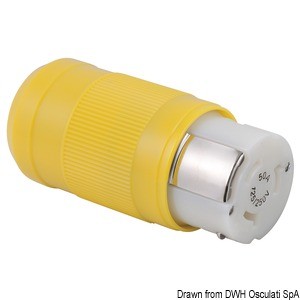


How to use this plugs and sockets guide for faster purchases and fewer errors
The most useful part of a practical guide is not just knowing what to look for, but knowing in what order to check it. When you have to choose between multiple alternatives, the most effective method is to start from the existing component, verify the coupling point, check the dimensions, and only then proceed to select the spare part or accessory.
This sequence reduces wrong purchases and also makes it easier to compare similar items. In particular, if you work on multiple systems or manage recurring maintenance, having a clear reference for the choice of maintenance plugs and sockets allows you to standardize checks and speed up internal requests.
If you want to more easily find the solution suitable for your context, explore the category dedicated to plugs and sockets and consult the brands available in the store: you will find components, spare parts, and accessories useful to complete the order with greater confidence and operational continuity.
FAQ
How do I know if a plug is compatible with an already installed socket?
It is advisable to check shape, attachment, coupling methods, dimensions, and orientation. Visual similarity is not enough: if you have doubts, compare the existing component with images and data available in the store and verify in the product sheet.
What are the most common mistakes when ordering plugs and sockets?
The most common mistakes are choosing based on external appearance, not detecting the useful measurements, ignoring the counterpart with which the component must mate, and neglecting accessories or worn parts that affect assembly.
When is it advisable to also check spare parts and connected accessories?
It is advisable to do this when the problem recurs, when the assembly is unstable, or when the replaced component works together with other fastening, protection, or support elements. In many cases, the malfunction depends on the assembly and not on a single part.
What is the fastest way to diagnose outlets and plugs?
The most practical method is to start with a visual inspection, check the integrity of the coupling point, look for any signs of wear or misalignment, and then confirm the compatibility of the component with its counterpart.
For the maintenance of plugs and sockets, what should be checked periodically?
It is useful to check the connection status, ease of insertion and removal, any play, wear, deformation, or residue at the coupling point. Periodic checks help prevent sudden stops and replacements.


