


When the electric boat motor is really needed
The topic of electric boat motor is often addressed only from the propulsion point of view, but in daily practice on board an equally important aspect comes into play: the quality of the system dedicated to lights, headlights, plugs, and sockets. An electric motor can work well on paper, but become unreliable if connected to inconsistent components or if installed in a neglected system.
Understanding when a well-organized electrical system is really needed means observing the actual use of the boat. If the boat is used frequently, if navigation occurs even in variable lighting conditions, if auxiliary accessories are used, or if continuous power supply is required for instrumentation, then compatibility between motor, connections, and power points becomes central.
In many cases the problem does not arise from the motor itself, but from details that are underestimated:
- beacons that draw power irregularly or show sudden drops;
- plugs and sockets subject to oxidation or unstable couplings;
- wiring done without a clear logic;
- temporary connections turned into permanent solutions;
- accessories added over time without checking the overall system integrity.
When talking about electric boat motor compatibility, therefore, one should not think only about the mechanical attachment or the power source. Compatibility also concerns how the motor interacts with the entire onboard electrical system. An orderly system reduces losses, minimizes false contacts, and makes it easier to identify any anomalies before they become an operational stop.
For those considering an upgrade of the system or a more thorough inspection, it may be useful to also consult content dedicated to onboard electricity, nautical instrumentation, and components for electrical connections, in order to have a more complete picture of the interactions between the various elements.
Electric boat motor compatibility: differences between connections, sockets, and lights
One of the most common mistakes is to consider equivalent components that actually operate under very different conditions. In the nautical world, the difference between a reliable solution and a continuous source of problems often lies in the actual compatibility between motor, connections, and lighting accessories.
Electrical compatibility and connection continuity
The first check concerns the quality of the electrical path. A electric boat motor requires stable continuity, without interruptions due to loose contacts, worn terminals, or sockets not suitable for the onboard environment. If a plug fits too loosely or if the socket shows signs of blackening, the signal should not be ignored.
The most frequent symptoms of problematic compatibility are:
- inconsistent motor start;
- sudden interruptions during use;
- localized overheating at connection points;
- lights that vary in intensity when other services are activated;
- headlights that work intermittently without an apparent cause.
In these situations, it is useful to check not only the component that seems defective but the entire chain: socket, plug, cable, terminals, and distribution points. Often the visible malfunction is only the final effect of an imperfect contact upstream.
Lights and headlights: indirect signals of the system's condition
lights, pumps, chargers, and instruments may share technical spaces, terminal blocks, cable routes, or inspection areas. and beacons are valuable indicators. When they start behaving abnormally, they can reveal that the system is working out of balance. A light flashing for no reason or a headlight losing intensity does not always indicate a problem with the lighting body: sometimes the real issue is an unstable connection or uneven power distribution.
For this reason, it is advisable to observe some practical signs:
- brightness variations when the engine is started;
- delays in the activation of headlights;
- presence of moisture or residues at connection points;
- need to move the plug to restore contact;
- sporadic shutdowns of multiple devices simultaneously.
If these behaviors repeat, the priority is to check the consistency of the system and not just replace the single accessory. In a well-configured system, onboard services must coexist without influencing each other abnormally.
Plugs and sockets: the most underestimated critical point
Among all components, plugs and sockets they are often the most exposed to wear, moisture, salt, and repeated maneuvers. For this reason, they represent one of the most delicate points in the evaluation of the electric boat motor compatibility. An apparently simple connection can compromise the entire system's behavior if it does not guarantee sealing, stability, and continuity.
Regular checks include:
- visual condition of contacts;
- presence of oxidation or residues;
- firmness of the connection;
- absence of deformations or looseness;
- integrity of the sheath near the connection.
When a connection point shows signs of fatigue, it is advisable to intervene immediately. Postponing means increasing the risk of intermittent malfunctions, which are the most difficult to diagnose because they appear only under certain usage conditions.
Mistakes to avoid when choosing or installing the boat electric motor
When comparing different solutions, many users focus on the most visible part of the system and neglect the context in which the motor must operate. In reality, the correct choice depends on how the motor fits into the existing system or the one intended to be built.
Using mixed components without prior verification
A recurring mistake is combining elements from different configurations without checking their real compatibility. Connecting an engine to sockets, adapters, or lines intended for other uses can create instability, even if everything seems to work at first. If a detail is uncertain, check the product sheet always compare the connection characteristics with the existing system.
Ignoring weak signals
Serious problems rarely start with a clear failure. More often, they manifest with minor signals: a socket that offers more resistance than usual, a light that dims for a few seconds, a headlight that requires a second attempt to turn on. Ignoring these symptoms often leads to more extensive failures or sudden stops at the worst moment.
Signals not to be underestimated are:
- contacts that require pressure or movement to work;
- unusual odors near connections;
- hot surfaces at plugs and sockets;
- irregular lighting of onboard lights;
- presence of halos, residues, or discolorations around terminals.
Messy assembly and reduced accessibility
A system that is difficult to inspect is a system that tends to be checked less often. If connections are hidden, compressed, or made with unclear passages, even simple maintenance becomes complicated. Order in assembly is not just an aesthetic matter: it speeds up fault detection and reduces the risk of rough interventions.
For more effective management, it is advisable to arrange accessible connections, clearly separate main lines from auxiliary services, and periodically check the most exposed points. Good organization also helps when other accessories need to be integrated over time.
Practical checks on lights, headlights, plugs, and sockets before the problem worsens
Preventive maintenance is the simplest way to avoid recurring failures. There is no need to wait for complete malfunction: regular and targeted checks are enough to understand if the system is maintaining consistent behavior.
An effective routine can include these steps:
- visual inspection of plugs and sockets to identify wear, oxidation, or looseness;
- checking lights under different usage conditions, monitoring any intensity variations;
- checking headlights to ensure quick ignition and stable operation;
- observing cables at bending points or near terminals;
- connection test without forcing, to understand if the joint remains secure.
If irregular behavior emerges during the check, the advice is to avoid temporary solutions. A temporary adaptation may seem useful immediately, but often introduces additional weak points. In the nautical field, electrical continuity must be preserved with consistent and properly installed components.
Those who wish to deepen their knowledge of system maintenance may find it useful to also consult guides on navigation lights and lanterns and nautical sockets and connectors, especially when elements subject to frequent wear need to be replaced.
Products and categories to consider for a more reliable system
When evaluating an upgrade or revision of the system, it is advisable to think in terms of functional categories and not by isolated single parts. This approach helps to build a more coherent system and reduce interaction problems between the engine and onboard services.
The areas to consider more carefully are:
- components for power supply and connection, essential to ensure continuity;
- lights and headlights, which must remain stable even during the use of other services;
- plugs and sockets, to be chosen according to the environment and frequency of use;
- distribution accessories, useful to maintain order and readability in the system;
- control elements, important to monitor any anomalies before they become evident faults.
A well-designed system does not arise from the accumulation of components, but from their mutual coherence. For this reason, when selecting accessories or spare parts, it is always appropriate to check the intended use and compatibility with the rest of the system. If information is not explicitly stated, check the product sheet.
From a comparative perspective, the difference between a reliable solution and one that causes problems over time emerges especially in the quality of connections and ease of maintenance. A component may seem suitable during installation but prove impractical if it makes periodic checks difficult or does not integrate well with the existing wiring.
Recommended products

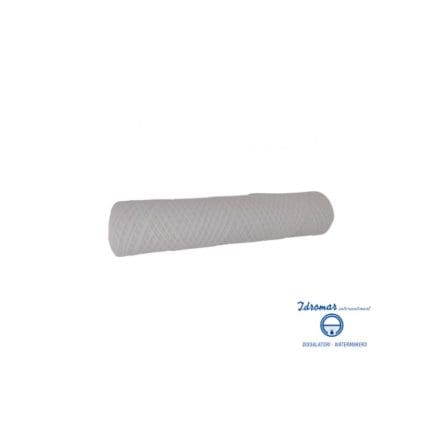 10" Wound Wire Cartridge 20 micron – code: 10MP20 – Idromar
 Stainless steel clamps Norma 12–22 mm – code: FAI0012022 – Toscogomma
 Brush with spring - code: SGM45 - Gianneschi Pumps and Blowers
 Desalination maintenance kit – code: Cleaning Kit (SC1 + SC2) – Schenker


How to understand if the onboard electrical system is requesting intervention
There are situations in which the electric boat motor continues to function, but the system as a whole sends clear signs of fatigue. Recognizing them in time allows targeted intervention, avoiding unnecessary replacements or overly superficial diagnoses.
The most typical warning signs are:
- correct operation only after several connection attempts;
- lanterns that seem to be affected by the activation of other services;
- sockets that do not maintain a firm contact;
- cables that show stiffening or signs of stress near the terminals;
- frequent need for small manual adjustments to restore operation.
When these symptoms appear together, it is likely that the problem is not localized in just one spot. In these cases, it is advisable to perform a complete check of the electrical path, starting from the most exposed connections and continuing towards the distribution points and connected services.
Regular checks also help to distinguish between a simple worn component and a broader critical issue related to electric boat motor compatibility. This distinction is important because it avoids partial interventions that solve the symptom but not the cause.
Support for choosing between maintenance, replacement, and system upgrade
It is not always necessary to redo everything. In many cases, it is sufficient to replace the weakest points, improve the order of connections, and verify the consistency between the motor, lighting accessories, and connections. In other cases, repeated problems indicate that the system has grown in a disorderly manner and requires a more structured upgrade.
To better guide your choice, explore the solutions dedicated to electricity and onboard instrumentation, compare the available categories, and delve into the components for lights, headlights, plugs, and sockets. If you are considering an intervention on the electric boat motor or want to improve the reliability of the connections, consult the brand or reference category pages to identify the components best suited to your configuration.
FAQ
How to understand if a boat electric motor has a connection problem and not the motor itself?
If the engine starts irregularly, runs intermittently, or restarts when moving the connection, the problem may be due to plugs, sockets, terminals, or cables. Lights and headlights that change intensity during use can also indicate a fault in the system and not in the engine.
Can lights and indicators signal a fault in the electric boat motor system?
Yes. Flickering lights, headlights that turn on late, or sudden drops in intensity are often indirect signs of unstable contacts, oxidation, or electrical distribution inconsistent with the rest of the system.
Why are plugs and sockets so important in electric boat motor compatibility?
Because they represent a critical point of the electrical connection. If the plug is not stable or the contacts are worn, the power supply can become intermittent. The boat electric motor compatibility also depends on the quality and consistency of these components with the onboard system.
Which signals should never be ignored on an onboard system?
Unusual odors near connections, plugs that heat up, flickering lights, the need to move a plug to get contact, and discoloration around terminals are all signs to check immediately.
When is it better to replace a component and when to check the entire system instead?
If the problem is isolated and clearly visible, it may be enough to replace the worn component. However, if the malfunctions involve multiple devices, such as the engine, lights, and headlights, it is preferable to check the entire system to identify any incompatibilities or weak connections.


