


When to really consider the topic of boat air conditioner price
Talking about boat air conditioner price usefully means going beyond the simple idea of initial cost. In the nautical field, in fact, the perceived cost of a system varies greatly depending on compatibility, installation complexity, available space, and integration with onboard systems. This is exactly where the most common mistakes occur: similar solutions are compared only superficially, without verifying if they are truly suitable for the boat.
Many boat owners start their search with a legitimate question: how worthwhile is it to install or replace an air conditioning system on board? The answer does not depend only on the unit itself, but on the technical context in which it will operate. A system designed for a certain internal layout, for example, may prove impractical on a boat with limited technical spaces, difficult passages, or suboptimal air distribution.
For this reason, the nautical technical guides most effective ones do not limit themselves to comparing options superficially: they help to understand when the investment makes sense, quali criticità prevenire e quali verifiche fare prima dell’acquisto. Se stai valutando anche altri componenti collegati al comfort e alla gestione impiantistica, può essere utile approfondire contenuti correlati come accessori per impianti di bordo, componenti per la climatizzazione nautica e soluzioni per il ricambio aria in barca.
Another common mistake is thinking that the price issue only concerns first-time buyers. In reality, even in replacements, the central point is understanding whether the new system will fit seamlessly into the existing architecture. An apparently simple replacement may require adaptations to piping, drains, sea intakes, power supply, or ducting. This is where the concept of boat air conditioner price compatibility becomes decisive: an incompatible solution tends to generate indirect costs, longer times, and results below expectations.
Differences between solutions, sizes, or compatibility of the boat air conditioner
When comparing different systems, the real difference is not only in the type of unit but in how it fits the boat. Compatibility must be understood on multiple levels, not just dimensional ones.
Compatibility with available technical spaces
One of the first aspects to check is the actual space occupied in the installation area. It is not enough to check if the unit physically fits in the compartment: you must also consider accessibility for maintenance, passage of connections, compartment ventilation, and inspection possibilities. An overly cramped installation makes it more difficult to intervene for cleaning, inspection, or replacement of wear components.
In practice, a wrong choice regarding space can result in:
- installation difficulties already at the initial stage;
- forced or too long ducting;
- uncomfortable maintenance;
- higher likelihood of errors over time.
Compatibility with the boat's internal layout
A boat does not distribute comfort evenly by definition. Cabins, dinettes, corridors, and technical rooms have different volumes, openings, and materials. For this reason, a solution valid for one layout may be ineffective for another. The position of the unit and the duct paths greatly affect the perceived performance and overall quietness.
Those looking for information on boat air conditioner price often neglects this point and compares systems without asking whether the airflow can be distributed consistently with the actual use of the boat. The risk is ending up with areas that are over-served and others poorly reached, with obvious comfort limitations.
Compatibility with existing systems
Onboard air conditioning does not operate in isolation. It interacts with electrical power supply, condensate drainage, water intakes, pumps, grilles, vents, and sometimes with other environmental management devices. Before deciding, it is useful to check in the product sheet:
- type of installation planned;
- connection requirements;
- recommended minimum spaces;
- indications on compatible accessories or components;
- any notes on compatibility with existing systems.
Questo approccio riduce gli errori e rende il confronto tra alternative molto più concreto. Se vuoi orientarti meglio tra componenti e accessori collegati, possono aiutarti anche risorse come guide ai ricambi nautici e approfondimenti sugli impianti tecnici di bordo.
Mistakes to avoid in choosing or mounting
can also help you. nautical technical guides, The real problem is not only choosing the wrong system, but underestimating the practical consequences of a decision made without method. In.
, the most recurring errors repeat with surprising regularity.
Confusing price with the real installation cost.
The first mistake is to compare only the initial product value without considering everything needed to integrate it properly. On a boat, an apparently convenient solution may require complex adaptations. If modifications to passages, revision of drainage lines, or repositioning of existing components are needed, the picture quickly changes. To avoid this situation, it is better to think in terms of overall project.
and not of a single element. The useful question is not only “how much does it cost?”, but “how easy is it to integrate on my boat?”.
The topic boat air conditioner price compatibility Underestimating compatibility between unit and boat.
is often overlooked precisely when it should be central. A poorly compatible solution can generate vibrations, uneven air distribution, poorly managed condensation, or maintenance access difficulties. All aspects that affect user experience and system longevity.
- available compartment dimensions;
- Before proceeding, it is useful to check:;
- position of the vents;
- ease of disassembly or inspection;
- consistency with the systems already on board.
Ignoring the condensation problem
A very common mistake concerns the management of condensation. Often the focus is on the main unit and the drainage path, slope, accessibility, and protection of the surrounding areas are neglected. In a nautical environment, poorly managed condensation can cause recurring discomfort, bad odors, localized humidity, and more frequent maintenance interventions.
If the detail is not clear, the rule is simple: check the product sheet and always compare the data with the actual configuration of the boat.
Installing in a position inconvenient for assistance and cleaning
A well-chosen system but installed in a hard-to-reach spot soon becomes a source of problems. Filters, connections, drains, and parts subject to inspection must remain accessible. Otherwise, even ordinary maintenance can turn into a long and invasive intervention.
This aspect weighs more than it seems in the evaluation of boat air conditioner price, because poor accessibility tends to increase downtime and the complexity of subsequent interventions.
Relying on overly generic comparisons
Many online contents oversimplify the comparison between systems for nautical air conditioning. The result is that decisions are made based on abstract categories, without analyzing the specific case. A truly useful guide must help distinguish between different needs: seasonal or continuous use, boat in port or underway, open spaces or more compartmentalized environments, new system or replacement.
In other words, the correct comparison is not between “best overall” options, but between solutions more consistent with your onboard setup.
Products and categories to consider for a more informed choice
When facing a technical choice, it is useful to think in terms of functional categories and not by isolated single items. This method allows a better understanding of which elements really impact the success of the project.
When evaluating a nautical air conditioning system, it is advisable to consider the whole of:
- main units;
- air distribution components;
- installation accessories;
- elements for drainage and condensation management;
- spare parts and parts subject to maintenance.
This approach is particularly useful when the goal is not only to purchase, but avoid incompatibilities and corrective interventions. Those seeking information on nautical technical guides often needs exactly this: an overall vision that helps prevent errors even before the installation phase.
Another practical tip is to never separate the product from the usage context. A secondary accessory, if poorly chosen, can compromise the effectiveness of the entire system. Conversely, a coherent configuration between units, connections, and air distribution tends to offer a neater, more manageable, and more reliable result over time.
If you are comparing different options, it can be helpful to start with technical categories and support content, so you can more accurately identify the solution best suited to your boat. At this stage, reading the datasheets and compatibility details is often more important than a superficial comparison based only on the perceived price.
Recommended products

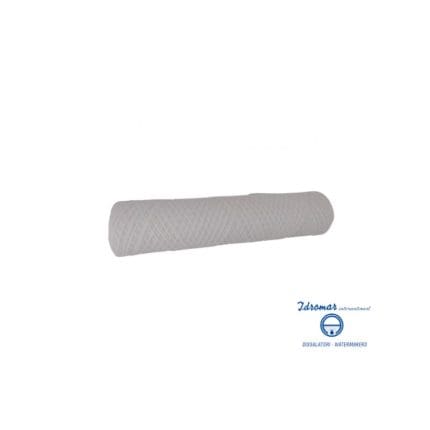 10" Wound Wire Cartridge 20 micron – code: 10MP20 – Idromar
 Stainless steel clamps Norma 12–22 mm – code: FAI0012022 – Toscogomma
 Brush with spring - code: SGM45 - Gianneschi Pumps and Blowers



How to correctly read a technical datasheet without making mistakes
A technical datasheet is useful only if read with the right method. The point is not to look for a single piece of data, but to check if the available information is consistent with the boat and the existing system. In particular, before choosing, it is advisable to focus on some practical aspects.
- Dimensions and installation: check if the available space allows for mounting, ventilation, and maintenance.
- System compatibility: check the product datasheet for any indications on connections, required accessories, and recommended configurations.
- Routing management: consider if pipes, drains, and ducts can follow an orderly path without forcing.
- Future accessibility: ask yourself if, once installed, the system will remain inspectable.
This method helps avoid the classic mistake of buying a product that is theoretically correct but inconvenient or unsuitable in practice. In a nautical context, the difference between a successful and a problematic choice often lies in installation details that on land would be considered secondary.
Boat air conditioner price: how to avoid misleading comparisons between similar alternatives
Competitor-driven searches often lead to comparing solutions that seem equivalent. But in the nautical sector, two apparently similar systems can result in very different experiences once installed. The correct comparison should start from a grid of practical questions:
- Is the solution compatible with the actual onboard spaces?
- Does it require significant adaptations?
- Does it allow for air distribution consistent with the internal layout?
- Does it simplify or complicate maintenance?
- Does it integrate well with the components already present?
Only after these checks does the topic boat air conditioner price take on a useful meaning. Otherwise, the risk is choosing based on an incomplete comparison that does not take into account installation criticalities and daily use.
In summary, the price should never be read alone: it must be interpreted together with compatibility, accessibility, quality of integration, and ease of management over time. This is the criterion that distinguishes a choice that is only apparently convenient from a truly sensible choice for your boat.
If you want to identify the most suitable solution, explore the category dedicated to nautical air conditioning or the reference brand present in the catalog: you will be able to compare the available options with greater awareness and check the compatibility with your onboard system in the product datasheets.
FAQ
How to correctly evaluate the boat air conditioner price?
To evaluate it correctly, one must not stop at the initial cost alone. What matters most is compatibility with edge spaces, ease of installation, the routing of connections, condensation management, and accessibility for maintenance.
Why does compatibility matter so much when choosing a marine air conditioner?
Because a less compatible solution may require complex adjustments, create assembly difficulties, and make maintenance less practical. On a boat, even small space or layout constraints can greatly change the final result.
What are the most common mistakes when installing an air conditioner on a boat?
The most common errors concern placement in hard-to-reach compartments, underestimating the condensate drain, forced passage of ducts, and failure to verify integration with existing systems. Before purchasing, it is always useful to check the product sheet.
How to understand if a solution is suitable for my boat?
It is advisable to start with a practical check: available space, internal layout, future accessibility, necessary connections, and consistency with the existing system. A well-made nautical technical guide helps precisely to perform this type of check before making a choice.
Does it make sense to compare only products similar in shape or category?
No, because in the nautical field two similar solutions on paper can behave very differently once installed. A useful comparison must include compatibility, ease of integration, and practicality of management over time.


