When talking about safety kit, the choice should never be guided solely by habit or immediate availability. Professionals know that a well-selected kit helps to work more continuously, reduce operational errors, and manage daily activities more orderly. In technical, production, or maintenance fields, having the correct solution available means intervening more quickly and with a level of preparation consistent with the usage context.
A good buying guide always starts with a simple question: in which situation will the kit be used? Not all contexts require the same composition, the same format, or the same level of completeness. For this reason, before selecting an item, it is useful to evaluate the environment, frequency of use, transportation methods, compatibility with existing equipment, and ease of component replenishment.
In questa guida vediamo i criteri usati dai professionisti per orientarsi tra le diverse soluzioni disponibili, con un approccio pratico e orientato alla scelta. Se stai confrontando più opzioni nel catalogo, può essere utile partire anche da guide prodotto e categorie tecniche correlate, così da avere una visione più completa del contesto applicativo.
What is a safety kit used for in professional contexts
The term safety kit can indicate a solution prepared to handle recurring activities, quick interventions, or specific needs related to operational protection. In a professional environment, its value lies not only in the included components but especially in the ability to make useful elements immediately available when they are really needed.
A kit can be chosen for various objectives:
- support control and monitoring activities;
- facilitate scheduled or extraordinary interventions;
- improve the organization of equipment;
- reduce forgetfulness in work preparation;
- simplify the management of related materials and accessories.
Those who purchase for professional use tend to favor solutions that allow for more streamlined management over time. It is not only about what is inside the kit but also how the kit integrates with the operational flow. A well-thought-out content, in fact, helps standardize procedures and limit improvisations that, in practice, slow down work.
When a preassembled solution is more useful than a manual selection
Many experienced operators consider whether it is better to choose a preconfigured kit or assemble the equipment separately. In general, a preassembled solution is particularly useful when it is necessary to standardize equipment, speed up supply, or simplify reordering. It is a frequent choice, for example, when multiple people need to work with homogeneous criteria or when the time to prepare the material is limited.
La selezione manuale resta invece interessante nei casi molto specifici, ma richiede maggiore attenzione nella verifica di compatibilità e completezza. Se il tuo obiettivo è individuare una soluzione pronta all’uso, può essere utile confrontare anche accessori e componenti correlati per capire se il kit scelto copre davvero l’esigenza operativa.
The role of the safety kit in mobile activities
The safety kit guide is often sought by those who work off-site, make frequent trips, or need to maintain an organized supply during itinerant activities. In these cases, the selection criteria change: practicality, ease of placement, accessibility of components, and consistency with the vehicle or type of intervention become central.
A professional carefully evaluates whether the kit should be used as support equipment, as a station for routine activities, or as an integration to already existing equipment. The opening method, internal order, and the speed with which components are identified can also greatly affect the actual usefulness of the product.
Compatibility, measurements, and technical checks before purchase
One of the most underestimated aspects in choosing a kit is the preliminary verification. Before ordering, professionals always check that the solution is compatible with the environment of use, operational habits, and other elements already in supply. This is where most errors are avoided.
The main evaluations generally concern:
- overall size of the kit;
- storage or transport methods;
- consistency between content and actual use;
- possibility of replenishing or replacing components;
- ease of identifying material inside.
If some details are not immediately clear, the advice is simple: check the product sheet. This is the rule followed even by the most experienced operators when they need to make a quick but precise choice.
How to read a product sheet usefully
It is not enough to check the name of the kit or its brief description. To choose well, it is important to read the sheet with a practical approach. The correct questions are: is the kit suitable for my context? Is it easy to manage? Can I integrate it with what I already use? Is it designed for occasional or continuous use?
In particular, it is advisable to check:
- indicated intended use;
- any information on dimensions and format;
- presence of replaceable or integrable elements;
- indications on content and internal organization;
- compatibility with accessories or spare parts available in the store.
Quando si confrontano più opzioni, può essere utile aprire anche le pagine dedicate a ricambi professionali o ad altri materiali collegati, per capire se il kit si inserisce in una logica di gestione più ampia e non solo in un acquisto isolato.
Maintenance safety kit: what to really check
In the case of a maintenance safety kit, compatibility becomes even more important. Maintenance activities can vary greatly in frequency, environment, equipment involved, and level of accessibility of the work area. For this reason, professionals do not just ask if the kit is “complete,” but if it is consistent with the type of maintenance to be performed.
Among the aspects to evaluate are ease of use in technical spaces, clarity in the arrangement of components, the possibility of quick visual inspection, and ease of restoration after the intervention. In many cases, the real difference is not made by the quantity of elements present, but by their organization and the kit's ability to support the work without creating unnecessary steps.
Typical errors in ordering or installing the safety kit
Even those who regularly purchase can make mistakes in selecting a safety kit. The problem is that these errors often only emerge at the time of use, when the kit has already been delivered or put into service. To avoid them, it is advisable to know the most frequent cases observed in professional practice.
Choosing based on the name and not the application
One of the most common mistakes is stopping at the commercial name without delving into the actual use. Two apparently similar kits can be designed for very different contexts. The name helps to orient oneself, but does not replace technical verification. For this reason, it is always useful to carefully read the description and, if necessary, compare multiple solutions.
Underestimating space, transport, and accessibility
A kit may be valid on paper but impractical in daily use. If it is bulky, difficult to place, or uncomfortable to open during the intervention, it risks being used poorly or not at all. Professionals always evaluate where it will be kept, who will use it, and how often it will need to be moved.
This aspect is particularly important for the safety kit guide, where space management and quick access can greatly affect overall functionality.
Not verifying supply continuity
Another typical mistake is considering the kit as a one-time purchase. In reality, in many professional contexts it is important to understand if there are spare parts, accessories, or integrable components. This allows maintaining the equipment efficiently over time without having to replace the entire solution at the first need for update or replenishment.
For this reason, before ordering it is useful to also explore the store sections dedicated to complementary elements, so as to have a more concrete view of future management.
Neglecting checks after delivery
Once the kit is received, the work is not finished. An initial check helps verify that the content is consistent with what was expected and that the solution is actually suitable for the operational context. During the first installation or setup phase, it is advisable to check internal order, accessibility, integrity, and ease of use.
This habit reduces subsequent problems and makes it easier to integrate the kit into company procedures or maintenance routines.
Products, spare parts, and accessories useful for completing the safety kit
A well-chosen kit works better when it is part of an organized system. For this reason, professionals do not only look at the main product but also at everything that can improve its use over time. We are talking about spare parts, accessories, and support components that help keep the equipment orderly, up-to-date, and ready for use.
At this stage, it is useful to think about three levels:
- what is needed for immediate use;
- what facilitates inspection and replenishment;
- what makes the kit more consistent with the operational context.
Those who work continuously tend to prefer solutions that can be easily managed over time. The availability of complementary elements is therefore a concrete selection criterion, not a secondary detail.
How to evaluate accessories and complementary components
Useful accessories are not necessarily numerous: they must be functional. They can help improve transport, internal order, content protection, or replenishment speed. Again, the choice depends on the actual application and not on a generic logic.
Se il kit è destinato a impieghi frequenti, può essere utile verificare se lo store propone una gamma coerente di articoli collegati. Questo aiuta a costruire una dotazione più stabile e più facile da gestire. Per approfondire, puoi consultare anche soluzioni per manutenzione e supporto operativo, utili per contestualizzare meglio la scelta.
When it is advisable to already think about replenishment
One of the smartest criteria used by professionals is to plan the subsequent management from the start. If a kit is intended to be used regularly, it makes sense to immediately evaluate how it will be maintained over time. This approach is particularly useful in the case of a maintenance safety kit, where continuous operation requires order and continuity.
Checking the availability of compatible components, support accessories, or related items helps avoid interruptions and keeps the kit always ready for use. When the catalog offers a clear structure between the main product and complements, management becomes much simpler.
Recommended products
Go to the Safety Kits category

 Telescopic light alloy mooring hook – code: 34.458.90 – Osculati
 Underwater LED torch sub-extreme compact – code: 12.170.04 – Osculati
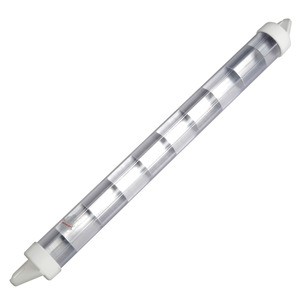 Supercompact radar reflector for shroud or stay – code: 32.235.00 – Osculati


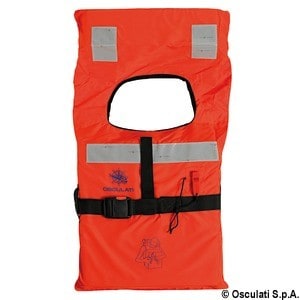 Floral stole life jacket 7 – 150 N adults – code: 22.451.15 – Osculati
How to choose the right safety kit based on the usage context
To arrive at the correct choice, professionals almost always follow a logical path. First, they define the usage environment, then evaluate frequency and mode of use, then check compatibility, content organization, and the possibility of integration with other items already present.
A practical method can be this:
- identify the real context of use;
- determine whether a mobile, fixed, or support solution is needed;
- check dimensions, access, and kit management;
- check the available information on the product sheet;
- evaluate spare parts and accessories for continuous management.
This approach helps to choose more precisely both a safety kit guide and a maintenance safety kit, avoiding generic purchases that then prove to be unsuitable for daily practice.
If you are looking for a reliable solution for your operational field, explore the selection available in the store and delve into the dedicated category or the reference brand: comparing options in an orderly way is the best way to find the safety kit best suited to your professional needs.
FAQ
How to choose a safety kit suitable for professional use?
It is advisable to start from the real usage context: environment, frequency of use, transportation needs, available space, and compatibility with existing equipment. It is also useful to check the product sheet for content, format, and replenishment options.
What is the difference between the driving safety kit and the maintenance safety kit?
The driving safety kit is generally designed for mobile activities or equipment to be kept on board or to support travel, while the maintenance safety kit is aimed at technical and operational interventions. The choice depends on the specific application and the organization of work.
Why is it important to check spare parts and accessories before purchasing?
Because a kit should not only be evaluated at the time of order, but also in subsequent management. The availability of useful spare parts and accessories allows the equipment to remain efficient, organized, and ready for use over time.
What mistakes are most often made when ordering a safety kit?
The most common mistakes are choosing only based on the product name, not checking dimensions and usage methods, neglecting compatibility with the operating context, and not reviewing the product sheet before ordering.