



When talking about safety kit, the most common mistake is to consider it a standard set of components to order quickly, without a preliminary check. In reality, precisely because these kits are chosen to protect systems, lines, or sensitive points of the circuit, it is essential to carefully check sizes, threads, capacities or voltages before purchase. A thorough check reduces downtime, avoids incompatibilities during assembly, and also makes subsequent maintenance management easier.
This safety kit guide is born with a practical goal: to help you understand which checks to make before ordering, which mistakes to avoid, and how to navigate between spare parts and accessories without wasting time. Whether you are purchasing for a new system, a replacement, or a scheduled intervention, starting with the correct data is always the most effective choice.
What is the safety kit used for in a system
A safety kit is normally used to oversee a critical function of the system, simplifying the installation of components that must work coherently together. The main advantage is not only the convenience of the set but the possibility of having a solution designed for a specific application, with elements that must be compatible mechanically, functionally, and electrically, when required.
In an operational context, the kit can be useful when it is necessary to:
- restore an existing configuration with consistent components;
- reduce the risk of error in choosing individual elements;
- speed up replacement activities during a system shutdown;
- support maintenance safety kit ordinary or extraordinary;
- have a clearer reference for future reordering.
The key point is that a kit should not be evaluated only for what it contains, but for how it integrates into the real system. For this reason, before ordering, it is advisable to gather all available information about the installation point: connections, dimensions, type of fluid or signal, connection methods, and general operating conditions. If some data are not immediately available, it is always recommended check the product sheet.
Per chi gestisce attività ricorrenti, può essere utile affiancare questa guida ad altre risorse tecniche dello store, ad esempio una panoramica su componenti per impianti industriali o un approfondimento dedicato alla manutenzione delle linee e dei collegamenti.
Compatibility, measurements and technical checks before ordering
The most important phase, before confirming the purchase of a safety kit, is the verification of the real compatibility. Even when the kit seems correct for its intended use, small details such as thread, diameter, or type of power supply can make assembly impossible or unreliable.
Measures to always check
Measurements are the first filter. It is not enough to know that the component “looks the same” as the one already installed: it is necessary to precisely check all connection points and useful dimensions.
- Connection diameters: check that the connections are consistent with the existing line.
- External dimensions: check the available space for installation, access, and maintenance.
- Useful lengths: in the presence of fittings, pipes, or wiring, even a few millimeters can make a difference.
- Orientation: assess if the kit requires a specific position or installation direction.
If you are replacing an existing component, a direct comparison with the already installed part is often the fastest method. In case of doubt, it is advisable to photograph the installation area and compare the data with the technical documentation. Where information is not explicitly stated, the correct solution remains only one: check the product sheet.
Threads and connections: the detail that causes the most errors
One of the most common mistakes concerns the threads. Two connections may appear compatible at a glance but differ in pitch, profile, or reference standard. This leads to forced assemblies, leaks, premature wear, or the need for unplanned adapters.
Before ordering, check:
- type of thread present on the system;
- thread required by the kit or connected components;
- any adapters already installed;
- need for sealing on the thread or mating surface;
- compatibility with fittings and accessories already in use.
When the connection point has been modified over time, do not rely solely on the system's historical memory. A physical check avoids errors that are discovered only on site or in the workshop, when the machine downtime has already started.
Flows, signals, or voltages: what to really check
In many cases, a safety kit must work in balance with the rest of the system. For this reason, it is important to verify not only mechanical compatibility but also functional compatibility.
The most useful checks concern:
- flows compatible with the line or circuit;
- operating pressures expected by the application;
- voltages or power supply characteristics, when electrical parts are present;
- type of control or signal required by the system;
- compatible materials with the fluid or the working environment.
Here it is important not to make assumptions. If your system has been updated over time, the component replaced in the past may no longer correspond to the original configuration. A careful reading of the technical documentation and the kit sheet helps to avoid orders that seem correct but are not actually suitable.
Per approfondire il tema delle connessioni e delle verifiche preliminari, può essere utile consultare anche una guida su raccordi, attacchi e compatibilità dei collegamenti oppure una risorsa dedicata a selezione e verifica dei componenti tecnici.
When it is advisable to check the application and not just the code
If you already have a reference code, you might think that simply reordering the same item is enough. In reality, this shortcut is not always safe. Over time, the system layout, the type of line, the connections, or even the originally installed brand may have changed.
For this reason, a good safety kit guide does not limit itself to the code, but always starts from the application. Ask yourself:
- is the kit for a new system or a replacement?
- is the connection identical to the current one?
- have accessories or adapters been added over time?
- are there space or orientation constraints?
- is the function required today the same as when the system was installed?
These questions help avoid the classic “formally correct” order that is of little use during assembly.
Typical errors in ordering or installing the safety kit
Most problems do not arise from kit defects, but from an incomplete collection of information before purchase or from an installation carried out without preliminary checks. Knowing the most common errors allows you to easily prevent them.
Confusing similar but non-equivalent components
A similar external appearance does not guarantee technical equivalence. Threads, attachments, orientations, or power supplies can change even between very close versions. Ordering “what seems the same” is one of the most frequent causes of returns or operational downtime.
The practical rule is simple: always compare measurements, connections, and function of use, not just the general shape.
Skipping the check of available space
A kit may be correct on paper but unsuitable for actual assembly if space is limited. This often happens in panels, technical compartments, compact groups, or lines where other components have been added later.
Before ordering, check:
- space for initial assembly;
- accessibility for connections and tightening;
- possibility of future inspection or replacement;
- interference with existing pipes, cables, or brackets.
Do not consider future maintenance
A correct purchase should not only solve the immediate problem but also facilitate management over time. From a maintenance safety kit, perspective, it is useful to evaluate whether the chosen kit allows for simple interventions, quick inspections, and availability of associated spare parts.
Neglecting this aspect can lead to systems that are more difficult to manage, with longer intervention times in case of replacement or upgrade.
Install without a final data check
Even after delivery, it is advisable to perform a verification before assembly. Check that the received kit matches what was expected in terms of connections, configuration, and intended use. This step is particularly useful when the order was placed for systems with a complex history or with multiple similar variants in stock.
An essential checklist may include:
- comparison between order and technical documentation;
- visual inspection of connections;
- check of main dimensions;
- presence of any accessories necessary for assembly;
- consistency with the intended application.
Products, spare parts, and accessories useful for the safety kit
When purchasing a safety kit, it is useful to also consider everything related to its use. This does not mean adding components indiscriminately, but verifying if the installation requires spare parts, accessories, or connecting elements that can simplify the work and reduce downtime.
In particular, it may be useful to check the availability of:
- connecting elements compatible with the existing threads;
- mounting or fastening accessories;
- replacement components subject to wear over time;
- complementary solutions to adapt the kit to the existing system;
- items useful for scheduled maintenance.
This approach is particularly effective when the intervention is planned in advance. Preparing the accessory components also reduces the risk of halting work due to an apparently minor detail, such as an inconsistent connection or a missing fitting.
Se stai organizzando una sostituzione o una revisione periodica, può essere utile consultare anche una selezione di ricambi e accessori per completare l’installazione. In questo modo puoi verificare da subito se il kit si integra facilmente con il resto della configurazione.
Another practical tip is to keep internal records of the installed kit data: measurements, connections, position in the system, and replacement date. This habit simplifies future reorders and makes maintenance management more straightforward.
Recommended products
Go to the Safety Kits category

 Foldable Super Compact Radar Reflector – code: 32.235.01 – Osculati

 Telescopic light alloy mooring hook – code: 34.458.90 – Osculati
 Underwater LED torch sub-extreme compact – code: 12.170.04 – Osculati
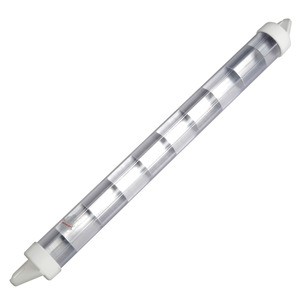 Supercompact radar reflector for shroud or stay – code: 32.235.00 – Osculati
How to choose the right safety kit without slowing down the order
Choosing quickly does not mean choosing hastily. The most effective method is to first gather essential data and use it as a filter during selection. For most applications, a few well-done checks are enough to avoid later mistakes.
Before proceeding, make sure you have:
- measurements and fittings of the installation point;
- information on threads and connections;
- useful data on flow rates or voltages, if required by the application;
- photos or reference of the component to be replaced;
- list of any necessary accessories.
With this information, the choice becomes easier and the risk of incompatibility is significantly reduced. If any data is missing, do not improvise: compare the available documentation and check the product sheet before confirming.
If you want to find the solution suitable for your system more quickly, explore the dedicated category or the reference brand in the Technofluid store: you will find a selection designed to facilitate comparison between variants, spare parts, and accessories useful for installation and maintenance.
FAQ
Which data to check before ordering a safety kit?
Before ordering, it is advisable to check fittings, dimensions, threads, clearances, compatibility with the line, and, if electrical components are present, also voltages or type of power supply. If any information is unclear, check the product sheet.
Why is thread inspection so important in a safety kit?
Why two similar-looking connections may not be compatible. A wrong thread can cause forced assemblies, leaks, or the need for unexpected adapters. Checking the thread type is one of the most important steps before purchase.
Can I reorder the same safety kit using only the old component code?
Not always. If the system has been modified over time, the historical code may no longer reflect the current configuration. It is better to also check the application, connections, available space, and required function.
How to avoid installation errors after purchasing the security kit?
Before assembly, it is useful to perform a final check between the received order, connections, dimensions, and necessary accessories. A preventive check reduces the risk of plant downtime and helps manage the installation more smoothly.
Is the safety kit also useful for maintenance?
Yes, especially when the goal is to simplify replacements and scheduled maintenance. From a maintenance safety kit perspective, having a solution consistent with the system helps reduce errors and intervention times.


