


When talking about safety kit, the choice should never be made hastily. In many cases, in fact, the kit is not just an accessory, but a set of components that contribute to the proper functioning of the system, the protection of connected parts, and operational continuity over time. A good safety kit guide always starts with three practical questions: on which system it must be installed, with which elements it must interact, and what level of reliability is required in daily use.
To really navigate, it is not enough to compare generic descriptions. It is useful to evaluate the context of use, compatibility with existing connections and configurations, ease of maintenance, and availability of spare parts or related accessories. In this guide, we see how to choose the most suitable kit avoiding common mistakes and setting a more conscious selection, especially when the goal is to purchase targeted within a technical store.
If you want to delve deeper into the application context of the connected components, you can also consult the technical guides in the catalog and the pages dedicated to system installations, useful for better framing needs and configurations.
What a safety kit is for and when it is worth choosing it
A safety kit is used to neatly integrate components designed to work together in a specific system or application. The main advantage is functional coherence: instead of selecting individual elements separately, you start from a solution already conceived to meet a precise need.
This approach is particularly useful when:
- a new system must be installed and you want to reduce the risk of incompatibility;
- you are working on an existing system that requires a targeted update;
- you want to simplify the management of ordering, assembly, and assistance;
- you are looking for a more straightforward solution also in terms of maintenance safety kit.
In practice, the kit helps avoid fragmented selection. However, this does not mean that every solution is automatically suitable for any configuration. For this reason, it is important to carefully read the intended use and check in the product sheet the technical details truly compatible with your system.
Another often underestimated aspect is durability over time. A well-chosen kit is not only evaluated at the time of installation but also for how it fits into the future management of the system. The availability of replacement components, ease of inspection, and clarity of technical information greatly affect the overall user experience.
When a kit is more useful than separately purchased components
Buying single components can make sense in very specific contexts or when you already know precisely the necessary configuration. However, in many cases, the kit represents a more efficient choice because it reduces the margin of error. This is especially true for those who want a ready-to-integrate solution without having to reconstruct the logic of the whole each time.
A kit can be the best choice when:
- the system has a standard or recurring structure;
- you want to speed up the selection phase;
- you seek greater uniformity between different installations;
- you prefer to simplify subsequent inspection or replacement interventions.
For an overview of the related component families, it may be helpful to consult the section with compatible accessories and spare parts, so you can immediately understand if the kit fits well within the logic of your system.
Compatibility, measurements, and technical checks of the safety kit
The most delicate phase in the choice concerns the compatibility. Even the seemingly most suitable kit can prove to be poorly functional if it does not properly interact with the rest of the system. For this reason, a true safety kit guide must start from concrete checks and not from a simple visual assessment.
Before purchasing, it is advisable to check at least these points:
- type of system: the kit must be designed for the correct application;
- connections and fittingscheck the product sheet for the type of connection required;
- dimensions and sizes: the available space can influence the choice;
- compatibility with already installed components: fittings, valves, groups, or other elements must be consistent;
- mounting methods: some kits are more suitable for new installations, others for replacements or integrations;
- usage conditionsenvironment, frequency of use, and general configuration affect the selection.
Often the mistake arises from considering the kit as an isolated element. In reality, it must be seen as part of a system. If your system already has installed components, it is useful to compare the existing characteristics with those indicated in the product sheet, thus avoiding unforeseen adaptations or awkward installations.
Measurements and details to check before ordering
Measurements should not be interpreted only as external dimensions. In a kit, center distances, diameters, connection orientation, maneuvering spaces, and compatibility with any supports or housings also matter. A careful check before ordering avoids many subsequent issues.
A practical check can follow this scheme:
- identify the exact point of the system where the kit will be installed;
- take useful measurements and not just the overall size;
- check the type of connection present on the system;
- verify if additional accessories are needed for mounting;
- compare the collected data with what is reported in the product sheet.
If any of these steps is unclear, the best choice is not to proceed by analogy. Two kits similar in appearance may be designed for different configurations. In case of doubt, it is always preferable to rely on official technical information and verify every determining detail in the product sheet.
Compatibility with existing systems and replacements
When the safety kit must replace an already present group, compatibility becomes even more important. It is not enough that the new component “fits” in the available space: it must properly integrate into the circuit and maintain consistency with the rest of the system.
In these situations it is useful to check:
- the function performed by the already installed component;
- the arrangement of the connections;
- the presence of accessories that may need to be maintained or replaced;
- the possibility of performing maintenance without complex disassembly.
For those who often work on updates or replacements, it may be useful to also consult the solutions for integration on existing systems and the pages dedicated to compatible components, so as to have a more complete picture before purchase.
Typical errors in ordering or installing the safety kit
Many problems do not depend on the product itself, but on incomplete selection or installation set without verifying all steps. Knowing the most common errors helps reduce lost time, avoidable returns, and corrective interventions.
Confusing similar but not identical applications
One of the most frequent mistakes is choosing a kit designed for a similar use, but not really compatible with your system. Visual similarity or a too generic description can be misleading. It is always necessary to verify the actual application context and not stop at the category name.
Neglecting installation space
A kit may be functionally correct but uncomfortable or unsuitable in the available space. This happens especially when only the final position is considered and not accessibility during assembly, inspection, and maintenance. Leaving the right operational space is essential to avoid complex interventions in the future.
Not considering future maintenance
The maintenance safety kit should not be an afterthought. If a kit is installed in a hard-to-reach position or without considering the replacement of wear parts, every subsequent intervention becomes longer and less practical. A good initial choice also takes into account ease of inspection and availability of related components.
Ordering without checking the product sheet
Another typical mistake is relying only on the image or product title. In the technical field, details make the difference. Before completing the order, check the product sheet:
- intended use;
- declared compatibility;
- type of connections;
- any necessary accessories;
- useful information for installation and maintenance.
This simple habit significantly reduces wrong choices and makes the entire purchasing process more effective.
Products, spare parts, and accessories useful for a more complete choice
A safety kit should not be evaluated only for what it includes, but also for the ecosystem of elements it may require over time. Thinking ahead about spare parts, accessories, and complementary components means better managing both installation and routine maintenance.
Among the aspects to consider are:
- the availability of compatible spare parts for future replacements;
- the presence of accessories that simplify assembly;
- consistency with other components already present in the store;
- the possibility to easily identify variants or related solutions.
This approach is particularly useful for those who purchase with a professional logic: they do not only look at the immediate need, but also at operational continuity. Knowing that compatible accessories and spare parts exist makes it easier to plan subsequent interventions without having to start from scratch every time.
Furthermore, a well-constructed selection helps standardize purchases, especially when managing multiple systems or recurring installations. Even in this case, the advice is always the same: before proceeding, check in the product sheet if the kit is designed for use with additional elements or if it requires specific components for proper assembly.
Recommended products
Go to the Safety Kits category


 Yellow sky XL dominator lifebuoy - code: 22.473.04 – Osculati
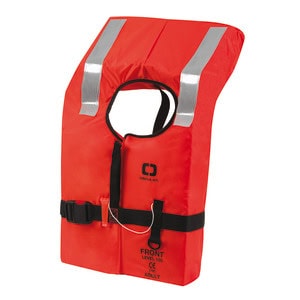
 France Kit category 3rd/4th/5th – code: 35.446.10 – Osculati
How to use this safety kit guide to buy better in the store
An effective guide is not only useful to understand “what to buy,” but above all how to choose more precisely. When browsing the store, try filtering options by following a simple sequence:
- start from the type of system;
- narrow the selection based on compatibility;
- check measurements, connections, and available space;
- verify the presence of useful spare parts or accessories;
- read the product sheet carefully before ordering.
This method helps avoid impulsive purchases and makes it easier to compare different solutions in a technical but practical way. If your goal is to find a kit suitable for an existing system, it is advisable to start from the characteristics of the current installation. If, on the other hand, you are designing a new configuration, you can immediately also consider ease of maintenance and consistency with other components available in the store.
To complete the search more quickly, explore the category dedicated to safety kits and the brands available in the Technofluid store: you will find solutions designed for different applications, with product sheets useful for checking compatibility, assembly, and related accessories before purchase.
FAQ
How do I know if a security kit is compatible with my system?
The most reliable way is to compare the type of system, connections, measurements, and mounting methods with what is indicated in the product sheet. If the system already exists, also check the function of the component to be replaced and the arrangement of the connections.
Is it better to choose a security kit or buy separate components?
It depends on the context. A kit is often more practical when you want to reduce the risk of incompatibility and simplify ordering, installation, and maintenance. Separate components can be useful only when you already have a very specific configuration to assemble.
What checks to make before ordering a safety kit online?
Before ordering, it is advisable to check the intended use, connections, dimensions, available space for installation, compatibility with already installed components, and any necessary accessories. In case of doubt, check all technical details in the product sheet.
Why is maintenance important when choosing a safety kit?
Because a kit should not be evaluated only at the time of installation. Ease of access, the possibility of replacing worn parts, and the availability of compatible spare parts affect the future management of the system and operational continuity.
What is the most common mistake when choosing a security kit?
The most common mistake is relying solely on the appearance or a generic description without verifying the actual compatibility with the system. Even very similar kits can be intended for different applications, so it is essential to always check the product sheet.


