When boat tanks are really needed
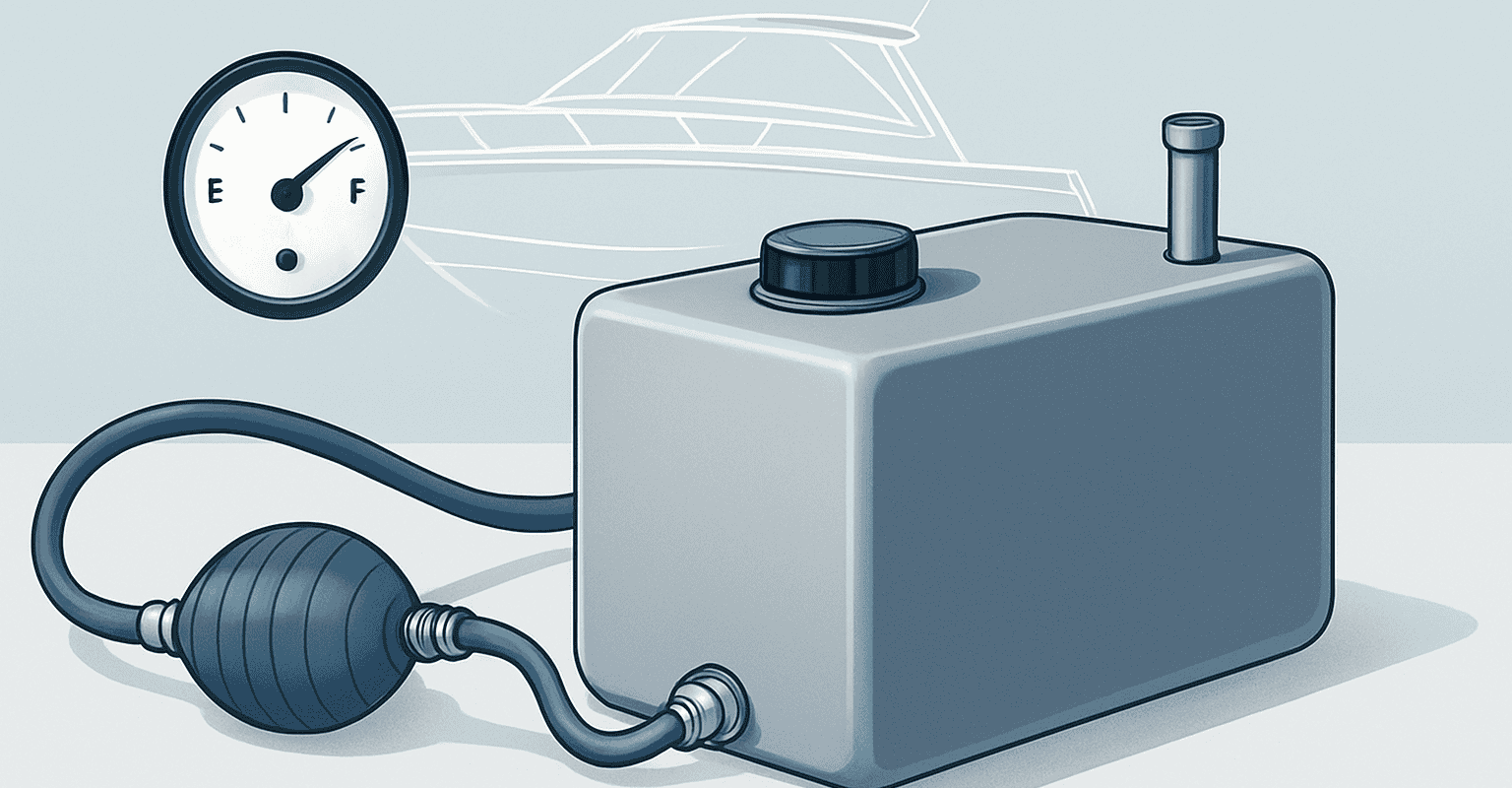
Choosing boat tanks does not only mean finding a container with dimensions suitable for the available space. In the nautical field, the correct choice arises from the combination of actual use of the boat, type of system already on board and the need for compatibility with fittings, pipes, and fastening systems. It is precisely here that many seemingly simple decisions become technical.
A tank can be used in different operational contexts: onboard supply, collection, technical reserve, or management of fluids dedicated to specific functions of the boat. For this reason, it is not enough to evaluate only the size. It is necessary to understand what it must contain, where it will be installed, and with which components it will have to interact over time.
Those who consult nautical technical guides this often happens after encountering one of these problems:
- irregular or difficult to use available space;
- connections not aligned with the existing system;
- doubt between direct replacement and adaptation;
- need to avoid invasive modifications on board;
- uncertainty about the actual compatibility with accessories and connections.
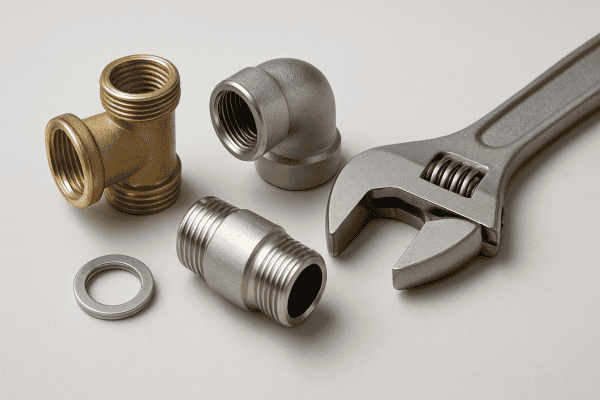
In pratica, il serbatoio giusto è quello che si integra senza forzature. Se per montarlo servono troppe modifiche, curve anomale nelle tubazioni o adattatori improvvisati, è probabile che la scelta iniziale non sia stata la migliore. In questi casi conviene confrontare anche componenti collegati come raccordi per impianti nautici, tubi tecnici per barca e accessori di installazione, così da valutare il sistema nel suo insieme.
Boat tanks: differences between solutions, sizes, and compatibility
The most delicate point in the choice concerns the relationship between tank shape, system layout, and accessories already present. When talking about boat tank compatibility, It does not only mean the physical possibility of fitting them into a compartment. Compatibility is also functional, related to systems and maintenance.
Shape and dimensions: it’s not just about external space
Two tanks with similar external dimensions can behave very differently once installed. The positioning of the openings, accessibility to connections, pipe routing, and ease of inspection change. Before purchasing, it is useful to check:
- orientation of the connections;
- usable height for connecting pipes and fittings;
- presence of structural obstacles in the compartment;
- possibility of stable fixing;
- future access for maintenance or replacement.
A common mistake is measuring only the width, depth, and height of the compartment, neglecting the space needed to mount and connect the tank. Even a few poorly considered centimeters can complicate installation.
Compatibility with existing fittings and lines
One of the most common reasons for returns or replacements is the mismatch between the tank’s connections and components already on board. To avoid problems, always check:
- position of inlet and outlet points;
- type of connections provided;
- direction of pipe flow;
- possible need for adapters;
- consistency with the layout of the existing system.
If the detail is not clear, check the product sheet. In a serious technical guide, compatibility is never taken for granted: it must be considered together with the characteristics of the compartment and the system.
Materials and intended use
Another key aspect concerns the relationship between the tank material and the fluid to be handled. It is essential to avoid oversimplifications here. Not all tanks are designed for the same use, and not all configurations are interchangeable. The choice must be made based on the intended use and compatibility with the rest of the system.
Per chi sta confrontando più opzioni, può essere utile approfondire anche contenuti collegati come componenti per impianti di bordo o accessori tecnici nautici, così da verificare se il serbatoio selezionato si inserisce in modo coerente nell’impianto complessivo.
Mistakes to avoid when choosing or installing boat tanks
Many problems arise not from component defects, but from incomplete assessment before installation. The nautical technical guides most useful are those that help prevent practical errors, especially when replacing an existing tank with a different model.
Choosing based on the compartment without reading the configuration
The first mistake is to think that if the tank fits into the compartment, then it is suitable. In reality, you also need to check how the various points of the system connect. A fitting positioned on the wrong side can force unnatural bends in the pipes or awkward passages that increase the complexity of the assembly.
The practical rule is simple: first compare the configuration, then compare the measurements. The reverse order often leads to unreliable compromises.
Neglecting accessibility and maintenance
A properly installed tank today must remain manageable tomorrow as well. If once installed it makes it impossible to check fittings, clamps, or connection lines, every future intervention becomes longer and more inconvenient. It is therefore worth asking:
- can the connections be reached without complex disassembly?
- is there space for periodic checks?
- does the fastening allow stability without blocking access?
These questions make the difference between a neat solution and an installation that creates problems over time.
Using improvised adaptations to force compatibility
When talking about boat tank compatibility, the most common temptation is to compensate for a wrong choice with makeshift fittings or unusual pipe routes. It is a shortcut to avoid. If the tank requires too many corrections to work in your system, it is probably not the most suitable model.
Meglio dedicare più tempo al confronto iniziale tra schema del vano, attacchi e accessori, piuttosto che risolvere tutto in fase di montaggio con soluzioni poco pulite. Se necessario, confronta anche guide su raccordi e collegamenti nautici per capire se il sistema resta coerente.
Ignoring the fastening and support of the tank
Another recurring mistake is to focus only on the container and not on how it will be supported. The fastening must be designed to be stable and compatible with the compartment structure. Again, if a detail is unclear, check the product sheet and compare the solution with the support available on board.
Products and categories to consider together with boat tanks
In a complete technical evaluation, the tank should never be considered as an isolated element. The best choice almost always comes from comparison with related categories, because the final performance depends on the set of components involved.
When analyzing a solution, it is advisable to also check:
- fittings compatible with the intended fittings;
- pipes consistent with the available route;
- clamps and fastening systems suitable for installation;
- inspection or connection accessories useful to complete the assembly;
- system components that may require an orderly and not improvised adaptation.
This approach is typical of the best nautical technical guidesdo not just say which tank to look at, but help to understand which configuration makes sense in the real context of the boat.
If you are replacing an existing component, the most useful comparison is between the old configuration and the new solution. Note the position of the fittings, the direction of the pipes, the maneuvering spaces, and the type of fastening. Only then does it make sense to move on to selecting the new tank.
A good operating method can be this:
- carefully detect the actual compartment, including obstacles and connection spaces;
- photograph or sketch the current system;
- check the position and orientation of the fittings;
- verify if the components already present can be retained;
- compare the tank's datasheet with the system, not just with the compartment.
By doing so, the choice becomes more precise and the risk of hidden incompatibilities is reduced. In a professional or semi-professional context, this is the real dividing line between a quick purchase and a correct purchase.
Recommended products

 10" Wound Wire Cartridge 20 micron – code: 10MP20 – Idromar
 Stainless steel clamps Norma 12–22 mm – code: FAI0012022 – Toscogomma
 Brush with spring - code: SGM45 - Gianneschi Pumps and Blowers



How to read a technical datasheet without making compatibility mistakes
Many users look for boat tanks starting from photos or general shape, but a reliable decision is made by carefully reading the datasheet. There is no need to look for complex details: the right data, read in the right order, is enough.
When consulting a datasheet, focus first on:
- overall dimensions;
- arrangement of the fittings;
- declared intended use;
- any mounting notes;
- compatibility with accessories or related components.
Only later does it make sense to compare secondary aspects. If the component is not consistent with your system from the basic setup, no subsequent adaptation will really make it practical.
For this reason, those who work methodically use datasheets as a comparison tool and not as a simple showcase. If information is not explicitly stated, check the product sheet or compare the available documentation before proceeding.
Support for choosing between boat tanks and related accessories
If you are considering a replacement or a new installation, it is advisable to start from the category of boat tanks together with the connected accessories, so as to immediately verify the consistency between tank, fittings, pipes, and fastenings. An orderly comparison between categories and technical brands helps reduce compatibility errors and choose a more straightforward solution for your onboard system.
FAQ
How to check the compatibility of a boat tank with the existing system?
To verify compatibility, you need to check together the dimensions, position of the connections, routing of the pipes, accessibility to the connections, and the type of fixing provided. It is not enough for the tank to fit into the compartment: it must integrate with the system without requiring improvised adaptations. If a detail is not clear, check the product sheet.
Does the size of the compartment or the arrangement of the connections matter more?
Both aspects are important, but the arrangement of the connections is often underestimated. A tank that fits perfectly into the compartment can be uncomfortable or unsuitable if the connections are not compatible with the system layout. The correct choice starts from comparing configuration and measurements, not just external dimensions.
Is it a good idea to use adapters to make a tank compatible?
Adapters can be useful only if they remain part of an orderly and coherent configuration. If many modifications are needed to make the tank work in your system, it is likely that the chosen solution is not the most suitable. In general, it is better to prefer a component already compatible with fittings and lines present on board.
When is it better to replace the tank instead of adapting the existing one?
It is advisable to consider replacement when the system requires a different configuration, when the connections are no longer consistent with the onboard layout, or when installation would involve too many adjustments. A well-planned replacement is often easier to manage than a forced adaptation.
Which components should be checked along with boat tanks?
In addition to the tank, it is useful to check fittings, pipes, fastening systems, and connection accessories. The actual compatibility depends on the set of components and not just the container. For this reason, the most useful nautical technical guides always consider the complete system.