


When talking about connections, handling, fastening or quick assemblies, carabiners, shackles and swivels are often considered “simple” components. In reality, this apparent simplicity leads to frequent mistakes: buying the wrong part, assembling it in a way that is not suitable for the application, neglecting compatibility with other elements of the line, and ending up wasting time on replacements, downtime and extra checks.
This carabiners/shackles/swivels guide is designed to help you choose more wisely, avoiding the most common mistakes both when ordering and during assembly. The goal is not to complicate the choice, but to make it faster and more consistent with actual use. If you are evaluating components for a system, a work line or equipment, starting with the right checks allows you to reduce errors, returns and corrective actions.
Per orientarti meglio tra categorie e soluzioni correlate, può essere utile consultare anche le guide tecniche del catalogo, dove trovi approfondimenti su componenti e accessori collegati.
What carabiners/shackles/swivels are used for in everyday applications
I carabiners/shackles/swivels are connection elements used to join, hold, connect or make coupling between different parts more practical. They may seem interchangeable, but they are not: each family is designed to solve specific needs and choosing “the one that seems to fit” is often the first step towards an ineffective purchase.
In practical terms:
- carabiners are chosen when a quick and practical connection is needed;
- shackles are often preferred where a stable union between multiple elements matters;
- swivels come into play when it is useful to manage rotation or limit unwanted twisting.
The correct function always depends on the context. A component that works well in a linear connection may not be the best choice if the system is subject to movements, vibrations, twisting or frequent openings and closings. For this reason, even before looking at shape and size, it is worth asking yourself what kind of work the component has to perform.
The useful questions to ask yourself are simple:
- Should the connection be quick to open or generally stable?
- Does the component work in a fixed position or can it undergo rotations and misalignments?
- Does it need to connect to ropes, chains, cables, eyelets, or other terminals?
- Is the work environment exposing the part to dirt, moisture, or frequent use?
Capire questo punto all’inizio evita il classico errore di acquistare un articolo corretto “in assoluto”, ma sbagliato per l’uso reale. Se hai dubbi sulle differenze tra famiglie di componenti, può essere utile confrontare anche le categorie di collegamento e fissaggio disponibili nello store.
Compatibility, measurements, and technical checks before purchase
One of the most common causes of error is focusing only on the external appearance of the component. Instead, the correct choice comes from compatibility with the system in which it will be inserted. This applies to carabiners, shackles, and swivels in any application field.
The first check concerns the interface with other elements. It is not enough that the component “fits”: it must work well together with what it connects. An eyelet that is too tight, an unsuitable seat, a coupling that creates friction or limited rotation can cause problems already at the first assembly.
Always check the contact points
Before ordering, verify:
- diameter and clearance of the elements to be connected;
- shape of the terminals with which the component will mate;
- available space for opening, insertion, or rotation;
- orientation of the load or traction in the intended use;
- any need for frequent disassembly or periodic maintenance.
These checks are particularly important when replacing an existing component. In many cases, there is a tendency to order a replacement “similar to the one installed,” but over time the application may have changed, or the original assembly may not have been optimal. Performing a visual and functional check before reordering avoids repeating the same mistake.
Measurements: don’t stop at the main dimension
Another common mistake is to consider only one measurement, neglecting everything else. In mechanical connections, compatibility does not depend on a single datum but on the combination of multiple dimensions and geometries. Useful opening, pin size, internal clearance, overall bulk, and possibility of movement are aspects that must be read together.
If a measurement is unclear, the most practical advice is simple: check the product sheet. When possible, compare the component with the piece already installed and observe how it works in the real system. A minimal difference on paper can translate into an awkward assembly or non-smooth use.
Materials and operating environment
Compatibility is not only geometric. The operating context also affects the choice. If the component works in environments exposed to humidity, external agents, dirt, or frequent washing, the material and finish can influence durability and ease of use. The same applies to applications with intensive use, repeated openings, or contact with other metal elements.
Non serve entrare in valutazioni troppo teoriche: basta chiedersi se il componente dovrà lavorare in un ambiente pulito e controllato oppure in condizioni più gravose. In caso di dubbio, conviene consultare le schede tecniche dei componenti e confrontare le soluzioni disponibili in base all’applicazione.
Typical errors in ordering or installing carabiners/shackles/swivels
Many problems do not arise from the product itself, but from a hasty choice or an assembly performed without checking how the component will behave once in operation. Here are the most common mistakes to avoid.
Purchasing based on visual similarity
This is probably the most widespread mistake. Two components may look very similar but differ in opening, geometry, closing method, or compatibility with the rest of the assembly. Ordering “by sight” wastes time, especially when the component must integrate with already existing parts.
The correct method is to start from the application and then check the drawing, dimensions, and notes on the product sheet. If your goal is to reduce purchasing errors, this is the most important rule of the entire guide.
Ignoring the working direction of the component
A connection may be formally assembled but work poorly because it is subjected to a stress direction inconsistent with its configuration. This can cause abnormal wear, friction, difficulty in operation, or the need for early replacement.
Before assembly, always observe:
- how the load is distributed at the connection point;
- whether the component remains aligned or tends to rotate;
- if torsions or rubbings occur during use;
- if the opening or closing remains accessible even after installation.
A comfortable assembly on the bench is not always a functional assembly in the machine or plant.
Neglecting the real tolerances of the assembly
In the workshop or maintenance, it often happens to reason on nominal measurements, but the component must face reality: wear, slight deformations, accessories not perfectly standardized, limited spaces. For this reason, it is useful to consider a real operational margin and not just a theoretical one.
If insertion is forced, if movement is limited, or if the fit appears “tight,” it is advisable to stop and recheck. A not smooth assembly today can become a recurring problem tomorrow.
Underestimating routine maintenance
The carabiners/shackles/swivels maintenance is often neglected because these components are perceived as passive accessories. In reality, precisely because they work at connection points, they are exposed to wear, dirt, friction, and repeated operations.
Minimal but regular maintenance helps prevent jams, difficulty opening, abnormal play, and unscheduled replacements. There is no need to complicate the process: just include these checks in the periodic inspections of the equipment or line.
In particular, it is useful to check:
- presence of visible wear at contact points;
- smoothness of moving parts, if present;
- deformations, ovalizations or abnormal marks;
- dirt buildup that hinders proper functioning;
- correct integration with connected components after interventions or replacements.
If you notice differences compared to usual operation, do not just replace the part: also check if the error depends on the assembly, installation, or an initially inconsistent choice.
Products, spare parts, and accessories useful to avoid downtime and wrong reorders
When looking for a connecting component, the risk is focusing only on the main part and forgetting everything around it. In many cases, however, the best choice comes from a broader view of the assembly: base component, interface elements, mounting accessories, and spare parts that may be needed over time.
This approach is especially useful in three situations:
- when you are setting up a new system and want to avoid incompatibilities;
- when you need to replace a worn component without stopping work more than necessary;
- when you want to standardize purchases to simplify maintenance and reordering.
A good operating method is to prepare a small internal checklist before ordering. For example:
- which component needs to be replaced or integrated;
- which elements it must be compatible with;
- if connected accessories are needed for assembly;
- if it is worth keeping spare parts of the same families in stock;
- if the application requires a solution oriented towards ease of use or connection stability.
Questa logica riduce gli acquisti frammentati e aiuta a costruire un assortimento più coerente. Per approfondire componenti complementari e soluzioni collegate, puoi consultare anche la selezione di accessori tecnici e i ricambi per applicazioni professionali.
Another often underestimated aspect concerns operational continuity. If a component is subject to frequent use, having already identified the correct family and compatible spare parts allows for quicker intervention in case of replacement. It does not mean over-purchasing, but better organizing the flow between selection, installation, and maintenance.
At this stage, the product sheet remains the main reference. If a detail about compatibility, dimensions, or configuration is not immediate, check the product sheet before confirming the order. It is a simple step that often avoids returns, rework, and downtime.
Recommended products
Go to the Carabiners/Shackles/Swivels category
 Twisted stainless steel shackle microcast mm 5 – code: 08.856.05 – Osculati
 Galvanized steel omega shackle 25 mm – code: 0123425 – Motomarine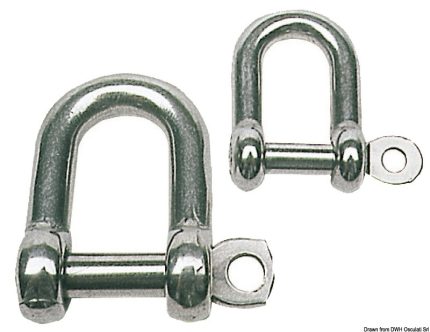

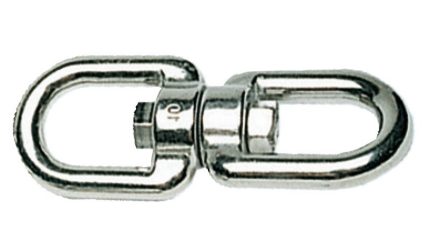 Double eye stainless steel swivel d. 10 – code: 01.018.10 – Osculati
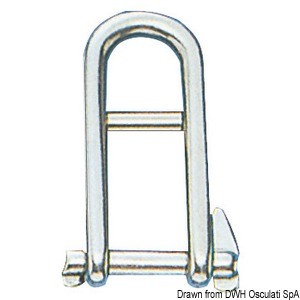 Snap stainless steel shackle with 8 mm stop – code: 08.764.08 – Osculati
 Stainless steel spring carabiner 70 mm – code: 09.247.70 – Osculati
 Stainless steel recessed lyre latch d. 12 – code: 01.081.12 – Osculati
How to set up a more effective choice without wasting time
If you want to purchase more quickly but with less margin for error, the best criterion is to follow a logical sequence. Do not start from the component name, but from the problem to solve. First ask yourself what function the connection must perform, then check how it integrates with the rest of the assembly and only at the end compare the available options.
A practical procedure can be this:
- identify the actual use of the component in the system;
- check shape, space, and connection method with other elements;
- assess if quick opening, stability, or rotation management is needed;
- consider the working environment and frequency of use;
- always compare everything with the product sheet before ordering.
Following this scheme, the choice becomes less impulsive and more functional. And this is exactly where a good carabiners/shackles/swivels guide makes the difference: not to add complexity, but to remove uncertainty.
If you are looking for the most suitable solution for your system or your business, explore the dedicated category and the brands available in the store: comparing compatible families and technical sheets helps you find the right component faster, with fewer errors in purchase and assembly.
FAQ
How to choose between carabiner, shackle, and swivel?
The choice depends on the function of the connection. If ease of opening is needed, a carabiner is often considered; if a stable union matters, a shackle may be more suitable; if rotations need to be managed or twists limited, a swivel can be useful. Always check compatibility, geometries, and usage methods in the product sheet before ordering.
What is the most common mistake when purchasing carabiners/shackles/swivels?
The most common mistake is to purchase based solely on visual similarity or a main measurement. In reality, dimensions, usable opening, contact points, mounting orientation, and compatibility with other assembly elements must also be checked.
When is it useful to check compatibility before installation?
Always, especially when replacing an existing component. Even if the new part looks similar, internal clearance, shape, rotation possibilities, or space required for installation may change. A preliminary check prevents forced assemblies and wasted time.
How to perform basic maintenance of carabiners/shackles/swivels?
Include these components in the periodic equipment inspections. Check for visible wear, deformations, smoothness of moving parts, presence of dirt, and correct fitting with other elements. If you notice anomalies, also check if the problem depends on the assembly or the application.
What to do if a technical detail is not clear?
The correct reference is the product datasheet. If a dimension, configuration, or compatibility is not immediately clear, check the product datasheet before confirming the order. This step helps avoid unnecessary returns and replacements.


