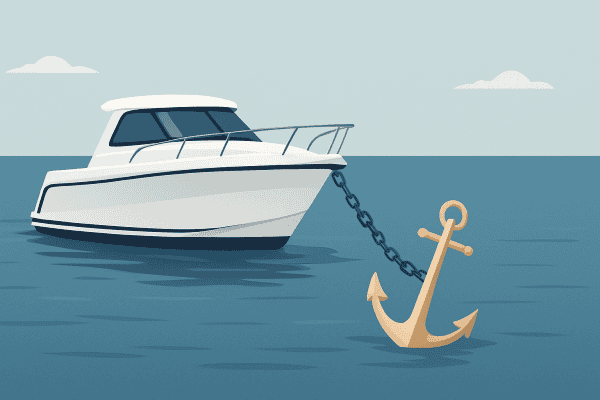
What sail and accessories are for in an efficient nautical setup
When talking about sails and accessories, people often tend to focus only on the main element, neglecting everything that allows for smooth, safe, and consistent use with the boat's trim. In reality, proper functioning depends on the whole: attachment points, adjustment systems, sliding components, connecting elements, and wear parts work as a single system.
A good sails and accessories guide It starts right here: understanding that the most common problems do not always arise from the sail itself, but from small misalignments, rushed assemblies, or replacements chosen without checking compatibility. An apparently secondary component can affect maneuverability, correct tension, and ease of use in daily adjustments.
Those who buy or replace sail accessories usually have a concrete need:
- restore a system that no longer works properly;
- improve smoothness during maneuvers;
- resolve play, friction, or unstable fastenings;
- update worn parts before they cause more extensive problems;
- correctly match new components to elements already on board.
For this reason, it is useful to approach the topic practically. Before ordering a replacement or accessory, it is advisable to observe the behavior of the whole system and not just the single piece. If an adjustment is stiff, if the fastening does not remain stable, or if the assembly seems forced, the problem could be due to an incorrect measurement, an improper fit, or wear distributed over multiple points.
To deepen the context of the technical components on board, it can be useful to also consult the guides dedicated to nautical components and the insights on spare parts for systems and equipment, so as to compare approaches and selection criteria.
Compatibility, measurements, and technical checks to choose sail and accessories
The most delicate phase is not always installation: often it is the preliminary verification. A correct choice comes from simple but essential checks, especially when replacing already mounted parts or integrating new elements into an existing setup.
Check the connection points
The first step is to verify how the component interfaces with the structure or with the accessories already present. It is not enough that it “looks similar”: attachments, seats, passages, and fastening methods must match. If the component works under tension or movement, even a small difference can cause friction, play, or unstable assembly.
Before purchasing, check:
- shape and type of attachment;
- position of the fixing points;
- compatibility with already installed elements;
- any differences between the original configuration and the chosen replacement;
- presence of adapters or necessary intermediate parts.
If a detail is not clear, check the product sheet. It is the fastest way to avoid compatibility errors that are discovered only at the time of assembly.
Measurements to take before ordering
In the world of sails and accessories maintenance, many critical issues arise from measurements taken approximately. A correct measurement should include not only the size of the part to be replaced, but also the actual available space, the mounting orientation, and the interaction with nearby components.
The most useful checks are:
- overall size of the component;
- distance between fixing points;
- diameter or section of the connecting parts;
- space needed for excursion, rotation, or sliding;
- presence of obstacles that limit assembly.
When possible, compare the existing part with clear photos and noted measurements. This helps reduce errors and makes it easier to identify the correct solution within the store.
Assess wear and condition of the assembly
A common mistake is to replace only the most visibly damaged component. In many cases, however, wear also involves the connected parts. If an accessory has worked for a long time out of alignment, it is likely that fastenings, supports, or sliding elements have also been stressed.
Before proceeding, observe these signs:
- visible deformations;
- irregular wear of contact surfaces;
- abnormal movements during use;
- difficulty in adjustment;
- noises or friction not previously present.
In a purchase guide, this step is decisive: choosing the right replacement also means understanding whether only a targeted replacement is needed or a more complete intervention.
Typical errors in ordering or installation: quick diagnosis of the most frequent problems
Many returns, repeated replacements, or wasted time depend on recurring errors. Recognizing them in advance allows for more informed purchasing and installing components with fewer surprises.
The component fits, but does not work well
This is one of the most common cases. The part seems compatible, is installed, but during use friction, stiffness, or unsteady movements emerge. Usually, the problem depends on only apparent compatibility: similar attachment, but different geometry; close measurement, but not correct; possible assembly, but out of alignment.
If this happens, it is advisable to immediately check:
- alignment with other elements;
- correct orientation during assembly;
- any interference with supports or guides;
- presence of worn components that alter the work of the new part.
Irregular sliding or imprecise adjustment
When a maneuver does not respond progressively, the cause is not always the recently replaced component. Often the problem arises from residues, wear of the seats, uneven fastenings, or secondary accessories that are no longer efficient. For this reason, a quick diagnosis must start from the behavior of the complete system.
A useful check can follow this order:
- check if the movement is stiff at only one point or along the entire stroke;
- observe if the component works in alignment;
- check for any signs of abnormal rubbing;
- ensure that the anchoring points are stable;
- verify that no interface elements required by the assembly are missing.
For those looking for a practical solution in the store, this sequence helps to understand whether a single replacement or a set of coordinated components is needed.
Correct order on paper, but unsuitable for the real application
Another common mistake concerns purchasing based only on the generic description. In the nautical field, two accessories may seem equivalent but differ in shape, mounting method, or intended use. That is why a sails and accessories guide truly useful one must insist on practical checks, not just on the product category.
Before confirming the order, ask yourself:
- am I replacing an identical component or looking for a compatible alternative?
- have I checked photos, attachments, and dimensions?
- does the component need to integrate with parts already present?
- are there complementary accessories to check together?
To better navigate the available solutions, the pages dedicated to technical accessories for boating and collections of related spare parts and components can also be useful.
Useful products, spare parts, and accessories to check before replacement
When undertaking an intervention on sails and accessories, it is advisable to avoid too narrow a logic. Replacing only the most obvious part may solve the symptom, but not always the cause. A broader check reduces the risk of having to intervene again shortly.
Fastening and connection components
Connection points are among the first to check because they often work under stress and can compromise the efficiency of the entire system. If they show wear, play, or deformation, even a new accessory might not work as expected.
It's worth checking:
- condition of the mounting seats;
- stability of connections;
- integrity of the load-bearing parts;
- presence of signs of loosening or wear.
Guiding, sliding, and adjustment elements
Many operational problems arise from components that should facilitate movement but, over time, begin to resist or work irregularly. In this case, maintenance is not just cleaning: it may be necessary to replace worn elements or verify if the current assembly is still correct.
A good routine of sails and accessories maintenance includes checking:
- guides and seats subject to friction;
- parts that must maintain constant smoothness;
- accessories that regulate tension or position;
- components showing signs of uneven wear.
Coordinated spare parts to avoid repeated interventions
In many cases, it is advisable to consider the simultaneous replacement of multiple connected elements, especially when wear is distributed. This approach is useful not only to restore functionality but also to avoid incompatibility between a new part and already compromised components.
Before choosing, consider if:
- the new component will work together with very old parts;
- contact points show obvious wear;
- the problem has been present for a long time and not suddenly;
- partial interventions have already been made without stable results.
If you are comparing multiple options, also consult the guides for identifying compatible spare parts to simplify the choice and reduce matching errors.
How to set up a quick diagnosis before purchasing
An effective quick diagnosis does not require complex tools but an orderly method. The goal is to understand whether the problem really depends on the component you want to replace or on a set of related factors. This is particularly important in a store-driven guide, where choosing the right product starts from observing the real case.
Practical control sequence
You can follow this scheme:
- Observe the main symptom: friction, play, irregular sliding, unstable fastening, difficulty in adjustment.
- Identify the point where it occurs: at the start of the movement, throughout the stroke, only under load, only in a certain position.
- Check nearby components: often the defect originates from connected parts and not from the most obvious one.
- Verify measurements and attachments: especially if the component has already been replaced in the past.
- Compare with the product sheet: if a detail is uncertain, verify it in the product sheet.
This method helps both those performing routine maintenance and those who want to purchase spare parts more accurately.
When to stop and recheck
If during assembly you notice forced fits, uncertain alignments, or unexpected differences compared to the removed component, it is better to stop and recheck. Continuing may worsen the problem or compromise parts still in good condition.
The signals not to ignore are:
- need for improvised adaptations;
- unstable fastening;
- unnatural movement even when dry;
- interferences with nearby elements;
- difficulty in maintaining the correct position of the component.
In these cases, an additional check before ordering or final assembly saves time and reduces the risk of choosing an unsuitable accessory.
Recommended products
Go to the Sails and accessories category


 Sail repair tape stayput 100 mm x 2 m white - Code: 10.289.01 - Osculati


 Footstep for sails 8 mm - length 300 cm - code: C0508300 - Trem
Support for choosing between maintenance, replacement, and upgrading accessories
Not all interventions have the same goal. Sometimes it is enough to restore the proper functioning of an existing component; in other cases, it is more useful to replace worn parts or review the set of accessories to achieve a more coherent configuration. Understanding this difference helps to better navigate the store and select only what is really needed.
In summary:
- maintenance when the component is still intact but requires inspection, cleaning, or restoration of functionality;
- replacement when there is obvious wear, play, deformation, or incompatibility;
- upgrade when the current setup works, but it can be made more practical or more consistent with the actual use of the boat.
If you are considering which components to check or replace, explore the category dedicated to sails and accessories or consult the brands available in the store: finding compatible spare parts and accessories is easier when you start from an orderly technical check and a selection designed for real nautical applications.
FAQ
How to understand if the problem depends on the sail or the connected accessories?
Observe the main symptom: if you notice friction, irregular sliding, play, or difficulty in adjustment, first check the fastening points, connecting elements, and guide parts. Often the defect does not originate from the sail itself, but from worn or misaligned accessories.
What measurements should be checked before ordering a replacement for sail and accessories?
It is useful to check the overall size, distance between the fixing points, diameter or section of the connecting parts, available space for installation, and presence of any interferences. If a detail is not clear, check the product sheet.
If an accessory mounts but works poorly, what could it mean?
It usually indicates only apparent compatibility. The component may have similar fittings but geometry, orientation, or dimensions not perfectly suitable. It is advisable to recheck alignment, mounting seats, and the condition of nearby parts before proceeding.
When is it better to replace multiple components together?
When wear is distributed, when contact points show obvious wear, or when a partial intervention has not resolved the problem stably. In these cases, considering coordinated replacements can avoid new disassemblies and improve the final result.
How to set up effective maintenance on sails and accessories?
Effective maintenance starts with regular checks on fastenings, sliding, adjustments, and signs of wear. It is useful to verify if the system works in alignment, if there are abnormal frictions, and if all connected components maintain stability and functionality over time.