


When talking about oils, greases and chemicals, the most common mistake is to consider them “secondary” materials, to be chosen at the last moment. In reality, these elements directly affect the continuity of the work, the cleanliness of operations, and the durability of the components they come into contact with. A rushed choice can cause incompatibilities, wasted time in the workshop, unexpected stops, and repeated purchases that weigh on the budget much more than it seems at the beginning.
A good oils, greases and chemicals guide starts from a simple principle: there is no “absolutely right” product, but there is the product suitable for the type of system, the material of the surfaces, the context of use, and the phase of assembly or maintenance. For this reason, it is practical to think starting from real applications and checks to be made before ordering.
In this guide, we see how to navigate the choice, what checks to make to avoid mistakes, and how to link the purchasing decision to the concrete needs of oils, greases and chemical maintenance, without improvisation.
If you want to explore other topics related to the management of technical components, it may be useful to also consult the product guides, industrial maintenance tips, and categories dedicated to consumables.
What oils, greases, and chemical products are used for in assembly and maintenance activities
The function of oils, greases and chemicals is not limited to lubrication. In many contexts, they are also needed to facilitate assembly, protect surfaces, reduce friction, promote cleaning, prevent seizing, and improve the ordinary management of parts subject to movement or contamination.
The key point is to understand at which phase of the work the product is used. The same system, in fact, may require different materials between initial installation, routine maintenance, corrective intervention, and recommissioning.
When
- During assembly, really come into play.
- , to facilitate fittings, protect threads, or reduce the risk of seizing., In operation.
- , to maintain smoothness, protection, and cleanliness of the parts involved., In maintenance.
- , to unblock, clean, lubricate, or properly prepare surfaces before reassembly., In storage.
, when it is necessary to preserve components or spare parts from moisture, residues, or surface deterioration.
A frequent mistake is to use a single product for very different functions. This approach simplifies purchasing only apparently, but often complicates fieldwork. A lubricant does not automatically replace a cleaner, just as a protective product is not always suitable for delicate assembly. The correct choice depends on the specific task.
Because the choice affects time and costs.
When the material is not suitable, the effects are immediately visible: slower assemblies, unwanted residues, improperly prepared surfaces, the need to disassemble and redo the work. In the worst cases, a chain of inefficiencies is created: reorder, stop the intervention, involve more people, and extend restoration times. oils, greases and chemical maintenance it does not only concern the warehouse, but the entire operational flow. Those who purchase should consult with those who install and those who perform maintenance, in order to avoid theoretically correct choices that are impractical in real use.
Compatibility, measurements and technical checks before ordering
Before purchasing oils, greases and chemicals, it is advisable to pause for a moment and check some essential aspects. Complex evaluations are not needed: targeted checks are enough to reduce the risk of error and choose consistently with the application.
Compatibility with materials and surfaces
The first check concerns the materials with which the product will come into contact. Metals, alloys, elastomers, plastics, gaskets, and treated surfaces can react differently. A product effective for one application may be unsuitable for another if the material of the seat, component, or sealing element changes.
Before ordering, always check:
- the type of material of the component;
- the presence of gaskets, sealing rings, or plastic parts;
- any surface coatings;
- the intended use of the product, check the product sheet.
This attention is particularly useful when working on mixed systems or on machines that have undergone modifications over time. In these cases, taking compatibility for granted is one of the most costly mistakes.
Operating conditions to consider
Another decisive aspect is the environment of use. Dust, humidity, presence of residues, frequency of interventions, and application methods greatly change the expected behavior. A product designed for general use may not be the best choice in a dirty context, subject to washing or with frequent maintenance.
When selecting, ask yourself:
- is the product used for assembly, protection, cleaning, or continuous lubrication?
- will it be applied on stationary or moving parts?
- is the area easily accessible or does it require quick and precise applications?
- are there residues that require a cleaning phase first?
These questions help narrow down the choice concretely, avoiding purchases driven only by habit or overly generic descriptions.
Format, packaging, and work management
Often only the type of product is considered and the format is overlooked. In reality, the packaging also affects efficiency. A correct material but inconvenient to apply can slow down work, increase waste, or make it difficult to dose the necessary quantity.
For a more functional choice, consider:
- who will use the product and how often;
- whether the application takes place at a bench, in line, or in external maintenance;
- how important precision in dosing is;
- whether it is useful to reduce residues, drips, or accidental contamination.
Even in this case, practical details make the difference. A oils, greases and chemicals guide really useful must consider not only the product but also how it will be used every day.
Typical errors in ordering or installation that waste time and money
Many problems do not arise from material defects but from selection or usage errors. Identifying them in advance helps avoid rework, unnecessary replacements, and corrective actions that halt work.
Purchasing without verifying the actual application
One of the most common mistakes is ordering based on the generic product name without clarifying the actual use. Saying “a grease is needed” or “an oil is needed” is not enough. It is necessary to understand where it will be applied, with which materials it will come into contact, and what result is expected.
When this information is missing, the risk is twofold: buying something unsuitable or choosing a product too generic that does not solve the problem at its root.
Skipping cleaning before new assembly
Another typical error concerns surface preparation. Applying a new product on old residues, dirt, or contamination can compromise the result. In practice, the material is blamed for poor effectiveness when the problem is the base on which it is used.
Before assembly or restoration, it is good practice to:
- remove previous residues;
- check the condition of the surfaces;
- avoid contamination between different products;
- follow the usage instructions, check the product sheet.
This simple sequence reduces many anomalies that otherwise only emerge after restarting the system.
Using too much product or applying it in the wrong place
In daily work, it often happens to think that “a little more’ guarantees a better result. In reality, excess can create build-ups, dirty unaffected areas, attract residues, or make subsequent control more difficult. Applying it in the wrong place is also more common than believed, especially when working quickly or without a clear procedure.
To avoid this problem, it is advisable to define in advance:
- where to apply the product;
- who performs the operation;
- with which tool or method;
- how to visually verify that the intervention is correct.
Mixing different habits between purchasing and workshop
A less obvious but very common mistake arises from the gap between those who order and those who use the material. The purchasing office may prioritize catalog simplification, while the workshop needs solutions suited to specific cases. Without dialogue, there is a risk of over-standardizing and losing operational effectiveness.
The solution is simple: gather the most frequent use cases and create a reasoned selection of materials for assembly, cleaning, protection, and maintenance. This way, emergencies are reduced and consistency between order and actual use is improved.
To deepen the choice based on the application, the pages dedicated to technical spare parts and solutions for assembly and maintenance can also be useful.
Products, spare parts, and accessories useful for more efficient management
Talking about oils, greases and chemicals in isolation is reductive. In practice, the result often also depends on the application accessories, cleaning tools, and components that work together with the chosen material. Efficient management arises from the whole, not from the single purchase.
Accessories that help to work better
The right accessories simplify dosing, cleaning, and intervention control. This is especially true when working in confined spaces, on already installed machines, or during quick maintenance activities. Having tools consistent with the type of application helps reduce waste, errors, and downtime.
Among the aspects to consider are:
- application precision;
- cleaning the work area;
- ease of access to the points to be treated;
- reduction of contamination between different materials.
When the process is repetitive, standardizing accessories can greatly improve the quality of daily work.
The link with spare parts and components
The choice of a consumable material should always be considered together with the components involved. If you are working on seals, fittings, moving parts, or wear-prone elements, the product used must be consistent with the type of spare part and the function of the group you are working on.
This approach avoids a classic mistake: replacing the component but maintaining an unsuitable assembly or maintenance procedure. The result, in these cases, is only an apparent repair, which risks lasting a short time.
To build a more complete selection, it may be useful to also consult the brands available in the catalog and the site areas dedicated to components related to the intervention.
How to organize a smarter choice in the store
If you buy online for professional use, the best method is to start from the application and not from the product name. Look for the category most consistent with the problem to be solved, compare the intended uses, and always check the essential technical information. If a detail is decisive for your system, check the product sheet.
A good decision-making flow can be this:
- define the type of intervention: assembly, cleaning, protection, or maintenance;
- identify the materials and components involved;
- check compatibility and application methods;
- assess if accessories or related spare parts are needed;
- align the choice with those who will perform the work.
Following this logic, the category oils, greases and chemical maintenance becomes an operational tool and not just a simple list of items.
Recommended products
Go to the Oils, greases, and chemicals category


 Technical petroleum jelly oil – 1L can – code: L00210 – Cfg


 Two-component epoxy putty 600 g L4102 + L4101 – code: 65.520.04 – Osculati
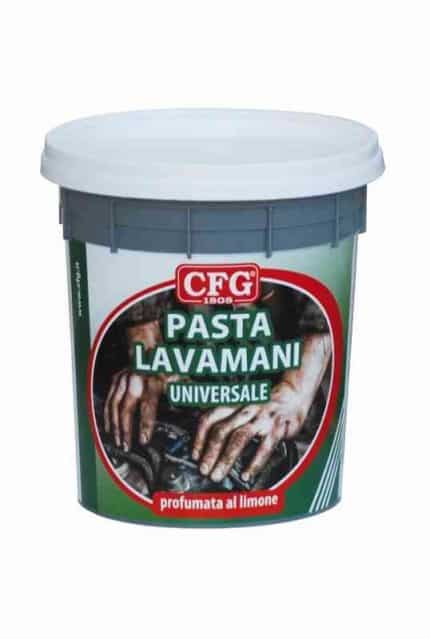 Universal lemon hand-cleaning paste 1000 ml – code: R00600 – Cfg
Choosing oils, greases, and chemical products with fewer errors and more operational continuity
Buying well means reducing unexpected events in the workshop, speeding up assemblies, and making maintenance more orderly. If you are evaluating the category or want to compare solutions from different brands, explore the store starting from the real application: this will make it easier to find oils, greases and chemicals consistent with your work, your components, and the daily needs of the technical department.
FAQ
How to choose between oils, fats, and chemicals without making a wrong purchase?
The best criterion is to start from the actual application: assembly, cleaning, protection, or maintenance. Then check the materials involved, the presence of seals or plastic parts, the operating conditions, and the application methods. If a piece of information is crucial, check the product sheet.
Why can a correct product still cause installation problems?
Often the problem is not the product itself, but the context of use: dirty surfaces, previous residues, unchecked compatibility, or excessive application. Even incomplete preparation of the work area can compromise the final result.
Is it useful to use a single product for all maintenance tasks?
Usually not. A material suitable for lubrication does not automatically replace a detergent or a protective product. Using a single reference for different needs may seem convenient, but often leads to less effective results and rework.
What to check before ordering materials for oils, greases, and maintenance chemicals?
It is advisable to check compatibility with materials, intended use, working environment conditions, practicality of the format, and the presence of any accessories necessary for the application. This helps to avoid hasty and unsuitable orders for the intervention.
How to reduce errors between the purchasing office and the workshop?
The most effective way is to share real use cases. Buyers should gather input from those who install and maintain, so as to select materials consistent with daily work and not just with a generic category description.


