


What boat accessories are used for in daily management
When talking about boat accessories, people often tend to think only of complementary elements. In reality, in a nautical context accessories directly affect comfort, ease of use, order on board, and operational continuity. The correct choice is not only about aesthetics or the completeness of the equipment: it mainly concerns how the boat is used, maintained, and prepared during the different phases of the season.
A good boat accessories guide starts from a simple principle: not all accessories meet the same need. There are entry-level solutions suitable for occasional use or for those completing essential equipment, professional solutions designed for more frequent and organized use, and heavy-duty solutions dedicated to more intense, demanding, or continuous contexts.
The difference is not only in the construction level but also in the consistency between accessory, usage environment, and onboard routine. An accessory chosen without considering the context can be uncomfortable to install, impractical to use, or unsuitable for routine maintenance.
From a conscious purchasing perspective, it is advisable to think in terms of scenarios:
- occasional use, with simple needs and quick installations;
- frequent use, where greater reliability and better integration with spaces are needed;
- intensive use, where robustness, continuity, and long-term resistance become priorities.
To guide you among the different options, it can be useful to also compare other store resources, such as technical guides for boating, components for onboard outfitting e solutions dedicated to system management, thus linking each accessory to a real use.
Entry level, professional, and heavy duty: what really changes
In comparing different ranges, the most common mistake is to evaluate everything only in terms of “basic” or “advanced.” In reality, the decisive point is to understand how often the accessory will be used, under what conditions e with what level of stress.
The solutions entry level are suitable when it is necessary to complete an essential equipment, address non-continuous needs, or simplify occasional operations. They can be a sensible choice for those who want to better organize the boat without immediately entering a more structured configuration.
The solutions professional are positioned at an intermediate level and often represent the best balance for those who use the boat regularly. They generally offer better integration with the onboard environment and greater consistency with repeated usage rhythms.
The solutions heavy duty, on the other hand, are designed for more demanding uses. Here the focus shifts to durability, operational reliability, and the ability to withstand harsh usage conditions. They are not always necessary, but in some cases, they make a difference precisely because they reduce compromises.
To choose well, the question is not “what is the most complete product?”, but “what is the solution best suited to my way of using the boat?”.
Boat accessories guide: how to choose between occasional, frequent, and intensive use
A true boat accessories guide must help filter options based on use cases. This approach is more useful than a simple tier distinction because it centers on the real onboard experience.
When to choose entry-level accessories
Entry-level solutions are recommended when the goal is to cover essential functions without complicating installation or organization. They may be suitable if:
- the boat is used intermittently;
- you are completing an initial equipment set;
- you want to improve order and convenience in specific areas of the boat;
- you are looking for a simple solution to integrate.
In this scenario, it is important not to oversize the choice. A more complex accessory is not automatically better if it remains underutilized or requires unnecessary additional checks.
When to move to professional solutions
If the boat is used more regularly, it is advisable to opt for professional accessories. The main advantage is the greater consistency with a more structured onboard routine. Generally, this tier is ideal when:
- operations are repeated often during the season;
- a better organization of spaces is needed;
- the accessory must integrate with other components already present;
- the aim is to reduce the risk of frequent replacements.
For those reviewing the overall layout of the boat, it may be useful to also explore accessories and spare parts for nautical maintenance e solutions for light refitting, in order to build a homogeneous equipment set.
When does a heavy duty choice make sense
Heavy duty solutions are recommended when the accessory is subjected to intense use, challenging environment, or repeated operational loads. It is not a “more professional” choice in a generic sense, but a response to specific needs.
It may make sense to consider this range if:
- the use is continuous or particularly frequent;
- the accessory operates under harsher conditions;
- the priority is continuity of use over time;
- a downtime or quick replacement would cause operational inconvenience.
In these cases, it is essential to carefully read the technical sheet and, if a detail is unclear, check the product sheet.
Compatibility, measurements and technical checks for boat accessories
One of the most underestimated steps in choosing boat accessories concerns compatibility. Even a seemingly simple accessory can cause problems if not checked against available space, fastening methods, materials on board, and intended use.
Before purchase, it is advisable to check some essential aspects:
- space requirements and actual available space;
- installation points and accessibility during assembly;
- compatibility with existing supports, surfaces, or components;
- exposure to water, humidity, salt, and stresses;
- ease of maintenance once installed.
These checks are particularly important when moving from an entry-level solution to a professional or heavy-duty one. Often, in fact, the way the accessory integrates with the boat changes, not just its construction level.
Measurements and spaces: the mistake almost always starts here
Many returns or replacements depend on an approximate assessment of the spaces. On board, a few centimeters can change the ergonomics of an area or make access uncomfortable. For this reason, it is useful to measure not only the installation point but also:
- the space needed for daily use;
- the opening or movement of the accessory, if applicable;
- the distance from other already installed elements;
- the possibility of intervening later for cleaning or inspection.
If the dimensions are not perfectly clear, check the product sheet. It is a simple precaution that avoids purchases that are inconsistent with the actual configuration of the boat.
Materials, marine environment, and perceived durability
Another decisive aspect is the relationship between the accessory and the marine environment. Humidity, salt, sun, and repeated use affect performance over time. For this reason, the correct range is chosen not only based on frequency of use but also on where and how the accessory will be used.
An accessory installed in a sheltered area may require different considerations compared to one placed in a more exposed area. Similarly, a component intended to be handled often must be evaluated differently from one with a more static function.
If you are building an equipment consistent with the environment of use, you can also benefit from insights on materials and onboard maintenance.
Typical errors in ordering or installing boat accessories
The choice of accessories does not end with the comparison between ranges. Many problems arise from very concrete mistakes, often avoidable with one more check before ordering or installation.
Buying based on impression and not on the use case
An accessory may seem suitable on paper but prove to be impractical in practice. This happens when purchasing follows a too generic logic, without linking the product to a specific need. The result is a heterogeneous equipment, with components that may be valid but inconsistent with each other.
To avoid this, it is advisable to start with three questions:
- what is the concrete problem I want to solve on board;
- how often will I use this accessory;
- in which area of the boat will it be installed or used.
Neglecting future maintenance
An accessory comfortable at the time of purchase can become uncomfortable if it makes cleaning, inspection, or replacement difficult. This issue is central in every boat accessories maintenance, because ease of intervention over time is part of the quality of the choice.
Before proceeding, always consider if the accessory:
- leaves surrounding areas accessible;
- can be checked without complex disassembly;
- fits into a simple routine of regular maintenance;
- does not obstruct other onboard operations.
Underestimating fastenings and supports
Another common mistake concerns mounting systems. Even when the accessory is correct, the support or installation surface may not be ideal. This is especially true when moving towards professional or heavy-duty solutions, where integration needs can be more specific.
If you have doubts about compatibility or installation methods, the most useful reference is always the product datasheet. If a detail is uncertain, check the product sheet.
Boat maintenance accessories: how to build a truly useful kit
Talking about boat accessories maintenance means going beyond the single purchase. An effective kit is born when accessories are chosen as part of a system: order, cleanliness, accessibility, small recurring operations, and space management must work together.
In this perspective, the difference between entry level, professional, and heavy duty becomes even clearer. It’s not just about “how long” an accessory lasts, but about how well it fits into the boat’s maintenance routine.
The right logic: less improvisation, more continuity
A well-thought-out kit helps reduce downtime, disorder, and impractical interventions. This approach is useful both for those who manage the boat independently and for those who want to simplify seasonal activities. Some criteria help choose better:
- priority to functions actually used;
- consistency among accessories installed in nearby areas;
- ease of cleaning and inspection;
- possibility to integrate future spare parts or compatible components.
An entry-level kit may be sufficient for simple needs, but when maintenance becomes more regular, it is often advisable to move to more structured solutions. This way, you avoid having to review everything after a short time.
Useful products, spare parts, and accessories: how to navigate without confusion
In practice, the best choice is the one that simplifies work onboard. For this reason, it is useful to evaluate accessories, spare parts, and related components not as separate elements, but as parts of a whole. If you are updating multiple areas of the boat, it may be convenient to compare related product families, checking each time compatibility, installation methods, and intended use.
A good method is to proceed by priority:
- identify the areas of the boat where the accessory is really needed;
- define whether the use will be occasional, frequent, or intensive;
- check measurements, supports, and environmental conditions;
- evaluate whether the chosen solution also facilitates future maintenance.
This approach reduces impulse purchases and helps build a more consistent equipment over time.
Recommended products
Go to the Boat Accessories category


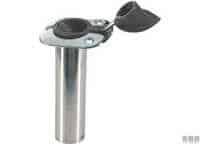 Straight flush mount rod holder 50 mm stainless steel - Code: 0800012 - Motomarine

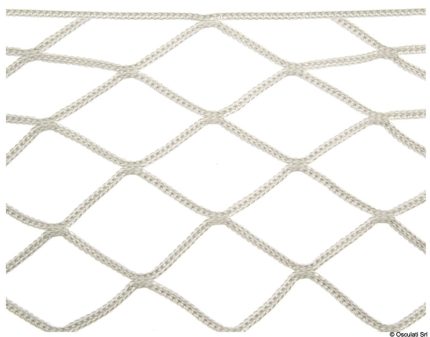 Rete battagliola termosaldata 600 mm 100mt bianca – codice: 06.349.00 – Osculati
Choose boat accessories consistent with your actual use
The comparison between entry-level, professional, and heavy-duty solutions becomes truly useful only when considered in relation to the actual use of the boat. If you want to complete or update your equipment, explore the category dedicated to nautical accessories or the brands available in the store: you will find solutions designed for different levels of use, with product sheets useful for checking compatibility, installation, and intended use before purchase.
FAQ
How to understand whether to choose entry-level or professional boat accessories?
The choice mainly depends on the frequency of use, the environment in which the accessory will be installed, and how much it needs to integrate with other components already on board. Entry-level solutions are suitable for simple or occasional needs, while professional ones are more appropriate when use is regular and boat management requires greater continuity.
When is it advisable to choose heavy duty boat accessories?
Heavy duty solutions make sense when the accessory is intended for intensive use, harsher conditions, or a particularly frequent onboard routine. In these cases, the priority is to reduce operational compromises and choose components more suitable for continuous use. For specific technical details, check the product sheet.
What checks to make before ordering boat accessories?
Before ordering, it is useful to check dimensions, available space, fastening methods, compatibility with existing supports or surfaces, and ease of access for maintenance. It is also important to consider exposure to water, humidity, and salt spray. If a measurement or compatibility is unclear, check the product sheet.
Why does maintenance matter when choosing boat accessories?
Because an accessory must not only work at the time of installation, but also remain practical over time. If it hinders cleaning, inspection, or minor routine interventions, it can complicate the management of the boat. A good choice also takes into account future maintenance and the accessibility of surrounding areas.
Is it better to buy boat accessories individually or as part of a coordinated set?
In many cases, it is advisable to think in terms of coordinated equipment, especially if you are working on multiple areas of the boat. Considering accessories, spare parts, and connected components as part of a whole helps avoid incompatibilities, reduces inconsistent purchases, and makes maintenance easier over time.


