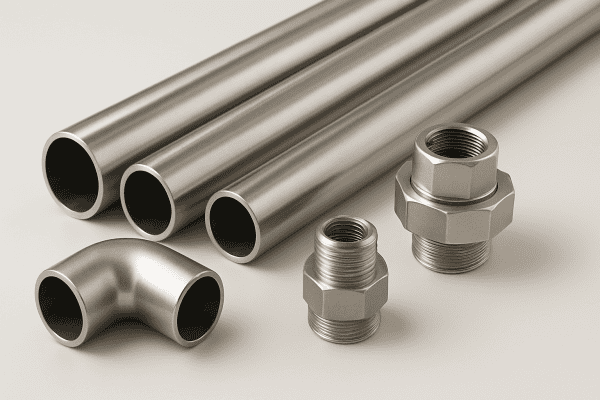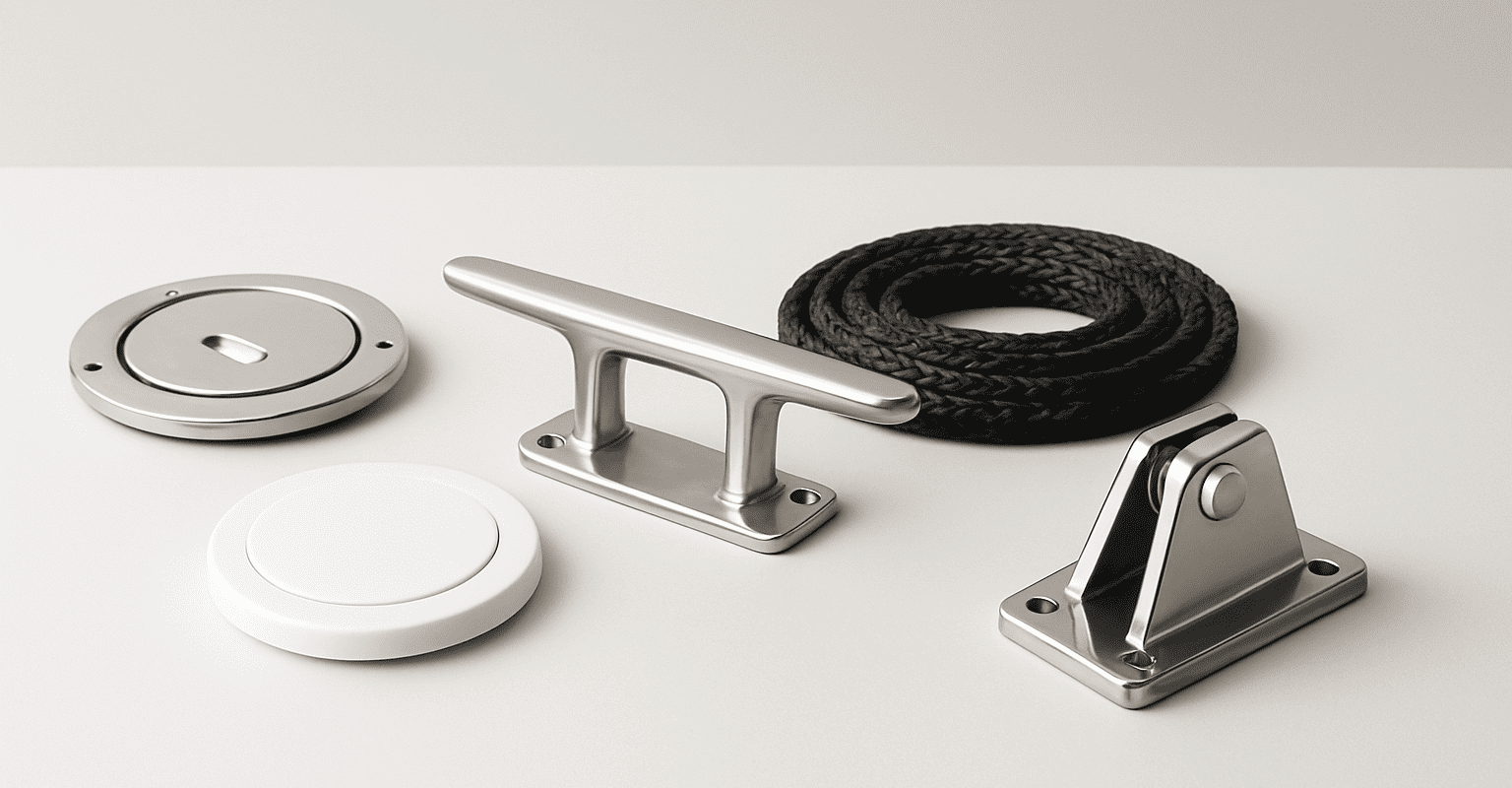
When talking about blanket accessories, the reference is not only to the onboard equipment in a general sense, but to a set of components that contribute to the management, protection, and functionality of operational surfaces on nautical and industrial systems. In these contexts, the correct choice of accessories affects ease of use, work continuity, and simplicity of interventions over time.
A good blanket accessories guide it must therefore help to navigate real applications, preliminary checks, and compatibility aspects, avoiding common errors during ordering or assembly. Whether it is a nautical deck subject to saltwater and intensive use or an industrial technical area exposed to external agents, the goal remains the same: to integrate reliable elements consistent with the existing system.
In this overview, we analyze the most common uses, the checks to perform before purchase, and the useful criteria to set up a correct blanket accessories maintenance, with a practical and choice-oriented approach.
What are deck accessories for nautical and industrial systems for
Accessories intended for the deck perform a function that goes beyond simply completing the system. In the nautical field, they help organize spaces, protect sensitive points, facilitate onboard operations, and keep the working surface tidy. In the industrial field, instead, they can support the management of passages, closures, fastenings, access points, and areas subject to wear or frequent movement.
Their usefulness emerges especially when the system must remain spare part, quick to use and easy to maintain. A well-chosen accessory reduces improvisations, better adapts the deck to the operational context, and also makes ordinary maintenance more straightforward.
The most recurring practical applications concern:
- protection of surfaces and installation points exposed;
- support for fastening of functional elements on the deck;
- better space management in operational or passage areas;
- facilitation of opening, closing, or access operations;
- integration with existing spare parts and components to avoid unreliable adaptations.
In many installations, the difference between an effective solution and one that creates problems over time lies precisely in the consistency between accessory, environment, and mode of use. For this reason, before choosing, it is useful to evaluate the real operational cycle: exposure to external agents, frequency of use, presence of vibrations, humidity, washing, or repeated stresses.
Se stai confrontando più soluzioni per impianti professionali, può essere utile approfondire anche componenti per applicazioni nautiche e soluzioni per impianti industriali, così da contestualizzare meglio la scelta degli accessori in base all’ambiente di lavoro.
Deck accessories guide: how to choose based on the real application
A true blanket accessories guide does not just describe a category but helps connect each component to the intended use. The first criterion to consider is the main function the accessory will have to perform on the deck: support, closure, protection, connection, or completion of an already existing system.
Immediately after, the context comes into play. A nautical deck and an industrial platform may seem similar in terms of robustness requirements but differ in exposure, usage methods, and operational priorities. In the nautical environment, for example, resistance to external agents, ease of cleaning, and compatibility with surfaces subject to wet conditions are very important. In the industrial environment, instead, continuity with the existing system and speed of replacement in case of maintenance are often decisive.
To guide your choice, it is advisable to start with some practical questions:
- Will the accessory be installed in an exposed or protected area?
- Does it need to operate in the presence of water, humidity, dust, or aggressive agents?
- Is frequent or occasional use expected?
- Does it need to integrate with already mounted components?
- Does the installation require drilling, alignments, or specific fastenings?
These checks help avoid purchases based solely on visual similarity. Two apparently compatible accessories can in fact differ in geometry, mounting system, or intended use. When information is not immediately clear, the correct reference always remains: check the product sheet.
Un altro aspetto spesso sottovalutato riguarda la manutenzione futura. Scegliere un accessorio facile da ispezionare, pulire o sostituire significa ridurre i tempi di fermo e semplificare gli interventi successivi. In quest’ottica, è utile consultare anche guide tecniche e approfondimenti dedicate ai componenti di impianto, così da avere un quadro più completo prima dell’ordine.
Compatibility, measurements and technical checks before ordering
The verification phase is the one that most affects the success of the purchase. In the case of blanket accessories, compatibility concerns not only external dimensions but also the fastening system, the shape of the installation point, the surface material, and the interaction with other present elements.
Before proceeding, it is advisable to carefully check:
- available space in the mounting area;
- center distances and fastening points already present;
- thickness or shape of the surface to be worked on;
- mounting orientation and direction of use;
- compatibility with existing accessories or spare parts.
In the nautical field, these checks are essential because the deck may have curves, limited spaces, or areas where access to the inner side is restricted. In the industrial field, the most common problem is integration with already configured systems, where even small differences can require unwanted adaptations.
To work well, it is advisable to first gather all available information: photos of the installation, precisely measured dimensions, hole positions, usage methods, and environmental conditions. This approach reduces errors and makes it easier to compare truly suitable options.
When replacing an existing component, it should not be assumed that a similar accessory is automatically compatible. It is always appropriate to verify:
- if the new element maintains the same mounting logic;
- if it does not interfere with moving parts or passage areas;
- if the material is suitable for the environment of use;
- if the planned configuration is indicated by the manufacturer or distributor in the available documentation.
If a technical detail is not specified, the safest formula remains just one: check the product sheet. In caso di dubbi, può essere utile confrontare anche ricambi e componenti correlati per capire se esistono soluzioni pensate per la stessa famiglia di applicazioni.
Typical errors in ordering or installing blanket accessories
Many problems related to blanket accessories maintenance they actually arise much earlier, that is, at the time of selection or installation. An order made in haste, without checking the real context, can result in incompatibilities, complex assemblies, or premature wear.
Among the most frequent mistakes is the choice based solely on the external shape. An accessory may seem correct at first glance, but prove unsuitable due to attachment, orientation, or destination. Another common mistake is not considering the working environment: what works in a sheltered area might not be the right choice on a blanket exposed to salt spray, frequent washings, or continuous stresses.
Here are the most typical cases to avoid:
- measurements taken roughly or without reference to the fixing points;
- failure to check the clearance in opening, closing, or movement;
- lack of control over material compatibility with the environment;
- installation on surfaces not properly prepared;
- choice of accessories inconsistent with the frequency of use.
During assembly, a recurring mistake is underestimating alignment. Even a small inaccuracy can generate abnormal stresses, difficulty of use, or uneven wear over time. For this reason, it is important to work on a clean base, verify installation references, and check correct positioning before final fastening.
Another critical point concerns partial replacement. When only one element is changed, it must be ensured that the new accessory interacts correctly with the components already present. Otherwise, there is a risk of compromising the functionality of the whole, even if the single piece is theoretically compatible.
To reduce these problems, the best rule is simple: do not purchase by analogy, but by verification. Photos, measurements, comparison with documentation, and checking the product sheet are steps that save time later.
Products, spare parts, and accessories useful for orderly maintenance
A correct strategy of blanket accessories maintenance does not only concern replacement when something no longer works. It also means setting up an orderly system, in which accessories, spare parts, and complementary components are chosen to make blanket management easier over time.
On nautical and industrial systems, maintenance is more effective when each element is consistent with actual use and with the rest of the installation. This allows targeted intervention, avoiding temporary solutions that can complicate subsequent operations.
In practice, it is advisable to consider blanket accessories as part of a broader set, consisting of:
- completing components for better integration;
- compatible spare parts for faster replacements;
- assembly support elements when required by the application;
- coordinated solutions to maintain functional uniformity across the system.
This approach is particularly useful in professional contexts, where operational continuity is as important as the quality of the individual component. Having a clear reference for the category and for the related spare parts helps to better plan interventions and reduce uncertainties during reordering.
Per chi gestisce installazioni articolate, può essere utile esplorare anche accessori e ricambi per la manutenzione, così da individuare con maggiore precisione gli elementi complementari più adatti al proprio impianto.
A good operational method involves keeping track of installed configurations, noting measurements, position, function, and relevant characteristics of the mounted components. This way, when a replacement or integration is needed, the choice is quicker and more reliable.
Recommended products
Go to the Covered Accessories category
 Polycarbonate windscreen wiper plate baskets - Code: 14.193.36 - Osculati
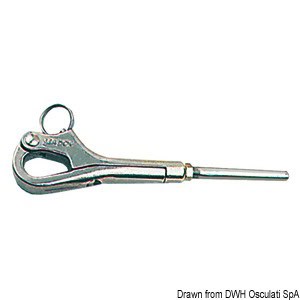 Stainless steel carabiner 5×8 mm – code: 05.283.03 – Osculati

 Adjustable nylon rod holder – code: 2828054 – Italian Nautical Supplies
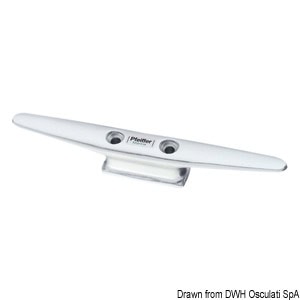 Reinforced light alloy cleat 125mm – code: 67.317.00 – Osculati
 25 mm rod base for 25 mm tube - Code: 35.394.02 - Osculati
How to set up a safer choice for blanket accessories
To purchase consciously, there is no need to complicate the process, but to follow a logical sequence. First, define the application, then verify measurements and compatibility, and finally check consistency with the environment and future maintenance. This applies both to new installations and to replacements on already operational systems.
In summary, an effective selection of blanket accessories goes through a few essential steps:
- precisely identify the function of the accessory;
- record actual measurements and mounting points;
- evaluate the usage environment;
- check compatibility with existing components;
- prefer solutions that also simplify maintenance.
If you are looking for a solution suitable for your system, explore the dedicated category and the brands available in the store: you will find a selection designed for professional applications, with useful datasheets to verify compatibility, use, and related accessories before ordering.
FAQ
How to choose the right blanket accessories for a nautical or industrial system?
You need to start from the real application: component function, usage environment, available space, fastening system, and compatibility with the existing system. Before ordering, it is always useful to check measurements, dimensions, and mounting methods; if a detail is not clear, check the product sheet.
What technical checks to do before ordering blanket accessories?
The main checks concern measurements, center distances, fixing points, mounting orientation, compatibility with the installation surface, and the presence of any interference with other components. In case of replacement, it is advisable to also compare photos and configuration of the already installed part.
Do blanket accessories require periodic maintenance?
Yes, especially in environments exposed to humidity, external agents, or frequent use. Regular maintenance includes visual inspection, cleaning of installation areas, checking proper fastening, and replacing worn components when necessary.
What are the most common mistakes in installing blanket accessories?
The most common errors are measurements taken inaccurately, lack of clearance checks, choosing the component solely for aesthetic similarity, incorrect alignment during assembly, and poor verification of compatibility with the usage environment.
How to understand if a blanket accessory is compatible with an already present component?
You need to compare not only the general shape, but also the attacks, wheelbases, orientation, available space, and function of the component. Compatibility must be checked against the available documentation and, when necessary, in the product sheet.