


When a boat fender is really needed
The boat fender is not an accessory to consider only during occasional mooring. It is a protective element that affects the daily management of the boat, especially when entering a port, docking alongside a quay, or staying close to other vessels. Many problems arise precisely from a superficial assessment: people think that just “having fenders on board” is enough, without considering shape, position, contact point, and the actual use of the boat.
In practice, the fender is needed every time there is a risk of contact between the hull and rigid or movable surfaces. This includes not only the classic docking but also slow maneuvers in tight spaces, temporary stops, passages in crowded areas, and situations where wind or waves can push the boat against an obstacle.
A common mistake is always using the same configuration, regardless of the context. In reality, a boat that often moors alongside a quay requires different attention compared to one that more frequently docks at floating piers or other boats. For this reason, in the nautical technical guides, the fender is treated as part of a protection system and not as a simple accessory.
It is also worth observing the type of actual use:
- regular mooring in port, with recurring contact points;
- temporary dockings, where speed and practicality matter a lot;
- maneuvers with reduced crew, where the margin of error increases;
- stops in crowded areas, where light but repeated bumps are more likely;
- variable conditions, which require adaptation in the arrangement.
Chi cerca un approccio più consapevole può approfondire anche temi collegati come accessori per l’ormeggio, cime e sistemi di fissaggio e attrezzatura di coperta, perché la protezione dello scafo funziona davvero solo quando tutti gli elementi lavorano insieme.
Differences between solutions, sizes, and boat fender compatibility
One of the most underestimated points concerns boat fender compatibility. Not all fenders behave the same way on every hull and in every mooring configuration. The correct choice depends on several factors: hull geometry, height of the contact point, type of dock, fastening method, and available space on board.
When comparing different solutions, it is useful to think in practical terms. One shape may be more suitable for linear surfaces and distributed contacts, while another may better handle concentrated impacts or specific support points. Positioning also matters: a correct fender but poorly fastened or placed too high loses much of its usefulness.
Compatibility is not just about the size “large or small,” but especially the alignment between the fender and the usage scenario. Before choosing, it is worth asking:
- where the first contact between boat and dock usually occurs;
- if the freeboard requires a higher or lower positioning;
- if the mooring is lateral, stern, or variable;
- if the support surface is regular or has edges, poles, or unevenness;
- if there is space on board for storage and quick use.
Another common mistake is copying the configuration seen on another boat. Two apparently similar boats can have very different needs. The height of the side, volume distribution, sensitivity to lateral movements, and how the hull rests during the stop all change.
For this reason, in the nautical technical guides more useful, the right question is not “what is the best fender overall?”, but “which solution is most consistent with my type of boat and my usual mooring?”. If you have doubts about materials, shape, or fastening points, check the product sheet and always compare the indications with the actual use of the boat.
How to correctly read compatibility
Compatibility should be interpreted operationally. It means understanding if the fender:
- really protects the exposed point and not a secondary area;
- remains stable during the boat’s movement;
- does not interfere with handrails, stanchions, or other equipment;
- can be quickly adjusted when the dock or conditions change;
- integrates with the mooring system without creating obstacles.
If even one of these aspects is missing, the protection may be partial. And partial protection, during maneuvering, often equals ineffective protection.
Mistakes to avoid in choice or assembly
Most recurring problems do not depend on obvious defects, but on setup errors. The fender is there, but it does not work as it should. Here are the most frequent cases.
Positioning it at the wrong height
This is perhaps the most common mistake. If the fender is too high or too low compared to the actual contact point, the hull can still hit. This often happens when preparing the mooring in a hurry or maintaining a standard setting for all situations.
The solution seems simple but only at first glance: observe where the boat actually touches and adjust accordingly. Not based on habit, but based on the specific dock.
Using too few in the wrong places
It's not just about the number, but the distribution. Placing more fenders concentrated in the center and leaving the most exposed points uncovered is a typical choice of those who have not yet analyzed their boat's behavior when docking. Bow and stern, in many maneuvers, may require more attention than the central section.
Improvised or unstable fastening
Un parabordo efficace deve restare nella posizione prevista. Se scorre, ruota o si sposta durante il contatto, la protezione si riduce. Anche una cima legata in modo frettoloso può compromettere il risultato. In questo senso, è utile approfondire anche nodi e tecniche di fissaggio nautico per migliorare rapidità e precisione in manovra.
Ignoring the type of dock
A smooth and continuous surface requires different behavior compared to an irregular structure. If the support point changes, the arrangement of the fenders must also change. Neglecting this aspect often leads to rubbing, uneven compression, or uncovered areas.
Correct installation, incorrect use
Even a well-done installation can become useless if the fender is left too far from the hull, if it is retrieved too early during mooring, or if it is not repositioned when the boat changes trim. Technique matters as much as the product.
To avoid repeated mistakes, it is advisable to follow a small checklist before each docking:
- assess the actual mooring side;
- identify possible contact points;
- adjust the height according to the dock;
- check that the fastening is stable;
- ensure that the fenders do not interfere with ropes and maneuvers.
This routine reduces the most common errors and makes any configuration more effective, even without changing equipment.
Recurring boat fender problems and how to prevent them
When talking about recurring problems, visible wear is the first thing that comes to mind. In reality, there are other signals not to be underestimated: fenders that tend to move, irregular protection, contacts that occur despite installation, difficulty adapting to different docks, or impractical handling during maneuvers.
Often the problem is not “the fender itself,” but the fact that the chosen solution is not consistent with daily use. A boat frequently used in variable contexts needs a flexible configuration; a boat that moors almost always in the same place can instead benefit from a more stable and repeatable arrangement.
The most frequent problems include:
- hull contact in unprotected areas, due to incomplete availability;
- fender sliding, caused by ineffective fastening;
- discontinuous protection, when the chosen shape does not follow the boat's profile well;
- storage difficulty, leading to using fewer fenders than necessary;
- slow preparation times, which increase the risk of error during maneuvering.
Prevention means working on three levels: choice, positioning, and method. Choice concerns compatibility with the hull; positioning concerns height and distribution; method concerns the crew's ability to prepare the mooring in an orderly and repeatable way.
Se vuoi migliorare la gestione complessiva della protezione laterale, può essere utile consultare anche guide all’ormeggio sicuro e contenuti dedicati alla preparazione della barca prima dell’arrivo in porto. In un blog tecnico, questi approfondimenti fanno la differenza perché aiutano a collegare teoria e pratica.
Products and categories to consider
When evaluating a boat fender, it is useful to think in terms of functional categories and not just habit or immediate availability on board. The correct question is: which solution best protects my boat in the context in which I really use it?
The categories to consider revolve around a few concrete criteria:
- shape, in relation to the type of expected contact;
- fastening system, for speed and stability;
- onboard space, important for those with limited space;
- versatility of use, useful if you often change port or mooring configuration;
- ease of adjustment, essential in frequent maneuvers.
At this stage, it is important not to stop at the visual aspect. A seemingly suitable fender may prove uncomfortable to position, unstable, or inconsistent with the hull geometry. Conversely, a less intuitive solution may offer more effective protection precisely because it is better aligned with real use.
To guide you in your choice, it is advisable to compare the available information with the behavior of your boat during mooring. If some technical details are unclear, check the product sheet. This step is especially crucial when evaluating fittings, materials, or specific usage instructions.
A correct technical approach does not consist of looking for “the universal model,” but in building an equipment set consistent with your own navigation profile. This is the point that distinguishes a random choice from a truly functional one.
Recommended products

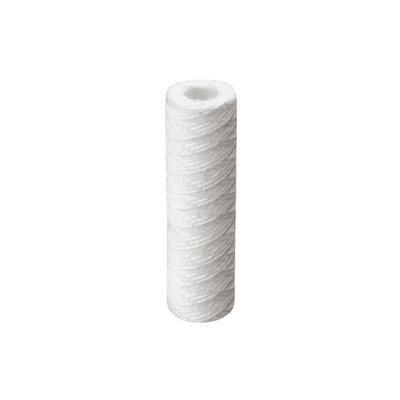
 10" Wound Wire Cartridge 20 micron – code: 10MP20 – Idromar
 Stainless steel clamps Norma 12–22 mm – code: FAI0012022 – Toscogomma
 Brush with spring - code: SGM45 - Gianneschi Pumps and Blowers


Useful links to deepen nautical technical guides
If you are comparing different protection solutions, it can be helpful to complement this reading with other technical content from the blog. Deepening the relationship between fenders, mooring, and onboard equipment helps avoid inconsistent purchases and improves the practical management of maneuvers.
Puoi iniziare da risorse dedicate a come preparare la barca all’ormeggio oppure esplorare altre guide tecniche nautiche per costruire una configurazione più consapevole e adatta al tuo utilizzo reale.
If you want to choose the most suitable solution with more confidence, explore the category dedicated to fenders and related accessories or delve into the reference brand: comparing the available options with your type of mooring is the most effective way to improve protection, practicality, and compatibility onboard.
FAQ
When is it really necessary to use a boat fender?
The boat fender is necessary whenever there is a risk of contact between the hull and the dock, pier, or another boat. It is not only needed during the final mooring but also during slow maneuvers, temporary berthings, and stops in tight spaces.
How to understand boat fender compatibility with your own vessel?
Compatibility is assessed by observing the actual contact point, the sidewall height, the type of rim, and the fastening system available on board. If you have doubts about technical details or usage methods, check the product sheet.
What is the most common mistake in fitting fenders?
The most common mistake is placing the fender at the wrong height relative to the actual contact point. Even an unstable attachment or incorrect distribution along the hull can greatly reduce the effectiveness of the protection.
Is it better to always use the same fender configuration?
No, because the ideal configuration changes depending on the type of mooring, the dock, and the current conditions. A setup that works in one port may not be suitable in another context.
How to avoid recurring problems with the boat fender?
To avoid recurring problems, it is advisable to check height, position, fastening stability, and coverage of the most exposed areas before each stop. A simple but consistent routine helps prevent bumps, chafing, and ineffective protections.


