When Quicksilver boat accessories are really needed based on the system
Talking about quicksilver boat accessories usefully means starting from a point often overlooked: it is not advisable to choose the accessory based only on the brand or aesthetics, but on the type of system already present on board. This is where the difference is made between a purchase that simplifies boat management and a solution that, once arrived, requires adaptations, additional checks, or even a replacement.
In many online searches, the user compares similar components and looks for a quick answer. In reality, in the nautical sector, the correct choice almost always depends on three factors: configuration of the system, mechanical or functional compatibility and actual use destination of the boat. An accessory suitable for a boat used occasionally in inland waters may not be the most logical choice for a vessel used more continuously or with a more complex onboard equipment.
Before choosing among the various options, it is therefore advisable to make a practical check on:
- type of installed system and its general configuration;
- These values are particularly useful for assessing for mounting, passages, and connections;
- interfaces already present on board;
- any accessories already installed that must communicate with the new component;
- such as prolonged stops or intermittent use., frequency of use and maintenance needs.
This approach is the most effective also from a comparative perspective: instead of asking which accessory is “better” overall, it is more correct to ask which solution really suits your system. It is a simple but decisive distinction.
Per chi desidera approfondire il metodo di selezione, può essere utile consultare anche guide tecniche nautiche dedicate alla lettura delle schede prodotto e alla verifica dei collegamenti presenti a bordo. Allo stesso modo, una panoramica su componenti per impianti nautici aiuta a capire come si inserisce il singolo accessorio nel sistema complessivo.
Quicksilver boat accessories compatibility: what to check before comparison
The theme of quicksilver boat accessories compatibility is what most often determines the real convenience of the purchase. Two accessories may seem equivalent in function but differ significantly in attachments, predispositions, sizes, materials, or integration methods with the existing system.
The first check to make concerns structural compatibility. It is not enough for an accessory to be intended for the nautical sector: it must be consistent with the support, the installation point, and the system it connects to. If the component works together with other elements already present, it is useful to check the product sheet for details on:
- type of mounting;
- expected interfaces or connections;
- any necessary adaptations;
- recommended pairings;
- usage limitations on certain systems.
A second level of analysis concerns the functional compatibility. Here the point is not just “whether it fits or not,” but does it work well in the real context of the boat? An accessory may be installable but impractical if it requires modifying the layout, complicates maintenance, or makes access to other components less immediate.
For this reason, in competitor-driven comparisons, it is advisable to evaluate each solution according to a practical logic:
- simple integration with what is already present;
- accessible maintenance over time;
- consistency with usual use of the boat;
- reduction of adaptations during installation;
- configuration continuity with the existing system.
Those looking for quicksilver boat accessories often compares similar options without considering that the most convenient solution is often the one that requires fewer technical compromises. If installing an accessory requires unplanned modifications, additional supports, or complex checks, the initial advantage can quickly diminish.
In questa fase è utile anche consultare contenuti correlati come come leggere una scheda tecnica nautica oppure come verificare la compatibilità di un accessorio di bordo. Sono passaggi che aiutano a filtrare le opzioni in modo più professionale, soprattutto quando il catalogo è ampio e le differenze non sono immediatamente evidenti.
Differences between solutions, measurements, and predispositions
When comparing accessories of the same family, the most important differences are not always the most visible ones. Often, more impact comes from useful measurements, mounting predispositions and connection methods. Even a small variation can change the level of compatibility with the system.
Measurements, for example, should not only be read based on the available space. You also need to consider:
- margins for the passage of cables, pipes, or connections;
- distances from other components already installed;
- accessibility for inspection, cleaning, or replacement;
- correct orientation at the mounting point.
The same applies to predispositions. An accessory designed for a certain configuration may be less convenient if your boat requires a different installation. In these cases, the right question is not “does it fit in the space?”, but does it integrate seamlessly into the existing system?
If the detail is not clear, the best choice is simple: check the product sheet and compare the features with what you actually have on board.
Mistakes to avoid when choosing or installing Quicksilver boat accessories
In practice, the most common mistakes do not arise from a completely wrong choice, but from an incomplete evaluation. Those who buy quickly tend to focus on the main function of the accessory and neglect the installation context. The result is a component that may be valid but poorly suited to their configuration.
The first mistake is confusing theoretical compatibility with real compatibility. An accessory may be indicated for a certain application but require additional checks related to your system. This is especially important when the boat has undergone modifications over time or has components installed at different times.
The second mistake is not checking operational clearances. It is not enough that the part can be mounted: it must remain accessible and not hinder other future interventions. In the nautical environment, maintenance practicality is a convenience criterion as important as the accessory's function.
The third mistake is choosing by visual analogy. Two components may look almost identical but be designed for different configurations. This is one of the reasons why the nautical technical guides they are so useful: they help to read the differences that do not emerge from a simple photo.
Among other mistakes to avoid:
- skipping the check of already existing connections;
- not verifying the type of support or fastening;
- neglecting the position of the accessory in relation to other systems;
- assuming that a “similar” spare part or accessory is automatically compatible;
- ignoring the installation instructions provided in the product sheet.
Another often underestimated aspect concerns the assembly. Even when the component is correct, an installation that is not consistent with the onboard layout can compromise the practicality and reliability of the system. For this reason, it is always useful to think about the whole, not just the single item.
Se stai confrontando diverse opzioni, può aiutarti anche una lettura trasversale di accessori e ricambi per la manutenzione nautica, così da capire quali elementi lavorano in sinergia e quali, invece, richiedono una verifica più attenta prima dell’acquisto.
Products and categories to consider for a truly cost-effective technical choice
When talking about cost-effectiveness, the focus should not be limited to the single accessory. A well-made technical choice also considers the category it belongs to and the role that component has in the onboard system. This approach is particularly useful in high-comparison searches, where the risk is to evaluate isolated products without understanding if they are really the most logical solution.
The categories to consider change depending on the system, but the criterion remains constant: start from the required function and trace back to compatibility. In other words, first define the real need, then filter the catalog based on assembly, integration, and intended use.
For example, when selecting accessories for the boat, it is useful to distinguish between components that:
- complete an already existing system;
- replace a worn or no longer suitable element;
- improve onboard management without modifying the system structure;
- require prior verification with other accessories already installed.
This distinction helps to avoid misleading comparisons. An accessory designed to complete a configuration may not be the right choice if your goal is to replace a component with already defined space or connection constraints.
In un catalogo professionale, la navigazione per categorie è utile proprio per questo: consente di confrontare famiglie di soluzioni omogenee e di leggere meglio le differenze tecniche. Se vuoi orientarti con maggiore precisione, può essere utile consultare anche guide alla scelta degli accessori nautici e contenuti di supporto che spiegano come interpretare compatibilità, predisposizioni e utilizzo consigliato.
Another concrete criterion is to evaluate the degree of continuity with the current system. The more a solution fits naturally into the existing configuration, the more likely it is to be cost-effective in the medium term. Conversely, when an accessory forces you to rethink connections, positions, or access, the comparison must be made more carefully.
At this stage, it is important not to look for shortcuts. The best choices almost always come from an orderly verification:
- identify the type of system involved;
- check the space and mounting point;
- verify connections and predispositions;
- compare the actual function of the accessory with your use;
- read the compatibility notes in the product sheet.
Following this method, the selection of quicksilver boat accessories becomes clearer and less confusing. It is not just about finding an available item, but about identifying the solution that works well with your system and reduces the risk of errors during installation or management.
Recommended products

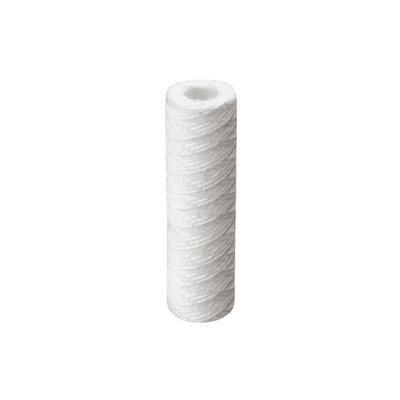
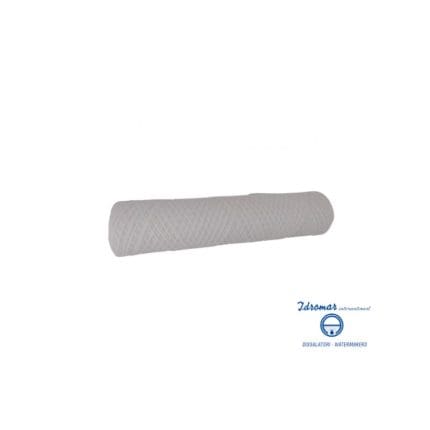 10" Wound Wire Cartridge 20 micron – code: 10MP20 – Idromar
 Brush with spring - code: SGM45 - Gianneschi Pumps and Blowers
 Stainless steel clamps Norma 12–22 mm – code: FAI0012022 – Toscogomma


How to compare alternatives without stopping at the commercial description
In competitor-driven searches, one of the main obstacles is the tendency to compare very similar descriptions. For this reason, a more technical criterion is needed. The best way to do this is to turn each sheet into a practical checklist, focusing on elements that really affect the choice.
Here are the questions that help understand which solution is really convenient:
- Is it compatible with my system without significant adaptations?
- Is the installation consistent with the available space on board?
- Is it accessible for maintenance and checks?
- Does it integrate with the other components already present?
- Does the product sheet clearly indicate any limits or checks to be made?
If any of these answers remain doubtful, it is better not to rely on assumptions. In that case, the correct formula is only one: check the product sheet. It is the simplest step to avoid silent incompatibilities, that is, those that only emerge at the time of installation.
This approach is also what distinguishes an impulsive choice from a professional choice. The nautical technical guides are precisely for this: to reduce uncertainty and help read the differences that really matter, especially when the catalog presents many close solutions by function but not identical by application.
Navigating among Quicksilver boat accessories and related categories
If you are considering which quicksilver boat accessories are more suitable for your setup, the most effective way to proceed is to start from the correct category and then refine the selection based on compatibility with the system. Browsing through brands and product families with a technical criterion allows you to more quickly identify the solution consistent with your boat, avoiding generic comparisons and imprecise choices. Explore the reference category or brand to compare the available options and check in the product sheet which accessory integrates best with your onboard system.
FAQ
How to understand if a Quicksilver boat accessory is compatible with my system?
The check must be done by inspecting the mounting point, connections, provisions, and the actual function of the accessory in the onboard system. If a detail is unclear, check the product sheet.
Is it better to choose an accessory based on the brand or the boat's configuration?
Boat configuration comes first. The brand can guide the search, but the most convenient choice is the one consistent with the existing system, available space, and usage methods.
What is the most common mistake when choosing nautical accessories?
One of the most common mistakes is assuming that an accessory similar in shape or function is automatically suitable for your system. In reality, compatibility and installation methods must always be verified.
Why are nautical technical guides useful in making a choice?
Because they help compare solutions with practical criteria: compatibility, dimensions, predispositions, ease of assembly, and integration with other components already on board.
When is an accessory really convenient?
When it performs the required function without requiring unnecessary adaptations, it integrates well with the existing system and remains accessible for maintenance and inspections over time.