


When you really need to evaluate boat accessories offer
Search boat accessories offer does not mean choosing hastily or just aiming for a convenient availability. In the nautical field, the real issue is understanding when an accessory is suitable for the boat, for the intended use and the existing installation. A correct accessory improves organization, operational safety, and convenience on board; one chosen without verification can instead create incompatibilities, unnecessary bulk, or inefficient fittings.
Searching for a solution on offer becomes really useful in some recurring cases:
- when you need to replace a worn component maintaining consistent measurements and attachments;
- when you are upgrading an already equipped boat and want to avoid invasive modifications;
- when you are looking for a seasonal accessory to integrate into an existing system;
- when you need to standardize multiple onboard elements by materials, sizes, or fastening system.
In this scenario, the nautical technical guides are useful because they help to correctly interpret differences that, at first glance, seem secondary: diameters, spacing, installation methods, materials compatible with the marine environment, mounting orientation, and available space around the application point.
A common mistake is starting from the shape or photo of the component. In reality, in most cases it is better to proceed the other way around: first verify measurements, function, and compatibility, then compare the available options. If your goal is to purchase boat accessories offer wisely, the correct question is not “which looks right?”, but “which meets the real onboard conditions?”.
Per approfondire il metodo di selezione, può essere utile consultare guide tecniche nautiche dedicate ai principali accessori di coperta e di impianto, così da confrontare i parametri prima della scelta finale.
Boat accessories offer compatibility: what to check before purchase
The theme of boat accessories offer compatibility is decisive. Even when a component belongs to the same product family as the one already installed, it is not necessarily interchangeable. Compatibility must be read on multiple levels, not just dimensional.
Mechanical compatibility and fixing points
The first check concerns how the accessory connects to the structure or system. Always verify:
- external measurements and dimensions;
- diameters or useful sections;
- hole center distance if present;
- orientation of the installation;
- maneuvering space for opening, closing or adjustment.
An apparently compatible accessory may not be if the useful edge is reduced, if the support has different thicknesses, or if the fastening requires a surface that is not available at the edge. In these cases, the technical datasheet is the correct reference: if a detail is not clear, check the product sheet.
Compatibility with materials and marine environment
Boating requires attention to materials. Humidity, salt, exposure, and vibrations require components designed to work in a harsher environment than on land. Therefore, it is not enough for an accessory to “fit in size”: it must also be consistent with the context in which it will be installed.
Before choosing, consider:
- the material of the surface on which it will be mounted;
- the presence of already existing metal parts;
- possible contact with water or frequent splashes;
- the need to maintain continuity with accessories already on board.
This check is particularly important when replacing a single element in a system already composed of multiple components. Compatibility, in fact, concerns not only the new accessory but also the balance of the whole.
Functional compatibility: same use does not mean same solution
Two accessories can perform a similar function but be designed for very different installations. This is where many online comparisons are misleading: related categories are compared without distinguishing the real context of use.
To better guide yourself, ask:
- does the accessory work on deck, in the cabin, or in a technical compartment?
- does it need to be easily accessible or can it remain fixed in position?
- is it for frequent or occasional use?
- does it need to integrate with components already installed?
Queste domande aiutano a filtrare le opzioni e a evitare una scelta basata solo sulla disponibilità del momento. Se stai confrontando famiglie di articoli diverse, puoi approfondire anche tramite schede comparative per accessori nautici e contenuti di supporto collegati.
Differences between solutions, measurements or compatibility
When analyzing multiple boat accessories offered, the most important differences are rarely visual. The real technical variables are often less obvious but much more relevant during installation and use.
Nominal measurements and actual measurements
One of the most underestimated aspects is the difference between the declared measurement and the useful measurement for installation. In boating, it is essential to distinguish between:
- overall size of the component;
- measurement of the part that fits into the seat;
- space needed for fastening;
- operating clearance.
This is especially true when the accessory must replace an existing element without structural modifications. In these cases, taking only one measurement is not enough: it is advisable to take multiple points and compare them with the available data. If the manufacturer indicates variants or versions, check the product sheet which configuration is suitable for your installation.
Universal solutions and dedicated solutions
In the nautical catalog, accessories coexist with a universal approach and solutions designed for more specific applications. The former offer greater flexibility but require careful checks on adaptability and final performance. The latter, on the other hand, are often easier to integrate, provided the usage context truly matches the intended one.
A universal solution can be interesting when:
- you need margin during installation;
- the boat has non-standard configurations;
- you are replacing a component no longer identical to the original.
A dedicated solution may be preferable when:
- you want to reduce adaptations;
- you need to maintain precise alignment with other elements;
- you seek functional continuity with an already defined system.
The choice therefore depends on the level of compatibility required and the type of intervention you want to carry out on board.
Single accessories or integration into a system
Many users look for a single component, but in reality, they are working on a broader system. This is the case, for example, of accessories connected to lines, supports, passages, fastenings, or organization of technical spaces. In these contexts, the component should not be evaluated alone: it must interact with the rest of the setup.
Per questo motivo, prima di scegliere, è utile osservare anche le categorie correlate e i contenuti di approfondimento su componenti nautici compatibili, così da capire se la sostituzione di un solo elemento sia davvero sufficiente.
Mistakes to avoid in choice or assembly
In the comparison between offered boat accessories, the most common mistakes almost always arise from incomplete verification. Here are the most frequent ones, with a practical approach.
Relying only on images
Photos and renders help recognize the type of accessory, but do not replace technical data. Very similar components can have different dimensions, attachments, or orientations. The image is useful for an initial screening, not to confirm compatibility.
Measuring only one point
Measuring a diameter or length and stopping there is a typical mistake. In boating, often the space around the component, the available depth, the position of fastenings, and accessibility during installation also matter. An isolated measurement rarely suffices to guarantee the result.
Ignoring the installation direction
Some accessories may seem reversible, but they are not. The exit direction, working direction, or fastening point position can change the real compatibility. Before purchasing, check if the component is designed for a specific configuration or if it allows multiple orientations.
Neglecting the usage environment
An accessory mounted in an exposed area does not face the same conditions as one installed in a protected compartment. If the component will be subject to humidity, splashes, sun, or frequent stresses, the choice must take this into account. Even in this case, do not make assumptions: check the product sheet the available details.
Forcing unnecessary adaptations
When an accessory requires too many modifications to be installed, it is often not the right solution. Enlarging holes, compensating misalignments, or adding improvised elements can complicate installation and worsen the final result. In many cases, it is more effective to look for a variant with more straightforward compatibility.
To reduce errors, a good practice is always to compare three elements before deciding: actual measurements, usage function and assembly context. This approach, typical of the best nautical technical guides, allows for a more informed selection even when the initial goal is to find offered boat accessories.
Products and categories to consider
In a competitor-driven search, it is useful to think not only about the single item but also about accessory families that more often require technical comparison. The categories to consider are those where differences in size, fastening, and compatibility most affect the final choice.
Among the most sensitive areas generally included are:
- deck and fastening accessories;
- components for passages, fittings, and connections;
- supports and accessories for technical organization on board;
- elements intended for quick replacement on existing systems;
- complementary accessories that must integrate with parts already installed.
The advantage of observing the category, and not just the single item, is that you can better compare construction logics, dimensional variants, and possible mounting alternatives. This is particularly useful when the component to be replaced is no longer available in the identical form or when you want to improve the installation without disrupting the existing setup.
Un altro aspetto importante è la relazione tra accessorio principale e componenti secondari. In molti casi, infatti, la resa finale dipende da elementi complementari che devono essere coerenti tra loro. Per questo può essere utile esplorare anche categorie nautiche correlate e contenuti di supporto che aiutano a leggere le differenze applicative.
If you are considering multiple options, try to build a mini-checklist before proceeding:
- what function the accessory must perform on board;
- which measurements are really binding;
- what type of fastening is already present;
- which materials are involved in the installation;
- whether the accessory works alone or as part of a system.
This setting makes the comparison more technical and less dispersive. In practice, it turns a simple search for boat accessories on offer into a guided selection, closer to the real needs of the boat.
Per chi vuole orientarsi con maggiore precisione, è utile consultare anche approfondimenti su misure e compatibilità nautica, così da arrivare alla scelta finale con un quadro più completo.
Recommended products

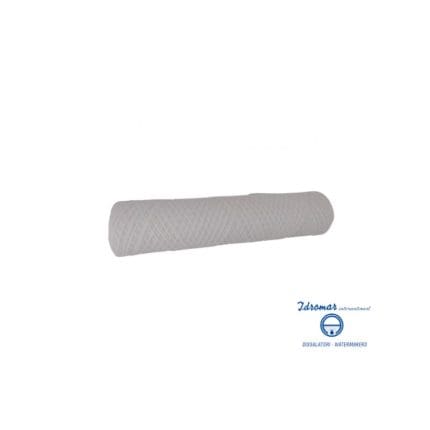 10" Wound Wire Cartridge 20 micron – code: 10MP20 – Idromar
 Stainless steel clamps Norma 12–22 mm – code: FAI0012022 – Toscogomma
 Brush with spring - code: SGM45 - Gianneschi Pumps and Blowers


How to choose with a technical method and not just comparative
Competitor pages often focus on quick comparisons, but in the nautical sector a three-step method works better. First, identify the real function of the accessory. Then check measurements and mounting constraints. Finally, evaluate the compatibility with the onboard context. Only then does it make sense to compare the available options on offer.
This approach helps to avoid inconsistent purchases and makes it easier to select accessories that can be installed without unnecessary interventions. If you are looking for a reliable solution for your boat, explore the category or reference brand and compare the available technical sheets: it is the most effective way to find boat accessories offer really suitable for your onboard project.
FAQ
How to check the compatibility of a boat accessory before purchase?
Check measurements, dimensions, fastening points, mounting orientation, and usage context. If the component must replace an existing one, compare multiple dimensions and not just the main measurement. In case of doubt, check the product sheet.
Is a universal accessory always the best choice on a boat?
Not always. Universal solutions offer flexibility but may require additional checks on adaptability and available space. If the installation has precise constraints, a more specific solution can be more straightforward.
What are the most common mistakes when choosing boat accessories offered?
The most common mistakes are relying only on images, measuring only one point, neglecting the installation direction, and not considering the marine environment. Forcing unnecessary adaptations is also a typical error.
Why are nominal measurements not enough to choose a nautical accessory?
Because the declared measurement does not always match the one useful for installation. In many cases, depth, spacing, operating clearances, and available space around the component also matter.
When is it advisable to consult nautical technical guides before making a choice?
It is advisable to do this when you need to replace an existing component, compare multiple similar variants, or check compatibility with an already installed system. Nautical technical guides help to correctly interpret differences that do not emerge from a simple photo.


