What is the management of bilge, fire, diesel, and seawater for
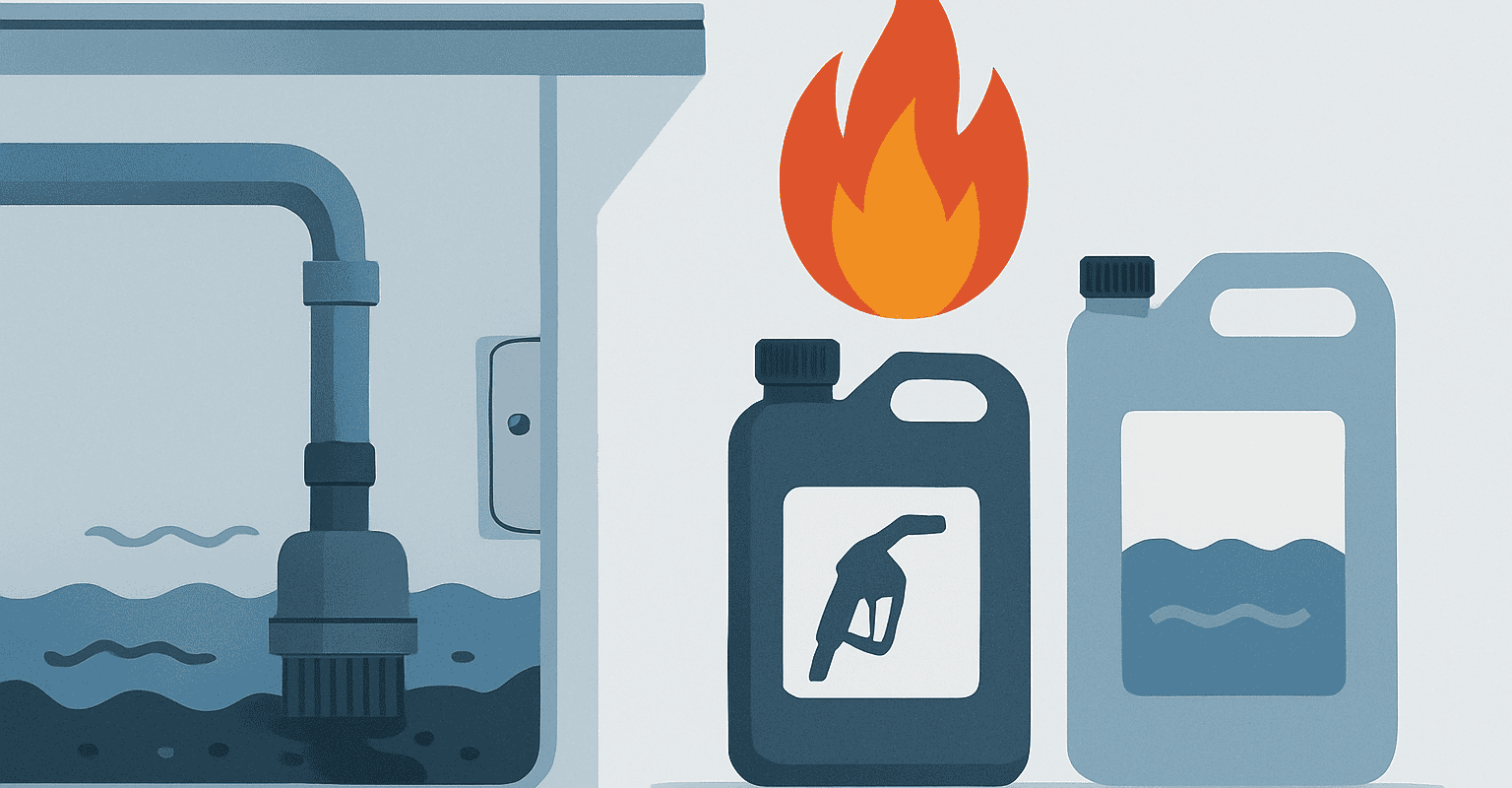
On a boat, many problems arise from small and often underestimated signals: an unusual smell in the engine compartment, a trace of liquid in the bilge, a pump that activates too often, oily residues, persistent humidity, or the presence of saltwater where it shouldn't be. The management of bilge, fire, diesel and seawater therefore does not concern a single component, but a set of checks that help prevent breakdowns, boat downtime, and critical situations.
A quick diagnosis always starts with observation: understanding whether the liquid present in the bilge is fresh water, seawater, diesel, or a contaminated mixture immediately narrows down the field. Similarly, identifying burnt smells, vapors, or leaks near the engine, tanks, pipes, and through-hull fittings allows intervention before the problem turns into an emergency.
This bilge, fire, diesel and seawater guide is designed for those who want to navigate essential checks, spare parts to consider, and useful inspections before choosing components compatible with their installation. If you are organizing routine maintenance or looking for a specific cause of infiltration or leakage, it is advisable to start with an overview and then go into detail.
Among the areas to monitor more closely are:
- bilge and drainage, to understand where the liquid is coming from and if the evacuation system is working properly;
- diesel lines, to identify leaks, seepage, or unreliable connections;
- seawater circuits, often involved in infiltrations, corrosion, or efficiency drops;
- engine compartments and hot zones, where an anomaly can increase the risk of fire outbreak;
- gaskets, clamps, fittings, and passages, which are among the first elements to check when an intermittent problem appears.
Per una panoramica più ampia sui componenti collegati alla sicurezza e alla gestione dei fluidi, può essere utile consultare le soluzioni dedicate agli impianti di bordo e confrontare le famiglie di articoli più rilevanti per il proprio allestimento.
Compatibility, measurements, and technical checks for bilge, diesel, and seawater
When replacing a component or looking for the cause of a malfunction, compatibility should never be taken for granted. In practice, many errors arise from installing elements that appear similar but are not suitable for the type of system, the diameter of the lines, or the environment in which they must operate.
In the context of bilge, fire, diesel and seawater maintenance, preliminary checks help avoid inconsistent purchases and reduce the risk of reinstalling the problem after a few outings.
How to recognize the nature of the liquid in the bilge
Before intervening, it is useful to understand what is accumulating:
- sea water: often leaves saline traces, halos or signs of crystallization;
- diesel: it is recognized by smell, surface patina and texture different from water;
- water mixed with oily residues: may indicate previous spills or contamination from the engine compartment;
- fresh water: may come from tanks, condensates, drains or infiltrations not related to the seawater circuit.
This distinction is fundamental because it directs the inspection towards different areas: seawater intakes, cooling pipes, tanks, filters, fittings, pumps or condensate drains.
Measurements and points to check before ordering
If you need to replace an accessory or a spare part, always check:
- internal and external diameter of pipes and fittings;
- type of connection, straight, curved or threaded;
- material compatible with diesel, seawater or bilge environment;
- mounting position and available space in the compartment;
- orientation of the passages to avoid bends, constrictions or tensions on the lines;
- presence of gaskets or sealing elements to be replaced together with the main component.
If a detail is not immediately clear, check the product sheet and compare the code or technical description with the part installed on board. A photo of the disassembled component and an actual measurement help much more than a visual assessment.
Critical areas to inspect with priority
There are points that deserve systematic checking, especially when the problem occurs intermittently:
- pipe connections near the engine and pumps;
- clamps loose, oxidized or no longer uniform in closure;
- filters and filter holders in the fuel lines;
- bilge pump and valves connected to the seawater circuit;
- tight bends of the pipes, where microcracks or crushings can form;
- bilge tank and floats, if the pump starts late or does not start at all.
Per chi sta valutando componenti di ricambio compatibili, può essere utile consultare le sezioni dedicate a tubi, raccordi e accessori di collegamento così da confrontare le soluzioni in base al tipo di impianto.
Typical errors in ordering or installation that worsen bilge, fire, diesel, and seawater issues
Many recurring problems are not due to a single serious fault, but to a series of small errors that, combined, compromise the reliability of the system. In a guide oriented to the store, it is important to recognize these cases because often the choice of the right component arises precisely from correcting a wrong installation.
Confusing a seepage with a main leak
A dirty or wet bilge does not always indicate a major break. Sometimes it is slow seepage from fittings, plugs, filter covers, or connections subject to vibration. The risk is replacing the wrong part without first cleaning the area and observing where the problem starts again.
The most useful method is simple:
- thoroughly clean the area;
- dry the bilge;
- check with the engine off and then running;
- verify if the liquid appears at a specific point or is distributed by spray or dripping.
Using components not suitable for the fluid or environment
A common mistake is installing generic elements in a circuit where specific characteristics are required for diesel, seawater or a humid and aggressive environment. Even if the installation seems correct, an unsuitable material can degrade, stiffen, lose sealing, or promote corrosion over time.
For this reason, when selecting a replacement, do not stop at just the size: always verify the suitability for use in the component's technical data sheet.
Underestimating the fire risk in the engine compartment
On the subject bilge, fire, diesel and seawater, the fire risk is often linked to a combination of factors: fuel leaks, vapors, oily residues, wiring near heat sources, and poor compartment cleaning. Even a small diesel leak, if neglected, should not be considered a mere nuisance.
Signs not to ignore include:
- persistent fuel odor after starting or during navigation;
- wet traces near filters, pumps, or pipes;
- deposits that accumulate on hot surfaces;
- bilge residues that can spread vapors in a poorly ventilated compartment.
In questi casi, oltre alla riparazione, è utile verificare lo stato generale del comparto e valutare i componenti per controllo, sicurezza e gestione del vano motore.
Tightening fittings and clamps too much or too little
An excessively tightened clamp can deform the hose or damage the sealing point; a loose clamp, on the other hand, promotes infiltration and micro-leaks. The same applies to fittings and threaded connections: forcing the tightening does not always improve the seal, in fact, it can create cracks or misalignments.
When a connection continues to leak despite tightening, often the problem lies elsewhere:
- worn gasket;
- hardened or ovalized hose;
- imperfectly compatible fitting;
- dirty or corroded seating surface.
Neglecting the bilge pump and evacuation system
If the pump operates too often, the temptation is to consider it the main problem. In reality, in most cases the pump is only signaling that water or liquids are entering somewhere. Replacing it without looking for the cause means postponing the failure.
It is therefore advisable to check:
- float or activation sensor;
- discharge pipe and possible blockages;
- non-return valves, if present;
- water intake from through-hull fittings, seals, sleeves or sea circuit;
- any residues that hinder proper pumping.
Products, spare parts, and accessories useful for a quick diagnosis
When dealing with problems related to bilge, fuel and seawater, choosing the right components helps not only to repair, but also to better diagnose. Having spare parts consistent with the system allows isolating the fault, restoring the seal and reducing the risk of the defect recurring.
The most useful product families, from a practical perspective, are those related to connection, sealing, suction, discharge and visual monitoring of the lines. There is no need to fill the compartment with unnecessary parts: it is more effective to focus on components that statistically wear out first or work under more severe conditions.
Which categories are often involved
In a complete check, the most relevant categories are usually:
- hoses and sleeves for fuel or seawater lines;
- fittings and adapters to restore correct connections;
- clamps and fastening systems to improve sealing;
- filters, filter holders and diesel line accessories if seepage or air appears in the circuit;
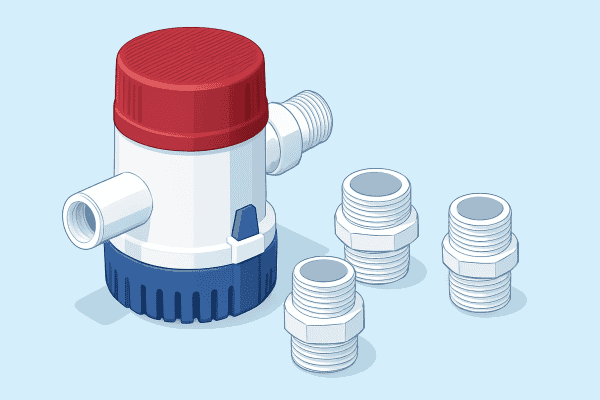
- bilge components such as pumps, floats and discharge accessories;
- gaskets and sealing elements to be replaced together with the disassembled parts.
Per orientarti tra soluzioni compatibili con diversi impianti, puoi vedere la selezione di ricambi e accessori per la manutenzione nautica e restringere la ricerca in base all’applicazione reale.
When it is advisable to replace more than one component
There are situations where changing just one part is not enough. If a pipe is hardened or a fitting shows signs of oxidation, often clamps, gaskets, or nearby connections also deserve attention. This approach is particularly useful when the problem concerns bilge, fire, diesel and seawater maintenance, because it reduces the risk of having to disassemble everything again shortly after.
It makes sense to consider a coordinated replacement when:
- the old component has been working for a long time in a humid or hot environment;
- the leak has already contaminated adjacent parts;
- the pipe shows signs of stiffening, cracking, or deformation;
- the connection has been tightened and reopened multiple times;
- the area is difficult to reach and it is better to carry out a more complete intervention at once.
Un altro supporto utile può arrivare da guide e approfondimenti tecnici per la manutenzione di bordo, soprattutto se vuoi confrontare sintomi, cause e componenti da controllare prima dell’ordine.
Quick checklist before choosing the replacement
Before adding an item to the cart, always perform this essential check:
- have you identified the fluid involved with certainty?
- have you measured the correct diameter of the pipe or fitting?
- have you checked the type of connection?
- have you verified if gaskets or complementary accessories are needed?
- have you compared the actual assembly with photos or diagrams of the component?
- have you read any compatibility notes in the product sheet?
This procedure reduces purchase errors and makes any bilge, fire, diesel and seawater guide oriented towards practical problem solving.
Recommended products
Go to the category Bilge, fire, diesel, and seawater
 EL/Pump MVI60, 230/400 V TR, 50 Hz, 1.1 kW – code: 01GMVI6003 – Gianneschi Pumps and Blowers
 EL/Pump MV44 G, 24 V DC, 0.33 kW – code: 01GMV341G – Gianneschi Pumps and Blowers
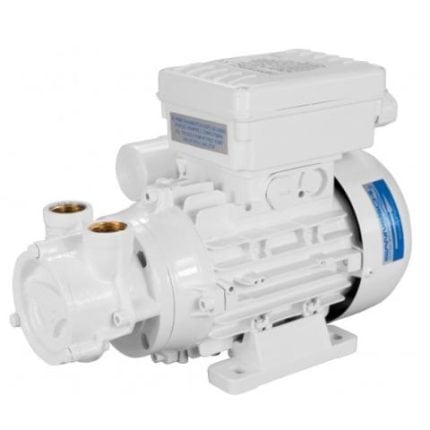 El/Pump ACB 90E, 24V, 0.44 kW - code: 01AAC901E - Gianneschi Pumps and Blowers
 EL/Pump ACB 61 RG B, 24v cc, 0.25 kw, 3400 rpm - Code: 01AAC61RG - Gianneschi Pumps and Blowers
 The ACB 61G Pump, B 230V Single-phase, 50/60Hz, 0.25 kW – code: 01AAC612G – Gianneschi Pumps and Blowers
 EL/Self-priming pump CP 40 G, 24v, 0.90 kw – code: 01ACP4001G – Gianneschi Pumps and Blowers
 El/Self-priming pump: CP 20 A1 G, 12V DC, 0.20 kW - code: 01ACP200G - Gianneschi Pumps and Blowers
Operational checks to do immediately if you find water or diesel in the bilge
When liquid appears in the bilge, speed matters, but the order in which you perform checks matters even more. Acting methodically helps distinguish an occasional anomaly from a defect that requires a more targeted intervention.
A useful sequence can be this:
- visually inspect the bilge and evaluates quantity, color, odor, and presence of surface film;
- checks the engine compartment looking for fresh traces on pipes, filters, fittings, and pumps;
- checks the seawater circuit at the points of intakes, hoses, and connections;
- observes the behavior of the bilge pump, if it frequently activates or does not evacuate properly;
- cleans and rechecks after a short use of the boat to understand where the leak restarts.
If the problem is recurring, do not just remove the liquid: identify the point of origin and compare the installed component with a solution suitable for the type of system. In case of doubts about compatibility, check the product sheet.
If you are looking for spare parts, accessories, or components to neatly restore the bilge system, diesel lines, or seawater circuit, explore the relevant category or brand in the store: you will find solutions suitable for onboard maintenance and can select the items most consistent with your installation.
FAQ
How to tell if there is seawater or diesel in the bilge?
Seawater often leaves salty traces or halos, while diesel is recognized by its smell and surface film. If the liquid is mixed, clean the area and check where it reappears.
Which components should I check first if I find liquid in the bilge?
It is advisable to start with pipes, fittings, clamps, filters, pumps, through-hull fittings, and connections of the seawater circuit. Gaskets and points subject to vibration also deserve careful inspection.
A bilge pump that frequently starts always indicates a pump failure?
No. Often the pump works correctly and instead signals an abnormal entry of water or liquids. It is important to find the cause of the accumulation before replacing the component.
When is it better to also replace clamps and gaskets along with the main replacement part?
When the pipe is hardened, the fitting shows signs of wear, the leak has been present for a long time, or the area is difficult to reach. In these cases, a coordinated intervention reduces the risk of having to disassemble again.
How to avoid compatibility errors when ordering a spare part?
Measure real diameters and fittings, compare the installed component with photo and technical description, and check the product sheet for suitability for diesel, seawater, or use in the bilge.