
When talking about blanket accessories, the choice should never be left to chance. In a professional context, in fact, accessories are not just complementary elements: they contribute to correct installation, continuous use of the system, and its management over time. Careful selection helps avoid incompatibilities, rough assemblies, and unnecessary replacements.
This blanket accessories guide is born precisely with a practical goal: to clarify which criteria professionals use to identify the most suitable component based on the context, the type of blanket, and usage needs. There is no universally valid choice: what works well in one application may prove unsuitable in another.
To navigate effectively, it is advisable to start with three questions: which blanket the accessory must work with, what function it must perform e what checks to make before ordering. From here, a more precise evaluation is built, useful both for a first purchase and for a subsequent replacement or integration.
Throughout the article, we will see the main use cases, the most important technical checks, the most frequent errors, and useful references for a correct blanket accessories maintenance. To explore other topics related to component selection, it may also be useful to consult product guides, maintenance solutions e technical insights.
What blanket accessories are for: real functions and selection criteria
The blanket accessories they serve to complete, adapt, or restore the correct functioning of the blanket in its usage context. In practice, they allow better management of installation, fastening, connection, protection, or replacement of parts subject to wear.
From a professional point of view, the first selection criterion is not the name of the accessory, but the function it must fulfill. An accessory may be necessary to:
- make compatible the blanket with a specific system or support;
- facilitate assembly and reduce errors during installation;
- restore efficiency of the system without replacing the entire assembly;
- improve operational management during use, inspection or maintenance;
- adapt the blanket to specific application conditions.
This approach is important because it avoids one of the most common mistakes: looking for an accessory “similar” to the one already present without verifying if it really meets current needs. In many cases, an apparently simple replacement actually requires a more careful check of the overall configuration.
Those who purchase professionally almost always also consider the component's life cycle. A correct accessory must not only “fit today,” but must fit into a continuity logic: easy to identify, consistent with the installed blanket, and manageable over time in case of maintenance or replacement.
For this reason, it is useful to distinguish between:
- original accessories, chosen during the initial configuration phase;
- integration accessories, added later to adapt the system;
- replacement accessories, intended to restore an already existing function.
Understanding this difference helps to ask the right questions before purchasing and to read the technical sheet more precisely. If there is doubt about compatibility with other components, it is advisable to also check the information present in the related categories or on the pages dedicated to compatible systems.
Compatibility, measurements and technical checks before choosing blanket accessories
Compatibility is the point that separates a correct choice from a potentially problematic purchase. Even when two accessories seem similar, they can differ in attachment, shape, fastening method, or intended use. This is why professionals follow a rather rigorous verification procedure.
Start from the blanket model and the usage context
The first check always concerns the blanket on which the accessory will be installed. If it is a replacement, it is useful to gather all available information about the component already in use: configuration, position, type of connection, and actual function.
If instead a new system is being configured, it is necessary to clarify right away:
- how the blanket will be installed;
- which other elements it will have to interact with;
- whether the accessory is essential or simply recommended;
- if future disassembly or replacement operations are planned.
This step is essential because the same family of accessories can be offered in variants designed for different needs. When the detail is not immediately obvious, check the product sheet.
Measurements, attachments and interface points
One of the most delicate aspects concerns the useful measurements. A visual assessment is not enough: concrete references are needed, especially if the accessory must integrate with existing parts. Professionals generally check:
- overall dimensions;
- position of the fixing points;
- shape and size of the interface;
- mounting orientation;
- any elements that may interfere with installation.
A common mistake is to focus only on the main measurement, neglecting seemingly secondary details such as the mounting direction or the geometry of the connection point. In fact, these elements determine the real compatibility.
Technical checks to be done before ordering
A good blanket accessories guide must also include a method. Before confirming the order, it is advisable to check at least these points:
- intended use of the accessory;
- declared compatibility with the blanket or with the reference system;
- installation method expected;
- presence of complementary components necessary for assembly;
- any application limitations reported in the product sheet.
When possible, it is useful to compare the technical documentation with a photo of the installed component or with a survey of the main measurements. This approach reduces errors and allows potential critical issues to be identified in advance.
In case of doubts, the safest choice is to avoid equivalences “by similarity” and rely only on verifiable data. If you are evaluating multiple options, it may also be useful to consult the pages dedicated to spare parts and compatible accessories to compare the available information.
Typical errors in ordering or installing blanket accessories
Errors almost never arise from a single factor. More often they depend on a chain of small omissions: a missed check, a measurement misinterpreted, a function taken for granted. Knowing the most common mistakes helps to prevent them.
Confusing spare parts, supplementary accessories, and alternative components
One of the most common misunderstandings is treating an accessory as a spare part when it actually performs a different function than the original component. The fact that it looks similar does not guarantee that it is equivalent in assembly or use.
To avoid this problem, one must ask: are you replacing an existing part, are you adding a function, or are you looking for a compatible component by adaptation? These are three different situations that require different checks.
Ordering without checking the entire system
Another typical mistake is evaluating the accessory in isolation. In reality, every component works within a system: cover, supports, connection points, available space, mode of use. If any of these elements change, even the seemingly correct accessory can become unsuitable.
For this reason, professionals do not limit themselves to checking the single piece but observe the assembly context. This is a step that takes a few minutes and often avoids longer downtime during operations.
Neglecting the actual assembly
A compatible accessory on paper can cause problems if the actual assembly presents constraints that were not considered. Some practical examples:
- limited space for installation;
- limited accessibility to fastening points;
- need to disassemble other elements to complete the intervention;
- orientation that makes subsequent maintenance awkward.
These aspects do not always emerge from a simple description. For this reason, it is useful to imagine the intervention from start to finish, not just the moment of purchase.
Underestimating future maintenance
The professional choice also takes into account what will happen after installation. An accessory that is difficult to identify or replace can complicate management over time. From a blanket accessories maintenance, it is advisable to prioritize solutions that are easily recognizable, consistent with the existing configuration, and supported by clear information in the product sheet.
A good rule is to always document the installed component, noting position, function, and useful references. This simple measure speeds up any future inspection or replacement activities.
Products, spare parts, and useful accessories: how to navigate the choice
In the catalog of a specialized supplier, the section dedicated to blanket accessories may include solutions with different roles. To navigate without confusion, professionals tend to classify components based on actual use, not just commercial naming.
Accessories to complete the installation
This category includes components that make the blanket ready for use in the intended context. These are the accessories to consider from the start, as they affect the correct integration of the system. When choosing, it is useful to check whether the accessory is required as a necessary part of the configuration or as an optional element to be added depending on the application case.
Spare parts to restore functionality
When the goal is to restore an already installed assembly, the main criterion is consistency with the existing configuration. In these cases, aesthetic similarity matters less and functional and mounting correspondence matters much more. If the original component is not immediately identifiable, it is advisable to gather as much information as possible before ordering.
Accessories for maintenance and management over time
Not all accessories are chosen at the initial stage. Some become relevant especially during the operational life of the system, when the need arises to simplify inspections, replacements, or adaptations. In a logic of blanket accessories maintenance, it is useful to consider:
- ease of obtaining the correct spare part;
- clarity of the available information;
- simplicity of identifying the installed component;
- consistency with other elements already present.
This approach allows for more orderly work and reduces the risk of being stopped by an unrecognized or not perfectly compatible component.
How to read a product sheet professionally
A well-consulted product sheet helps avoid most errors. Professionals read it looking for precise answers, not generic confirmations. In particular, they check:
- the function of the accessory;
- the field of application;
- the elements with which it is declared compatible;
- the mounting or replacement instructions;
- any complementary accessories to consider.
If information is not clearly stated, the correct formula is simple: check the product sheet. Avoiding personal interpretations, especially in spare parts, is one of the habits that distinguishes a professional choice from a hasty decision.
For those who want to explore the catalog in a more targeted way, it can be useful to start from an overview of the available components and then narrow the selection based on the required function.
Recommended products
Go to the Covered Accessories category

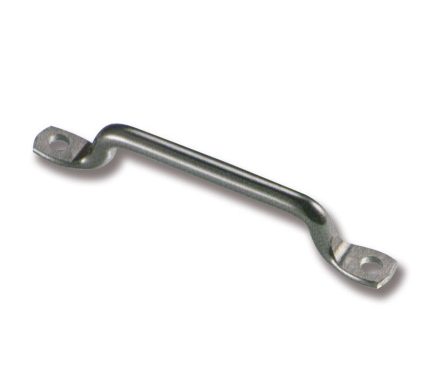


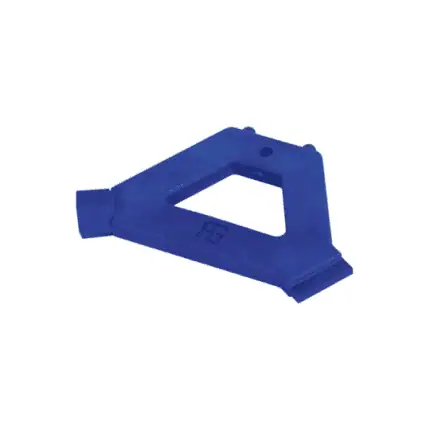

How to set a correct choice of covered accessories in your project
In summary, choosing the blanket accessories means working methodically. Professionals always start from function, compatibility, and installation context; only then do they move on to comparing the available options. This order is what helps reduce errors, speed up purchasing, and simplify future maintenance.
If you are considering a new configuration, a replacement, or an integration, explore the dedicated category and available brands to identify the solution most consistent with your system. A careful analysis of the product sheets will help you choose the right accessory with greater confidence and operational continuity.
FAQ
How do I know if a blanket accessory is compatible with my system?
The most accurate way is to check the function, mounting method, interfaces, and compatibility declared in the product sheet. If it is a replacement, also compare the already installed component and the context in which it operates.
Can I choose a blanket accessory only based on the measurements?
No, the measurements are important but not enough. Shape, attachments, orientation, function, and the actual available space for installation must also be considered. A component similar in size may not be suitable for the application.
What is the most common mistake when ordering blanket accessories?
One of the most common mistakes is confusing a spare part with an additional accessory or with a component that only appears to be equivalent. To avoid this, it is useful to clarify whether the goal is to replace, complete, or adapt the system.
When is it advisable to also check maintenance aspects when making a choice?
It is always advisable to do it, even before purchase. Evaluating the ease of identification, replacement, and management of the component over time helps reduce future problems and makes system maintenance more organized.