What Veco is for
When talking about veco in the technical field, the point is not only to identify a component or a product line, but to understand where it finds real application and how to correctly insert it into a system. In nautical and industrial contexts, the choice of an element compatible with the circuit, the fluid, and the available space directly affects operational continuity and the simplicity of subsequent interventions.
A good veco guide always starts from concrete use. On a nautical system, for example, it may be necessary to intervene in areas where reduced accessibility, humidity, and vibrations make it essential to select components suitable for the environment. In the industrial field, instead, the priority often concerns consistency with the system layout, ease of replacement, and availability of compatible spare parts and accessories.
The brand or family veco is often sought by those who want to maintain a homogeneous line of components, avoid improvised adaptations, and simplify maintenance and replacement management. This approach is particularly useful when working on existing systems, where careful control of connections and measurements prevents errors during ordering.
In practice, Veco can be considered when you need to:
- restore the proper functioning of an already installed line;
- replace a worn component without modifying the system setup;
- improve operational continuity with consistent spare parts;
- organize a veco maintenance more orderly and predictable;
- reduce downtime caused by incompatibility between fittings, measurements, or accessories.
For those working onboard or in the workshop, the most important aspect is to avoid a choice “by similarity.” Two components may appear similar but differ in fittings, dimensions, materials, or intended use. For this reason, it is useful to always compare the installed part with the available information and, if necessary, delve into the technical datasheet. If a detail is not immediately clear, check the product sheet.
If you are considering related components for your system, it can be useful to also consult the technical guides in the catalog and the solutions for marine systems, so as to have a more complete picture of the possible combinations.
Compatibility, measurements, and technical checks to choose Veco
The most delicate phase in choosing a component veco is the compatibility check. In many cases, the error does not arise from a completely wrong evaluation, but from an incomplete check: a fitting is measured but the overall size is not considered, the shape is observed but not the type of connection, or a spare part is ordered thinking that “it will fit anyway.”.
A veco guide truly useful must therefore start from a simple and replicable method. Before purchasing or replacing an element, it is advisable to gather some essential information:
- use application: nautical, industrial, or other operational context;
- position in the systemline type;
- type of connection: main line, branch, secondary connection, service point;
- actual measurementsconnection type;
- compatible materials: in relation to the fluid and the working environment;
- access conditions: if the assembly takes place in tight spaces or in hard-to-reach areas.
In the nautical field, checks must also consider exposure to salt, condensation, and vibrations. In the industrial field, on the other hand, the relationship with the rest of the line is often decisive: a component that is correct on paper may be inconvenient to install or maintain if the operational space is not well evaluated.
A useful check consists of photographing the existing component from multiple angles and noting the main measurements before proceeding with the order. This step, seemingly trivial, helps avoid incompatible replacements and makes it easier to compare with the documentation available online.
How to correctly read a product sheet
The product sheet is the main reference when you need to confirm a choice. It should not be read hastily: every item can make the difference between a compatible component and one to be returned or replaced again. In addition to the general description, pay attention to:
- declared dimensions;
- type of attachment or connection;
- indicated intended use;
- any accessories required for assembly;
- notes on compatibility or paired configurations.
If your goal is a correct veco maintenance, it is advisable not to limit yourself to the main part only but to also check any complementary elements right away. In many systems, in fact, the machine stop or service stop does not depend on the replaced component but on the lack of an accessory necessary to complete the work.
To deepen the selection criteria, you can also consult the section dedicated to technical spare parts and the insights on system maintenance.
Typical errors in ordering or installation
The most frequent errors related to veco almost never depend on a single cause. More often they arise from a sequence of small inaccuracies: a measurement taken quickly, an unclear photo, a skipped check because the component “looks the same.” In a nautical or industrial system, however, even a minimal difference can result in lost time, repeated disassemblies, and unexpected operational downtime.
Among the most common mistakes are:
- ordering based on external appearance without checking attachments and dimensions;
- neglecting the space requirements thinking only about connection compatibility;
- not verifying the usage context, especially if the component works in a marine environment or in a technical area subject to stresses;
- forgetting complementary accessories or spare parts necessary for assembly;
- force installation when the component does not perfectly match the existing configuration;
- do not plan maintenance and intervene only after a failure has occurred.
Another recurring mistake concerns the “adapted” replacement. In the workshop, it may seem like a useful shortcut, but on systems that need to remain reliable over time, it is preferable to work with components consistent with the planned configuration. A veco guide store-oriented approach should help precisely with this: not to choose “something that fits,” but to identify the most sensible solution for your system.
Mistakes that slow down maintenance
Those who deal with veco maintenance knows that the real operating cost is often not the replacement itself, but the time lost between diagnosis, wrong order, and second intervention. To reduce these delays, it is advisable to adopt a simple procedure:
- identify the installed component and its function in the system;
- carefully record measurements and connections;
- check if additional accessories are needed;
- check the product sheet before ordering;
- prepare the intervention taking into account the mounting space and necessary tools.
This method is useful both onboard and in industrial environments because it reduces unforeseen events and makes replacement more straightforward. If you have doubts about a specific feature, avoid assumptions: check the product sheet.
Products, spare parts, and accessories useful for an orderly Veco maintenance
When searching for veco, often the real need is not just to purchase a single component, but to build a more efficient management of spare parts and related accessories. This is particularly true in marine systems, where quick intervention can make a difference, and in industrial systems, where an unplanned stop complicates the work of the department and maintenance.
A veco maintenance well-organized maintenance starts from a simple logic: clearly knowing which elements are subject to wear, which accessories may be needed during replacement, and which checks to perform before scheduling the intervention. It is not necessary to accumulate components randomly; it is more useful to create a reasoned selection based on the existing system.
From this perspective, useful spare parts and accessories are those that help to:
- quickly restore the original functionality;
- maintain consistency between the replaced component and the existing configuration;
- simplify assembly, disassembly, and periodic checks;
- avoid fragmented or incomplete orders;
- reduce the risk of downtime due to lack of secondary elements.
For those managing multiple systems or vehicles, it may be useful to complement the search for the main component with a review of related parts. This approach makes maintenance less reactive and more planned. It does not mean replacing everything in advance, but knowing which elements to check and which to keep available based on usage frequency and working conditions.
Another often underestimated aspect is the continuity between purchase and installation. The store should not be seen only as a supply point, but as support for the correct choice. For this reason, it is advisable to consult the datasheets, compare the available variants and, when necessary, also explore the categories related to system components to identify what can complete the intervention in a single phase.
If you work on systems exposed to intensive use, a good practice is to record the data of components already installed. In this way, at the time of reordering, the search is faster and more precise. It is a simple but very effective strategy to transform the veco guide in a concrete technical management procedure.
Recommended products

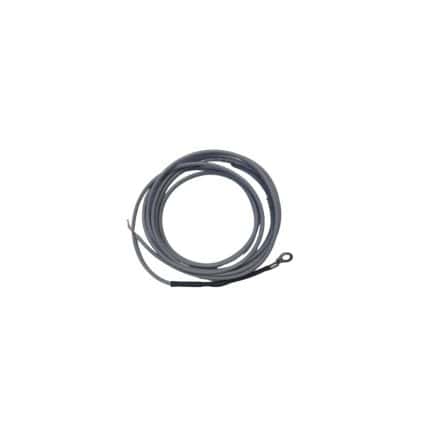 NTC probe for fancoil 3mt with eyelet - code: M72090 - Climma
 Display Vega MK2 AVE - control panels - code: MDISAV - Climma


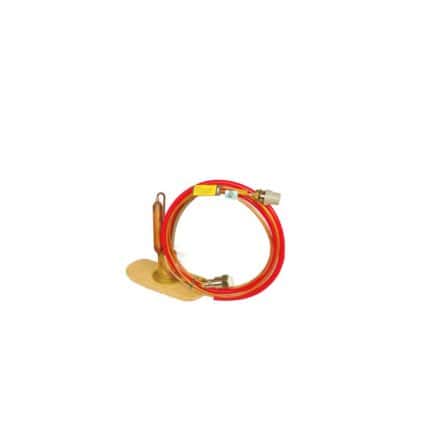 Threaded Frigomatic outrigger - without zincs - Code: E50361 - Frigoboat
 Remote room temperature sensor for MKII/MK3 - 3m - Code: MSENS - Climma
 Electric box for Compact Vega MK3 2011 - Code: M81301 - Climma
Useful links to guide you in the choice
If you want to better compare applications, spare parts, and compatible solutions, it can be useful to explore the pages dedicated to components for industrial use. In this way, you can contextualize the choice of veco within your plant and prepare a more complete order, with less margin of error.
If you are looking for a solution consistent with the brand or want to explore the availability of related spare parts and accessories, consult the category or brand page of the store: it is the fastest way to build a selection suitable for your nautical or industrial plant and set up a veco maintenance simpler over time.
FAQ
What is Veco used for in a nautical or industrial system?
Veco is sought after for applications where it is important to replace or integrate components consistently with the existing system. It can be useful both in the nautical and industrial fields when compatibility, ease of maintenance, and operational continuity are needed.
How to check if a Veco component is compatible with my system?
It is advisable to check the intended use, type of connection, actual measurements, dimensions, and materials. It is useful to compare the installed component with photos and measurements taken on site. If a detail is unclear, check the product sheet.
What are the most common mistakes when ordering a Veco spare part?
The most common mistakes are sorting based only on visual similarity, not checking connections and measurements, neglecting the accessories needed for assembly, and not considering the available space for installation.
How to organize a more efficient Veco maintenance?
For more organized maintenance, it is useful to record the data of the installed components, check related spare parts in advance, and plan the intervention considering access, tools, and complementary parts. This reduces errors and downtime.
Is it better to replace only the main component or also check accessories and related spare parts?
In most cases it is advisable to also check accessories and related parts. Often an intervention is delayed not because of the main component, but due to the lack of elements necessary to complete the assembly or replacement.