Introduction and when it is needed
The marine pumps are among the most “silent” components on board: as long as they work, you don’t think about them. Then comes the leak, the bilge alarm, or a faucet that no longer draws, and you realize how central they are for comfort and safety. In this article we look at 10 typical mistakes that lead to failures, blockages, and leaks, with practical solutions to avoid them.
In general, a onboard pump can be used for: water management (bilge, shower, sink), pressurization of the water system, transfers and services (depending on the type). If you notice frequent starts, pressure drops, unusual noises, or recurring humidity, it’s time to carry out targeted checks and consider a replacement: discover the pump category.
Basic concepts (how it works)
Understanding how a pump works helps prevent mistakes in choice and installation. Simply put:
- The bilge pump it sucks up accumulated water and discharges it overboard through a hose and through-hull fitting (or dedicated discharge line).
- A pump for the water system (booster/pressurization) maintains pressure in the pipes, activating when you open a faucet or when pressure drops.
- Pumps can be submerged (in the bilge) or self-priming (installed outside the liquid, with a suction line).
The key point: a pump does not work “alone.” Pipes, filters, valves, wiring, and installation location determine reliability and risk of leaks.
1) Identify the type of connection required
The correct choice drastically reduces failures and maintenance. Before purchasing, consider:
- Main use: bilge, shower, sink, pressurization, transfer. Not all pumps are suitable for liquids with residues.
- Type of installation: submerged vs external/self-priming; available space and accessibility for maintenance.
- Compatibility with the system: voltage, power consumption, cable sections, and protections. If in doubt, check the product sheet.
- Materials: in a marine environment, corrosion resistance and quality of seals matter. If the pump works with saltwater or in humid areas, favor components designed for marine use.
- Spare parts and accessories: filtri, giranti/rotori (se previsti), raccordi, sensori livello. Avere accessori compatibili semplifica la gestione.
Se stai aggiornando l’impianto, può essere utile consultare anche guide correlate: guida all’impianto idrico di bordo e controlli e manutenzione della sentina.
Flow rate and head (practical examples)
Molti guasti “misteriosi” nascono da un dimensionamento errato. Due concetti ricorrenti:
- Flow rate: quanta acqua la pompa può movimentare in un certo tempo (valore indicato dal produttore).
- Head: quanto “in alto” o con quanta resistenza la pompa riesce a spingere l’acqua (dislivello + perdite di carico).
Practical examples (without numbers): a pump that seems “powerful” on paper may perform poorly if the hose is long, with many bends, or if the through-hull fitting is higher than the pump. Similarly, a bilge pump installed with a tortuous discharge may start frequently but evacuate slowly, increasing wear and flood risk.
Consiglio operativo: prima di scegliere, fai una mini-mappa del percorso dei tubi (lunghezza, curve, dislivello) e poi check the product sheet che la pompa sia adatta al tuo scenario.
Correct installation (steps + errors to avoid)
Un’installazione ordinata riduce vibrazioni, perdite e falsi allarmi. Ecco una sequenza tipica:
- Placement: installa la pompa dove può lavorare senza pescare aria e dove sia raggiungibile per pulizia.
- Raccordi e tubazioni: usa diametri coerenti, evita strozzature e curve inutili; serra con fascette adeguate.
- Valvole/antiritorno: inseriscile solo se previste e utili al tuo impianto; in alcuni casi possono aumentare le perdite di carico o creare intasamenti. Se non sei sicuro, check the product sheet o chiedi supporto.
- Wiring: protezioni, connessioni stagne, passaggi cavo lontani da zone che si allagano.
- Test: prova con acqua (o simulazione controllata) e controlla eventuali trafilamenti su raccordi e passascafo.
Ora i 10 errori più comuni che causano guasti e perdite:
- 1) Pompa montata troppo in alto: pesca aria e si surriscalda. Soluzione: riposizionamento o scelta di modello adatto (es. autoadescante).
- 2) Tubo di scarico sottodimensionato: increases effort and reduces efficiency. Solution: adjust diameter and fittings.
- 3) Too many bends and “bulging” sections”: stagnation and water backflow. Solution: more linear path and correct clamps.
- 4) Non-marine clamps and fittings: corrosion and micro-leaks. Solution: components suitable for marine environment.
- 5) Lack of filter where needed: debris in pump body, blockages and wear. Solution: install compatible filter/screen.
- 6) Check valve inserted “randomly”: can stick, reduce flow or trap dirt. Solution: use only if necessary and accessible for cleaning.
- 7) Wiring with exposed joints: oxidation and voltage drops. Solution: sealed connections and protected routing.
- 8) Dirty or poorly positioned level sensor: continuous starts or no starts. Solution: periodic cleaning and check fastening.
- 9) Pump not properly fixed: vibrations, noise and stress on fittings. Solution: adequate and anti-vibration supports if provided.
- 10) No test after installation: leak is discovered late. Solution: complete test and check after first hours of use.
Maintenance (frequencies and checks)
Maintenance should not be complicated, but it must be regular. A simple routine:
- Visual inspection of pipes, clamps, leaks and oxidation.
- Cleaning of filter/screen and bilge area: sand, hair, debris and oil are enemies of the pump.
- Function test: manual activation (if present) and check free discharge.
- Check sensors: float or electronic sensor, making sure it does not get stuck.
Frequency depends on use and environment (salt water, presence of debris, humidity). If you sail often or in “dirty” waters, increase checks. If in doubt about specific procedures, check the product sheet or consult a guide: maintenance of marine pumps.
Common problems and solutions (troubleshooting)
When something goes wrong, avoid random attempts: you risk worsening the leak or damaging the engine. Here is a quick diagnosis:
The pump runs but does not discharge
- Air suction (low water level, slow hose, crack): tighten fittings and check suction.
- Clogging: clean filter/screen and check that the hose is not bent.
The pump does not start
- AlimentazioneFuse.
- : check fuse/switch, oxidation, and connections.Level sensor.
: check that it is not blocked or dirty.
- Water return Frequent starts (short cycles).
- from the discharge line: check slopes and presence/condition of any non-return valve. Micro-leaks.
Noise and vibrations
- Mounting in the system (if pressurization pump): inspect fittings and utilities.
- insufficient: add supports and reduce tension on hoses.Dirty pump body.
Recommended products
: cleaning and checking impeller/rotor if provided (check in the product sheet). check the product sheet To choose quickly, below you will find a selection of products and types useful for different applications. Open each sheet and.
- Automatic bilge pump
- compatibility, included accessories, and installation requirements.
- Manual bilge pump
- Self-priming pump for onboard systems
- Freshwater pressurization pump
- Pump for shower and grey water discharge
- Filter/screen for pump
- Float switch for bilge
- Non-return valve for discharge line
- Discharge and suction hose
Recommended products
 El/Single-screw Pump MV44 G, 230/400V T, 50Hz, 0.75 kW – code: 01GMV343G – Gianneschi Pumps and Blowers
 EL/Pump IN 12, 24v, 0.25 kw, 2900 rpm – code: 01CIN121T – Gianneschi Pumps and Blowers
 Maxi Sub V. 220 Submersible Pump – code: 01GMAX2 – Gianneschi Pumps and Blowers
 Autoclave Jet 4BE, 24V DC, 0.75 kW - code: 01J4B1E - Gianneschi Pumps and Blowers
 EL/pump CB 22-120, 230/400 V, 50 Hz 3Ph 0.55kW 2P – code: 01CB22G103 – Gianneschi Pumps and Blowers
 Maxi Rule Pump 24 V 7 A 38 mm – code: 16.118.24 – Osculati
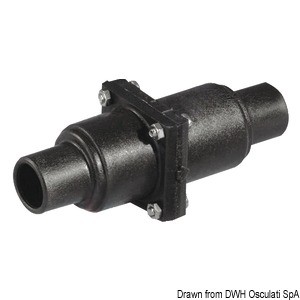 Non-return valve 25/38 mm Whale – code: 17.121.50 – Osculati
 EL/PUMP – ECOINOX 1/15 24V – CODE: 01EI114T – GIANNESCHI PUMPS AND BLOWERS
Useful links
- Category: Marine pumps
- How to choose a bilge pump
- Mistakes to avoid in the boat water system
- Brand: Technofluid
FAQ
Is an automatic or manual bilge pump better?
It depends on the use: the automatic one is convenient for continuous management, the manual one is useful as a backup. Many owners choose a combination for redundancy.
Is a check valve always recommended?
No. It can be useful in some systems, but it adds resistance and can trap debris. Evaluate case by case and check the product sheet if the manufacturer provides it.
Why does the pump often start even without visible water?
It is often a dirty/blocked sensor, water backflow from the drain line, or moisture activating the system. Check the sensor, tube path, and any standing water.
How often should I check the onboard pump?
There is no single frequency: it depends on usage and conditions. In practice, regular visual inspections and periodic tests reduce sudden failures.
Conclusion
Preventing failures and leaks is mainly a matter of correct choice, neat installation and constant checks. If you want to upgrade your onboard pump or replace a bilge pump with a model better suited to your system, visit the selection of marine pumps e, se preferisci un marchio specifico, esplora anche Technofluid per trovare la soluzione più coerente con la tua barca.
FAQ
Is an automatic or manual bilge pump better?
It depends on the use: the automatic one is convenient for continuous management, the manual one is useful as a backup. Many owners choose a combination for redundancy.
Is a check valve always recommended?
No. It can be useful in some systems, but it adds resistance and can trap debris. Evaluate case by case and check the product sheet if the manufacturer provides it.
Why does the pump often start even without visible water?
It is often a dirty/blocked sensor, water backflow from the drain line, or moisture activating the system. Check the sensor, tube path, and any standing water.
How often should I check the onboard pump?
There is no single frequency: it depends on usage and conditions. In practice, regular visual inspections and periodic tests reduce sudden failures.