When boat accessories Rome are really needed for maintenance and checks
Talking about boat accessories Rome usefully means going beyond the simple search for the spare part or component to be replaced. In the nautical field, in fact, many problems do not arise from a sudden failure, but from weak signals that are overlooked: a fastening that loosens, a gasket that loses elasticity, an exposed cable passage, a connection showing oxidation, or an element subject to vibrations that starts to malfunction.
The nautical technical guides they are useful precisely for this: they help to read the symptoms before they become a boat stop or a more invasive intervention. Those who look for accessories and components for the boat often do so when the problem is already evident; a technical approach, on the other hand, starts from the periodic check of the areas most exposed to wear, humidity, and mechanical stress.
In practice, it is time to consider an accessory or a replacement when you notice:
- abnormal play on elements that were previously stable;
- signs of corrosion or surface alterations near attachments and connections;
- hardening, cracks or deformations on flexible parts;
- unusual noises during use or navigation;
- difficulty in assembly after a previous replacement that was not perfectly compatible;
- signs of infiltration or moisture in points that should remain protected.
Another often underestimated aspect concerns the context of use. A boat used frequently, exposed to salt spray, sun, and continuous wet-dry cycles, also stresses seemingly secondary components. For this reason, it is useful to complement ordinary maintenance with a targeted check of the most sensitive areas, also consulting nautical technical guides and in-depth sheets when available.
If the goal is to avoid repeated replacements or ineffective assemblies, it is advisable to observe the boat as a system: an accessory never works alone, but interacts with supports, surfaces, wiring, fittings, fastenings, and materials already present on board.
Boat accessories Rome compatibility: differences between solutions, sizes, and pairings
The theme of boat accessories Rome compatibility It is central. Many errors arise from the idea that two components similar in shape or function are automatically interchangeable. In reality, compatibility must be considered on multiple levels: dimensional, mechanical, environmental, and applicative.
Dimensional compatibility
The first check concerns measurements, center distances, diameters, clearances, and fixing points. Even a minimal difference can create tension during assembly, misalignments, or unevenly distributed loads. When a component seems “almost right,” it is often not the correct one. In these cases, the best choice is check the product sheet and compare the data with the installed part or the mounting seat.
Compatibility with materials on board
An accessory must coexist with surfaces, supports, and components already installed. Contact between different materials, in a marine environment, can accelerate wear, oxidation, or loss of efficiency. Therefore, it is not enough to evaluate the function of the single element: it is necessary to understand how it integrates with the rest of the system or structure.
Before choosing, it is useful to ask yourself:
- on which surface it will be mounted;
- if the installation point is subject to vibrations or torsions;
- if it is exposed to splashes, direct sunlight, or stagnation;
- if the component must work continuously with other elements already present;
- if the existing system requires a specific geometry.
Usage compatibility
Another typical mistake is choosing an accessory that is theoretically correct but unsuitable for the actual use of the boat. Occasional use, intensive use, or prolonged exposure to the marine environment may require different characteristics. The best nautical technical guides insist precisely on this point: compatibility is not just “fits or doesn’t fit,” but works well over time or not.
To navigate among similar solutions, it can be helpful to also consult related content such as in-depth articles on nautical maintenance, tips for correct assembly, or sheets dedicated to different families of accessories.
Errors to avoid when choosing or installing nautical accessories
In the comparison between competing solutions, the real difference often emerges not from the commercial description, but from the errors that a component helps you avoid. Those looking for technical boat accessories should focus on this: reducing incompatibilities, forced assemblies, and premature replacements.
Choosing based on appearance rather than function
Two accessories may look equivalent but have different intended uses. The external shape is not enough to make the right choice. It is important to start from the installation point, the type of stress, and the interaction with other present elements.
Ignoring the signs before replacement
Many interventions are done too late. If a component shows play, localized wear, loss of sealing, or coupling difficulties, it is not advisable to wait for complete failure. Timely replacement often prevents indirect damage to other parts of the boat.
Forcing the assembly
When an accessory requires improvised adaptations, abnormal pressures, or fastenings inconsistent with the original seat, the problem is almost never the assembly itself, but the initial choice. A correct installation must be clean, stable, and consistent with the support. If too much compensation is needed, the compatibility is probably not correct.
Ignoring the installation environment
A component installed in a sheltered area does not face the same conditions as one exposed to humidity, salt, impacts, or sunlight. This affects the durability and reliability of the whole. Before purchase, always check if the intended use is consistent and, in case of doubt, check the product sheet.
Not checking the complete system
A new accessory installed on a worn base or a compromised connection rarely solves the problem stably. The most effective technical maintenance does not only replace the visibly damaged part but also checks what surrounds it.
For this reason, during an inspection, it is advisable to observe:
- condition of fastenings and seats;
- presence of deformations or ovalizations;
- signs of abnormal rubbing;
- residues, moisture, or oxidation in nearby areas;
- general alignment of the system.
Products and categories to consider for technical maintenance of the boat
When analyzing the most wear-prone areas, the correct logic is not to look for a single “universal” item, but to identify the functional category most suitable for the intervention. This approach is typical of the best nautical technical guides: first the problem is identified, then the family of accessories compatible with the onboard context is selected.
The categories to evaluate change depending on the area involved, but in general, it is advisable to pay attention to all elements that affect:
- fastening and stability of parts subject to movement;
- protection of passages, connections, and exposed points;
- estate in areas sensitive to infiltration or moisture;
- order and safety of wiring, pipes, and connections;
- functional continuity between new accessory and already installed components.
A concrete advantage of this method is that it also makes it easier to compare alternatives available in the catalog. Instead of stopping at the brief description, it evaluates whether the chosen category really addresses the problem encountered on board. For example, if the defect arises from vibration, rubbing, or misalignment, you need to opt for solutions designed for that type of issue, not just a seemingly similar replacement.
To deepen your choice more consciously, you can also consult sections dedicated to nautical accessories, guides to check compatibility, and support content useful for correctly interpreting signs of wear and the need for replacement.
A well-done technical check almost always starts with three simple questions:
- what is the real problem to solve;
- in what environment does the component operate;
- what compatibility is needed with what is already installed.
If you understand this scheme, the search for boat accessories Rome becomes much more precise and less scattered. It is not just about finding an available component, but about choosing a solution consistent with the boat's maintenance in the medium term.
Recommended products

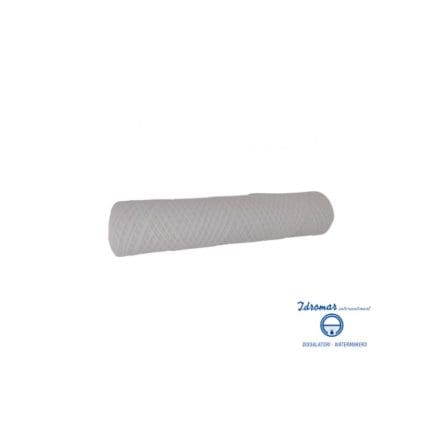 10" Wound Wire Cartridge 20 micron – code: 10MP20 – Idromar
 Desalination maintenance kit – code: Cleaning Kit (SC1 + SC2) – Schenker
 Stainless steel clamps Norma 12–22 mm – code: FAI0012022 – Toscogomma
 Brush with spring - code: SGM45 - Gianneschi Pumps and Blowers


Signs not to ignore during periodic checks
There are situations where postponing a check leads to more complex interventions. Some signs deserve immediate attention, even when the boat remains usable. Recognizing them in time helps prevent collateral damage and plan a more orderly replacement.
The most common warning signs are:
- abnormal movement of parts that should remain stationary;
- difficulty in opening, closing, or adjusting compared to normal use;
- signs of irregular wear on edges, supports or contact points;
- presence of salt, moisture or residues in areas where they did not appear before;
- fastenings that tend to loosen frequently;
- small repeated infiltrations that seem negligible but recur over time.
In these cases, the best choice is to avoid temporary solutions and carefully check the compatibility of the component to be replaced. Effective technical maintenance does not only address the symptom but identifies the cause: wear, improper assembly, material not suitable for the context, or incorrect pairing.
Support for choice and recommended path
If you are considering which boat accessories Rome to include in your next maintenance, the most reliable method is to start with a thorough visual inspection, compare the existing component with its actual function, and then verify the match with the most suitable category. Where there is doubt about measurements, fittings, or intended use, it is always advisable check the product sheet.
To guide you among the available solutions, explore the category dedicated to nautical accessories or the reference brand: you will find a useful selection to compare applications, compatibility, and types of use with a more technical and less generic approach.
FAQ
How to understand if a nautical accessory is really compatible with my boat?
Compatibility must be checked on multiple levels: measurements, mounting points, materials on board, and usage context. It is not enough for the component to be similar to the existing one. In case of doubt, compare the mounting location and the actual function of the part and check the product sheet.
What signs indicate that a boat accessory needs to be checked or replaced?
The most common signs are abnormal play, oxidation, cracking, difficulty in adjustment, loosening of fastenings, repeated infiltrations, and irregular wear in contact areas. Even if the component still seems usable, these symptoms warrant a technical inspection.
Is it a problem if an accessory fits only with a small adjustment?
Yes, it is often a sign of incorrect compatibility. Forced assembly can cause stress, misalignments, or premature wear. A suitable accessory should install consistently with the intended fitting, without improvised corrections.
Why do nautical technical guides emphasize so much on controlling the installation environment?
Because humidity, saltiness, sun, vibrations, and stagnation affect the behavior of components over time. An accessory suitable for a sheltered area might not be the right choice in a very exposed spot. For this reason, the selection must always consider where and how the component will work.
Is it better to replace only the worn part or also check the nearby parts?
It is always advisable to also check fastenings, supports, seats, and connected components. In boating, a new accessory mounted on a compromised or misaligned base risks not solving the problem in a lasting way.