


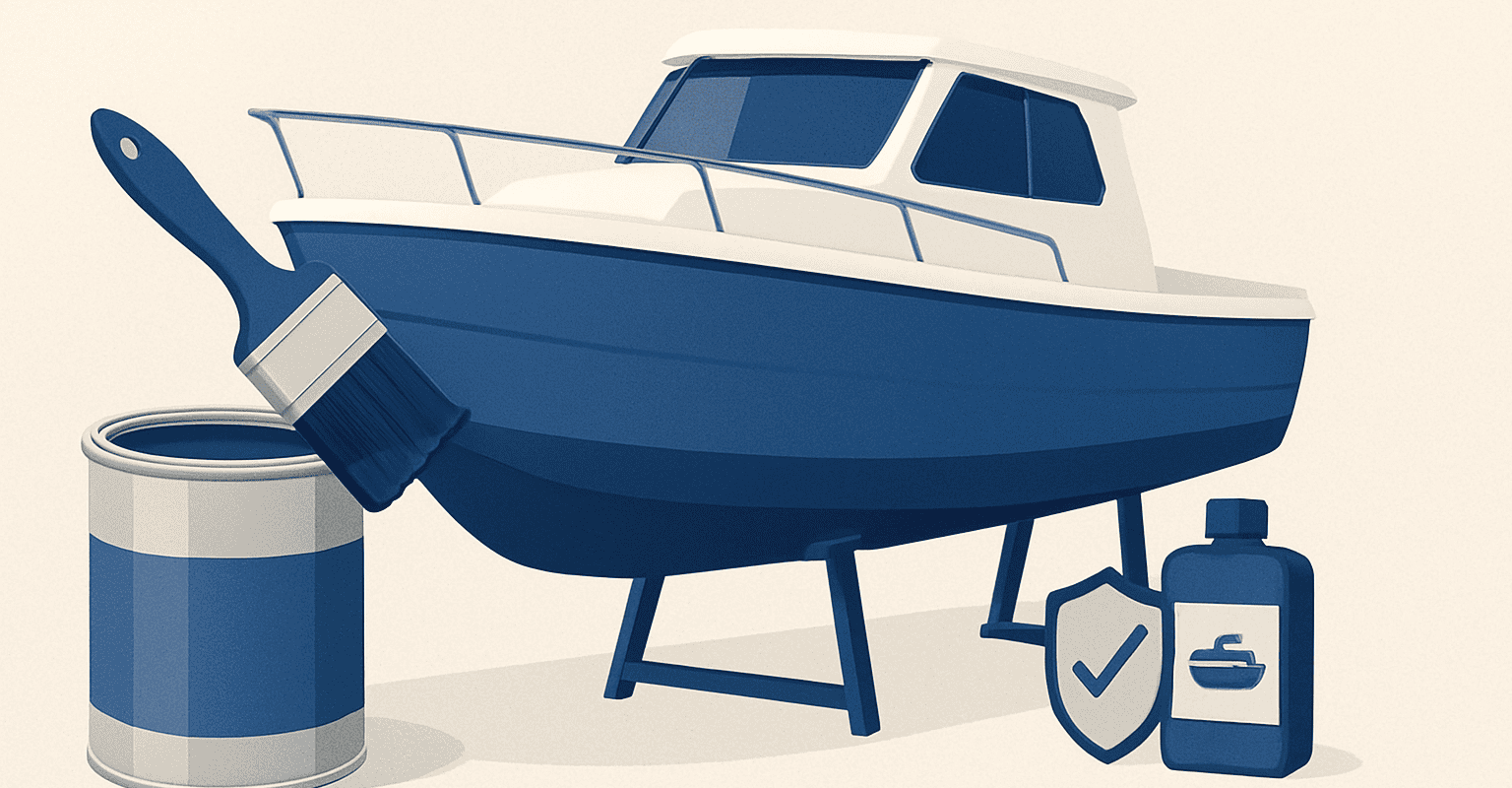
When antifouling boat is really needed
The’antifouling boat it is not an automatic step to be repeated always in the same way. It is needed when the hull stays in the water long enough to favor the adhesion of algae, slime, microorganisms, and encrustations which, over time, make navigation more difficult and complicate ordinary maintenance. The critical point is not only the presence of visible marine vegetation, but also that initial deposit that seems harmless and instead prepares the bottom for more tenacious layers.
Understand when to intervene means observing the type of use of the boat, the period of stay in the water, the mooring area, and the condition of the cycle already present on the hull. A frequently used boat does not necessarily require the same approach as a boat left still for long periods. Likewise, a hull that has already received several coats over time must be carefully evaluated to avoid incompatibilities or detachments.
In many nautical technical guides the first mistake is precisely this: treating all hulls as if they were the same. In reality, the substrate, the existing finish, and the maintenance history affect as much as the choice of product. Before proceeding, it is advisable to check if the old layer is still adherent, if it shows peeling, if there are powdery areas, or if signs of irregular wear appear.
A well-done preliminary check also helps to understand if a light restoration is sufficient or if a deeper intervention is necessary. In case of doubts about the surface or the previous cycle, it is always prudent check the product sheet to compare the application instructions with the hull material.
Per approfondire la preparazione della carena e i passaggi preliminari, può essere utile consultare le risorse dedicate alla manutenzione nautica e gli approfondimenti sui cicli di protezione dello scafo.
Differences between solutions and antifouling boat compatibility
One of the most searched topics online concerns antifouling boat compatibility, and it is also one of the most underestimated in practical phases. It is not enough to choose a “for boats” solution: you need to understand if it can be applied on the existing cycle without causing adhesion problems, surface reactions, or irregular wear.
The main differences between the various solutions concern how the film behaves over time, the type of release or wear of the surface, and the relationship with the underlying substrate. For this reason, before applying a new coat it is essential to clarify at least three aspects:
- What is already on the hull: old antifouling, primer, bottom coat, or bare surface.
- What condition the existing cycle is in: well anchored, cracked, peeling, or uneven.
- On which material you are working: not all substrates react the same way and some combinations require an intermediate primer.
Compatibility is important because a wrong choice can result in problems that appear even after a short time: patchy detachment, uneven wear, poor coverage, sanding difficulties, or the need to remove the entire cycle to start over. In practice, an initial mistake multiplies the subsequent work.
Another often overlooked point is the difference between chemical compatibility and application compatibility. A solution may theoretically be usable over an old layer, but still require specific preparation, thorough cleaning, or an adhesion promoter. If this step is skipped, the problem is not always with the chosen product, but with the incomplete process executed.
When comparing different options, it is advisable to think in terms of a system and not a single can. This approach, typical of the best nautical technical guides, helps to avoid impulsive purchases and to build a coherent cycle: preparation, possible primer, antifouling finish, and subsequent maintenance.
Se vuoi orientarti meglio tra supporti, fondi e finiture, puoi consultare la sezione con le guide tecniche nautiche e i contenuti dedicati alla compatibilità tra cicli di verniciatura.
How to correctly read the compatibility of the existing cycle
Many problems arise from a superficial reading of the instructions. Saying that a solution is compatible does not mean it can be applied without checks. You need to verify in the product sheet if operations such as:
- washing and complete removal of dirt and salts;
- matting of the old film;
- removal of non-adherent parts;
- application of a primer or a tie coat;
- waiting specific times between phases.
When the previous cycle is not identifiable with certainty, the safest choice is not to improvise. In these cases, a preventive technical check avoids compromising the entire hull.
Mistakes to avoid when choosing or applying boat antifouling
The most common mistakes do not depend only on the quality of the material, but especially on hasty evaluations. The’antifouling boat works well when inserted into a correct process; if instead treated as a simple final coat, problems are almost inevitable.
Applying on dirty or poorly prepared surfaces
A hull with residues, dust, grease, or old detaching parts does not offer a reliable substrate. Even minimal contamination can compromise adhesion. The typical result is an irregular surface, with areas that work well and others that fail prematurely.
Preparation must be consistent with the condition of the substrate: washing, drying, possible sanding, and removal of incoherent parts. Skipping one of these steps is one of the most costly mistakes in terms of time and rework.
Choosing without verifying the existing primer
Among recurring problems is the application of a new finish over an unknown old cycle. This often happens on used boats or hulls maintained by different operators over time. Without knowing what was previously applied, the risk of incompatibility increases significantly.
If you are not sure of the existing cycle, avoid “trial and error” solutions. It is preferable to gather as much information as possible or set up a controlled restoration cycle, following the instructions reported in the product sheet.
Confusing normal wear and application defect
Not everything that appears worn indicates a material problem. In some cases, the surface behavior is consistent with the type of use of the boat or the time spent in the water. In others, however, the defect arises from irregular thicknesses, incomplete preparation, or overlapping times not respected.
To understand the difference, observe how the problem presents itself:
- flake detachment: often indicates poor adhesion of the substrate;
- alternating shiny and matte areas: may indicate uneven preparation;
- disorderly wear: may depend on irregular application or old uneven layers;
- localized peeling: often appears where the base was already compromised.
Using the same procedure for every boat
Another common mistake is replicating the method used on another boat without considering differences in substrate, maintenance history, or usage conditions. The nautical technical guides are useful precisely for this: they help build a method, not a shortcut.
The practical rule is simple: the more uncertain the previous cycle is, the more accurate the initial check must be. And when a detail is unclear, the best solution is always the same: check the product sheet.
Recurring problems after application and how to avoid them
Many users seek information on the’antifouling boat only when the problem has already appeared. In reality, recognizing the most frequent signs allows intervention before the defect spreads or requires complete removal of the cycle.
Poor adhesion of the new layer
If the film tends to detach, the most likely causes are an improperly prepared surface, the presence of old incoherent layers, or an antifouling boat compatibility unchecked. To avoid this, it is important not to limit yourself to visual cleaning: the substrate must be stable, dry, and uniform.
Uneven finish on the hull
An irregular result may depend on uneven application, absorbent substrate in some areas, or differences between already treated areas and restored areas. To reduce the risk, it is advisable to work methodically, maintaining continuity of preparation and carefully checking the junction points between the old and new cycle.
Difficulty in seasonal touch-ups
When previous maintenance has been carried out without criteria, even touch-ups become complicated. Areas with different thicknesses, unrecognizable bases, or partially degraded surfaces make it difficult to achieve a homogeneous result. In these cases, prevention consists of documenting the applied cycle and using compatible products within the same system.
Per chi desidera migliorare il metodo di lavoro, può essere utile leggere gli approfondimenti sulla preparazione delle superfici nautiche e le indicazioni pratiche per la manutenzione stagionale della carena.
Products and categories to consider for a correct cycle
When it comes to choice, it is useful to think in terms of functional categories rather than specific names. A correct cycle for the hull can include several elements, to be evaluated based on the condition of the hull and the compatibility of the existing system.
Among the most relevant categories are:
- cleaners and preparation products, useful for removing dirt and residues before application;
- abrasives and preparation accessories, to be used to dull or smooth the surface;
- primers or base coats, when required by the cycle or necessary to improve adhesion;
- antifouling finishes, to be chosen based on the surface and compatibility with the existing system;
- application tools, important for maintaining uniformity and control during work.
The mistake to avoid is buying only the final finish, neglecting everything needed beforehand. In a technical cycle, success often depends more on the preparatory phase than on the last step. For this reason, the nautical technical guides most useful always emphasize one concept: the system's performance arises from the consistency between the phases.
If you are considering which category to take into account for your hull, start with three simple questions:
- Is the surface sound or does it require restoration?
- Is the old cycle identifiable?
- Is a bridging product needed between the existing base and the new finish?
From here you can build a more informed choice, avoiding incompatibilities and subsequent corrective interventions.
Recommended products

 10" Wound Wire Cartridge 20 micron – code: 10MP20 – Idromar
 Stainless steel clamps Norma 12–22 mm – code: FAI0012022 – Toscogomma
 Brush with spring - code: SGM45 - Gianneschi Pumps and Blowers


How to set up safer maintenance over time
A good result does not depend only on the initial application but on the ability to keep the cycle understandable and manageable over the years. Recording the type of work performed, keeping useful information, and periodically checking the condition of the hull helps avoid repeated mistakes season after season.
This approach is particularly useful when the boat changes hands, is used by different operators, or alternates between periods in the water and periods out of the water. Organized maintenance reduces doubts about antifouling boat compatibility and makes it easier to decide whether to proceed with a light renewal or a more structured intervention.
If you want to choose more confidently between cycles, primers, and solutions for the hull, explore the category dedicated to nautical maintenance or the reference brand available on the site: you will find useful tools to set up a more consistent job, supported by technical data sheets and in-depth content.
FAQ
When should boat antifouling be applied?
It should be evaluated based on the time spent in the water, the use of the boat, the mooring area, and the condition of the existing cycle. Before applying a new coat, always check the condition of the hull and verify in the product sheet.
How to check compatibility between old and new antifouling?
The correct way is to identify the existing cycle, check if the old layer is well adhered, and read the manufacturer's instructions. Compatibility concerns not only the final product but also the preparation of the substrate and the possible need for an intermediate primer.
What happens if I apply antifouling on a surface that is not properly prepared?
Detachment, peeling, irregular wear, or poor adhesion may occur. Even if the defect is not immediate, incomplete preparation compromises the durability of the cycle and makes subsequent maintenance more difficult.
If I do not know the product already present on the hull, can I apply a new one?
It is a delicate situation. Without knowing which cycle was used previously, the risk of incompatibility increases. In these cases, it is advisable to proceed only after a thorough technical check or follow a restoration cycle indicated in the product sheet.
Why does antifouling wear unevenly?
The causes can be different: old uneven layers, irregular preparation, non-uniform application, or differences between restored areas and already treated areas. To avoid this, it is important to work on a homogeneous substrate and follow a consistent cycle in all phases.


