


What engine parts and oils are used for in professional maintenance
When talking about engine parts and oils, the choice is not only about replacing a worn part or topping up a fluid. For those working in workshops, industrial, agricultural fields, or in the maintenance of vehicles and equipment, selecting the correct component means reducing machine downtime, preventing premature wear, and maintaining operational continuity.
A good engine parts and oils guide starts from a simple principle: every engine and every connected system works in balance between mechanical parts, seals, filtration, and lubrication. If even one of these elements is not consistent with the actual application, the result can be less effective maintenance, complicated assembly, or a shorter lifespan than expected.
Professionals never choose “by sight”. Instead, they evaluate the usage context, compatibility with the vehicle or engine, frequency of use, type of stress, and the indications present in the technical documentation. When a detail is not immediately clear, the correct step is always the same: check the product sheet.
From this perspective, spare parts are not all the same by function. Some act on sealing, others on filtration, others still on power transmission or protection of moving parts. Oils, likewise, are not simple consumables: they are an active part of the engine spare parts and maintenance oils, because they contribute to surface protection, smooth operation, and cleanliness of the circuit in which they operate.
Per orientarsi in modo più rapido tra categorie, applicazioni e componenti correlati, può essere utile consultare anche le guide tecniche disponibili e gli approfondimenti sulla manutenzione, così da confrontare i diversi casi d’uso prima dell’acquisto.
How professionals evaluate compatibility, measurements, and technical checks
The most important phase in choosing engine parts and oils is the compatibility verification. An apparently similar component may not be suitable due to attachment, size, shape, material, or intended use. The same applies to an oil: even if it belongs to the same family, it may not be the correct one for the system it must work on.
Professionals generally follow a precise sequence of checks:
- Identification of the vehicle or engine: model, series, version, and actual application.
- Verification of the component to be replaced: shape, position, connections, and function in the system.
- Check of useful measurements: diameters, lengths, threads, dimensions, and fixing points.
- Comparison with the product sheet: description, technical images, and compatibility notes.
- Analysis of the working environment: dust, humidity, intensive use, frequent stops, or seasonality.
This method avoids one of the most common mistakes: buying a spare part based solely on its external appearance. In reality, two components may look equivalent but differ in crucial details, such as the position of a hole, the type of seal, or compatibility with a specific engine group.
For oils, the professional evaluation is even more careful. It is not enough to know that the product is used for lubrication: you need to understand where it is used, which materials it comes into contact with, and in which circuit it operates. In case of doubt, the safest choice remains to always compare the manufacturer's instructions with the information available in the store and, if necessary, verify in the product sheet.
The measurements that really matter when choosing a spare part
In daily work, measurements are never read in isolation. A professional considers the dimensional data together with the function of the part. For example, a correct diameter but associated with a different geometry can compromise assembly. Similarly, a compatible thread alone does not guarantee that the component will work well once installed.
For this reason, it is useful to check:
- main and secondary dimensions;
- type of attachment or connection;
- material and configuration of the component;
- presence of seals, seats, or coupling elements;
- any application notes reported in the sheet.
Those who manage recurring maintenance also tend to create their own internal procedure, archiving codes, photos of the removed component, and vehicle references. It is a simple but very effective practice to speed up subsequent orders and reduce margins of error.
When compatibility goes beyond the single part
Another typical criterion of professionals is to think in terms of system, not by single item. If working on an engine or a connected group, often the best result is obtained by also evaluating related elements: seals, filters, mounting accessories, and compatible fluids. This approach helps avoid partial replacements that solve the problem immediately but leave another open shortly after.
Per approfondire la logica di scelta tra componenti collegati, possono essere utili anche le pagine dedicate ai ricambi correlati e le raccolte per applicazione, che aiutano a leggere il prodotto nel suo contesto reale.
Typical errors in ordering or installing engine spare parts and oils
Even those with experience can make mistakes that slow down work. In most cases, they do not depend on lack of competence but on incomplete verification or too quick a reading of the available information. Knowing the most frequent mistakes helps to prevent them.
Here are the mistakes professionals try to avoid:
- Ordering based on the image alone: the photo is useful but does not replace technical verification.
- Neglecting the engine variant: within the same family there can be important differences.
- Do not check the accessories necessary for assembly: gaskets, fittings or sealing elements can be crucial.
- Using oil inconsistent with the application: correct lubrication depends on the specific system.
- Skipping the check of the removed component: comparing old and new parts reduces errors before installation.
- Intervening only on the symptom: replacing a spare part without verifying the cause of wear can lead to a new malfunction.
A very common mistake concerns haste. When a vehicle must return to operation quickly, there is a tendency to choose the seemingly closest solution. However, in engine spare parts and maintenance oils, speed only works if it is based on an orderly process: identification, verification, comparison and only then purchase.
Installation also deserves attention. A correct spare part can cause problems if mounted without cleaning the seats, without checking the contact surfaces or without verifying the integrity of nearby parts. The same applies to oils: before use, it is important to ensure that the circuit is suitable, clean and consistent with the intended type of use.
Signs indicating a choice to recheck
There are some practical clues that suggest stopping and rechecking before proceeding:
- the component does not fit perfectly even during the test phase;
- the fastening points are not aligned;
- the overall shape is similar but some details do not match;
- there is a lack of clear information about the application;
- the product sheet contains notes that require additional verification.
In all these cases, the most professional choice is not to force the assembly, but to suspend the installation and check the data again. This step saves time, avoids returns and protects the vehicle from incorrect interventions.
Useful products, spare parts, and accessories to consider together
Those who purchase professionally know that an effective order does not only include the main part. It is often advisable to also consider complementary components that may be necessary during replacement or in subsequent usage phases. This approach improves operational continuity and reduces the risk of stopping work due to a missing detail.
In the world of engine parts and oils, the elements to consider together may include:
- sealing components, when the intervention involves couplings or closures;
- filtration elements, if the circuit requires constant cleaning and protection;
- mounting accessories, useful for completing the installation without improper adaptations;
- compatible fluids, to be chosen based on the system and actual use;
- parts subject to related wear, to be checked when working on an already stressed group.
This logic is particularly useful in scheduled maintenance. If the vehicle is stopped for an intervention, it is advisable to check if there are other elements that, although not yet broken, show signs of wear or require a close replacement. This way, technical downtime is optimized and reopening the same group shortly is avoided.
A good engine parts and oils guide therefore does not just explain “what to buy,” but helps to understand what to check around the main component. This is where the difference between an occasional purchase and a selection oriented towards professional maintenance is seen.
Per chi desidera navigare in modo più rapido tra famiglie di articoli, può essere utile consultare anche le categorie più richieste e i brand disponibili nello store, così da individuare con maggiore precisione il ricambio o il fluido più adatto al proprio contesto operativo.
Another often underestimated aspect is the continuity between order and warehouse. Professionals tend to standardize, when possible, choices on components compatible with their fleet or with the equipment managed most frequently. This does not mean always buying the same item, but building a consistent selection method based on technical data sheets, intervention history, and field checks.
In practice, choosing well means combining three levels:
- technical compatibility of the single item;
- consistency with the maintenance already performed on the vehicle;
- availability of accessories and related spare parts to complete the work without interruptions.
This approach makes the purchase more conscious and closer to the real needs of workshops, maintenance technicians, and operators who work daily with engines, mechanical groups, and lubrication systems.
Recommended products
Go to the Engine Spare Parts and Oils category
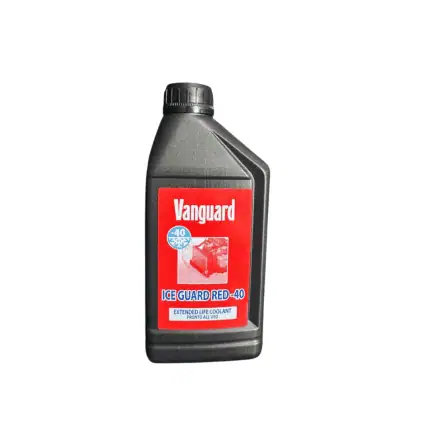 Ready-to-use antifreeze fluid ice guard red – 40 1L – code: V3203 RED 1L – Vanguard

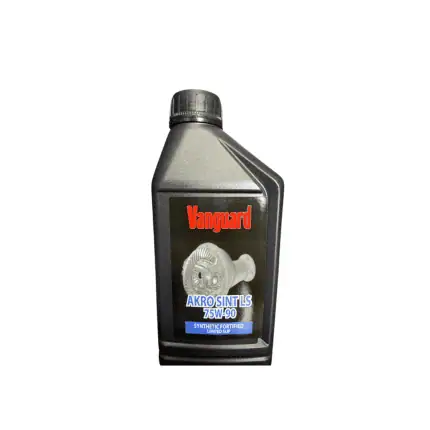 Akro synthetic oil LS 75W90 1L – code: V311575W90 1L – Vanguard

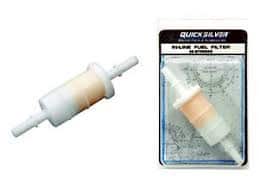

How to choose the right category or brand more quickly
When the catalog is large, the best way to find the correct product is to start from the application and not from the generic name of the spare part. If you already know the type of engine, the group to work on, or the required fluid family, orienting yourself between category and brand becomes simpler and faster. Consult the dedicated sections of the store, compare the available information and, in case of doubt, check the product sheet to complete the choice with greater confidence.
FAQ
How do I know if an engine spare part is compatible with my vehicle?
The safest method is to check the model, version, and application of the vehicle, then compare measurements, mounts, and construction details with the product sheet. If any information is unclear, verify it in the product sheet before ordering.
Can I choose an oil based only on the general type?
No, in a professional context the choice of oil must be made based on the system in which it operates, the materials involved, and the guidelines provided for that application. If you have doubts, always compare the available technical information.
What are the most common mistakes when ordering engine parts and oils?
Among the most common mistakes are purchasing based solely on the photo, failing to check engine variants, incomplete measurement verification, and not considering gaskets or accessories necessary for installation.
Is it better to buy only the main replacement part?
Not always. It is often useful to also evaluate sealing components, mounting accessories, filtration elements, and other related spare parts, especially if the intervention is part of scheduled maintenance.
What to do if the new component looks similar but does not fit perfectly?
It is better to stop and double-check the technical data. Do not force the assembly: a minimal difference in shape, attachment, or size may indicate incorrect compatibility.


