


When boat kitchens are really needed
Talking about boat kitchens usefully means going beyond the idea of a simple kitchenette. In the nautical field, the kitchen is a system that must coexist with limited spaces, boat movements, humidity, ventilation, and very different usage habits compared to domestic ones. For this reason, a correct choice always starts with a concrete question: how will it be used on board?
On a boat intended for day trips, the kitchen can have an essential function: heating, preparing quick meals, managing few dishes, and occupying the minimum possible space. On a boat designed for longer cruises, instead, the kitchen becomes a true operational area, where ease of access, compartment layout, compatibility with other systems, and ease of cleaning matter.
The key point is to avoid superficial comparisons. Two solutions may seem similar at first glance, but change a lot if considered based on:
- internal layout of the boat;
- available space in width, depth, and height;
- presence of already installed modules;
- type of actual use, occasional or continuous;
- accessibility for installation and maintenance.
Those looking for nautical technical guides often it does so precisely because it has already seen different solutions and wants to understand which one is really suitable for its context. At this stage, it is useful to observe not only the kitchen unit itself but also how it integrates with the passage on board, with the opening of doors, and with nearby storage areas.
Another often underestimated aspect concerns routine. If little cooking is done on board, a compact and tidy solution can be the most rational choice. If meal preparation is frequent, it is better to prioritize ergonomics, useful surface, and function organization. In practice, the right kitchen is not the most complete in the abstract, but the one that reduces compromises and complications once installed.
Per approfondire il rapporto tra componenti di bordo e integrazione degli impianti, può essere utile consultare anche le guide tecniche dedicate agli accessori nautici e i contenuti su configurazione e montaggio a bordo.
Boat kitchens: differences between solutions, sizes, and compatibility
In the technical comparison between different boat kitchens, the first variable to consider is compatibility with the boat. It is not enough to check if a kitchen “fits” in the available space: it is necessary to understand if it really integrates with the existing furniture, openings, planned connections, and the logic of the layout.
Dimensional compatibility: it’s not just about external size
When talking about boat kitchen compatibility, many focus only on external measurements. This is a common mistake. The correct check also includes:
- space needed for opening lids, doors, or movable elements;
- useful margin for rear or side connections;
- alignment with tops, panels, or existing modules;
- any structural obstacles, such as curves or reinforcements of the furniture;
- practical access to fastening points.
In other words, a solution may appear compatible on paper but create issues during installation. If the detail is not explicitly stated, check the product sheet always compare the measurements with the actual compartment, not with a visual estimate.
Differences between compact solutions and more complex configurations
Boat kitchens can meet very different needs. Some prioritize maximum space optimization; others focus on better distribution of functions. The choice mainly depends on how you want to use the kitchen area and how important it is to keep the passage free.
A compact solution is often recommended when:
- space on board is very limited;
- the kitchen is used occasionally;
- you want to simplify assembly;
- you prefer to concentrate functions in a small area.
A more structured configuration can make sense when:
- meal preparation is frequent;
- better separation between operational areas is needed;
- you want to facilitate the organization of utensils and accessories;
- the layout allows for a more complex insertion without sacrificing livability.
In a serious technical comparison, the criterion is not “more functions is better,” but more consistency with actual use. An oversized kitchen for the boat can make life on board less comfortable. Conversely, a solution that is too basic can become inconvenient after just a few outings.
Materials, finishes, and nautical context
Even without going into undeclared specifics, it is important to assess whether the chosen solution is designed for a nautical context and not for general use. In a marine environment, ease of cleaning, humidity management, and the perceived robustness of the components greatly affect the user experience.
For this reason, it is advisable to observe:
- overall build quality;
- ease of routine maintenance;
- practicality of exposed surfaces;
- consistency between materials and installation environment.
If some information is not clearly indicated, check the product sheet. This is a useful step especially when comparing similar solutions intended for different installations.
Compatibility with the rest of the layout
A boat kitchen never works alone. It must interact with the rest of the layout, with storage volumes, with the sink, with the countertops, and with other elements present in the same area. This is why the comparison must be made from a system perspective.
Before ordering, always check:
- if the positioning interferes with nearby drawers or doors;
- if the passage remains comfortable even during use;
- if access to connections remains possible after installation;
- if the solution is consistent with the furniture or module that will host it.
Per chi sta valutando un aggiornamento dell’area cambusa, può essere utile consultare anche le soluzioni per l’allestimento tecnico della barca e gli approfondimenti sui componenti compatibili con gli spazi di bordo.
Mistakes to avoid when choosing or installing boat kitchens
The most common critical issues do not always depend on product quality but on a too quick selection process. In the nautical sector, an incomplete evaluation can result in awkward adaptations, untidy installations, or impractical use over time.
Relying only on photos
Images help to understand the general style, but they are not enough to confirm compatibility. A kitchen may appear suitable and then prove difficult to place due to unconsidered dimensions, incompatible openings, or insufficient technical spaces. The rule is simple: first measure the actual compartment, then compare the technical sheet.
Neglecting access for installation and maintenance
Another common mistake is to think only about the final result, without considering how the kitchen will be installed and how it can be serviced later. On a boat, maneuvering spaces are often limited. If connection points remain too restricted, even a routine operation can become complicated.
It is therefore advisable to check in advance:
- how to reach the fixing points;
- if there is enough space for connections;
- if any nearby panels or modules obstruct the intervention;
- if the kitchen can be removed or inspected without invasive disassembly.
Underestimating movement on board
A kitchen installed on a boat must be practical even when the vessel is not perfectly still. This affects the arrangement of elements, ease of access, and perceived safety of use. A configuration valid in a showroom or in photos might not be so in an environment where the body has to compensate for continuous small movements.
For this reason, it is useful to ask:
- are the operational areas easily reachable?
- does the surface remain comfortable to use without obstructing passage?
- are the main elements arranged intuitively?
- does daily use appear simple even in tight spaces?
Not considering the logic of the entire furniture
Often the kitchen is evaluated as an isolated component, while in reality it is part of a whole. If the existing furniture has particular constraints, curves, thicknesses, or already defined openings, compatibility must be carefully checked. Even small differences can require adaptations that are inelegant or impractical.
A correct approach always involves a cross-check between:
- compartment measurements;
- furniture structure;
- functional dimensions;
- accessibility during use;
- consistency with the overall layout of the kitchen area.
Those looking for nautical technical guides a practical approach should start precisely from here: not from the single component, but from the balance of the installation as a whole.
Products and categories to consider before ordering
Before confirming a solution for the onboard kitchen, it is advisable to think in terms of functional categories and not just individual items. This helps avoid fragmented purchases and build a more coherent kitchen area, especially when updating a part of an already existing vessel.
The categories to evaluate in parallel are generally:
- kitchen modules or main elements;
- completing components useful for integration;
- space organization accessories;
- elements coordinated with the galley layout.
This approach is useful because a well-chosen kitchen but placed in an incoherent context risks losing much of its advantage. On the contrary, when the project is viewed as a whole, it is easier to achieve a neat, practical, and durable result over time.
During comparison, it can be helpful to create a checklist with these questions:
- Is the solution suitable for the actual use I make of the boat?
- Are the measurements compatible with the compartment and the opening spaces?
- Is the assembly realistic without excessive modifications?
- Is access to the connections still practical?
- Does the kitchen integrate well with the other elements of the area?
Se stai confrontando più alternative, consulta anche le pagine dedicate ai componenti nautici per la cambusa e gli approfondimenti tecnici per scegliere accessori compatibili. Un confronto fatto bene prima dell’ordine riduce errori, tempi di adattamento e compromessi in fase di installazione.
One last practical tip: do not wait until the last moment to check dimensions, openings, and clearances. In boat kitchens, details make the difference. Even a few millimeters, a hinge in an unfavorable position, or a connection difficult to reach can completely change the practicality of the chosen solution.
Recommended products

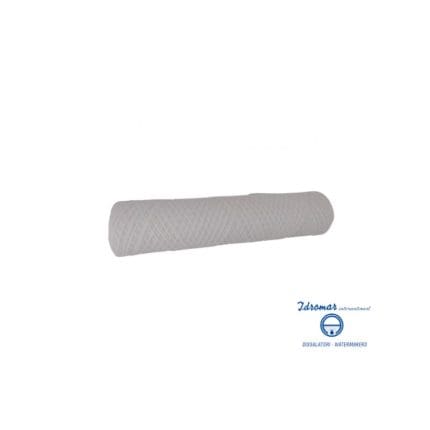 10" Wound Wire Cartridge 20 micron – code: 10MP20 – Idromar
 Brush with spring - code: SGM45 - Gianneschi Pumps and Blowers
 Stainless steel clamps Norma 12–22 mm – code: FAI0012022 – Toscogomma



Choosing boat kitchens with a truly useful technical comparison
If you want to identify the most suitable solution for your boat, the best method is to compare boat kitchens, compartment compatibility, and coordinated accessories starting from the real needs on board. Explore the dedicated category and the available brands to find a configuration consistent with space, use, and layout, so you can order with greater confidence and fewer subsequent adaptations.
FAQ
How to check the compatibility of a boat kitchen before ordering?
The correct verification starts from the actual measurements of the compartment, not from a visual estimate. Check external dimensions, space for openings, access to connections, and interference with nearby furniture or doors. If some data is unclear, check the product sheet.
Better a compact solution or a more elaborate onboard kitchen?
It depends on the actual use of the boat. A compact solution is suitable when space is limited and the kitchen is used occasionally. A more complex configuration makes sense when cooking frequently and better organization of functions is needed.
What is the most common mistake when choosing boat kitchens?
The most common mistake is to evaluate only aesthetics and external dimensions. In the nautical field, openings, accessibility for assembly, integration with existing furniture, and ease of use while moving also matter.
Why are nautical technical guides useful in choosing the galley?
Because they help compare solutions concretely, considering compatibility, layout, access to connections, and consistency with the boat's setup. This reduces the risk of uncomfortable adjustments after purchase.
What to check besides measurements when comparing multiple boat kitchens?
In addition to the measurements, check ease of installation, opening space, access for maintenance, integration with other elements of the galley, and practicality of use in the real context of the boat.


