


When boat hardware is really needed
Talking about boat hardware correctly means going beyond the idea of a simple fastening accessory. In the nautical field, every metal or closing component works in a more demanding context than on land: constant humidity, salt spray, vibrations, hull movements, and contact with different materials can affect durability, installation, and functionality.
The choice becomes important every time you need to:
- replace worn or oxidized elements;
- restore openings, closures, or onboard fastenings;
- work on lockers, hatches, handrails, hinges, or locking systems;
- update existing components without altering holes, encumbrances, and anchoring points;
- improve the reliability of an area subject to mechanical stress.
Many mistakes arise from a superficial evaluation: the general shape of the piece is looked at, but the context in which it will work is not checked. In reality, hardware suitable for an indoor environment may not be ideal for an exposed area, just as a component compatible in size might not be so in thickness, center distance, or fastening method.
To better navigate between spare parts, accessories, and mounting components, it can be useful to consult nautical technical guides dedicated to materials and installation systems, especially when the goal is to replace an existing element without completely redoing the support.
Another often underestimated aspect concerns the real function of the component. A hinge, for example, should not be chosen only based on appearance or hole position: the type of opening, the weight of the moved element, exposure to external agents, and compatibility with the material on which it will be installed also matter. The same applies to closures, hooks, supports, and fastening small parts.
In a practical guide like this, the central point is not to choose “the best hardware” overall, but to understand which solution is consistent with your installation. This is where the topic of boat hardware compatibilitycomes into play: a decisive criterion to avoid forced adaptations, unwanted play, or premature replacements.
Boat hardware compatibility: differences between solutions, sizes, and materials
When comparing multiple solutions, compatibility does not depend on a single factor. In boating, the sum of small details makes the difference between a clean installation and a job to redo. For this reason, before choosing, it is advisable to analyze at least four areas: geometry, material, fastening system and intended use.
Geometry and actual encumbrances
Two components may look similar in photos but behave very differently once installed. Always check the product sheet:
- overall shape of the component;
- hole spacing;
- diameter or type of fastening provided;
- thickness of the support on which it is to be mounted;
- space required when open or closed;
- right, left, or universal orientation, if present.
This check is essential especially in one-to-one replacements. If the new element requires different drilling or takes up more space, there is a risk of compromising alignment or weakening the existing support.
Materials and installation environment
The hardware used on board often works in contact with metal surfaces, fiberglass, wood, or composite materials. Therefore, it is not enough to choose a “durable” component: a material consistent with the environment and other existing elements is needed. An incorrect combination can promote wear, jamming, or visible deterioration over time.
When evaluating an item, ask yourself:
- will it be mounted in an internal or exposed area?
- will it be subject to splashes, humidity, or frequent washings?
- will it come into contact with other metals or delicate supports?
- does it require a finish that integrates with the hardware already installed?
If these details are not specified, the safest solution is to check the product sheet or compare the available technical documentation.
Fixing and replacement without forced adaptations
One of the most common problems concerns the fixing method. A component may be compatible in shape but not in installation method. For example, the type of screw required, the useful depth, the tightening system, or the seat necessary for proper support may change.
For this reason, in nautical technical guides more useful, compatibility verification does not stop at the product photo but considers the actual installation. If you are replacing an element already on board, it is good practice to compare:
- existing holes and center distances;
- available space around the component;
- thickness of the panel or structure;
- range of movement;
- any interference with covers, frames, or rebates.
On topics related to maintenance and installation, you can also deepen your knowledge through technical content for boating and insights on fastening systems, useful for better understanding the differences between seemingly similar assemblies.
Mistakes to avoid in choice or assembly
In comparing different solutions, the most costly mistakes are not always the obvious ones. They often appear after installation: a closure that does not align well, a hinge working off-axis, a support that vibrates, or a fixing that tends to loosen. Here are the most frequent mistakes to avoid.
Choosing based solely on aesthetics
A finish consistent with the rest of the boat is important, but it cannot be the primary criterion. The hardware must first and foremost be suitable for the intended function. If the component is attractive but not compatible with the support or workload, the intervention risks being only temporary.
Ignoring the measurements of the original piece
When replacing an existing element, taking approximate measurements is one of the most common mistakes. A few millimeters of difference are enough to create misalignments, abnormal stresses, or closing difficulties. Before purchasing, it is advisable to measure precisely:
- length and width of the component;
- distance between holes;
- thickness of the support;
- usable space in movement;
- position of the stop or strike point.
Neglecting the support material
Installing the same hardware on fiberglass, wood, or metal is not the same thing. The behavior of the fastening, the distribution of stresses, and the need for any precautions during installation change. A more delicate support may require greater care to avoid crushing, play, or deformation.
Mixing components without checking compatibility
The boat hardware compatibility does not only concern the single piece but also the whole system. If you replace a part of an existing system, you must verify that the new component works well with the remaining elements: closing counterpart, support, strike, guide, or mounting base.
A typical mistake is changing only the visible element without checking the interface with the rest of the assembly. The result can be imprecise operation or abnormal stress over time.
Installing without testing the range of motion
Before final fastening, it is always useful to simulate opening, closing, or positioning. This simple step allows you to identify any interference with frames, panels, lids, or nearby surfaces. On a boat, where spaces are often limited, a preventive check avoids more invasive subsequent modifications.
If you are working on components subject to wear or periodic replacement, it can also help to consult nautical maintenance guides and technical resources on onboard spare parts and accessories, so as to compare different approaches before intervening.
Products and categories to consider for a more precise technical choice
When looking for boat hardware, the risk is focusing on a single category and losing sight of the system as a whole. In reality, a correct technical choice starts from the function to be solved and only then moves to the component. This approach allows you to identify the right category without purchasing inconsistent elements.
The areas to evaluate most often are:
- opening and closing components, to manage hatches, doors, lockers, and technical compartments;
- fastening and support elements, useful when stability, sealing, and correct positioning are needed;
- handling accessories, to consider if the component must accompany controlled opening or stable support;
- coordinated small parts, important to avoid incompatibilities between the main part and fastenings;
- functional spare parts, when the goal is to restore the existing system without redesigning the assembly.
This logic is particularly useful in competitor-driven searches, where many pages offer generic collections of items without explaining how to navigate sizes, uses, and compatibility. Truly useful content, instead, helps to understand which category addresses the real problem.
For example, if your intervention concerns a compartment that no longer closes properly, you may need to check not only the main mechanism but also the counterpart, alignment, and fastenings. If the problem is a rough movement, the focus might shift to supports, hinges, or contact points. In both cases, the best choice comes from a technical reading of the existing assembly.
For this reason, it is useful to first gather some practical information:
- what function must the component perform?
- is it replacing an identical part or an updated system?
- what are the space constraints?
- are there existing holes to maintain?
- does the component work in view or in a technical area?
- is aesthetic continuity needed with other hardware already present?
Answering these questions reduces errors and makes it easier to select the correct category. If some details are unclear, the best advice is always the same: check the product sheet, especially for sizes, fastening methods, and compatibility with the support.
An additional advantage of this method is that it allows you to compare alternatives more objectively. Instead of choosing based on visual similarity, you can evaluate each solution based on function, assembly, and integration with the rest of the boat. This is the point where the nautical technical guides become truly useful: they turn a scattered search into a more conscious selection.
Recommended products

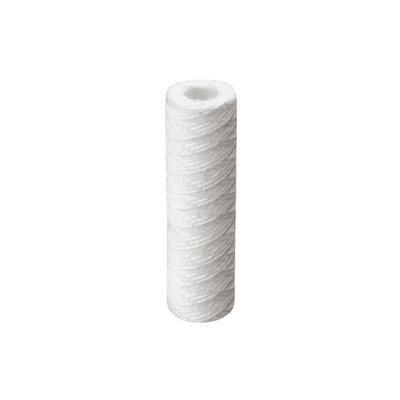
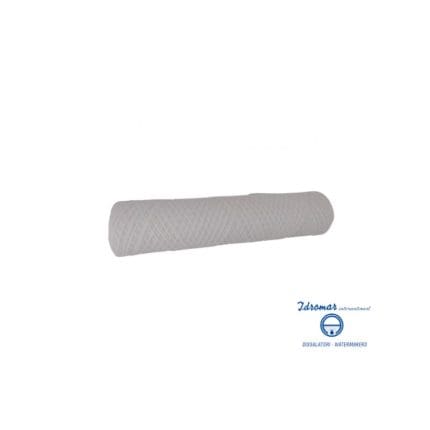 10" Wound Wire Cartridge 20 micron – code: 10MP20 – Idromar
 Stainless steel clamps Norma 12–22 mm – code: FAI0012022 – Toscogomma
 Brush with spring - code: SGM45 - Gianneschi Pumps and Blowers


Choosing boat hardware with a simple and replicable method
To avoid mistakes, you can follow a practical sequence every time you need to purchase or replace onboard hardware. It is a simple method, but very effective especially when comparing multiple similar solutions.
- Identify the function: opening, closing, support, fastening or locking.
- Take actual measurements: do not rely only on memory or photos.
- Observe the assembly context: space, support, exposure, and interferences.
- Check system compatibility: not just the single piece.
- Verify the product sheet: especially if details on materials, dimensions, or fastening are missing.
- Compare the correct categories: avoid looking for a single solution for different problems.
If you want to quickly find the right solution for your intervention, explore the selection of marine hardware and the related catalog categories: it is the most practical way to compare compatible components, delve into technical datasheets, and guide yourself towards the brand or product family best suited to your installation.
FAQ
How to check the compatibility of boat hardware before purchase?
It is advisable to compare actual measurements, hole spacing, dimensions, type of fastening, support material, and component function. If some details are unclear, check the product sheet.
Can I replace a boat hardware component with a similar one in shape?
Not always. A visual similarity does not guarantee compatibility. Drilling, thickness, orientation, movement range, or mounting methods may change.
What is the most common mistake in choosing nautical hardware?
The most common mistake is choosing based on appearance or general shape without checking the actual installation. In boating, small deviations can cause misalignments or imprecise functioning.
Why is the hardware material important on board?
Because the marine environment exposes components to humidity, salt, and continuous stress. The material must be consistent both with the installation area and with the other elements present.
When is it advisable to consult nautical technical guides for hardware?
They are particularly useful when you need to replace an existing component, compare multiple similar solutions, or avoid forced adaptations on holes, supports, and existing locking systems.


