When boat accessories are really needed
Talking about boat accessories usefully means going beyond impulsive buying or simple aesthetic replacement. In the nautical field, an accessory makes sense when it solves a concrete on-board need: it improves daily use, makes an installation tidier, facilitates a maneuver, or avoids incompatibilities between already present components. This is exactly where the nautical technical guidescome into play: they help to choose wisely, starting from the real context of the boat.
Many mistakes arise from an incomplete evaluation. One looks at the shape, the material, or the mounting point, but neglects the most important data: how that accessory integrates with what is already installed. An apparently suitable component can prove impractical if it does not interact well with supports, passages, attachments, bulkheads, or existing predispositions.
Before choosing, it is advisable to ask some simple but decisive questions:
- what is the real problem to solve on board;
- where the accessory will be installed;
- with which other elements it must be compatible;
- whether the use will be occasional or continuous;
- if access for installation and maintenance is easy.
Questo approccio riduce il rischio di acquisti inutili e aiuta a leggere in modo corretto le schede tecniche. Se stai valutando componenti per impianti, collegamenti o fissaggi, può essere utile confrontare anche contenuti correlati come guide per la scelta dei componenti nautici, approfondimenti sugli impianti di bordo e consigli pratici per il montaggio in ambiente marino.
In a truly technical logic, accessories are never chosen alone: they are chosen in relation to the system. This is the point that distinguishes an effective selection from one that creates problems after installation.
Boat accessories compatibility: differences between solutions, sizes, and attachments
The theme of boat accessories compatibility is often underestimated, especially when two solutions look similar at first glance. In reality, small differences in attachment, diameter, orientation, pitch, bulk, or fastening system can completely change the final result.
The first distinction to make concerns the type of compatibility required. Generally, work is done on multiple levels simultaneously:
- mechanical compatibility, that is sizes, holes, centers, attachments, and available spaces;
- functional compatibility, that is, the way the accessory works together with other components;
- installation compatibility, that is accessibility, orientation, and mounting methods;
- environmental compatibility, that is exposure to humidity, salt spray, vibrations, and continuous use.
A common mistake is to consider only the main measurement. For example, an accessory may seem correct by diameter or external size, but be unsuitable for depth, protrusion, position of fastening points, or bending radius required by the connections. In these cases, the check must always be done on all relevant dimensions, not just the most obvious one.
When comparing two solutions, always evaluate:
- type of connection or interface;
- usable space around the mounting point;
- any necessary adapters;
- presence of nearby components that may interfere;
- ease of inspection and maintenance after installation.
The best nautical technical guides they insist precisely on this aspect: compatibility is not a final detail, but the initial selection criterion. If an accessory requires unforeseen modifications, improvised adaptations, or forced assemblies, it is often not the right choice.
Nominal measurements and actual measurements: why they should not be confused
In boating, it is common to come across measurements indicated commercially or nominally. This can cause confusion because the reported measurement does not always match all the dimensions useful for installation. To avoid errors, it is important to check in the product sheet:
- internal and external diameter, if relevant;
- useful length or insertion depth;
- hole spacing;
- overall dimensions;
- type of threading or coupling system, if present.
If a datum is not clearly indicated, the safest choice is simple: check the product sheet. It is better to stop one step earlier than to end up with an accessory that is formally correct but unusable during installation.
Universal solutions and dedicated solutions
Another important point concerns the difference between universal solutions and solutions designed for more specific applications. The former offer greater flexibility but do not always guarantee the best fit with the existing installation. The latter, on the other hand, can simplify installation if they truly correspond to the onboard configuration.
The choice depends on the context. If the system or installation area has precise constraints, a dedicated solution can reduce adaptations and margins of error. If greater versatility is needed, a more generic solution can work well, provided all critical points have been verified.
Per orientarti tra componenti, raccordi, supporti e accessori collegati, può essere utile consultare anche articoli tecnici sulla compatibilità tra accessori nautici e guide alla lettura delle schede prodotto.
Mistakes to avoid when choosing or installing boat accessories
Those looking for boat accessories with a technical intent it mainly aims to avoid costly errors in terms of time, installation, and final performance. The most common problems almost never arise from a single piece, but from an incomplete assessment of the onboard context.
Here are the most frequent mistakes to avoid.
Choosing based on appearance and not integration
A well-finished accessory or one visually consistent with the boat is not automatically the correct one. If it does not integrate with existing attachments, available spaces, or the system logic, the risk is having to modify everything else to adapt it.
Neglecting space and accessibility
Many installations seem simple until the actual working space is considered. An accessory may physically fit in the intended area but leave too little margin for tightening, cable routing, opening, inspection, or maintenance. In a nautical environment, where spaces are often limited, this aspect weighs much more than in other contexts.
Mounting without checking the support
The surface or fixing structure must be suitable for the type of accessory and its use. An unsuitable support can compromise stability, alignment, and installation durability. Before mounting, it is advisable to check the condition of the area involved, flatness, useful thickness, and any hidden elements.
Using improvised adaptations
When an accessory is not perfectly compatible, the temptation to “make it fit” is strong. Unplanned spacers, additional drilling, forced orientations, or tensioned connections are clear signs that the initial choice might not be correct. In a serious technical guide, this is one of the main warning signs.
Ignoring the usage environment
The boat is not a neutral environment. Humidity, salt spray, vibrations, and usage cycles require attention to materials, finishes, and mounting methods. Even when two accessories seem equivalent, the difference can emerge precisely in their adherence to the nautical context. If the level of protection or intended use is not clear, check the product sheet.
Not reading the technical sheet thoroughly
Many problems stem from a superficial reading. Decisive information is often in the details: mounting notes, compatibility with related accessories, installation limits, recommended orientation, included or excluded elements. Spending a few minutes on this avoids errors that then require time to correct.
Products and categories to consider for a technical choice
In a reasoned selection of boat accessories, it is advisable to think in terms of functional categories and not isolated single items. This helps understand which components must work together and what checks to perform before purchase.
The categories to consider most often are those related to:
- fixing and support;
- connection between components;
- routing and organization of systems;
- protection of installations;
- completion of systems already onboard.
The key point is not to stop at the main accessory. Often the successful outcome of the installation depends on complementary elements that are only evaluated later: supports, interfaces, connecting elements, passages, seals, finishing accessories, or components necessary for a clean and inspectable installation.
For this reason, when analyzing a category, always ask yourself:
- which components must be compatible with each other;
- if there are complementary accessories necessary for the installation;
- if the installation requires special arrangements;
- if the component will be easily replaceable or inspectable in the future.
This approach is typical of the best nautical technical guides, because it reduces the risk of fragmented purchases and improves the consistency of the system as a whole.
How to compare similar categories without getting confused
When two categories seem to overlap, the best way to distinguish them is to observe their role in the installation. One solution can be designed to connect, another to support, another to protect or finish. If these functions are confused, you end up using an accessory out of context.
An effective technical comparison should always include:
- main function of the component;
- type of mounting provided;
- compatibility with existing materials and supports;
- need for complementary accessories;
- ease of integration into the system or onboard structure.
Se vuoi approfondire la logica di scelta per famiglie di componenti, possono essere utili anche guide comparative tra categorie nautiche e contenuti tecnici dedicati alla manutenzione di bordo.
One last practical tip: when in doubt between two very similar solutions, don’t start from what changes the least. Start from what must match best with the existing installation. This is the criterion that, in most cases, leads to the most correct choice.
Recommended products

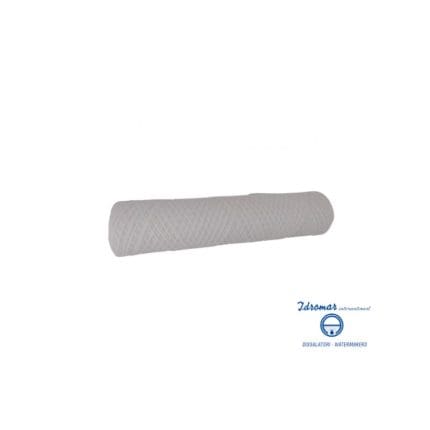 10" Wound Wire Cartridge 20 micron – code: 10MP20 – Idromar
 Brush with spring - code: SGM45 - Gianneschi Pumps and Blowers
 Stainless steel clamps Norma 12–22 mm – code: FAI0012022 – Toscogomma


How to choose well without compatibility errors
If the goal is to purchase boat accessories consciously, the most effective method is always the same: observe the boat, take useful measurements, check attachments and clearances, carefully read the technical sheet and compare the real role of the component in the onboard system. Compatibility should not be assumed, it must be checked.
To more easily find the right solution, explore the reference category or brand and compare options based on installation, function, and integration with components already present. A choice made wisely today avoids adaptations, replacements, and wasted time tomorrow.
FAQ
How to check the compatibility of boat accessories before purchase?
It is advisable to check useful measurements, attachments, clearances, fixing methods, and the presence of complementary components. It is not enough that the accessory looks similar to the one already installed: it must integrate correctly with existing supports, spaces, and connections. If a detail is unclear, check the product sheet.
Are the nominal sizes of boat accessories sufficient to choose?
No, nominal measurements are often not enough. For a correct choice, it is useful to also check actual diameters, depths, center distances, protrusions, and coupling systems. In the nautical field, small dimensional differences can prevent proper assembly.
Better a universal solution or a dedicated accessory?
It depends on the installation context. A universal solution offers more flexibility, but it is not always the one that integrates best. A dedicated accessory can simplify assembly if it truly matches the onboard configuration. The choice should be made by evaluating compatibility and ease of installation.
What is the most common mistake in choosing boat accessories?
The most frequent mistake is choosing based on appearance or only the main measurement, without verifying integration with the existing system. Even an apparently correct accessory can cause problems if it requires improvised adaptations or does not leave enough space for installation and maintenance.
Why are nautical technical guides useful in choosing accessories?
Because they help evaluate the component in its real context, not as an isolated element. Nautical technical guides allow you to compare functions, attachments, compatibility, and installation methods, reducing the risk of errors and purchases unsuitable for the boat.