


When boat accessories spare parts are really needed
In the nautical sector, intervening only when a component stops working is often the mistake that leads to unexpected stops, rushed assemblies, and unsuitable choices. Talking about boat accessories spare parts means instead adopting a more technical approach: observing wear, recognizing early signs, and replacing what no longer guarantees reliability, sealing, or continuity of use.
Many components do not fail suddenly. Before reaching a complete breakdown, they show clear symptoms: stiffening, abnormal play, difficulty tightening, loss of smoothness, visible deformations, or signs of corrosion. In these cases, it is not enough to “let it go a little longer.’ A timely check helps to understand whether maintenance is sufficient or if it is time to opt for compatible spare parts.
The central point, in nautical technical guides, boat accessories spare parts.
, is to distinguish between physiological wear and anomaly. A component exposed to vibrations, humidity, salt, and continuous usage cycles works under severe conditions. Even when it still appears usable, it may have lost fitting precision or sealing capacity. This is especially true for connecting, fastening, fluid passage, support, or movement elements.
- traces of oxidation It is advisable to schedule a check when you notice:;
- in areas previously clean or protected; cracks, hardening, or compressions;
- unusual noises on elastic or sealing parts;
- during opening, closing, or movement; imprecise alignment;
- between parts that previously fit correctly; abnormal resistance;
- during assembly or disassembly;, small leaks.
Another typical scenario involves “convenience” replacements, made by choosing a visually similar part. In the nautical field, an external resemblance does not guarantee real interchangeability. Materials, dimensions, threads, diameters, coupling systems, and usage conditions can change the final result. For this reason, before purchasing, it is useful to compare the installed component with the related documentation and, if necessary, consult nautical technical guides and detailed datasheets.
and detailed datasheets.
In practice, spare parts are needed when ordinary maintenance no longer restores correct functioning or when the component, although still operational, shows signs that may compromise the overall reliability. Acting at this stage is almost always more effective than intervening after extensive damage or forced assembly.
Visual checks that anticipate problems.
A quick but methodical inspection can avoid evaluation errors. Always observe the disassembled component and the seat where it works. If the previous spare part shows irregular wear, there may be an upstream problem: misalignment, excessive tightening, vibration, contact with aggressive agents, or material incompatibility.
- unevenly worn edges;
- scuff marks where they shouldn’t be;
- residues, deposits, or encrustations that alter the fitting;
- deformations from prolonged compression;
- dull or cracked surfaces.
If you notice any of these aspects, replacing just the component may not be enough. It is advisable to also check the connected element, the mounting seat, and the correct installation method.
Boat accessories spare parts: differences between solutions, sizes, and compatibility
The most delicate part in choosing boat accessories spare parts is the compatibility. It’s not just about understanding if a spare part “fits” or “mounts,” but if it works correctly over time without causing stress, leaks, or premature wear. The topic boat accessories spare parts compatibility is especially crucial when replacing components installed for a long time, possibly lacking immediate references or modified in previous interventions.
The most common differences concern:
- actual measurements and fitting tolerances;
- type of connection or fastening system;
- materials and behavior in a marine environment;
- seat shape and actual mounting dimensions;
- intended use and installation position.
A common mistake is relying only on the nominal size. Two components with seemingly similar dimensions can differ in details that matter a lot: effective depth, thickness, joint geometry, type of stop, orientation, or material finish. Even a minimal difference can cause unstable assemblies or irregular operation.
To reduce the margin of error, it is advisable to follow a simple procedure:
- carefully disassemble the component and clean it;
- take measurements at the truly functional points, not just the outside;
- check the type of connection and seat shape;
- verify the material of the original part, if identifiable;
- compare the data with the technical sheet; if a detail is uncertain, check the product sheet.
Mechanical compatibility and usage compatibility
There is an important difference between mechanical compatibility and usage compatibility. The first concerns physical assembly: the spare part is installed correctly, without forcing. The second concerns behavior over time: the material withstands the environment, the component maintains its function and does not alter the work of nearby parts.
A spare part may seem compatible dimensionally but prove unsuitable for actual use. This is the case, for example, with elements that operate in the presence of constant humidity, vibrations, corrosive agents, or repeated stresses. In these cases, the choice of material and construction configuration matters as much as the measurement.
To better orient yourself, it can be useful to consult support content such as insights on nautical maintenance, comparative datasheets, and technical documentation from the catalog. A good comparison avoids repeated replacements and corrective interventions after installation.
When the old component is no longer a reliable reference
The removed part is not always the right reference. On many boats, components have been replaced over time with adapted solutions, not necessarily correct. If the existing spare part shows signs of forced assembly, added shims, improper sealing, or makeshift modifications, it is wise not to copy it automatically.
In these cases, it is necessary to return to the original function of the component: what must it connect, support, seal, or protect? From there, the most consistent spare part can be evaluated. This approach is typical of the best nautical technical guides, because it avoids perpetuating errors already present on board.
Errors to avoid when choosing or installing marine spare parts
Choosing the right spare part loses value if the installation is done roughly. Many problems attributed to the product actually stem from insufficient preparation of the seat, uneven tightening, dirty surfaces, or failure to check the fit before final installation.
Among the most common errors to avoid are:
- choosing “by similarity” without technical comparison;
- reusing worn components that should be replaced together;
- installing on unclean or unchecked surfaces;
- forcing insertion when the fit is incorrect;
- neglecting the installation direction or functional orientation;
- ignoring the signs of the removed component, which often explain the problem.
Another common mistake is to intervene on only one element when the system requires a broader inspection. If a spare part wears out too early, the problem may be due to vibrations, misalignments, deformed seats, or improper contacts. Replacing without understanding the cause often leads to repeating the same failure.
Seat preparation and dry test
Before the final assembly, it is good practice to perform a dry fit. This step allows you to check insertion, alignment, freedom of movement, and correct support, without immediately introducing elements that make correction more complex. If something offers abnormal resistance, the cause must be identified before proceeding.
The seat must be:
- clean from residues, oxidation, or old sealing materials;
- intact, without obvious deformations;
- consistent with the spare part profile;
- accessible for uniform and controlled tightening.
When the assembly requires complementary accessories or interface parts, it is important to verify that they are suitable for the same application. Again, if a detail is unclear, the best rule is simple: check the product sheet.
Post-assembly signals not to ignore
After replacement, some signals deserve immediate attention. An incorrect assembly does not always manifest immediately with an obvious failure; often it appears with initial mild but significant symptoms.
Check if the following appear:
- abnormal play after little use;
- traces of rubbing or localized wear;
- seepage, infiltration, or loss of sealing;
- difficulty of movement compared to the expected condition;
- new noises or vibrations previously absent.
If any of these signals appear shortly after assembly, it is useful to stop and recheck compatibility, seat, and correct coupling. A quick intervention prevents an initial defect from involving other components.
Products and categories to consider in technical maintenance
When planning a replacement, it is useful to think in terms of functional categories and not of a single piece taken in isolation. This approach helps identify not only the main spare part but also the related elements that can influence its durability and proper functioning.
In a well-structured technical maintenance, it is advisable to consider components related to:
- connection and fastening;
- sealing and passage;
- support and protection;
- handling and control;
- interfaces between different parts of the plant or structure.
Evaluating the mounting context is often more useful than focusing only on the spare part to be replaced. If an element works together with other accessories, compatibility should be understood as system compatibility. This is one of the points that distinguishes a technical choice from an improvised replacement.
To explore related categories and correlated solutions, you can consult the section dedicated to nautical spare parts, read guides on component compatibility, and compare the information available in the technical catalog. A well-conducted consultation path reduces doubts before purchase and makes installation smoother.
How to build a useful checklist before ordering
A simple checklist helps avoid oversights and incorrect orders. Before searching for your boat accessories spare parts, always verify:
- actual function of the component to be replaced;
- exact installation point;
- measurements taken at functional points;
- material or finish of the existing part;
- any signs of abnormal wear on the seat;
- need to also replace complementary elements;
- available documentation and technical datasheet consulted.
This approach is particularly useful when comparing multiple similar solutions. In case of doubts, it is not advisable to choose the “closest” spare part at first glance: it is better to narrow down the field based on function, working environment, and mounting geometry.
The value of a technical comparison before purchase
In competitor-driven research, many contents limit themselves to suggesting a quick replacement. In reality, a professional blog should help read the problem even before the catalog. For this reason, the technical comparison remains decisive: observe the removed component, understand why it wore out, check the seat, and only then select the spare part.
If you are gathering information for a broader intervention, it may be useful to also consult insights on inspections and maintenance. Integrating multiple technical sources allows for more precise choices and reduces the margin of error during installation.
Recommended products

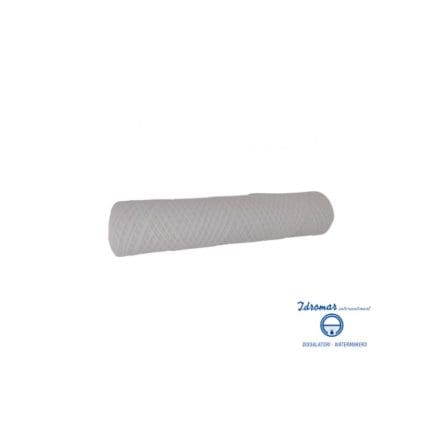 10" Wound Wire Cartridge 20 micron – code: 10MP20 – Idromar
 Desalination maintenance kit – code: Cleaning Kit (SC1 + SC2) – Schenker
 Stainless steel clamps Norma 12–22 mm – code: FAI0012022 – Toscogomma
 Brush with spring - code: SGM45 - Gianneschi Pumps and Blowers


If you need to replace worn components or want to verify the boat accessories spare parts compatibility before purchasing, explore the dedicated categories and available brands: comparing datasheets, applications, and technical details is the safest way to find the right solution for your marine maintenance.
FAQ
How to understand if a marine spare part is truly compatible?
Compatibility must be verified on multiple levels: functional measurements, type of connection, material, seat shape, and intended use. It is not enough for the component to look similar. If a detail is uncertain, check the product datasheet.
When is it advisable to replace a component even if it still works?
It is advisable to intervene when signs of wear appear such as corrosion, stiffening, abnormal play, small leaks, deformations, or difficulty in movement. A component that is still operational may no longer be reliable over time.
What are the most common mistakes when assembling boat spare parts?
The most common mistakes are choosing the replacement part based on similarity, installing on dirty or deformed seats, forcing the fit, ignoring the mounting direction, and not checking for abnormal wear of the removed component.
Why is the old part not always a good reference for replacement?
Because it may have been previously installed with incorrect adaptations, added thicknesses, or temporary solutions. In these cases, it is better to start from the function of the component and compare it with the available technical documentation.
What to check after installing a marine spare part?
After assembly, it is useful to check for the absence of abnormal play, correct smoothness, sealing, alignment, and absence of noise or rubbing. If unusual symptoms appear, it is advisable to recheck the seat, assembly, and compatibility.


