


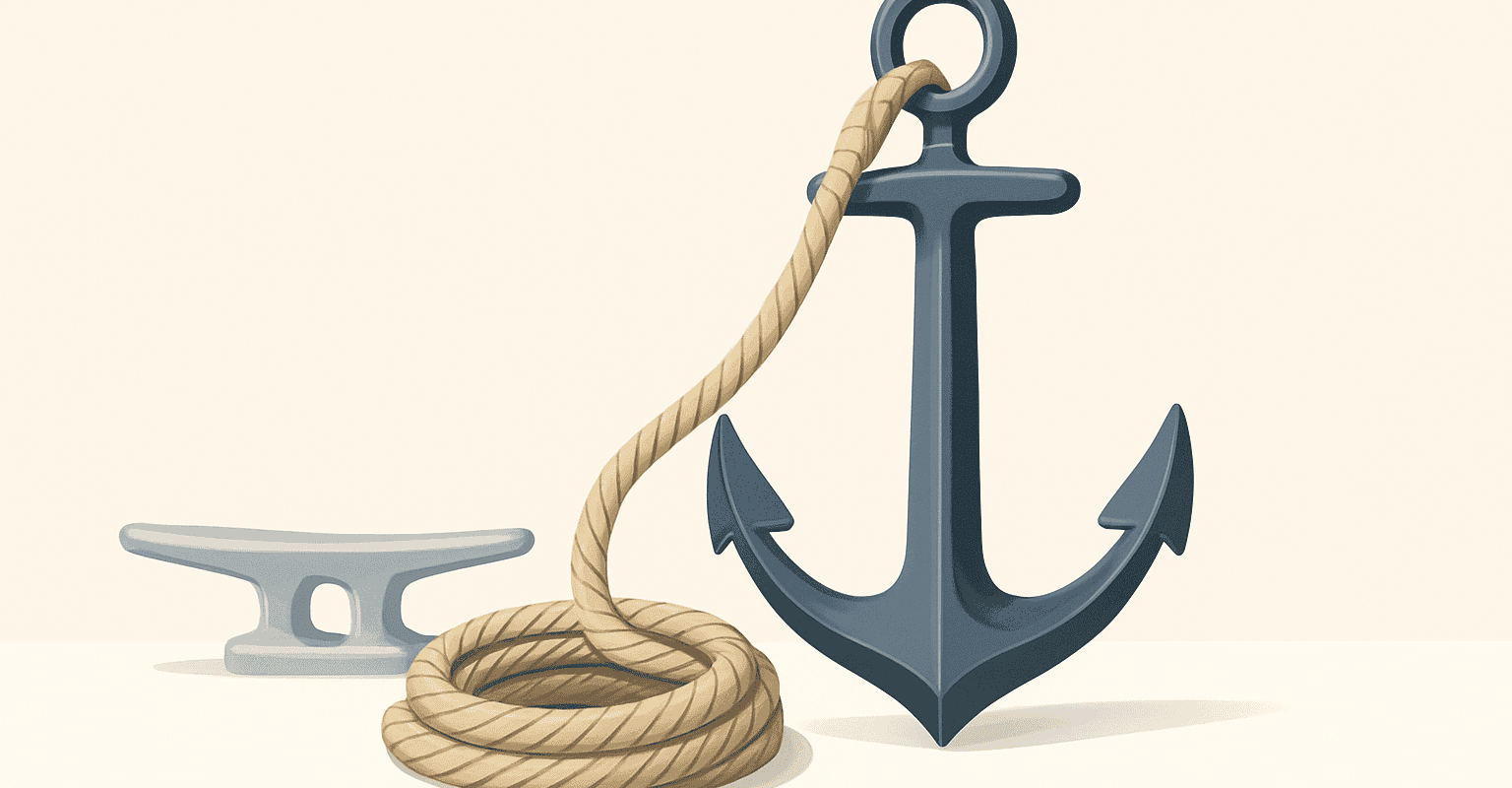
When to really evaluate the anchor boat price based on the system
Talking about anchor boat price usefully means going beyond the superficial comparison between seemingly similar solutions. In the nautical field, in fact, the perceived cost of an anchor depends not only on the shape or material, but on its compatibility with the onboard system, type of use and the way it works together with chain, bow roller, windlass, and locker.
Those looking for a quick answer often compare different products as if they were interchangeable. In reality, a convenient choice is one that reduces adaptations, avoids interference during retrieval, and integrates smoothly with the setup already present on the boat. For this reason, the topic anchor boat price compatibility is central in nautical technical guidesit is not enough to ask which solution costs less, but which requires fewer technical compromises.
The correct starting point is always the system. If the anchor has to work with an already installed bow roller, with a certain bow geometry, and with a windlass designed for a specific anchoring line, the evaluation changes radically. A theoretically valid solution can become impractical if:
- it does not align well during retrieval;
- it requires modifications to the chain passage;
- it causes impacts or rubbing on the bow;
- it does not settle stably in the resting position;
- it forces a review of already functioning components.
In this scenario, the price should be read as part of an overall integration cost. It is a criterion that in technical guides makes the difference between a purchase that is only apparently convenient and a choice truly consistent with the boat.
If you want to delve deeper into how to think about the entire deck equipment, it can be useful to consult nautical technical guides dedicated to anchoring and compare the various components of the system in a more structured way.
Differences between solutions, sizes, or compatibility of the anchor boat price
The differences between one anchor and another are not limited to shape. When analyzing the topic anchor boat price, it is advisable to distinguish at least three levels: solution geometry, dialogue with the system and ease of onboard handling.
Geometry and behavior in the bow fitting
Each anchor has its own size, its own center of gravity, and a specific way of orienting itself during hoisting, resting, and stowing. This aspect directly affects compatibility with the bow roller and the bow. In practice, two solutions that seem equivalent can behave very differently once installed.
The elements to observe are:
- how the anchor presents itself on return;
- whether it tends to rotate correctly or to lie sideways;
- how much space it requires in the resting position;
- whether the profile risks touching the hull, pulpit, or rollers;
- whether the attachment point works in line with the chain.
A compatible solution reduces corrective interventions and makes maneuvers smoother. An incompatible solution, even if interesting at the time of purchase, can result in less practical anchor handling.
Measurements and proportions: the point is not just size
When comparing measurements or size classes, the most common mistake is to think only in terms of size. In reality, in nautical technical guides the measurement should be read as the ratio between anchor, chain, bow roller, and available volume in the locker. A minimal difference in proportions can change how the system works.
For example, it is useful to check:
- if the passage over the roller is smooth;
- if the anchor can be housed without abnormal tensions;
- if the profile leaves enough space for nearby components;
- if the assembly remains stable during navigation;
- if retrieval occurs without recurring jams.
When these aspects are not considered, the issue of price loses meaning. A solution may seem advantageous, but if it requires adaptations or causes operational problems, the initial saving becomes secondary.
Boat anchor price compatibility: what to check before comparing
The search anchor boat price compatibility makes sense only if you start from a preliminary technical check. Before comparing alternatives, it is advisable to gather some information about the existing setup. Abstract evaluations are not needed: practical data taken directly onboard are required.
Check in particular:
- type of bow roller and roller configuration;
- space available between anchor and bow in resting position;
- alignment between chain and windlass;
- falling and recovery mode of the anchoring line;
- any interference with the pulpit, dolphin striker, or bow accessories.
If a detail is not clear, the best choice is check the product sheet and compare compatibility with your own system. This approach is much more reliable than simply comparing images or brief descriptions.
To have a broader picture of the interaction between components, you can also read the insights on chain, bow roller, and bow accessories, useful for evaluating the system as a whole.
Mistakes to avoid when choosing or installing the anchor
Many problems arise not from an absolutely inadequate product, but from a choice disconnected from the actual system. The most common mistake is buying based on a generic comparison, without checking how the anchor will perform on your own bow setup.
Confusing theoretical compatibility with real compatibility
A solution may be indicated for a certain type of boat, but not be ideal with the bow roller already installed or with the specific geometry of the bow. Real compatibility is measured over the entire process: deployment, working in line, recovery, and stowage.
This is where nautical technical guides become useful: they help interpret compatibility as a relationship between components, not as an isolated characteristic.
Underestimating the anchor’s return on the bow roller
An anchor that works well in the water but returns poorly on board can create ongoing operational issues. If it tends to rotate incorrectly, stop off-axis, or require frequent manual interventions, usability significantly worsens.
Before choosing, it is advisable to ask:
- does the anchor self-align easily?
- does the bow roller guide it correctly?
- does it remain stable once in place?
- are there contact points with the hull?
If these answers are not clear, it is appropriate to check the product sheet or compare the configuration with technical documentation of the bow system.
Ignoring the relationship with the anchoring line
Another common mistake is evaluating the anchor as a separate element from the chain or rope. In reality, the connection point, the pull orientation, and the passage over the rollers affect the smoothness of the entire system. An inconsistent geometry can cause twists, jams, or irregular supports.
To avoid problems, it is useful to consider the whole as a single system. In this sense, technical guides on anchoring systems help to understand which checks to perform before replacing an existing component.
Installing without checking the actual dimensions
Catalog images are not enough to understand if a solution is really suitable for your boat. Even with a compatible shape on paper, the actual dimensions can change the final result. The space at the bow, the position of the rollers, and the distance from the pulpit must be carefully checked.
The most overlooked aspects are often:
- the anchor's excursion during retrieval;
- the point where the profile approaches the hull;
- the final position relative to the bow roller;
- stability while sailing;
- ease of unlocking and release.
A well-made choice is not the one that promises to fit, but the one that integrates without forcing.
Products and categories to consider for a truly consistent choice
When analyzing the topic anchor boat price, it is not advisable to stop at the anchor as a single component. A serious technical evaluation also considers the related categories, because often the real convenience depends on the quality of integration between multiple elements.
The areas to consider are:
- anchoring and bow equipment;
- bow rollers and supports;
- chain and anchoring line;
- retrieval and storage accessories;
- components that influence the system's alignment.
This approach is particularly useful when replacing an existing anchor with a solution different in shape or size. In these cases, the real question is not only “how much does it cost,” but how consistent it is with what you already have on board.
If you are comparing multiple options, it can be useful to explore the categories dedicated to mooring and anchoring to read the system comprehensively, without isolating a single component from the rest of the setup.
Another practical criterion is to distinguish between simple replacement and system upgrade. In the first case, the goal is to maintain compatibility with the existing configuration. In the second, however, it may be sensible to also consider complementary components that improve the overall operation of the bow system.
In both cases, the comparison between solutions should focus on:
- consistency with the installed bow roller;
- ease of retrieval without frequent manual interventions;
- stability of the anchor once retracted;
- absence of interference with the bow structure;
- declared or verifiable compatibility in the product sheet.
This is the most concrete way to address the issue anchor boat price compatibility without reducing everything to a superficial comparison. A truly convenient solution is one that works well over time and fits correctly into the system, without requiring continuous adjustments.
To better orient yourself among connected components and useful accessories, you can also consult the technical insights for nautical equipment, where the focus is precisely on the integration between different parts of the system.
Recommended products

 10" Wound Wire Cartridge 20 micron – code: 10MP20 – Idromar
 Stainless steel clamps Norma 12–22 mm – code: FAI0012022 – Toscogomma
 Brush with spring - code: SGM45 - Gianneschi Pumps and Blowers
 Desalination maintenance kit – code: Cleaning Kit (SC1 + SC2) – Schenker


If you are evaluating which solution to choose, explore the category dedicated to anchoring or the brand of your interest: comparing options based on compatibility with your system is the most effective way to find an anchor truly suitable for your boat, without unnecessary compromises.
FAQ
How to evaluate the boat anchor price without stopping at just the initial cost?
The correct criterion is to check compatibility with the onboard system. Bow roller, rollers, chain, space at the bow, and recovery methods affect the actual convenience more than a simple visual comparison between solutions.
What does boat price compatibility still mean?
It means comparing the alternatives taking into account how the anchor integrates with the already installed system. A convenient solution is one that aligns well, fits correctly, and does not require unforeseen adjustments.
Why can two similar anchors have different holding power on the same boat?
Because geometry, bulk, and shooting point can interact differently with the stem and bow. Even if they look similar, one may stow better than the other or create less interference during recovery.
What checks to perform before replacing an existing anchor?
It is advisable to check the type of bow roller, the chain passage, the available space in the resting position, the alignment with the winch, and any contact with the hull or bow accessories. If necessary, check the product sheet.
Do nautical technical guides really help in choosing the anchor?
Yes, because they allow reading the anchor as part of a complete system. This way it is easier to avoid compatibility errors and choose a solution consistent with the actual setup of the boat.


