


When marine toilets are really needed
I marine toilets are not an accessory to consider only at the final stage: they affect onboard comfort, space management, and ease of daily use. In practice, they become central when the boat is used continuously, when the onboard bathroom is compact, or when replacing an existing system that no longer meets the real needs of the crew.
Those looking for nautical technical guides on this topic there is usually a specific doubt: understanding whether it is better to keep the current configuration or switch to a different solution, more suitable for space, connections, and onboard routines. It is a technical but also practical evaluation. A toilet chosen without considering the installation context can create problems with access, maintenance, and compatibility with the existing system.
Per orientarti in modo corretto può essere utile approfondire anche le sezioni dedicate a impianti di bordo, componenti idraulici nautici e accessori per il bagno in barca, così da confrontare il wc con il resto del sistema e non come elemento isolato.
A typical case is the replacement of an existing model on boats where maneuvering space is limited. In these situations, not only the type of toilet matters, but also the position of the fittings, the orientation of the connections, and how easily one can intervene for inspection or maintenance. If you are considering a replacement, the first step is always to observe the actual system and check the product sheet the installation and compatibility instructions.
Differences between marine toilets, installation dimensions, and compatibility
In the comparison between different solutions, the key word is one: marine toilet compatibility. An apparently similar choice aesthetically can involve important differences technically. For this reason, in the most useful comparative guides, the focus is not only on operation but on the relationship between the toilet, system, and available space.
What to check before the technical comparison
Before comparing options, it is advisable to gather some basic information:
- actual size of the bathroom compartment and available front/lateral space;
- position of inlets and outlets relative to the existing system;
- maintenance accessibility without complex disassembly;
- type of use, occasional or frequent;
- configuration of the system already present onboard.
These elements help avoid superficial comparisons. Two marine toilets may seem equivalent but not be at all when they have to integrate with pipes, technical passages, or very limited volumes.
Mechanical compatibility and system compatibility
When talking about compatibility, it is useful to distinguish between two levels. The first is mechanical compatibility: dimensions, mounting base, orientation, and usable space. The second is system compatibility: connections, installation scheme, and consistency with already installed components.
This is precisely where many choices become complicated. A toilet may physically fit into the space but require impractical adaptations for the rest of the system. Or it may be compatible with the system but uncomfortable for daily use due to position or limited access. For this reason, the best nautical technical guides always insist on a cross-check between measurements, connections, and intended use.
Se stai confrontando più soluzioni, può essere utile consultare anche contenuti correlati su pompe e ricambi nautici e guide all’installazione a bordo, così da leggere il wc all’interno del sistema completo.
Mistakes to avoid when choosing or installing marine toilets
The most common problem is not buying a low-quality product, but choosing a toilet that is correct in theory and wrong for that particular boat. Mistakes almost always arise from an incomplete assessment of the real context.
Mistake 1: measuring only the external footprint
Taking the measurement of the space and stopping there is insufficient. You must also consider space for connections, usable opening, access to mounting points, and the possibility of future interventions without dismantling other bathroom elements. In many cases, the real limit is not the width of the toilet but how it fits within the existing layout.
Mistake 2: ignoring the orientation of the connections
A difference in orientation can force a rethink of pipe routing or create unfavorable bends. Even when installation seems possible, a forced configuration complicates maintenance and makes the system less rational. If this information is unclear, the correct choice is simple: check the product sheet.
Mistake 3: underestimating actual onboard use
A boat used occasionally has different needs compared to a vessel lived on for several consecutive days. Required comfort, frequency of use, and attention to cleaning and access practicality change. Therefore, the toilet should be chosen based on the usage profile, not just available space.
Mistake 4: thinking of the toilet as an isolated element
The onboard bathroom works well when all components interact with each other. Evaluating the toilet without considering pipes, pumps, technical passages, and accessories often leads to an unbalanced solution. From an SEO and technical perspective, the comparison between marine toilets only makes sense if placed within an overall system vision.
Products and categories to consider before ordering
Before confirming the purchase, it is advisable to think in terms of functional categories and not on impulse. Beyond the toilet itself, it is often useful to check the presence and compatibility of connected components, mounting accessories, and wear parts. This approach reduces unforeseen issues and makes installation smoother.
The areas to check are generally these:
- bathroom system components already on board;
- compatible spare parts and accessories with the chosen configuration;
- available space for installation and maintenance;
- consistency with the toilet compartment layout;
- ease of integration with the rest of the nautical system.
In a technical comparison logic, this phase is fundamental because it allows moving from a theoretical choice to a concrete evaluation. If your goal is to order consciously, the best method is to compare the technical sheet, available measurements, and the actual boat configuration. Where a datum is not immediately evident, it is better not to improvise: check the product sheet.
Per completare il quadro, può essere utile consultare anche le pagine dedicate a ricambi per impianti nautici e alle altre sezioni del catalogo collegate al bagno di bordo, così da verificare subito eventuali elementi complementari.
Recommended products

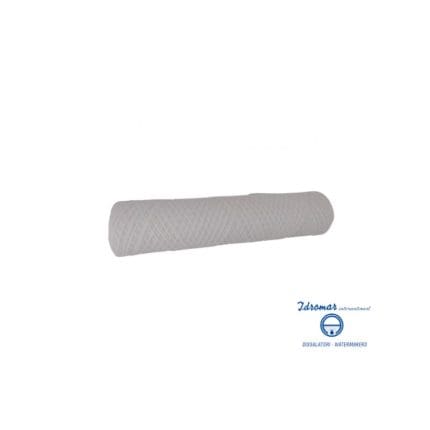 10" Wound Wire Cartridge 20 micron – code: 10MP20 – Idromar
 Stainless steel clamps Norma 12–22 mm – code: FAI0012022 – Toscogomma
 Brush with spring - code: SGM45 - Gianneschi Pumps and Blowers



How to order the right marine toilet without compatibility errors
A well-made order always starts with a simple but rigorous technical check: compartment measurements, connection positions, accessibility, and consistency with the existing system. If you are comparing multiple marine toilets, the advice is to start from the dedicated category or the brand you already use on board, so as to more quickly identify solutions consistent with your setup and reduce doubts about marine toilet compatibility before purchase.
FAQ
How to check the compatibility of a marine toilet with the existing system?
Check dimensions, connection positions, accessibility for installation, and consistency with the configuration already on board. If any data is unclear, check the product sheet.
When is it better to replace a marine toilet instead of keeping the one installed?
Replacement makes sense when the current toilet causes issues with space, maintenance, ease of use, or integration with the rest of the system. The decision should be made by evaluating the actual context of the boat.
What is the most common mistake in choosing marine toilets?
The most common mistake is to evaluate only the external dimensions without considering the orientation of the connections, maneuvering space, and access to maintenance points.
Why are nautical technical guides useful before ordering?
Because they help compare solutions based on compatibility, installation, and actual onboard use, avoiding choices based solely on appearance or overly generic comparisons.


