


When boat accessories Naples are really needed to avoid wrong choices
Those looking for boat accessories Naples often starts from a concrete need: replacing a worn component, completing an onboard system, or making boat management more orderly and functional. The critical point, however, is not to find an accessory in a generic sense. The real issue is choosing an element compatible with the boat, with the existing system, and with the actual use that is made of it.
In many situations the mistake comes from a too quick evaluation. Two accessories may seem similar in shape or intended use, but differ in attachments, dimensions, materials, installation methods, or interaction with other onboard components. For this reason, the nautical technical guides are especially useful when comparing apparently equivalent solutions.
An accessory must be chosen carefully when:
- it must integrate with an already existing system;
- it operates in an environment exposed to humidity, salt, and vibrations;
- it requires precise fastening or a dedicated connection;
- it affects daily usability onboard;
- it must replace an existing component without improvised modifications.
If you are comparing multiple options, the correct method is to start from the function and not the external appearance. First, verify what the accessory really has to do, then check dimensions, interfaces, and mounting conditions. This way, the risk of purchasing a component that seems suitable on paper but, once onboard, requires unreliable adaptations is reduced.
To better navigate between components and related solutions, it can be useful to also consult the sections dedicated to boating, the available technical insights, and the content on onboard applications, so as to compare usage contexts and selection criteria.
Boat accessories Naples compatibility: differences between solutions, sizes, and installation
The most important point, when evaluating boat accessories Naples compatibility, is to understand which differences really matter. It is not enough that an accessory is intended for the nautical sector: it must be suitable to the specific configuration of your boat.
Mechanical compatibility and fixing points
The first check concerns the physical part. An accessory may be correct for function but not for installation. The following must be checked:
- shape and position of the fastening points;
- available space around the component;
- installation orientation;
- any interference with bulkheads, covers or other nearby elements;
- need for supports or adapters.
If the installation takes place in a technical compartment or in a hard-to-reach area, even small details can make a difference. In these cases it is always advisable check the product sheet and compare the data with the actual configuration on board.
Compatibility with the existing system
Another often underestimated aspect is the relationship between the accessory and the already installed system. A new component never works alone: it connects, rests on or interacts with an existing structure. For this reason, it is advisable to check:
- type of connection required;
- presence of compatible fittings;
- materials already present in the system;
- intended modes of use;
- environmental conditions of the installation point.
The best nautical technical guides they insist precisely on this point: compatibility is not a generic label, but the result of multiple cross-checks. If even one essential match is missing, the risk is having to intervene with unforeseen modifications.
Actual measurements, dimensions and tolerances
Many problems arise from a superficial reading of the dimensions. It is not only the main measurement that counts, but also the overall size, the position of the fittings, the space needed for installation and future accessibility for maintenance or replacement.
A practical approach is to first take:
- measurements of the component to be replaced;
- available free space;
- distances from walls, pipes or wiring;
- maneuvering possibilities during installation.
This step is particularly useful when looking for boat accessories Naples for refit, maintenance or upgrading of systems already in use, where spaces are often constrained by previous installations.
Errors to avoid when choosing or installing nautical accessories
In the comparison between similar accessories, the most common mistakes do not depend on perceived quality but on an incomplete assessment of the usage context. Avoiding them means saving time and reducing the risk of incompatibility.
Choosing based solely on visual similarity
Two components may appear equivalent but differ in decisive details. Relying only on photos or general shape is one of the most frequent mistakes. Instead, it is necessary to carefully read the technical description, application methods, and compatibility notes. If information is unclear, the correct formula always remains: check the product sheet.
Ignoring the installation environment
The boat is not a neutral environment. Humidity, salt, vibrations, and limited spaces put every component to the test. An accessory suitable in theory may prove impractical or inconsistent with the point where it will be mounted. For this reason, it is worth asking:
- where exactly it will be installed;
- how much it will be exposed to external agents;
- if it will be easily reachable;
- with which other elements it will come into contact.
Ignoring material compatibility
When an accessory integrates into an existing system, materials also matter. Compatibility concerns not only fittings and sizes but also the behavior of the component in contact with other elements already present. In case of doubts, it is useful to compare the indicated characteristics and delve deeper with technical selection guides or with the catalog support pages.
Installing without verifying the complete usage cycle
An accessory may seem installable but cause problems during use. For example, it may be inconvenient to reach, difficult to maintain, or poorly compatible with routine operations on board. Before installation, it is useful to imagine the entire cycle:
- installation;
- ordinary use;
- possible removal;
- cleaning or periodic inspection;
- future replacement.
This approach helps avoid solutions that are correct only in theory.
Products and categories to consider in nautical technical guides
When looking for boat accessories with a technical approach, it is advisable to think in terms of functional categories and not isolated purchases. This allows better comparison of alternatives and understanding if the sought component is truly consistent with the rest of the system or setup.
Accessories for onboard systems
A first area concerns all components that interact with the systems present on the boat. In this case, compatibility is central because every element fits into an already defined system. Before choosing, it is necessary to check connections, spaces, materials, and installation methods.
If you are working on replacements or integrations, it can be useful to explore collections of technical components to compare families of accessories with similar intended uses.
Accessories for blanket and space organization
Another highly searched category concerns accessories that improve order, practicality, and management of onboard areas. Here, it is not enough to evaluate generic usefulness: checks on dimensions, attachments, exposure to external agents, and interaction with onboard movements are needed.
In these cases, a good choice arises from simple but decisive questions:
- does the accessory obstruct passages or openings?
- can it be installed without invasive modifications?
- is it accessible when needed?
- does it integrate with the existing setup?
Components for targeted maintenance and replacement
Many searches on boat accessories Naples arise from maintenance needs. Here, the comparison must be even more precise, because often an existing element is replaced with the goal of maintaining continuity of assembly and functionality. In these situations, it is useful to start from the installed component, gather all available information, and then compare it with the technical datasheets.
The nautical technical guides are particularly effective precisely in this scenario: they help distinguish between directly compatible components and solutions that would require adaptations to be carefully evaluated.
How to practically and comparatively compare boat accessories in Naples
A simple but effective method consists of creating a small checklist before choosing. This approach is especially useful when multiple solutions seem correct and the difference is not immediately evident.
Technical checklist before purchase
- identify the precise function of the component;
- check where it will be installed;
- record actual measurements and dimensions;
- verify attachments, connections, and orientation;
- compare materials with those already onboard;
- consider accessibility and future maintenance;
- read any compatibility notes;
- if any data is missing, check the product sheet.
This method reduces impulsive purchases and makes it easier to compare alternatives. It also helps understand when an accessory is truly suitable and when it is only apparently similar to the necessary one.
Recommended products

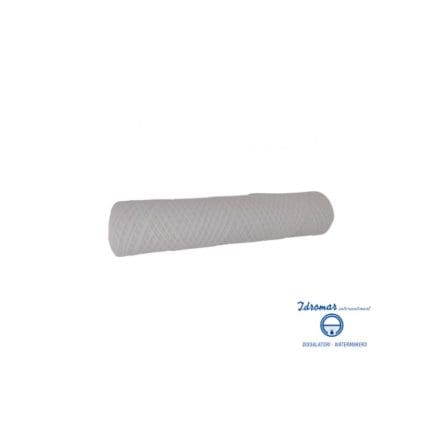 10" Wound Wire Cartridge 20 micron – code: 10MP20 – Idromar
 Desalination maintenance kit – code: Cleaning Kit (SC1 + SC2) – Schenker
 Stainless steel clamps Norma 12–22 mm – code: FAI0012022 – Toscogomma
 Brush with spring - code: SGM45 - Gianneschi Pumps and Blowers


Choose the right category for easier compatibility
If your goal is to find a reliable solution without wasting time on unhelpful comparisons, the best step is to start from the category most consistent with your system or the area of the boat you need to work on. From there you can filter options, read the datasheets, and check measurements, fittings, and intended use more precisely. Explore the catalog and delve into the sections dedicated to nautical components to find the accessory best suited to your installation.
FAQ
How to check the compatibility of a nautical accessory with my boat?
It is advisable to check function, attachment points, dimensions, connections, and materials already on board. If some data is unclear, check the product sheet.
Why can two similar nautical accessories not be interchangeable?
Because fittings, actual dimensions, mounting orientation, or integration methods with the existing system can change. Visual similarity is not enough to confirm compatibility.
What is the most common mistake when choosing boat accessories in Naples?
The most frequent mistake is buying based on appearance or general function without checking installation, available space, and compatibility with the rest of the boat.
When is it useful to consult nautical technical guides before purchase?
They are particularly useful when you need to replace an existing component, integrate an already installed system, or compare multiple solutions that seem equivalent but may differ in assembly and use.
What to check before installing a nautical accessory?
It is useful to check accessibility, orientation, maneuvering space, interference with other elements, and the possibility of subsequent maintenance, in addition to the indications present in the product sheet.


