


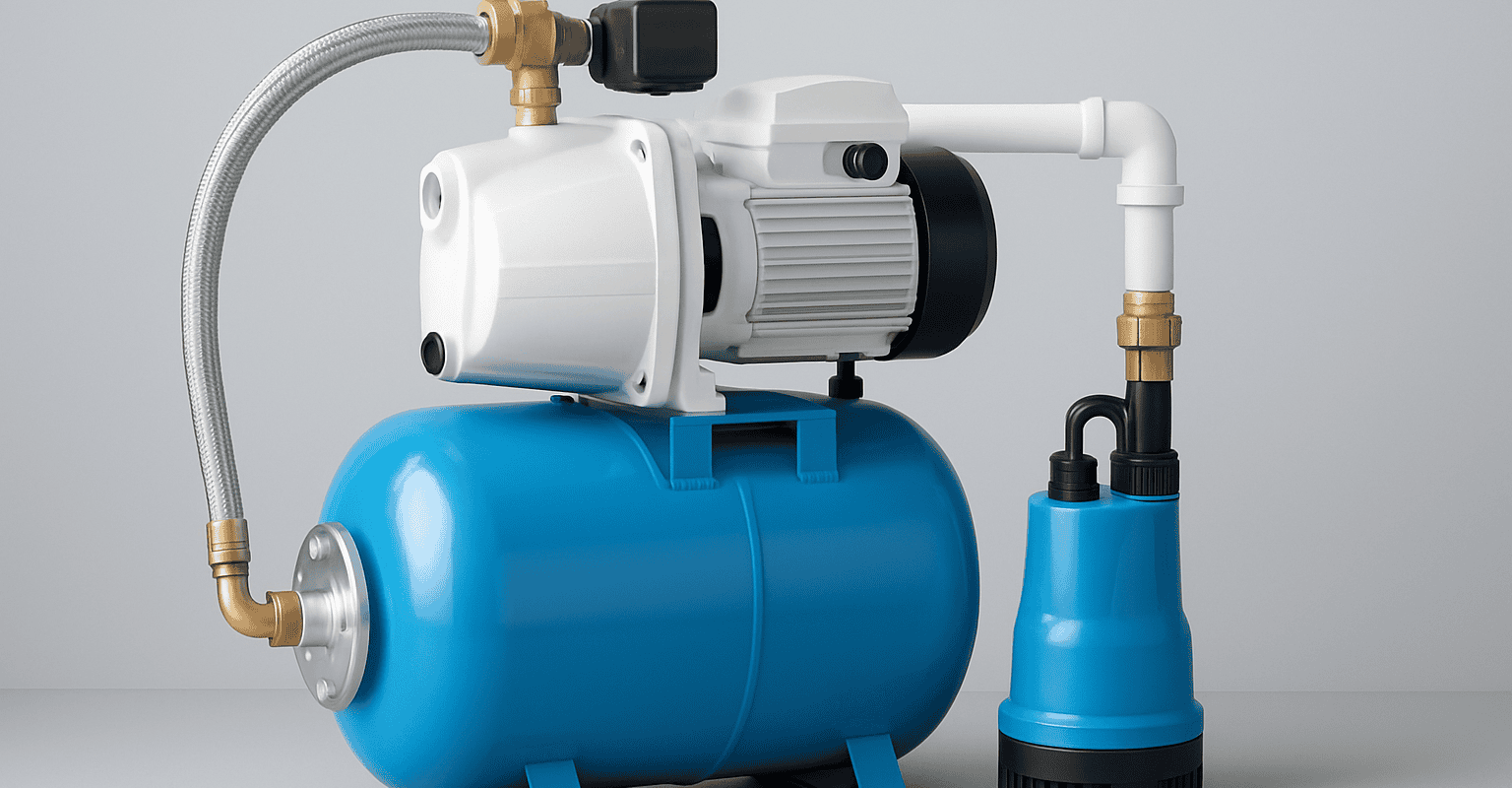
When to really look for information on autoclave pump prices
The search autoclave pump prices often starts from a concrete need: restoring water pressure on board, replacing a noisy pump, or solving irregular delivery that makes the service system unreliable. The point, however, is that stopping at just the economic comparison often leads to a wrong choice. In this field, in fact, the perceived cost says nothing about the real suitability of the pump compared to the existing system.
Those who compare solutions for bilge pumps and service tend to group products with only apparently similar functions. An autoclave pump works in a water distribution system, while other pumps on board respond to different logics for use, installation, and continuity of operation. Understanding this distinction is the first step to avoid inconsistent purchases.
It makes sense to delve into the topic when at least one of these situations occurs:
- the pressure at the taps is unstable or drops without apparent reason;
- the pump activates too often even with minimal consumption;
- vibrations, abnormal noise, or close start cycles are noticed;
- the onboard water system is being redone;
- you want to replace an existing model without modifying pipes and connections.
In all these cases, the real comparison is not only about price, but the compatibility with the system, la semplicità di integrazione e il tipo di utilizzo previsto. Per orientarsi meglio può essere utile consultare anche le soluzioni dedicate alle pompe di bordo e approfondire i componenti per la gestione dei servizi, così da distinguere correttamente le diverse applicazioni.
Another frequent mistake is starting from the idea that a “similar” replacement is always immediate. In reality, even when the size seems compatible, connections, wiring scheme, suction mode, and pressure switch behavior can change. That’s why, before evaluating a range of autoclave pump price compatibility, it is advisable to carefully read the product sheet and verify the data really useful for installation.
Differences between solutions, measurements, or compatibility of the autoclave pump
In the comparison between different models, compatibility is the criterion that most affects the final result. Those who look for autoclave pump price compatibility usually want to understand if one pump can replace another without complex interventions. The answer depends on several factors, and neglecting even one can cause problems right from the first uses.
Hydraulic compatibility and connections
The first check concerns the circuit. It is not enough to verify that the pump “fits in the available space”: you need to understand if the connections are consistent with the existing pipes, if the installation direction is correct, and if the suction system is suitable for the system configuration. A pump mounted with improvised adaptations can work, but often introduces leaks, noise, and premature wear.
Before purchasing it is useful to check:
- diameter and type of fittings;
- position of inlet and outlet;
- presence of accessories necessary for installation;
- possible need for filter or additional components;
- compatibility with accumulators or other existing elements.
If any of these aspects are unclear, the best rule is simple: check the product sheet. It is an essential step especially when replacing a pump that has been installed for a long time and the original documentation is not available.
Electrical compatibility and operating logic
Another critical area concerns the power supply and how the pump is activated. Some users focus on the format or brand but ignore the fact that the activation logic must be consistent with the rest of the system. If the system was designed with a certain configuration, changing the pump without checks can cause irregular starts or intermittent operation.
This also applies when thinking comparatively between bilge pumps and service. Bilge pumps respond to evacuation needs, while service pumps must ensure continuity and comfort in delivery. Confusing the two areas leads to unhelpful comparisons and, in the worst cases, inappropriate installations.
Dimensions, supports, and mounting position
Mechanical compatibility is often underestimated. A pump may seem equivalent on paper but require a different base, a specific orientation, or a pipe arrangement incompatible with the available space. On a boat, where technical spaces are often limited, this detail can turn a simple replacement into a longer-than-expected intervention.
To avoid mistakes, it is advisable to carefully observe:
- overall dimensions and fixing points;
- accessibility for maintenance and connections;
- distance from walls, cables, and other components;
- ease of inspection in case of subsequent checks.
Per chi sta valutando un aggiornamento dell’impianto, può essere utile leggere anche gli approfondimenti sui sistemi di pompaggio per servizi di bordo e consultare le pagine dedicate agli accessori di installazione per avere un quadro più completo prima della scelta.
Mistakes to avoid when choosing or installing the autoclave pump
Many critical issues do not depend on product defects but on hasty selection or inaccurate installation. When comparing options related to autoclave pump prices, the risk is prioritizing the least useful parameter and neglecting the details that really affect reliability and durability.
Choosing based on cost rather than the system
It is the most common mistake. An apparently convenient pump can prove unsuitable if it is not consistent with the number of users, the layout of the system, or the type of use on board. The result is a system that works poorly, activates too often, or does not offer the expected regularity.
The correct question is not “how much does it cost?”, but “is it suitable for my system?”. Only after this check does the economic comparison become meaningful.
Ignoring the signs of a system to be checked
In some cases, the pump is replaced thinking to solve a problem that originates elsewhere. If there are micro-leaks, loose fittings, air in the circuit, or an inefficient accumulator, even a new pump can behave abnormally. This often leads to negative judgments about the product, when the real problem is upstream.
The signs not to be underestimated include:
- frequent starts without an obvious water demand;
- intermittent flow at the taps;
- excessive noise after installation;
- presence of vibrations transmitted to the structure;
- priming difficulties or delays in delivery.
Before replacing a component, it is therefore advisable to check the entire circuit. A quick but orderly analysis avoids attributing responsibilities to the pump that it does not have.
Installation without checking the usage context
Another recurring mistake is installing the pump in an inconvenient position, poorly protected, or difficult to inspect. Even if the system starts working again, future maintenance becomes more complicated and the chances of overlooking small signs of malfunction increase.
A good installation should always consider:
- ease of access for periodic checks;
- neat routing of pipes and wiring;
- reduction of vibrations;
- protection from moisture and splashes, if required by the context;
- sufficient space for possible later replacement.
In the cluster Pumps and bilge, this approach is even more important because on board the systems are often close to each other and a poorly thought-out choice can also complicate the management of other components.
Confusing bilge pumps and service pumps
Those looking for information online often find pages that mix very different solutions. But a bilge pump and a booster pump are not interchangeable just because they belong to the same technical universe. The former manage the evacuation of water from specific areas, the latter feed the service circuit. Mixing selection criteria generates misleading comparisons and leads to evaluations that are not very useful even in terms of prices.
Per questo è importante leggere con attenzione le descrizioni e orientarsi tra contenuti dedicati alle pompe di sentina e servizio, distinguendo sempre funzione, installazione e compatibilità reale.
Products and categories to consider before purchase
When analyzing the topic autoclave pump prices from a comparative perspective, it is advisable to think in terms of functional categories rather than individual models. This approach helps avoid impulsive purchases and allows you to build a selection more consistent with your system.
The areas to consider are generally these:
- autoclave pumps for onboard services, to be evaluated based on the system configuration;
- connection components, often decisive for a replacement without invasive modifications;
- filters and accessories, useful for protecting the circuit and improving installation management;
- support elements for the system, to be checked if the problem does not depend solely on the pump;
- solutions in the bilge and service pump area, to be compared by keeping functions clearly separate.
This method is also useful for those looking for a quick replacement. Instead of jumping from one product to another without criteria, it is preferable to first define the context: type of use, available space, system layout, components already installed, and required level of compatibility. Only then does the comparison between alternatives become truly effective.
If you have doubts about the match between a solution and your system, do not rely solely on images or overly brief descriptions. Check in the product sheet all elements useful for installation and, if necessary, also compare related accessories. A well-planned choice reduces downtime, corrective interventions, and premature replacements.
Recommended products

 10" Wound Wire Cartridge 20 micron – code: 10MP20 – Idromar
 Stainless steel clamps Norma 12–22 mm – code: FAI0012022 – Toscogomma
 Brush with spring - code: SGM45 - Gianneschi Pumps and Blowers



How to avoid recurring problems after installation
Even after a correct choice, some problems may arise if the system is not checked as a whole. The most common critical issues are not always immediate but tend to manifest with small signs: too frequent start cycles, increasing noise, loss of flow regularity, or a feeling of “forced” operation.
To prevent these scenarios, it is useful to follow some good practices:
- periodically check fittings and pipes;
- verify that there are no air infiltrations in the circuit;
- keep any filters present clean;
- observe if the pump activates consistently with actual use;
- immediately address vibrations or unusual noises.
A well-monitored system also helps better interpret the comparison between autoclave pump price compatibility. In many cases, in fact, the value of a solution does not lie in the initial simple comparison, but in the ability to correctly fit into the system without causing secondary problems.
If you are considering a replacement or an upgrade, explore the solutions in the category dedicated to pumps and onboard services: comparing products, accessories, and compatible components in an organized way helps you choose more confidently and identify the most suitable option for your system.
FAQ
How to evaluate a booster pump without focusing only on prices?
The comparison must be made starting from compatibility with the system: connections, dimensions, operating logic, and necessary accessories. The price alone does not indicate if the pump is suitable. If you have doubts, check the product sheet.
Is a booster pump and a bilge pump the same thing?
No. The autoclave pump is used for water distribution in onboard services, while the bilge pump is intended for evacuating water from specific areas. They have different functions and should not be compared as if they were equivalent.
What are the most common mistakes in assembling a booster pump?
Among the most common errors are fittings that are not consistent with the system, inconvenient mounting position, failure to check filters and pipes, and replacement of the pump without verifying whether the problem is due to leaks or air in the circuit.
What does autoclave pump prices compatibility mean?
Indicates a search aimed not only at economic comparison but also at verifying that the pump can be correctly integrated into the existing system. Compatibility concerns the hydraulic part, electrical connections, dimensions, and installation methods.
If the pump turns on frequently, should it be replaced immediately?
Not always. Frequent ignitions can also be due to micro-leaks, air in the circuit, loose fittings, or other system components. It is advisable to check the entire system before replacing it.


