Preparing the Boat for the Season - Maintenance Checklist Pumps and Systems
To prepare the boat you must rigorously check the pumps and systems: verify that the bilge pumps work, check ducts, valves, and seals for leaks, inspect filters and electrical systems, assess the condition and charge of the batteries, and perform an engine and emergency systems test; this checklist helps you keep your boat reliable and safe during the season.
Pump Check
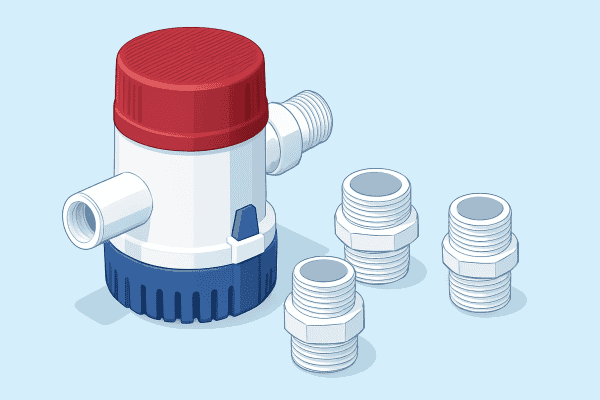
Proceed with visual and functional inspections: check antivibration mounts, flexible joints, and clamps, verify that the pump body has no cracks or pitting corrosion. Run the pump under load for 2-3 minutes observing for abnormal noises, vibrations, and flow rate; a 1,000 GPH (≈3.8 m³/h) pump should consistently move its nominal volume and not draw excessive current compared to the nameplate.
Measure the electrical current with an ammeter and compare it with the manufacturer's values; anomalies such as a 20-30% increase% over the nominal value indicate mechanical resistance or motor problems. Finally, test the automatics (float switch and relay): lift the float several times and verify that the pump engages immediately and turns off without delay, repeating the test also with the pump under load.
Leak Check
Carefully inspect all seals: gaskets, flanges, fittings, and sleeves. Look for traces of brine, white deposits, or oily film around joints; even a persistent drop can develop into a leak, so replace hoses with visible cracks or over 5 years of service.
To detect hidden leaks, perform a practical test: pour 200-250 ml of food coloring into the bilge or the load line and start the pump; follow the liquid path to identify the leak origin. Also check non-return valves and hose clamps: a loose or corroded clamp is often the most common cause of leaks in port and underway.
Routine Maintenance
Schedule regular interventions: monthly inspection during the season and full service before the first outing of the year. Replace the impellers of cooling or bilge pumps at least every 12 months, especially if exposed to saltwater; a cracked or swollen impeller reduces flow and causes electrical overload.
Clean the prefilter and debris baskets, degrease and protect electrical contacts with dielectric grease, and check clamps and sleeves for signs of emptying or weakening. Keep spare fuses and relays on board, noting the nominal value on a label: a wrong fuse can damage the circuit or leave the pump inactive when needed.
During seasonal maintenance also perform an amplitude check: record current draw at no load and under load and keep historical values to identify trends (e.g., progressive 10%% increase in current draw over two seasons). Also, apply lubricant to pivots and replace hoses showing signs of hardening: prevention is cheaper than repairing a leak underway.
Electrical Systems Check
Carry out a systematic check of the electrical panel, shore power supply, and battery bank: visually inspect switches, RCDs, fuses, and terminals for signs of overheating, oxidation, or burns. Use a multimeter to check voltages at rest and under load; for example, measure the battery bank voltage at rest (12.6-12.8 V for a fully charged 12 V) and under load to detect abnormal drops indicating high resistance in the lines.
Do not neglect insulation testing and connection verification as part of the spring checklist: a megger test on 230 V AC circuits (500 V DC test) and low voltage circuits (50 V DC test) helps detect degraded insulation before faults or stray currents occur. Record measured values and compare them with your boat's operational limits to schedule targeted repairs.
Electrical Insulation
Perform insulation resistance tests with a megger: use 50 V DC for low voltage onboard circuits and 250-500 V DC for 230 V mains circuits. An insulation value above 1 MΩ is generally considered acceptable; if you find values below 0.5-1 MΩ, immediately locate the affected section because moisture, salinity, and abrasion on sheaths and cables are the most frequent causes. During inspection, look for points where cables pass through bulkheads or near metal parts, as rubbing can compromise insulation even without obvious external signs.
In case of insufficient insulation, dry and sanitize the area considering the use of directional heaters or hot air to eliminate trapped moisture; if resistance does not improve, replace the section with marine tinned cables and heat-shrink sleeves. Integrate periodic checks: perform insulation tests at least once a year and whenever working on systems exposed to immersion, to prevent pump and onboard device malfunctions.
Connection Check
Check tightness, crimps, and corrosion levels on batteries, inverters, and terminal blocks: use a torque wrench following manufacturer specifications (example guideline: M6 ≈ 8-10 Nm, M8 ≈ 18-25 Nm) and replace oxidized terminals with properly soldered or crimped tinned lugs. Measure voltage drop under load with a voltmeter: on 12 V systems keep the loss below 3%% (≤0.36 V); higher values imply poor connections or undersized cables.
More thoroughly, perform a sequence: isolate the battery, remove the terminal, clean with a brass brush and neutral solution (neutralize acid spills if present), apply dielectric grease, and reassemble with heat-shrink adhesive on crimps. Use a clamp meter to measure current during starting and a thermal camera to detect hot spots under load; if during cranking voltage drops below about 9.6 V it is likely there is contact loss or overloaded cables and you must intervene immediately.
Navigation Systems Check
Immediately verify integrations between GPS, radar, AIS, and the NMEA 2000/0183 network: check voltages (battery 12.6-13.2 V with engine off), fuses, CAN connections, and any bus errors. Update charts and device firmware at least once a year – many workshops report error reductions with quarterly updates for heavily used units – and compare digital readings with analog instruments (compass, log) to identify deviations over 2° or log discrepancies over 5%%.
GPS Operation
Check the number of satellites displayed and the HDOP: an HDOP value below 1.5 indicates good accuracy; if you see HDOP above 2.0, investigate antenna position or interference. Perform a “cold start” and record the TTFF (Time To First Fix): normally a cold start takes from 30 seconds to 2 minutes, while a hot start should be under 10 seconds; significantly longer times may indicate a defective antenna or signal loss due to cables with attenuation >3 dB.
Check that WAAS/EGNOS (or local SBAS) are enabled to improve accuracy to 1-3 meters when available, and test the antenna by comparing the position with a known ground reference point (e.g., anchorage marked on a chart). If you use a multi-station unit, confirm the correct sending of NMEA GGA/GLL/RMC messages to other devices and verify the priority logic in case of conflict between master and backup units.
Radar Check
Verify the antenna rotation at 24/30 rpm and listen for any unusual noises: vibrations or clicks indicate worn bushings or bearings. Test the range on multiple scales: for example, a 3-4 m inflatable boat should be detectable at 0.5-1.5 nm with gain and clutter set correctly; if the range is less, try adjusting power and Doppler filtering (if present).
Align the radar with the electronic compass and verify the correspondence of detections with AIS: deviations over 3° require calibration; also check settings such as pulse width and sea clutter to optimize visibility in calm or rough sea conditions. Inspect coax cables and connectors for corrosion: a power loss of 1-2 dB can result in a significant reduction of effective range.
Periodic cleaning and maintenance of the radome are essential: remove salt and encrustations with a non-abrasive marine cleaner, check seals and flanges for water infiltration, and monitor the operating hours of the magnetron (if the radar uses a magnetron) – after 2,000-3,000 hours power may degrade and it is advisable to plan replacement or conversion to solid-state technology to improve reliability and maintenance.
Safety Equipment Maintenance
Regularly check expiration dates, markings, and physical integrity of equipment: for example, EPIRB canisters often require battery replacement every 5 years and registration must be updated; life jackets should be inspected for torn straps, working strobe lights, and flotation compliant with ISO specifications, while pyrotechnic signal flares normally expire after 3-4 years. Record inspections in a logbook with date and responsible person to demonstrate periodic maintenance and intervene promptly in case of wear or corrosion.
Also verify technical documentation and manufacturer recommendations for each unit; for detailed practical procedures and seasonal checklists you can consult specialized resources such as Preparing Your Boat for Summer: Maintenance Tips, but always maintain a personal control plan with precise deadlines (e.g., tender inspection every 6 months, self-inflating life jacket service every 3 years).
Safety Equipment Check
Check life jackets one by one: press the inflatable parts to verify there are no leaks, inspect seams and straps, and test the strobe light and whistle. Ensure the number of jackets matches the maximum number of passengers and that they comply with the CE/ISO standards required for your boat.
Examine fire extinguishers, flares, EPIRBs, and liferafts: rechargeable extinguishers must show the gauge needle in the green zone and undergo hydrostatic tests every ~5 years, liferafts must be serviced annually, and flares replaced upon expiration. If you find an EPIRB with a battery near expiration or a liferaft with water in the container, immediately arrange for intervention by a certified technician.
Fire System Functionality
Check the charge level and integrity of portable fire extinguishers: ABC powder units are the most versatile for a boat, while CO2 is suitable for electrical equipment; check the gauge needle, absence of rust on the body, and date of last inspection. Check fixed systems in the engine compartment (e.g., Novec or FM-200 gas): ensure the cylinder has correct pressure and that the pipe network and nozzles are not obstructed.
Test sensors and alarm interfaces: thermal detectors and smoke/CO sensors must be checked at least once a year, with a functional test of the signal to the control panel; finally, test the manual release mechanism and ensure the isolation valve has no leaks. In case of automatic intervention, always plan a post-activation check within 24-48 hours and inspection by a certified technician.
Deepen maintenance of the automatic system: do not activate the discharge system for testing unless in a controlled environment – contact an authorized center to perform non-destructive tests, check cylinder tightness with appropriate instruments, and test thermal detectors with threshold tests (e.g., 57 °C for some sensors); schedule a full inspection every 12 months or after any partial intervention to ensure the system is ready in case of a real fire.
Boat Preparation for Launch
Before launching, organize operations in sequence: cleaning, structural repairs, system checks, and final painting. For a 10 m boat, allow 2-3 days for routine work (local paint removal, filling, and two coats of antifouling) and up to a week if osmosis or sandwich damage emerges; plan yard time carefully considering weather and availability of specialized labor.
Ensure all materials are certified for marine use: two-component epoxy primers, specific fairing fillers, and vinyl or copper-based antifouling depending on the waters you navigate. Perform photographic and numerical control (thickness measurements, before/after photos) to track interventions and warranties: many workshops require documentation for possible returns or liability claims.
Cleaning and Painting
Start with coarse sanding using 80-120 grit paper to remove deposits and old antifouling, then move to 180-240 grit to prepare the surface for primer; for fiberglass surfaces use a two-component epoxy primer based on alkyd or polyurethane resin depending on the desired finish. For an 8-12 m hull, plan 2-3 coats of primer (each coat 150-200 µm if indicated by the manufacturer) and 2 coats of antifouling, allowing 12-24 hours drying between applications at 15-20 °C.
Apply precise masking along the waterline and on the deck: a common mistake is not respecting intermediate sanding times, which compromises adhesion between coats. If you navigate in calcareous or tropical waters, choose an antifouling with higher active content; for example, a boat frequently moored in Mediterranean ports benefits tangibly from controlled-release formulations, reducing slip-in frequency to 12-18 months versus 6-9 months for cheap products.
Hull Inspection
Inspect the hull looking for cracks, delaminations, and signs of osmosis: small translucent blisters, brown halos, or lightening indicate infiltration. Use a bodywork hammer for the “tap test” over the entire surface; spots that sound dull or produce powder are suspicious and require removal of the surface layer and moisture testing with a hygrometer (values over 2-3% in fiberglass deserve further investigation).
Also check the attachments of dowels, shaft passages and areas around winches and bollards: a practical example is the case of an 11 m boat that had micro-cracks around the rudder hinges, which were only detected after a spot check; preventive repair prevented seepage that would have required the hull to be lifted. Finally, measure its thickness with an ultrasonic calibrator: differences of more than 10-15% from the original section indicate wear or localised erosion.
For suspected cases, programme non-destructive testing: load the area with low-viscosity epoxy resins for penetration tests or proceed with core sampling for laboratory analysis; in one documented intervention on a 9m, the analysis of a sample showed advanced osmosis under 30cm from the keel, allowing a targeted repair that reduced costs and time compared to a total intervention.
Final Test in Water
Take the boat to calm waters and spend at least 20-30 minutes on the initial phase: let the engines warm up at idle speed for 10-15 minutes, check for leaks, correct operation of bilge pumps and siphons, and check that all instruments (temperature, oil pressure, voltmeter) remain within normal ranges during warm-up. It also checks the watertightness of the sea intakes and the tightness of the seals, performing a test with automatic pumps switched on and switching off the power supply to confirm manual interventions and alarms.
Immediately afterwards, run a short sequence of tests at different engine speeds to simulate real conditions: idle, cruise (around 60-75% of engine speed) and short bursts at full throttle for 10-20 seconds. In this phase monitor battery voltage (12.4-13.0 V with engine off, 13.8-14.8 V with engine running), alternator current and indicative fuel consumption (e.g. 15-40 L/h depending on engine), noting values and anomalies for comparison with design data.
Navigation Tests
Carry out repeated turning, emergency stop and reverse manoeuvres to check steering response and wake behaviour: do at least three complete turns at cruising speed and three stops from cruising speed to standstill to assess stopping times and possible yawing. Also test trim and propeller settings (if adjustable) to assess glide and consumption; for example, check at what speed your boat arrives at the plane (often 10-15 knots for light units) and how long it takes to stabilise.
Evaluate dockside manoeuvres at low speed (1-3 knots) by checking the effectiveness of the bow thruster or joystick, and repeat entering/exiting the berth in different current and wind conditions. Document any abnormal behaviour (tendency to drift, steering lag, vibration) with notes on engine speed and sea conditions, so that cause and remedy can be isolated.
Performance Verification
Measure actual performance with instruments: use GPS to measure speed in knots and record rpm from the tachometer; make three passes at defined speeds (idle, cruise, WOT) and calculate average speed and consumption. If the manufacturer's chart indicates 30 knots at 5,200 rpm and you only register 25 knots at the same rpm, investigate hull fouling, a damaged propeller or incorrect trim; small deposits can reduce speed by up to 10-15%.
Monitor operating temperatures (engine thermostat 80-90 °C, intercooler/exhaust within the manufacturer's tolerances) and oil pressure (typical values 1-3 bar at idle, 3-5 bar at cruising speed). It also checks vibrations at cruising speed and WOT: more than 0.5 g or metallic noises indicate shaft or propeller problems that need to be investigated.
In order to obtain repeatable data, record environmental conditions (wave, wind, load on board and tank level), use fuel consumption sensors when possible and compare the results with the declared operating values; if you find deviations greater than 10% on speed or consumption, schedule propeller work, hull cleaning or engine diagnostics before the full season.
Preparing the Boat for the Season - Maintenance Checklist Pumps and Systems
You should carry out a complete and methodical inspection: check and test all pumps (bilge, emergency bilge, bilge lights), replace worn impellers and seals, clean or replace filters and nozzles, check that clamps and couplings are tightened correctly, inspect pipes and tanks for cracks or leaks, and check sacrificial anodes. Check the electrical system associated with pumps-batteries, wiring, switches and relays-ensuring that connections are free of corrosion and control devices are functioning properly; also test solenoid valves, floats and level sensors to ensure reliability under real operating conditions.
During commissioning, carry out extended operational tests and, if possible, a water test to confirm performance and tightness; record any work in a maintenance logbook and schedule periodic checks. Prepare a kit of essential spare parts (impellers, seals, clamps, filters, fuses), keep certifications up-to-date and call in specialised technicians for complex interventions or on cooling and fuel systems: this way you protect your boat, reduce the risk of breakdowns and face the season with safety and compliance with regulations.