


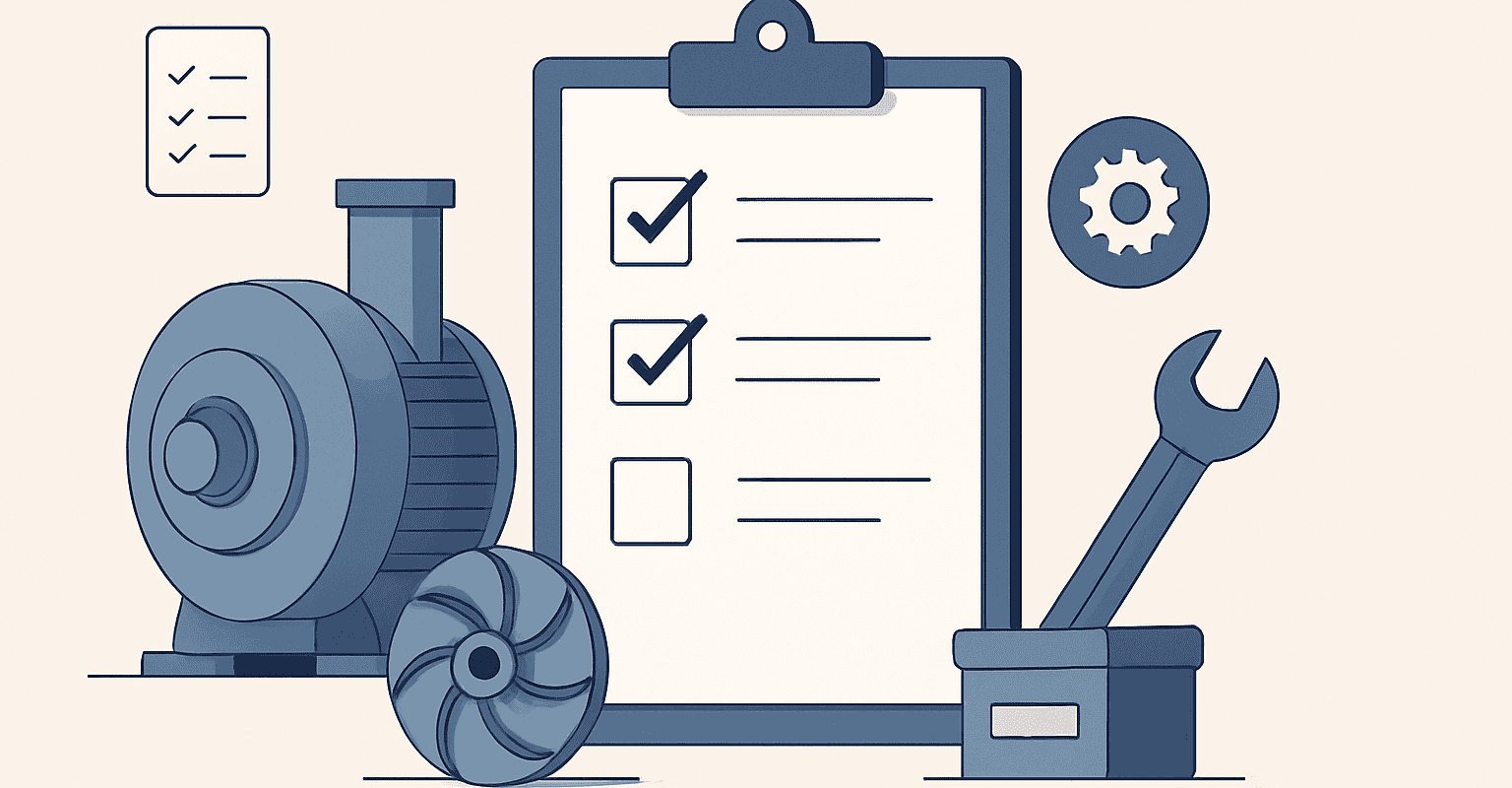
Buy components online and Gianneschi pumps and blowers S.R.L. spare parts can be very convenient, but only if the technical check is done methodically. When ordering a spare part or accessory without checking the code, fittings, dimensions, and application compatibility, the risk is not only receiving an unsuitable item: downtime is also extended and the management of the intervention becomes complicated.
This guide is designed for those who want to use the store consciously, with a simple but concrete checklist. The goal is not to choose “by eye,” but to understand which data to collect before ordering, which mistakes to avoid, and how to correctly read a product sheet. If you are looking for a starting point, you can consult the page dedicated to the brand Gianneschi pumps and blowers S.R.L. and compare the available information with the component already installed.
A good gianneschi pumps and blowers s.r.l. guide always starts from one principle: the brand name alone is not enough. To order without errors, verifiable references, clear photos of the existing component, and attention to details on the nameplate or in the system documentation are needed.
What Gianneschi pumps and blowers S.R.L. is for and when it is convenient to look for spare parts online
Those looking for components of this brand usually have a very concrete need: to restore the operation of a system, replace a worn element, or prepare scheduled maintenance. In these cases, the online store is useful because it allows you to quickly compare availability, descriptions, and product families, reducing the steps compared to a fragmented search.
The key point, however, is to distinguish between three different situations:
- Identical replacement: you already have the correct code and need to reorder the same component.
- Replacement for compatibility: the code is unreadable or unavailable and you need to verify equivalences based on technical data.
- Purchase for maintenance: you are looking for wear parts, connection accessories, or components to check during system downtime.
In the first case, the work is simpler, but it remains essential to verify that the code reported on the sheet matches that of the component in use. In the second and third cases, a more accurate data collection is needed. To better navigate between brands, applications, and technical support, it can be useful to start from the overview of the brands handled or from the sections dedicated to industrial spare parts.
When talking about gianneschi pumps and blowers s.r.l. maintenance, the most common mistake is to intervene only after the failure. In reality, buying online with criteria also means preparing in advance: identifying critical components, noting readable codes, and creating a small internal system registry. This greatly simplifies subsequent reordering.
Compatibility, measurements, and technical checks to order without errors
Compatibility is never evaluated from a single piece of information. A partial code, a blurry photo, or a generic description can lead to an incorrect order. Before purchasing, it is advisable to follow an essential technical checklist.
Check the complete component code
The first reference to look for is always the exact code. If present on the label, on the component body, or on the original documentation, it must be transcribed in full, without abbreviations. Even a minimal difference can indicate a different variant for connections, configuration, or materials. If the code is not perfectly readable, compare it with the product sheet and, in case of doubt, check the product sheet or in the available technical material.
Detect the actually useful measurements
One of the most common mistakes is taking generic measurements that do not help confirm compatibility. The most useful dimensions depend on the type of component, but during inspection it is always advisable to note:
- diameter or size of the fittings;
- center distance of the fixing points, if present;
- overall dimensions in the mounting areas;
- orientation of the connections;
- shape of the body and position of the connecting elements.
If you are comparing a spare part with its sheet, do not limit yourself to the main photo. Carefully read the description, variants, and application notes. If a detail is not explicitly stated, the correct formula is simple: check the product sheet or take an additional photo of the installed component before proceeding.
Confirm the application use
A component may look similar to another but may not be suitable for the system in which it must operate. For this reason, it is useful to always note the application context: where it is installed, with what function, and in what configuration it operates. This information is especially valuable when the code is missing or when the component has been replaced in the past with a non-original version.
To deepen the search method, the pages dedicated to support in choosing spare parts or information on maintenance and assistance, if available in the store, can also be useful.
Use technical photos, not just overview images
When you need to compare an online item with the one already installed, photos make a difference only if they are really useful. Take clear images of:
- label or marking;
- front and back of the component;
- fittings and connections;
- fixing area;
- details showing wear or previous modifications.
Images help avoid mistakes especially when the component in use has undergone adaptations over time. In these cases, ordering without visual comparison is often the main cause of incompatibility.
Typical errors in ordering or installing Gianneschi pumps and blowers S.R.L. spare parts.
Even with a good product sheet, some errors often recur. Knowing them in advance is the easiest way to avoid them.
Confusing product family and spare part code
Many users identify the component using only the family or a generic commercial description. This is not enough. Two items from the same family can have substantial differences. If you are purchasing Gianneschi pumps and blowers S.R.L. spare parts, the check must be done on the complete reference and not just on the brief denomination.
Ordering based solely on visual similarity
An item may look identical in the images but differ in attachment, orientation, or configuration. Photos are a support, not definitive proof. The correct verification always combines code, measurements, and application.
Neglecting modifications made to the system
In many systems, over time, adaptations, non-original replacements, or configuration changes are made. If you order based only on the theoretical model of the system, you risk receiving a component that is correct “on paper” but not compatible with the real situation. For this reason, it is always advisable to physically check the installed part.
Not checking the mounting direction or the position of the attachments
Among the most underestimated errors are the orientation and mounting geometry. Even when the component seems correct, a difference in the position of the attachments or in the installation direction can make an unwanted adaptation necessary. If this data is not clear, check the product sheet.
Underestimating the condition of connected components
During a replacement, the problem does not always concern only the main spare part. Gaskets, fittings, sealing elements, or connecting accessories can affect the final result. A gianneschi pumps and blowers s.r.l. maintenance well-planned replacement also considers what works around the component to be replaced, thus avoiding a second downtime shortly after.
Products, spare parts, and useful accessories: how to read the store practically
A professional store should not be consulted as a simple visual catalog. To find the correct component, you need to read the information selectively, prioritizing the data that really affects compatibility.
Which elements to start with on the product sheet
When you open a sheet, focus first on these points:
- item code and identifying references;
- technical description and compatibility notes;
- images useful for comparison with the installed component;
- variants or configuration differences, if any;
- application notes to check before ordering.
If you are using this gianneschi pumps and blowers s.r.l. guide for a quick reorder, the advice is to create a mini internal checklist with four fields: code, measurements, photos, application. These are the minimum data that allow you to purchase online with greater confidence.
When it makes sense to also consider accessories and connected components
During maintenance, it is often advisable to check if the component you are replacing works together with other elements subject to wear or disassembly. This does not mean buying everything in bulk, but verifying if during the intervention it will be useful to have what is needed to complete the assembly without interruptions. This approach is particularly useful when access to the system is complex or when downtime must be optimized.
For a more organized search you can also consult the section of the brand Gianneschi pumps and blowers S.R.L., useful for filtering the catalog consistently with the brand and reducing the risk of improper comparisons with items from other lines.
Quick checklist before confirming the order
Before adding a spare part or accessory to the cart, do one last check:
- have you verified the complete code?
- the key measurements match the installed component?
- have you checked connections, orientation, and dimensions?
- the product sheet confirm the intended use?
- do you have clear photos of the existing component for a final comparison?
- have you considered any connected elements to replace during the intervention?
This check takes only a few minutes but significantly reduces purchasing errors. It is the step that transforms a generic search into a well-structured technical order.
Useful links to navigate brands, spare parts, and maintenance
If you want to continue the search in a more organized way, it can be useful to start from the brand page and then compare the information with your system’s documentation. Depending on the type of need, you can explore the brand’s catalog, consult the areas dedicated to spare parts, or check the content related to maintenance. The important thing is to always maintain the same method: code, measurements, application and control of the product sheet.
If you need to buy online without mistakes in sizes or codes, visit the page Gianneschi pumps and blowers S.R.L. on Technofluid and use the brand catalog as a basis to compare spare parts, accessories and useful information before ordering.
FAQ
How do I know if a Gianneschi pumps and blowers S.R.L. spare part is compatible?
The best check starts from the complete code of the already installed component. If the code is not readable, compare measurements, fittings, orientation, and application use. In case of doubt, check the product sheet.
Can I order a replacement based only on the photo?
No, visual similarity is not enough. Images help, but confirmation must come from code, relevant quotes, and assembly details. A photo is useful only if accompanied by verifiable technical data.
What measurements should be taken before buying online?
In general, it is advisable to note the size of the mounts, the center distance of the fastenings if present, useful dimensions, and the position of the connections. The exact measurements to check depend on the component, so it is always good to verify in the product sheet.
What to do if the installed component has been modified over time?
In this case, do not rely solely on the original plant documentation. Check the actual installed part, photograph the label, connections, and mounting area, then compare everything with the product sheet before ordering.
Does scheduled maintenance also help with online shopping?
Yes. Good planning allows you to collect codes, photos, and measurements of wear-prone components in advance. This makes reordering faster and reduces the risk of prolonged downtime due to compatibility errors.


