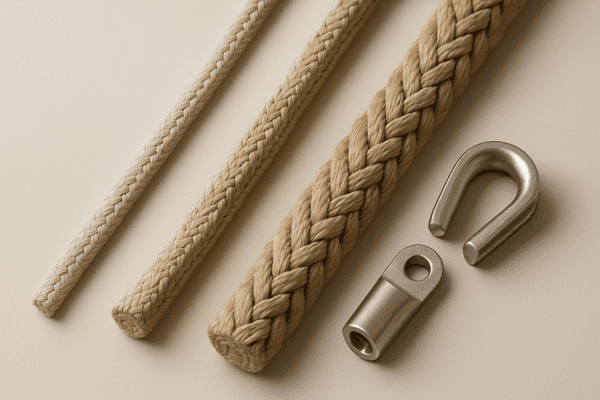
When boat shops are really needed to choose well
Those looking for boat shops often starts from a very concrete need: replacing a component, completing a system, or solving an incompatibility that on board causes wasted time and doubts. The point, however, is not only to find an available item. The real difference lies in understanding which solution is really convenient based on the system, that is based on existing connections, already installed materials, mounting spaces, and the overall logic of the system.
In the nautical field, an apparently simple choice can become critical if made without reading the technical context. A fitting, a line accessory, or a component for the circuit should not be evaluated in isolation: they must interact with what is already on board. For this reason, among the various boat shops, it is advisable to choose those who organize the offer clearly and support the reading of nautical technical guides, thus reducing errors before purchase.
The most useful criterion is not to ask which solution is “better” overall, but which is more consistent with the system. In many cases, in fact, two alternatives may seem equivalent online, but differ greatly in fittings, dimensions, integration methods, or compatibility with the rest of the line. If your goal is to avoid chain replacements, system downtime, or improvised adaptations, the initial technical evaluation is the most important step.
To orient yourself, it can be helpful to start with in-depth content such as nautical technical guides, sheets dedicated to materials, or collections of practical advice on installation and component selection. An overview of components for nautical systems also helps to understand where the part you need to replace fits and which elements to check before confirming the order.
The system context comes before the individual component
A common mistake is to compare only the shape or declared function of the product. In reality, to understand which solution is really convenient, it is useful to check at least these aspects:
- type of system in which the component must operate;
- materials already present along the line;
- available connections and interfaces; real mounting space;
- and accessibility; maintenance needs;
- or future replacement. This approach is what distinguishes a quick choice from a correct choice. The best results come when the product is selected starting from the system and not from the catalog seen as a generic list.
Boat shops: differences between solutions, sizes, or compatibility.
Negozi di nautica: differenze tra soluzioni, misure o compatibilità
In the comparison between different options, the central theme is compatibility. The query marine supply stores compatibility it reflects a real need: understanding if a component can be integrated without uncertain adaptations or unforeseen modifications. When evaluating similar solutions, compatibility must be read on multiple levels, not just by nominal size.
The most important differences often concern details that seem secondary in photos. A fitting with different geometry, a material not aligned with the rest of the system, or a configuration designed for a different use can compromise the final result. For this reason, it is always advisable to compare the available technical information and, when a detail is not explicitly stated, check the product sheet.
Nominal measurements and actual measurements: they are not always the same thing
One of the most common misunderstandings arises from reading the measurements. In boating, the indicated measurement alone is not enough to guarantee integration. It is necessary to understand what it refers to: internal diameter, external diameter, thread, useful passage, or connection interface. If components from different families are compared, the risk of misinterpretation increases.
Before choosing between two alternatives, it is advisable to verify:
- how the measurement is expressed in the technical description;
- if the component is designed for direct connection or requires intermediate elements;
- if the overall geometry is compatible with the installation point;
- if the mounting direction or the arrangement of the fittings is consistent with the existing system.
This attention avoids one of the most common problems in online purchases: ordering a component that is theoretically correct but practically unsuitable.
Material compatibility: the detail that changes the system's durability
When comparing similar solutions, material is often the least considered factor and at the same time one of the most decisive. It is not enough that the component fits or connects correctly: it must be compatible with the fluid, the working environment, and the materials already on board. An inconsistent combination can create issues over time, especially in systems exposed to humidity, salt, and irregular usage cycles.
In nautical stores more focused on the technical side, the product sheet and support content help to read these differences precisely. If you are comparing multiple solutions, it can be useful to also consult in-depth information on material compatibility or pages dedicated to nautical fittings and accessories, to better frame the role of the component within the line.
Functional compatibility: same apparent use, different real application
Two components may seem intended for the same use and yet respond to different logics. This is where the nautical technical guides they really become useful: they help distinguish between products suitable for a direct replacement and solutions that require additional checks on orientation, fastening methods, complementary accessories, or system configuration.
When the doubt is between multiple alternatives, the right question is not just “does it work?”, but does it work in my system without creating a weak point? This change in perspective makes the choice much more reliable.
Mistakes to avoid in choosing or mounting
Many problems arise not from an absolutely wrong product, but from an incomplete evaluation before purchase or installation. In boat shops, especially online, it is easy to focus on immediate availability and overlook consistency with the existing system. Yet the most costly errors in terms of time almost always stem from underestimated technical details.
Choosing by visual similarity
Relying on the photo or the general shape is one of the most common mistakes. Very similar components can have substantial differences in attachments, insertion depth, configuration, or material. The practical rule is simple: never confirm a choice just because it “looks the same”. If information is missing, check the product sheet.
Ignoring the upstream and downstream system
A component never works alone. Before replacing it, you need to observe what is before and after it in the circuit. This is especially true for lines with multiple fittings, section changes, adapters, or elements installed in tight spaces. Even a solution that is correct on paper can become awkward to install or impractical to maintain.
To reduce the margin of error, it is advisable to check:
- if the new component maintains the logic of the existing path;
- if it requires adaptations that complicate the line;
- if access for installation and maintenance remains practical;
- if the assembly maintains order and technical clarity.
Neglecting compatibility between connected elements
The marine supply stores compatibility does not concern only the single item, but the interaction between all connected elements. In practice, you need to verify that the new component does not introduce mechanical or functional discontinuities in the system. This also applies when replacing only an apparently secondary part: a small misalignment can cause stresses, forced assemblies, or the need for unexpected additional accessories.
The nautical technical guides are useful precisely because they help read the system as a whole. If you are working on a line already modified over time, this check is even more important.
Installing without checking dimensions and accessibility
Another typical mistake is to evaluate only the compatibility of the attachment, forgetting the overall dimensions. On a boat, spaces are often limited and maneuvering room is never guaranteed. Before proceeding, it is good to consider not only if the component fits, but also if it can be installed and handled correctly in the intended position.
When possible, compare the mounting point with the dimensional indications present in the sheet. If the data is unclear, check the product sheet or postpone the choice until the technical picture is complete.
Products and categories to consider based on the system
A good method to navigate through marine stores is to think in terms of functional families, not individual disconnected items. Instead of immediately looking for the final solution, it is better to identify the correct technical category and then narrow down the field based on the system. This approach reduces impulse purchases and helps build a coherent choice.
The categories to evaluate depend on the type of line you are working on, but in general it is useful to distinguish between connection components, distribution elements, finishing accessories, and parts intended for maintenance or periodic replacement. Each group has different compatibility logics and requires specific checks.
How to read a technical category without choosing the wrong filter
When you enter a catalog section, avoid selecting the first compatible product “at sight.” It is better to start with some practical questions:
- am I replacing an existing component or modifying the system?
- do I need a direct connection or an adaptation solution?
- do I need to keep materials already present or am I standardizing the line?
- does the component need to fit into a simple space or a critical area?
These questions help to better read the catalog and understand when a category is truly relevant. For further insight, pages like accessories for onboard systems or collections of content dedicated to technical maintenance can be useful, where the focus is not only on the product but on its role in the system.
When it is worth comparing adjacent categories
In some cases, the best solution is not found in the initially searched category, but in a nearby section by function. This especially happens when the system has been modified over time or when the original component no longer represents the most straightforward choice. Comparing related categories can be useful, provided the main criterion remains firm: compatibility with the actual system.
If the doubt concerns replacing a connection element or reorganizing a line, it is preferable to spend a few more minutes on technical comparison rather than proceeding by trial and error. This is where marine stores with a clear structure and supporting content offer a concrete advantage.
Recommended products

 10" Wound Wire Cartridge 20 micron – code: 10MP20 – Idromar
 Brush with spring - code: SGM45 - Gianneschi Pumps and Blowers
 Stainless steel clamps Norma 12–22 mm – code: FAI0012022 – Toscogomma


How to use nautical technical guides to compare alternatives
The nautical technical guides they are not only useful for those starting from scratch. They are also valuable for those who have already identified a solution but want to understand if there is a more coherent, easier to integrate, or tidier alternative from a system perspective. In a competitor-driven context, the real useful comparison is not between individual product pages, but between selection methods.
A well-constructed technical guide helps you filter options with practical criteria:
- compatibility with the existing system;
- material consistency;
- ease of installation;
- reduction of unnecessary adaptations;
- ease of future maintenance.
This type of reading is much more effective than a superficial comparison between commercial descriptions. If you want to continue the analysis, you can also consult other nautical technical guides to deepen use cases, selection criteria, and preliminary checks before purchase.
Choosing the right solution without complicating the system
Among the various boat shops, it is advisable to choose a catalog that makes technical comparison easy and allows you to select components consistent with your system. If you are considering a replacement or an upgrade, explore the technical categories and available brands to find the most suitable solution, always starting from real compatibility and the information provided in the product sheet.
FAQ
How to understand if a component is compatible with my marine system?
It is necessary to check attacks, reference measures, materials, dimensions, and the actual function of the component in the circuit. It is not enough that it looks similar to the one already installed: if a detail is not clear, check the product sheet.
In boating stores, is it better to choose based on the category or the individual item?
It is usually more effective to start from the correct technical category and then filter based on your system. This approach helps to compare consistent solutions and reduces the risk of purchasing a component that is only apparently suitable.
Why is material compatibility so important in boating?
Because the component must integrate with the treated fluid, the onboard environment, and the materials already present in the line. An inconsistent combination can create issues over time even if the initial installation seems correct.
Are the nautical technical guides also needed if I only have to do a replacement?
Yes, because they help verify whether the replacement is truly direct or if it requires checks on interfaces, orientation, complementary accessories, or installation space. They are especially useful when the system has been modified over time.
What is the most common mistake when buying components in marine stores?
The most frequent mistake is choosing based on visual similarity or an incompletely read measurement. In boating, you must always consider the system context, compatibility between connected elements, and accessibility during installation.