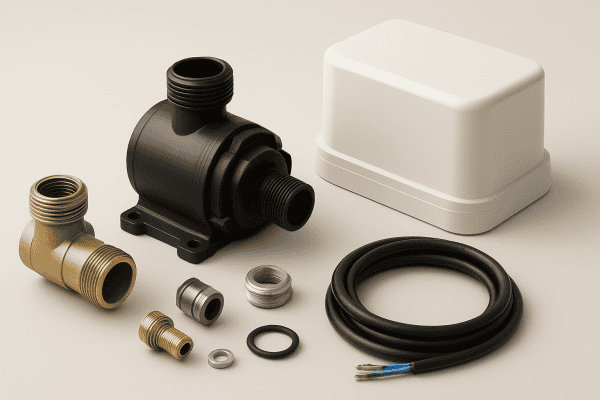
When you really need a nautical shop
Those looking for a nautical shop often you don’t just need to buy a component: in most cases you are looking for a technical answer. The point is not to find “something that looks suitable,” but to understand if an accessory, a spare part, or a system element is truly consistent with onboard use, available space, and existing connections.
This is where nautical technical guides become decisive. In the nautical field, in fact, many choices that at first glance seem simple hide practical variables: different fittings, incompatible sizes, materials to be correctly matched, installation steps that require attention, and usage conditions that vary from boat to boat.
A good approach always starts with three questions:
- Where will the the component or the accessory?
- With which elements must it interact already present onboard?
- What function must it perform in a continuous and reliable way?
Who consults a technical catalog without this method risks choosing based only on shape, brief description, or a visual similarity to the part to be replaced. This is one of the most common mistakes. For this reason, the topic nautical shop compatibility is central: compatibility does not only concern size, but also the type of use, material, connection system, and system logic.
Se stai valutando più opzioni, può essere utile partire da contenuti di orientamento come guide tecniche nautiche, approfondire i criteri di selezione con consigli per la scelta dei componenti di bordo e poi confrontare le schede delle categorie che ti interessano. Questo passaggio riduce gli acquisti poco adatti e aiuta a individuare la soluzione più coerente con l’installazione reale.
In practice, a specialized shop is really needed when you have to:
- replace an existing element without interface errors;
- update part of the system while maintaining consistency with the rest of the system;
- choose among multiple product families with similar functions but different construction characteristics;
- verify if an accessory is suitable for the marine environment and mounting context;
- avoid improvised adaptations that complicate maintenance and reliability.
In this scenario, the value is not only in the assortment but in the ability to read technical differences before purchase. And this is exactly where a well-structured comparative guide makes the difference.
Differences between solutions, sizes, or compatibility in a nautical shop
When comparing multiple solutions in a nautical shop, the temptation is to focus on a single variable, usually size. In reality, size is only one of the parameters to check. Two components may look similar and have close dimensions but be very different in connection, material, orientation, fastening method, or intended use.
The measurement is not enough if you do not consider the interface
One of the most common misunderstandings arises from the fact that a compatible size does not guarantee a correct assembly. A passage, a fitting, a support, or an accessory may have an apparently correct size but not be suitable for the existing system. It is therefore essential to check:
- diameters and useful sections;
- type of attachment or connection;
- orientation of the component compared to the available space;
- actual size during installation and maintenance;
- compatible material with the elements already present.
If any of these data are unclear, the correct choice is simple: check the product sheet. In the nautical field, even a seemingly minimal difference can affect the ease of assembly and the continuity of the system.
Mechanical compatibility and functional compatibility
Talking about nautical shop compatibility means distinguishing at least two levels. The first is the mechanical compatibility: the part fits, connects, and fixes correctly. The second is the functional compatibility: once installed, it really works as intended by the onboard system.
A component can indeed be mountable but not ideal for the context. It may require an unfavorable orientation, introduce an impractical connection, make maintenance more complex, or be inconsistent with the material of other elements. For this reason, in technical guides, the correct comparison never limits itself to the external shape.
Per approfondire i criteri di confronto tra componenti, può essere utile consultare schede comparative per applicazioni nautiche e approfondimenti sulla compatibilità tra accessori e impianti.
Differences between materials and usage context
Another often underestimated aspect concerns materials. In the nautical environment, the material affects not only the perceived durability but also the correct matching with the rest of the installation. When evaluating two solutions, always ask yourself:
- are they designed for the same usage environment?
- do they integrate with the materials already on board?
- do they require particular precautions during assembly?
- are they suitable for simple maintenance over time?
The nautical technical guides most useful are precisely those that help to read these differences before ordering, avoiding choices based only on availability or visual similarity.
How to correctly read a technical sheet
A well-filled product sheet already offers most of the necessary information, but it must be read methodically.
- functional description of the component;
- declared measurements and the way they are expressed;
- type of connection or fastening;
- any notes on compatible applications;
- assembly instructions, if present.
If the doubt concerns a specific detail, do not make assumptions. Even in this case, the safest formula remains: check the product sheet.
Mistakes to avoid in choice or assembly
Many problems do not arise from an absolutely wrong product, but from a selection made without considering the real onboard context. The most common mistakes are recurring and, precisely because they seem trivial, are often underestimated.
Choosing by similarity and not by function
The first mistake is buying a component because it “looks like” the one installed. In boating, two similar items can have different destinations. The external shape alone is not enough to confirm the correctness of the choice. It is always necessary to verify function, connection, material, and mode of use.
Ignoring the mounting space
Another typical mistake is checking only the size of the part and not the space needed to install or inspect it. In many technical compartments, the problem is not only fitting the component but being able to work with sufficient accessibility. Before purchasing, consider:
- available lateral space;
- possibility to connect pipes, cables, or fittings;
- access for routine maintenance;
- presence of obstacles or tight bends.
This is especially true when replacing an existing element with a solution of different construction.
Neglecting compatibility with the existing system
One of the reasons why the topic nautical shop compatibility is so sought after concerns precisely the integration with already installed systems. A correct accessory in itself can become unsuitable if it forces non-linear connections, untidy adaptations, or combinations of non-optimal materials. In these cases, the error is not in the single item but in the lack of overall vision.
To avoid this problem, it is advisable to first reconstruct the assembly chain: starting element, intermediate connection, component to be installed, available space, routing of connections. Only then does it make sense to compare the options available in the catalog.
Mounting without checking orientation and installation direction
Some components require precise orientation or work better in a certain position. Even when the assembly seems intuitive, it is good to check if the product sheet reports specific indications. If the detail is not explicitly stated, check the product sheet or in the related documentation.
Skipping the comparison between similar categories
Un errore meno evidente, ma molto frequente, è fermarsi alla prima categoria trovata. In un catalogo tecnico, prodotti con funzione simile possono essere distribuiti in sezioni diverse perché pensati per applicazioni differenti. Prima di decidere, è utile confrontare più famiglie merceologiche e leggere le differenze di impiego. Può aiutarti consultare categorie tecniche per impianti nautici.
Products and categories to consider
When exploring a nautical shop with technical cutting, the most effective way to navigate is not to immediately look for the single item, but to first identify the functional category correct one. This approach reduces the risk of confusing similar components and helps to better read the datasheets.
The categories to consider depend on the type of intervention you need to perform on board. In general, the catalog should be analyzed starting from one of these logics:
- system components, when you need to integrate or replace parts that work together;
- connecting elements, when the problem concerns connection, passage, or interface;
- installation accessories, when you need to complete an assembly in an orderly and coherent way;
- functional spare parts, when you want to restore an existing configuration without disrupting the system;
- solutions dedicated to the onboard environment, when the nautical context requires suitable materials and constructions.
This category-based reading is particularly useful in competitor-driven searches, where the user compares multiple stores or assortments and wants to understand not only “who has the product,” but who helps to choose the right one.
How to compare categories without wasting time
For a quick but reliable comparison, you can use a simple sequence:
- identify the function of the component to be replaced or installed;
- note measurements, attachments, and available space;
- check if there are variants for different materials or applications;
- verify compatibility with the elements already present;
- only at this point compare the datasheets of the relevant categories.
This method is at the heart of the best nautical technical guides, because it transforms a scattered search into a reasoned selection.
When it is convenient to start from the brand or the category
The starting point is not always the same. If you already know the system installed on board, it can be useful to enter from a brand page or a dedicated technical collection. If instead you are only looking for a compatible solution, it is better to start from the category and filter based on technical criteria. Both paths are valid, provided the final choice is always confirmed by the product datasheet.
Se vuoi approfondire il catalogo con un percorso più guidato, possono esserti utili selezioni per brand nautici e contenuti di supporto dedicati alle principali categorie tecniche.
In any case, remember a practical rule: in boating, the best choice is not the one that seems most universal, but the one that integrates with the least strain into your system or installation.
Recommended products

 10" Wound Wire Cartridge 20 micron – code: 10MP20 – Idromar
 Stainless steel clamps Norma 12–22 mm – code: FAI0012022 – Toscogomma
 Brush with spring - code: SGM45 - Gianneschi Pumps and Blowers


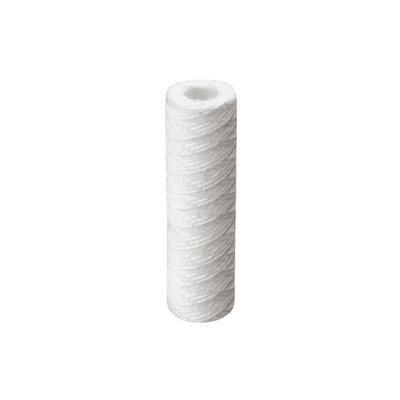
Choose wisely between technical guides and nautical categories
A well-organized catalog is useful, but without a reading criterion it risks becoming confusing. For this reason, before purchasing, it is advisable to use the nautical shop as a verification tool: compare categories, check construction differences, evaluate compatibility with your system, and use the datasheets as a final confirmation. If you are looking for a solution suitable for your onboard context, explore the technical categories or available brands and identify the component most consistent with your installation.
FAQ
How to understand if a component found in a nautical store is compatible with the one already installed?
It is necessary to compare function, type of attack, useful measures, material, and available space for installation. Visual similarity alone is not sufficient. If a detail is unclear, check the product sheet.
Is size the most important parameter when choosing a nautical accessory?
It is an important parameter, but not the only one. In many cases, orientation, fastening system, interface with the existing system, and material compatibility also matter. A correct measurement alone does not guarantee a suitable choice.
Why do nautical technical guides help more than a generic search?
Because they organize the comparison based on real installation and usage criteria. Instead of choosing by similarity or brief description, they allow evaluating differences between categories, sizes, and compatibility.
When is it better to start from the category and when from the brand?
If you are already familiar with the onboard system, starting from the brand can make the search faster. If instead you need to identify the correct solution first, it is often better to start from the category and compare the datasheets based on technical criteria.
What is the most common mistake when choosing nautical components online?
The most common is to purchase based on appearance or an assumed universality of the component. In the nautical field, it is wiser to always check mechanical compatibility and functional compatibility before ordering.